Understanding number patterns Math Worksheets
6 filtered results
-
From - To
Dive into the world of number patterns with our expertly designed math worksheets at Kids Academy. Each worksheet is crafted to help young learners recognize sequences, enhance their problem-solving skills, and build a strong foundation in mathematics. Through engaging exercises, children practice identifying, extending, and creating patterns, allowing them to understand mathematical relationships better. Perfect for reinforcing classroom lessons or providing extra practice at home, these worksheets make learning fun and effective. Equip your child with the tools to excel in math by exploring our diverse collection of understanding number patterns worksheets today!
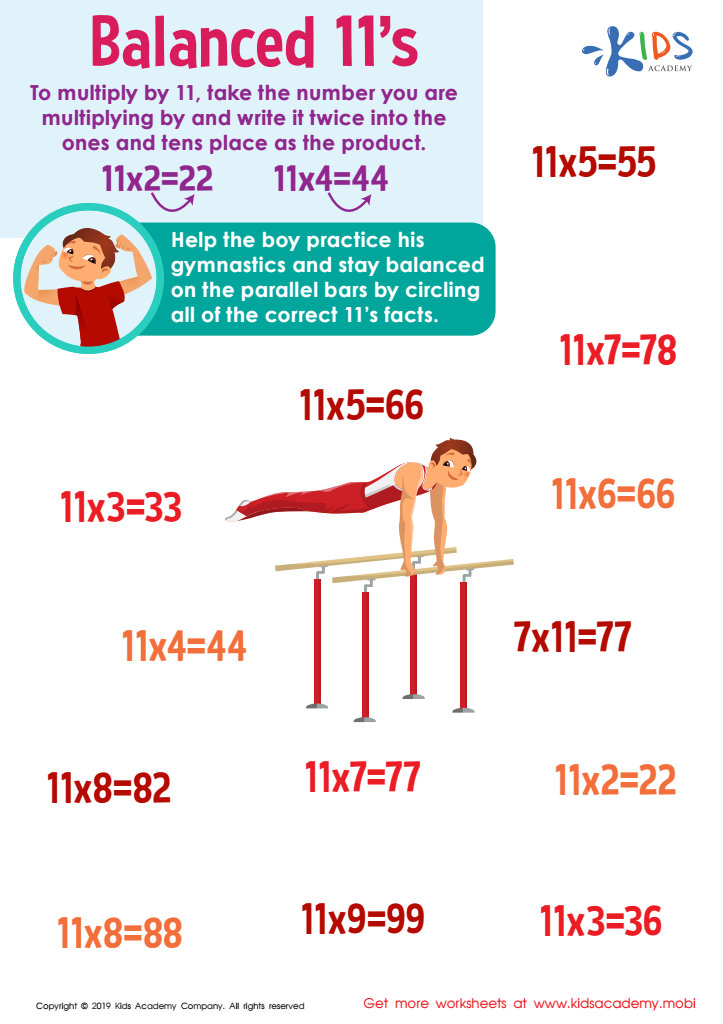
Balanced 11s Worksheet
 Assign to My Students
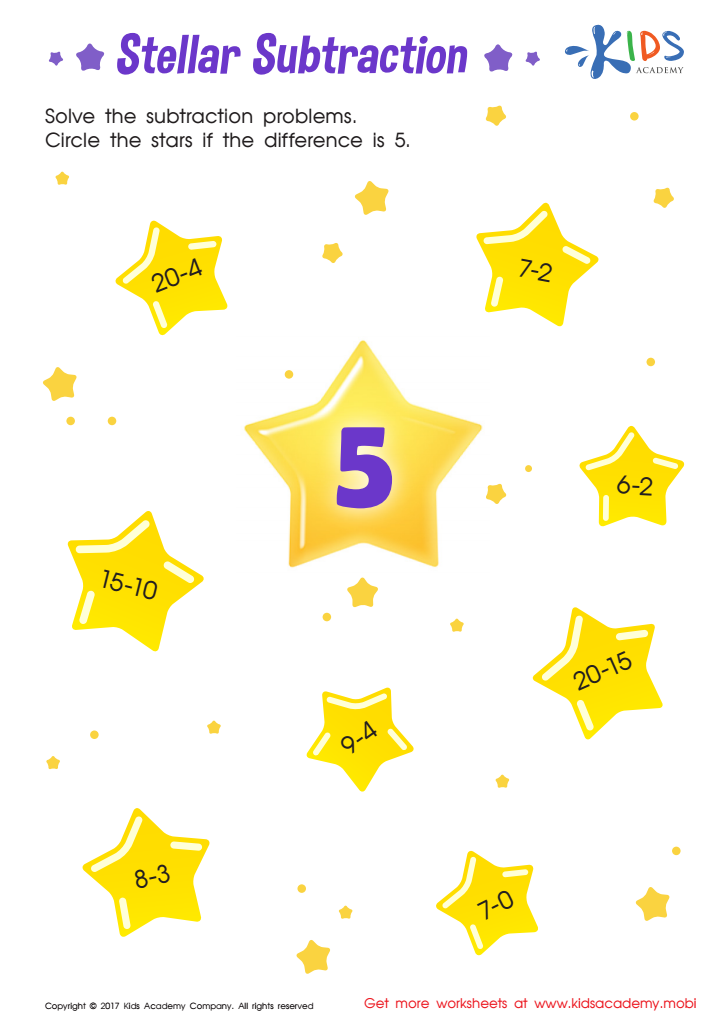
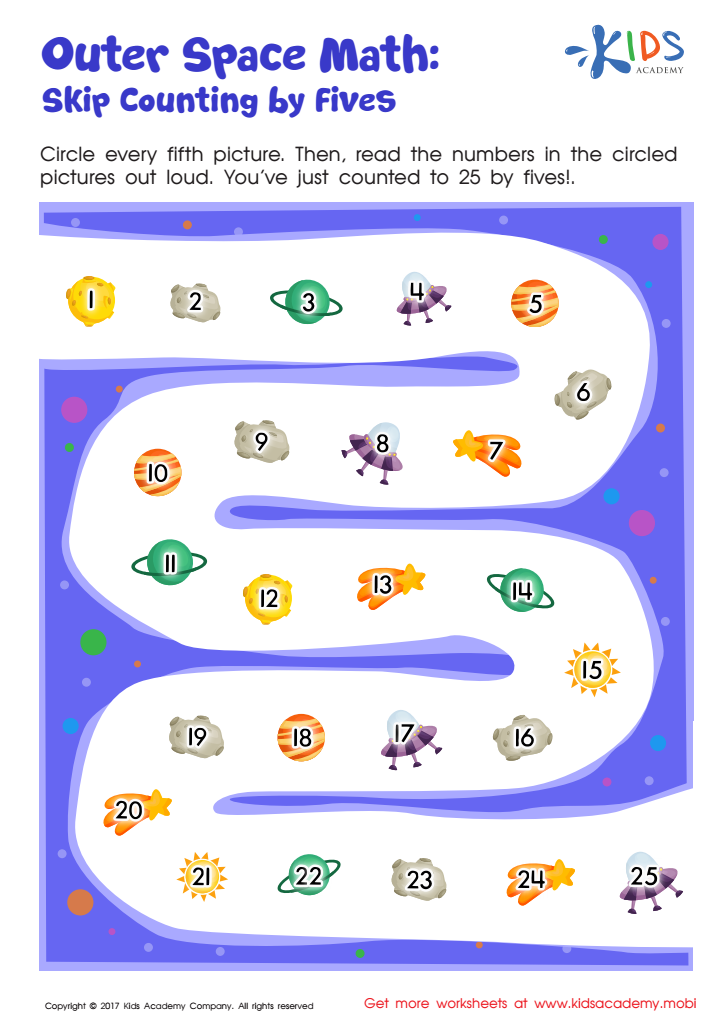
Skip Counting by 5s: Outer Space Math Printable
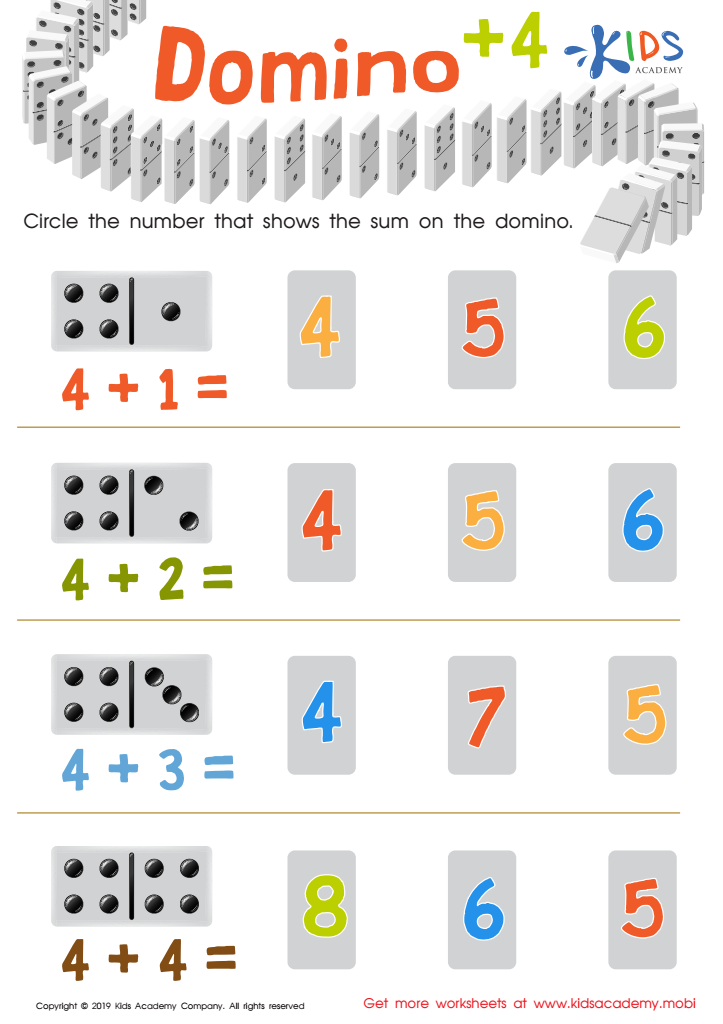
Domino +4 Worksheet
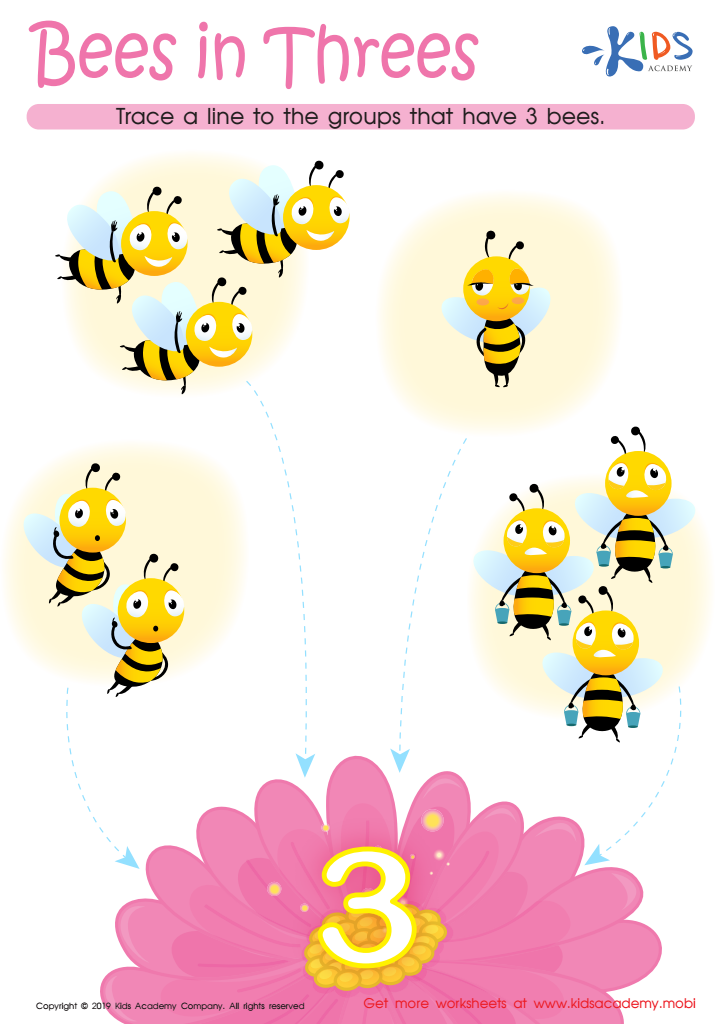
Bees in Threes Worksheet








Understanding number patterns in math is a foundational skill that has far-reaching implications for students' overall mathematical development. For both parents and teachers, nurturing this understanding is critical because it equips children with essential problem-solving skills and enhances their cognitive abilities. Recognizing number patterns helps students predict and anticipate trends, an ability that can be applied to everyday situations as well as to more complex mathematical concepts later on.
For example, grasping simple patterns such as counting by 2s, 5s, or 10s can boost numerical fluency and mental arithmetic, making more advanced topics like multiplication, division, and algebra easier to understand. Additionally, these patterns enrich students' understanding of properties like symmetry and order, fostering critical thinking and analytical skills.
Moreover, patterns are everywhere, from nature and music to art and architecture. When parents and teachers emphasize the importance of patterns, they're not just teaching math—they're cultivating an appreciation for how the world is interconnected. This holistic understanding can motivate students to engage more deeply with various subjects, demonstrating the relevance of math beyond the classroom.
In conclusion, understanding number patterns is vital as it forms the bedrock of mathematical logic and reasoning. By prioritizing this skill, parents and teachers set children on a path to academic success and a lifelong appreciation for the language of numbers.








