Understanding prepositions Math Worksheets
4 filtered results
-
From - To
Discover our engaging “Understanding Prepositions Math Worksheets” designed to enhance students' grasp of prepositional concepts in a fun and interactive way. These worksheets seamlessly integrate math with language skills, helping young learners identify relationships between objects through prepositions. Students will solve engaging problems that emphasize 'under,' 'over,' 'between,' and more, fostering a comprehensive understanding of spatial relationships. Ideal for early grade learners, these printable activities cater to various learning styles, ensuring each child can grasp essential mathematical and linguistic concepts effectively. Empower your teaching with our resources, promoting critical thinking and vocabulary development in an enjoyable learning environment. Explore now!
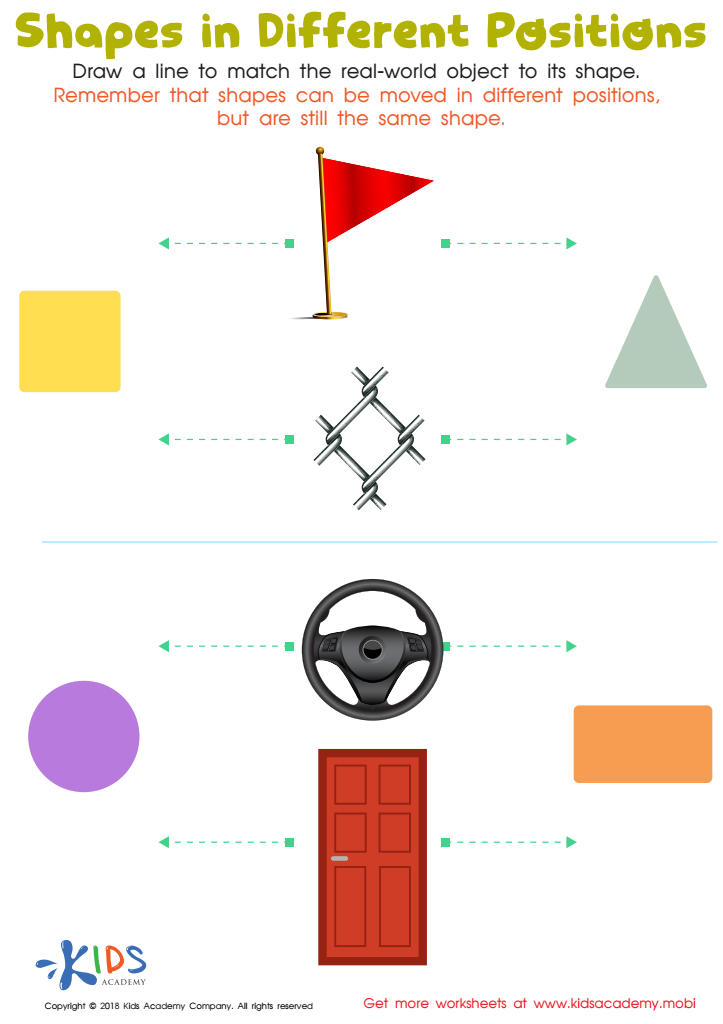
Shapes in Different Positions Worksheet
 Assign to My Students
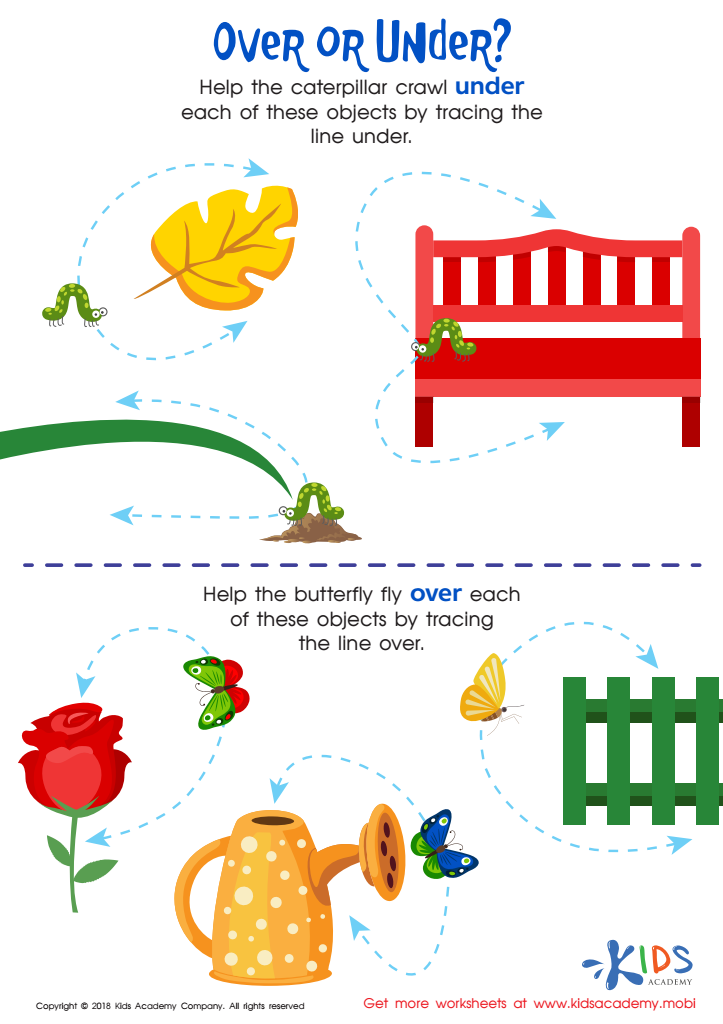
Over or Under? Worksheet
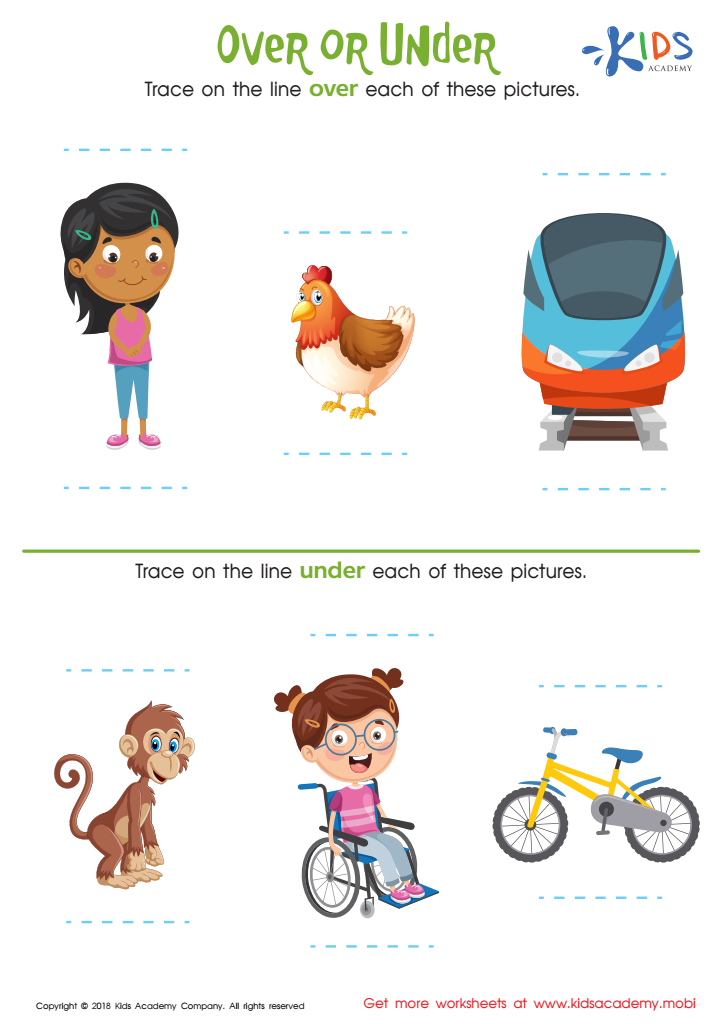
Over or Under Worksheet
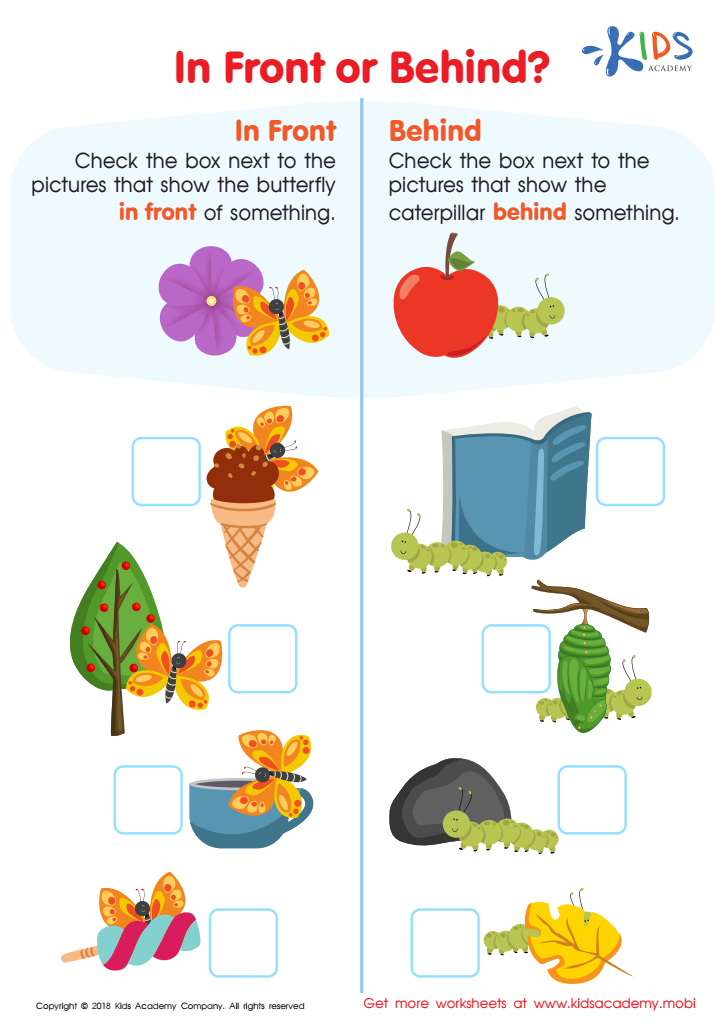
In Front or Behind Worksheet







Understanding prepositions in the context of math is essential for fostering problem-solving skills and promoting a clear understanding of mathematical concepts. Prepositions, like "above," "below," "between," and "around," help students grasp spatial relationships, which are crucial when dealing with geometric shapes, measurements, and even data interpretation. When children learn how to use prepositions correctly, they develop the ability to articulate their thought processes, enhance their comprehension of math problems, and communicate ideas more effectively.
Furthermore, prepositions are often integral to word problems, a common area where students struggle. A solid grasp of these terms allows them to break down complex problems into understandable parts, ultimately leading to improved analytical skills. Parents and teachers should focus on this aspect not just to improve math proficiency but to encourage a growth mindset.
Additionally, understanding prepositions can bridge the gap between math and language arts, boosting overall literacy. By engaging children with engaging activities—including games and visual aids—teachers and parents can create a rich learning environment that values both linguistic and mathematical abilities. This interconnected approach equips students with vital skills for academic success and everyday problem-solving.








