
Understanding symmetry Math Worksheets
30 filtered results
Difficulty Level
Grade
Age
-
From - To
Subject
Activity
Standards
Discover the joy of learning with our "Understanding Symmetry Math Worksheets" designed for young minds! These engaging and interactive worksheets help children grasp the concept of symmetry with fun activities that include matching, drawing, and coloring symmetrical shapes. Developed to enhance visual thinking and spatial awareness, our worksheets are perfect for Kindergarten to 2nd-grade students. Boost your child's problem-solving skills and understanding of balance and harmony in shapes. Share these enriching resources both at home and in the classroom to turn complex math concepts into enjoyable learning experiences. Join us at Kids Academy to make math magical for your child!
Favorites
With answer key
Interactive
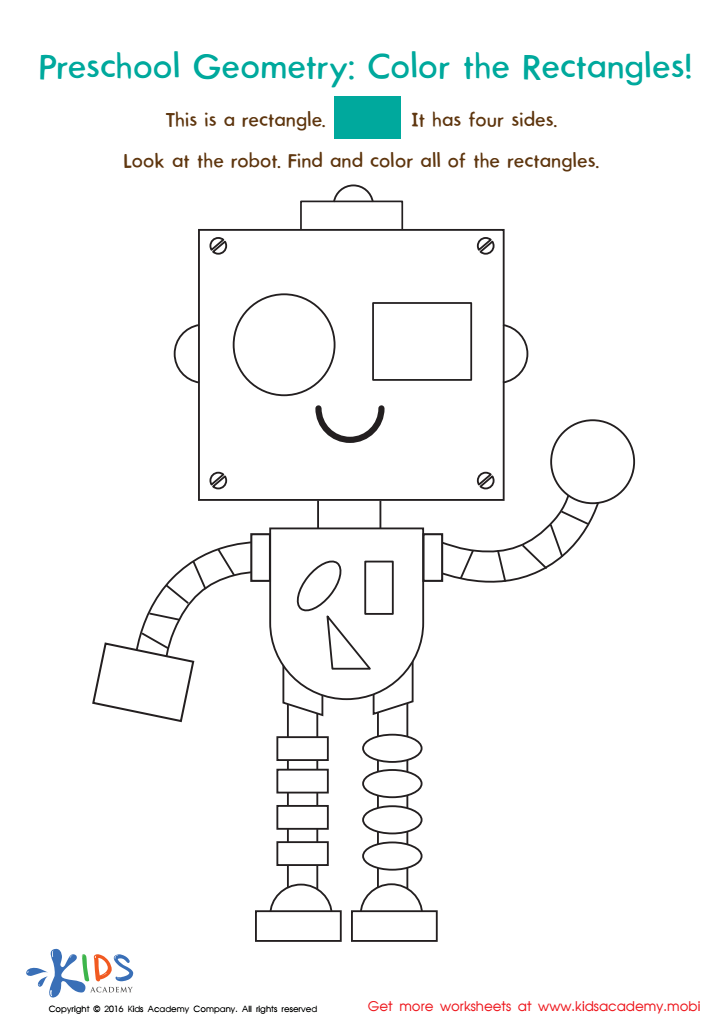
Geometry Worksheet
Geometry can be fun for kids! They explore shapes that create their favorite pics and objects. This preschool worksheet explains that rectangles have four sides, then kids color rectangles on a funny robot!
 Assign to My Students
Geometry Worksheet
Worksheet
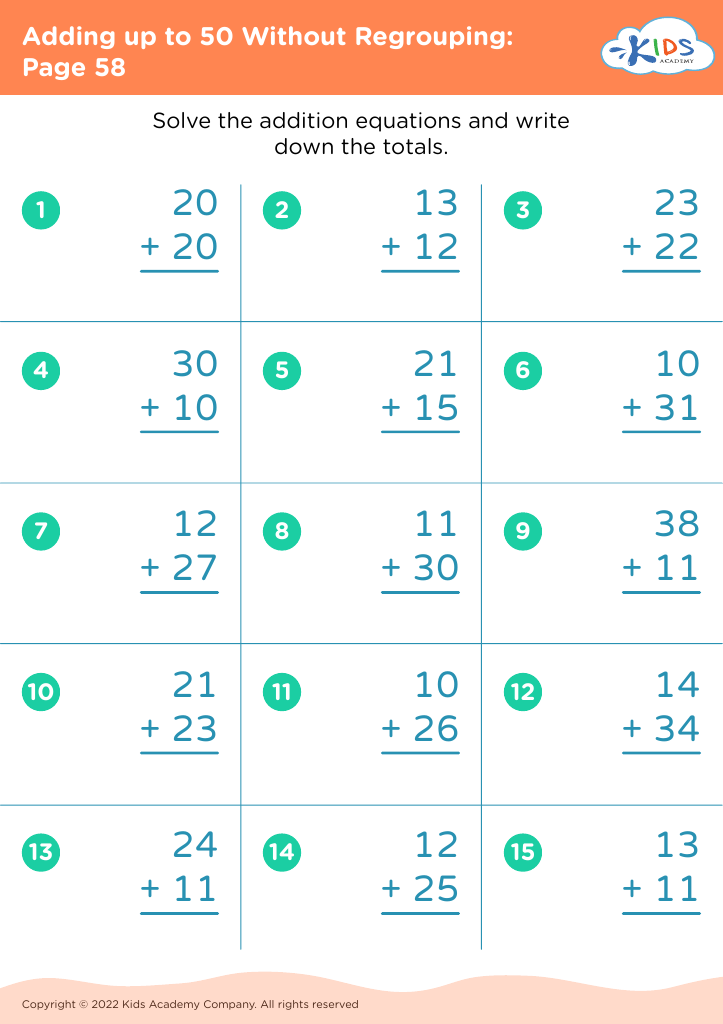
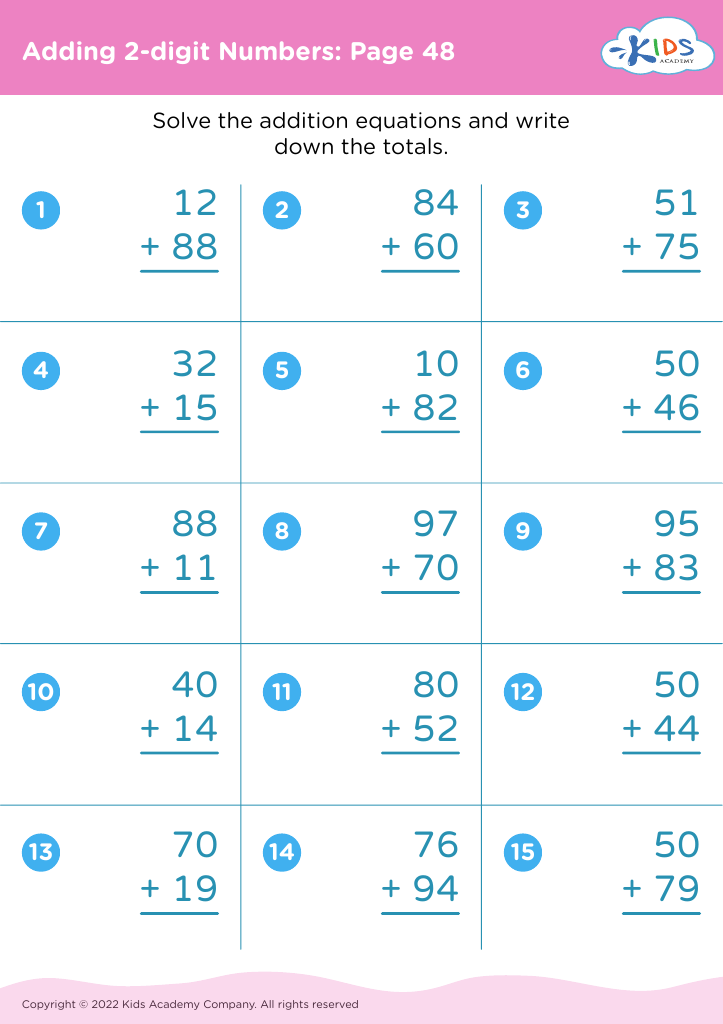
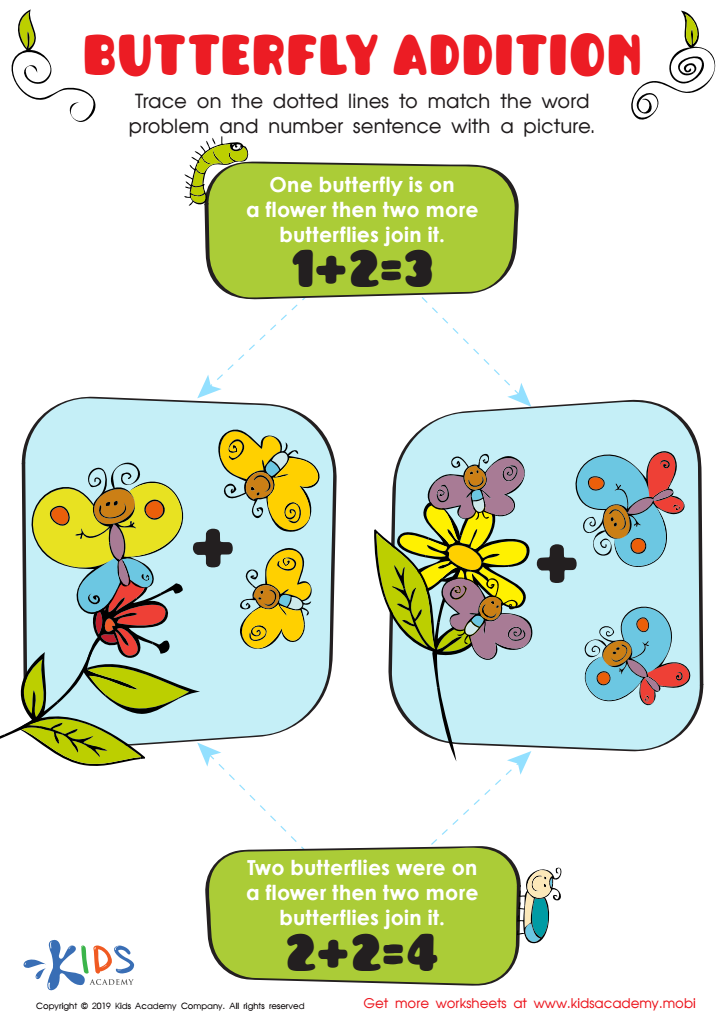
Butterfly Addition Worksheet
This tracing sheet is great for kids to work on math skills and have fun too. Read the word problems to them, then help them trace the dotted lines to match the problem and number sentence to a picture. Not only is it educational, it's beautiful too - your kids will love learning about butterflies!
Butterfly Addition Worksheet
Worksheet
Lines of Symmetry Printable
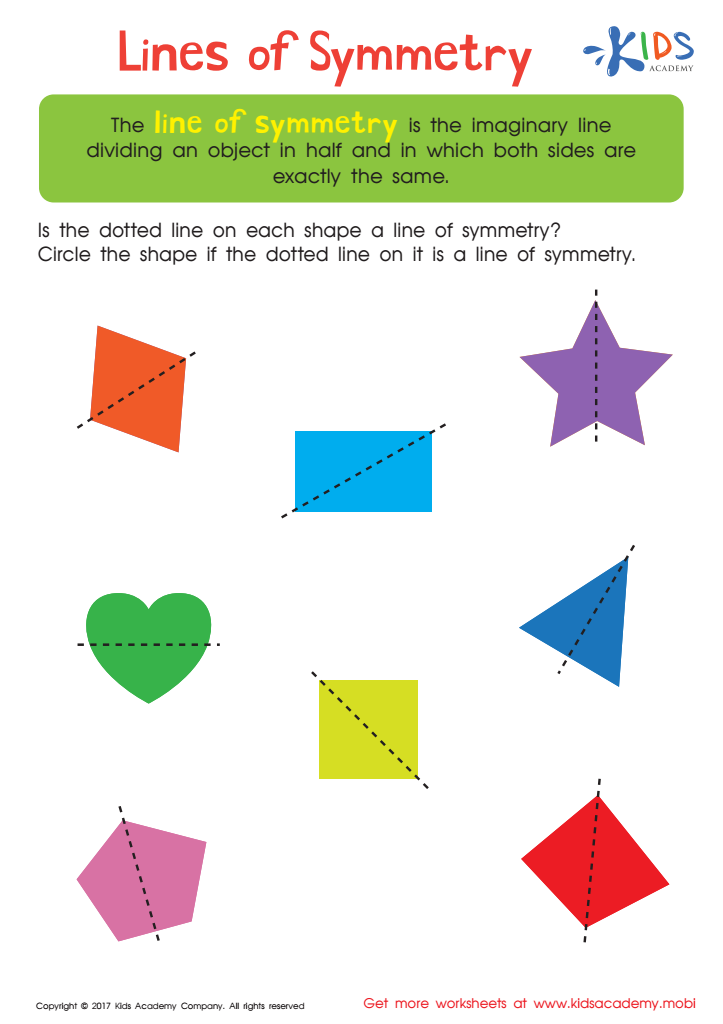
Symmetry is a key math concept that kids must learn to develop their geometry skills. This fun worksheet helps build this skill, by encouraging kids to recognize symmetrical shapes and find equal parts.
Lines of Symmetry Printable
Worksheet
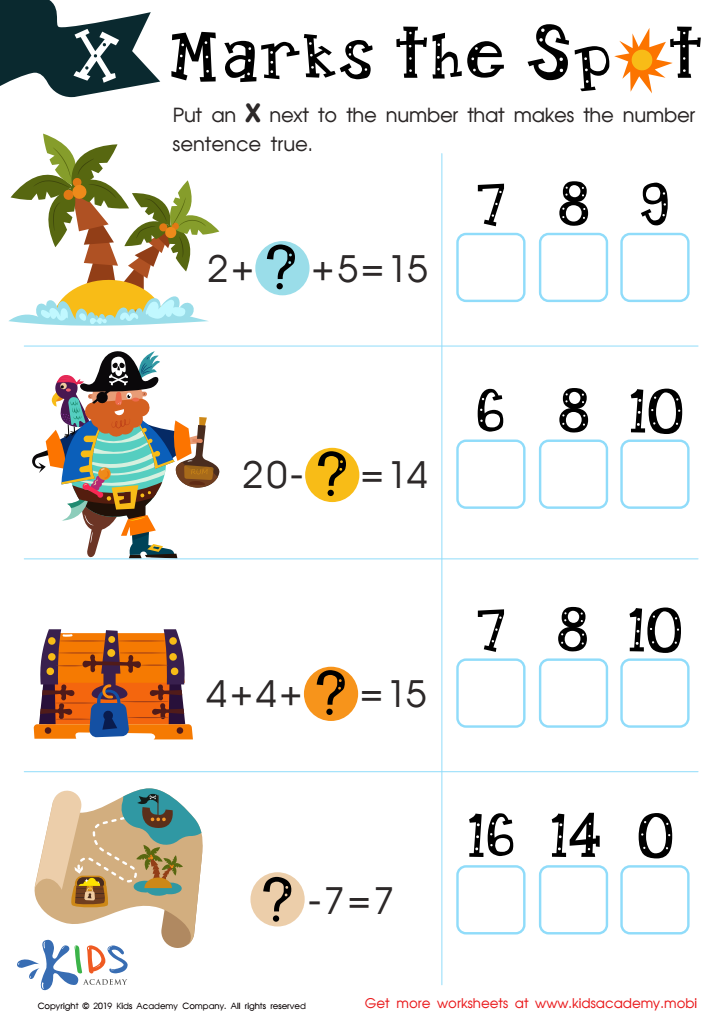
X Marks the Spot Worksheet
Let your kids explore the world of pirates! Ask them what they know about them, what they do and the phrases they like. Download the printout and point at the images, asking them to tell you what they see. Help them tick the box for the number that makes the sentence true. Let them have fun learning about pirates! (80 words)
X Marks the Spot Worksheet
Worksheet
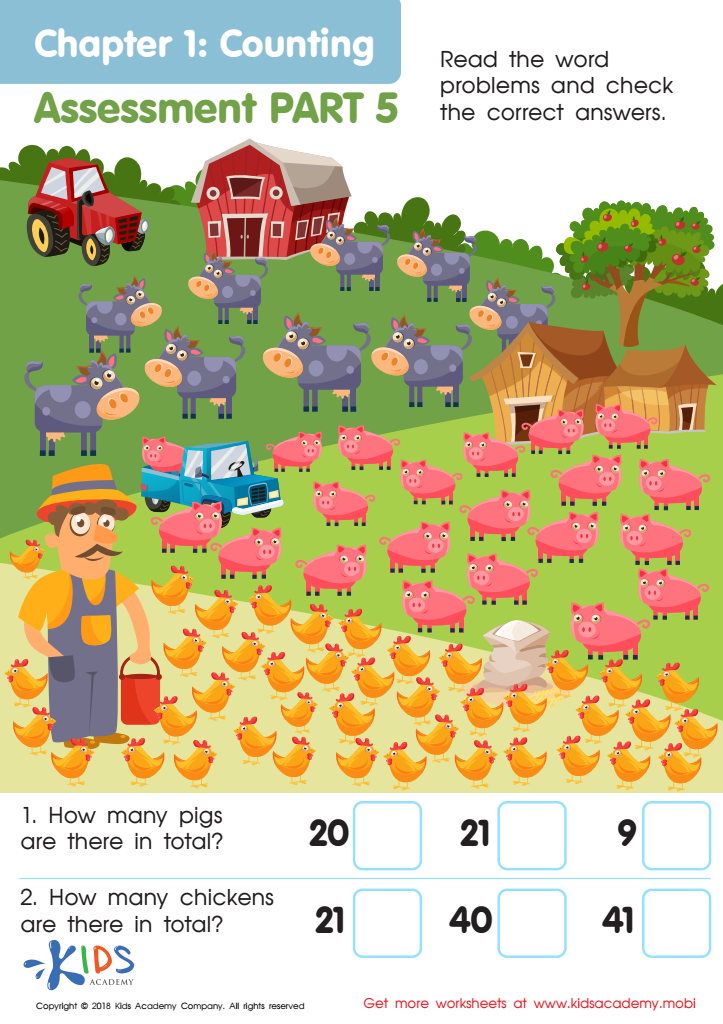
Counting: Assessment 5 Worksheet
Let your kids have fun counting farm animals on this worksheet! Help the farmer count the animals and have your child check the answers to assess their counting skills. Read the word problem at the bottom of the page and count the animals together. It's an entertaining way to practice counting and have a great time!
Counting: Assessment 5 Worksheet
Worksheet
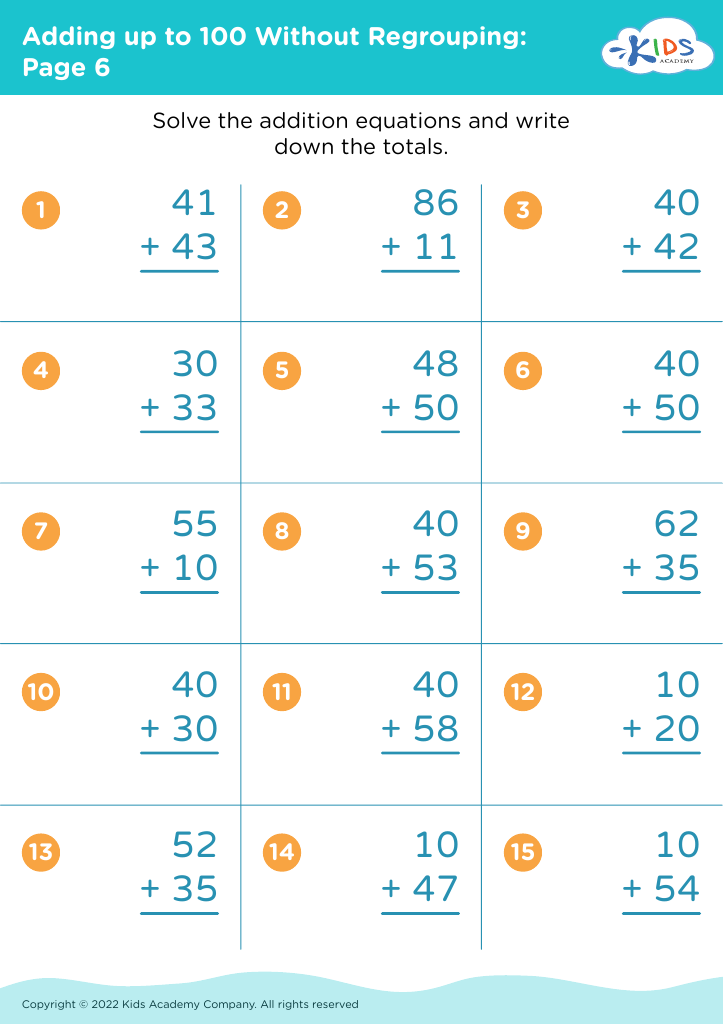
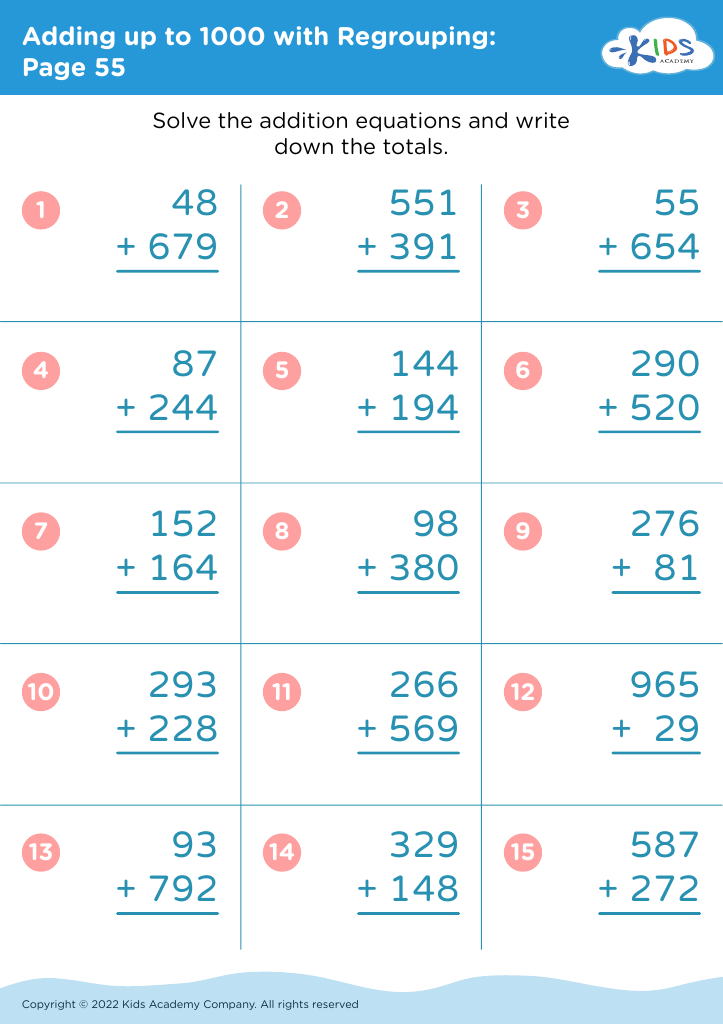
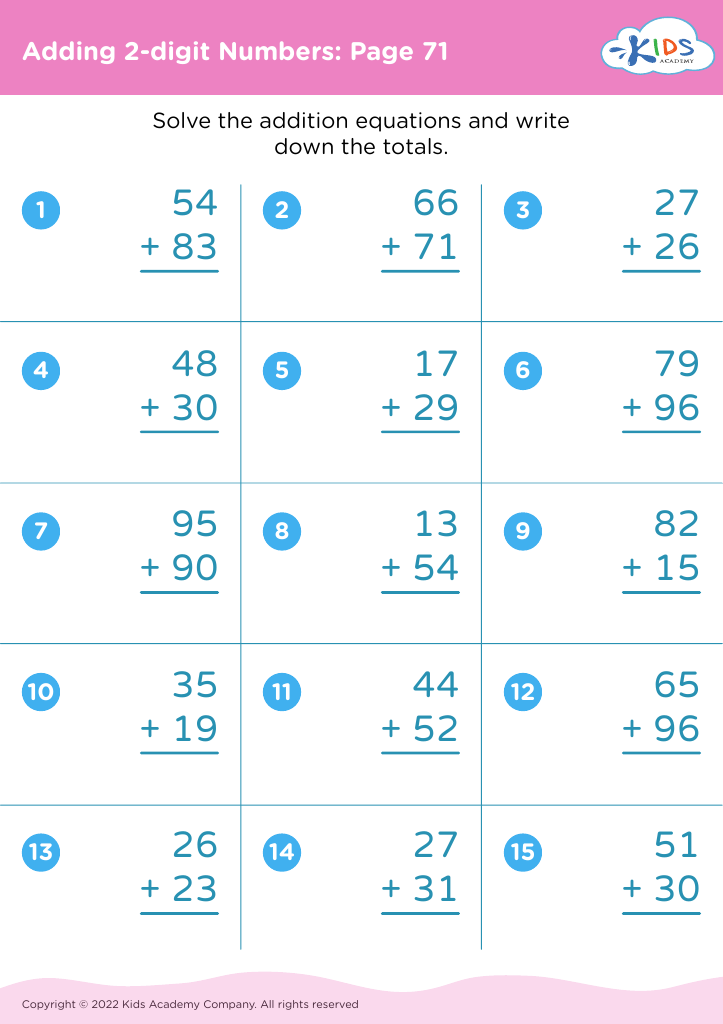
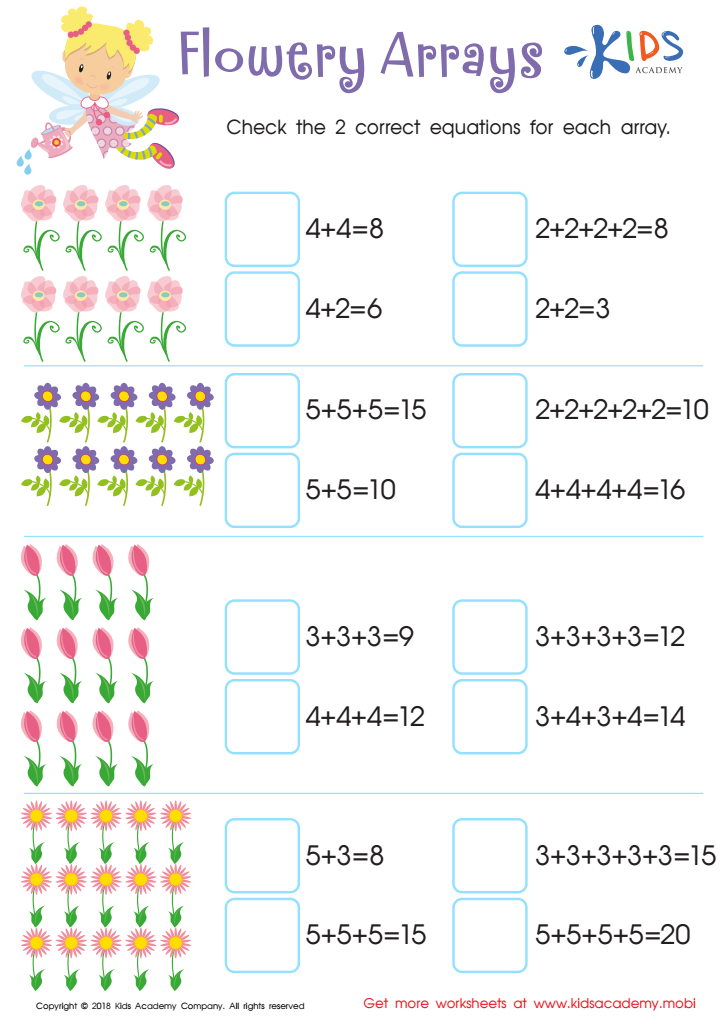
Flowery Arrays Worksheet
This worksheet helps your child learn to identify and represent arrays. For example, both 3+3+3+3=12 and 4+4+4=12 are arrays but the first is arranged in rows and the second in columns. Let your child use this knowledge to answer the four questions in this pdf and check the two correct equations.
Flowery Arrays Worksheet
Worksheet
Join Kids Academy for Free
Who is primarily going to use this learning content?








Understanding symmetry in math is crucial for young learners as it forms the foundation for many advanced mathematical concepts and real-world applications. Symmetry helps children develop crucial spatial reasoning skills, which are essential for solving a variety of mathematical problems. Recognizing and creating symmetrical patterns enhance a child's ability to identify and understand shapes, patterns, and geometric properties, all of which are vital components in their math education.
Moreover, a solid understanding of symmetry fosters creativity and problem-solving skills. Children learn to see connections and relationships, making it easier for them to grasp more complex concepts later on, like fractions and algebra. Symmetry is prevalent in nature, art, architecture, and design, which makes learning about it both practical and engaging. When students see mathematical concepts reflected in the world around them, it promotes a deeper appreciation and interest in the subject.
For parents and teachers, encouraging the study of symmetry can make math more interactive and enjoyable. By integrating symmetry-related activities, such as drawing, cutting shapes, and exploring nature, adults can help demystify mathematics, showing children that math is not just about numbers but also about structure and beauty. This holistic approach can foster a lifelong appreciation and curiosity for learning in general.








