
Understanding time Math Worksheets
10 filtered results
Difficulty Level
Grade
Age
-
From - To
Subject
Activity
Standards
Understanding Time Math Worksheets are essential tools designed to help young learners grasp the concept of time. These engaging worksheets cover various skills, including reading analog and digital clocks, understanding units of time (seconds, minutes, hours), and solving related word problems. Fun and interactive activities make learning enjoyable, enhancing time-telling abilities and daily routine comprehension. Perfect for early graders, parents, and teachers, these worksheets support a critical life skill while aligning with educational standards. Equip your child with the confidence to manage time adeptly with our comprehensive and thoughtfully crafted Understanding Time Math Worksheets.
Favorites
With answer key
Interactive
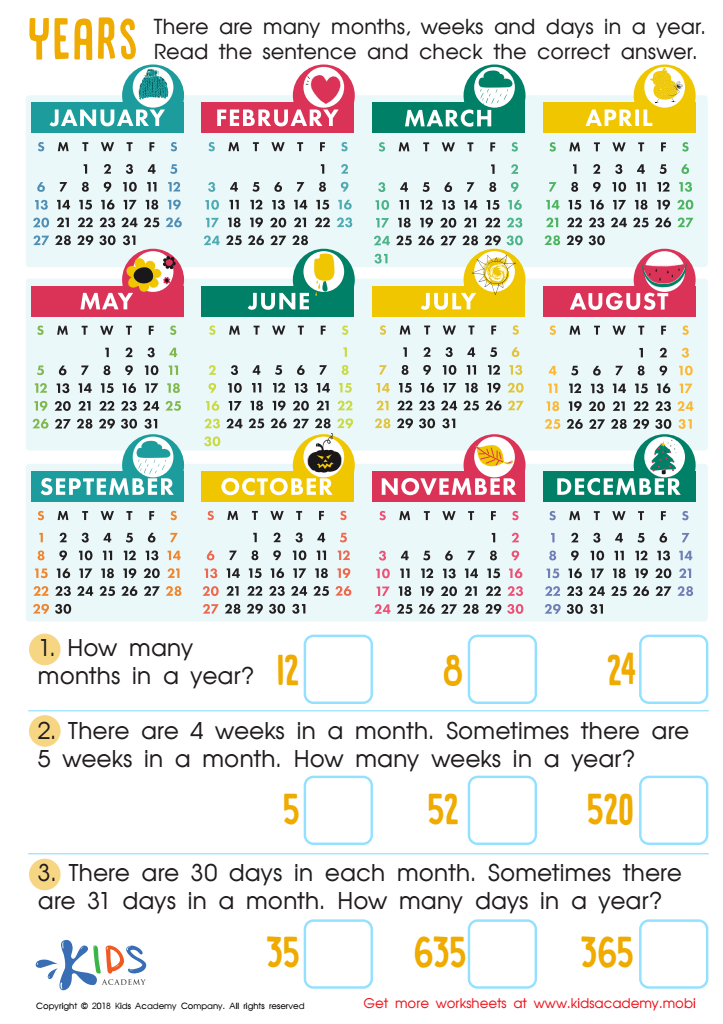
Years Worksheet
This worksheet is a great way to test your children's knowledge of the calendar. Ask them if they can name the days of the week and months in a year. Read and discuss the questions with them and help them find the right answers. Encourage them to check their answers.
 Assign to My Students
Years Worksheet
Worksheet
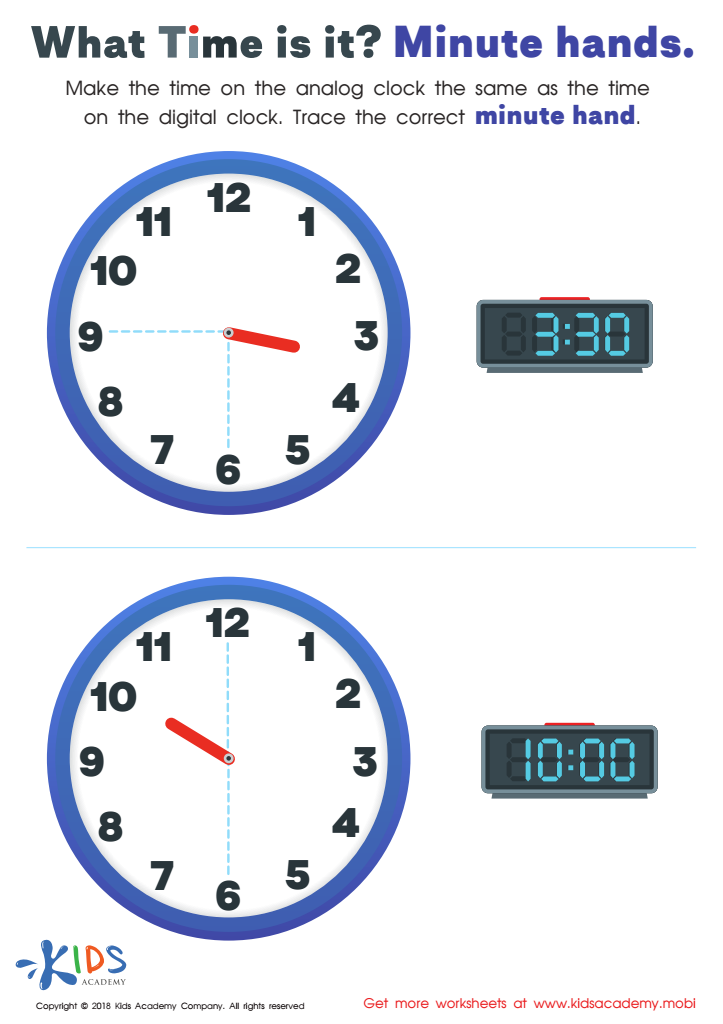
What Time Is it? Minute Hands Worksheet
Help your kids telling time with the minute hand correctly with this tracing sheet. Trace the correct minute hand to make the time on the analog clock the same as the time on the digital clock. Give them a pictured demonstration of how to do it and you'll be all set!
What Time Is it? Minute Hands Worksheet
Worksheet
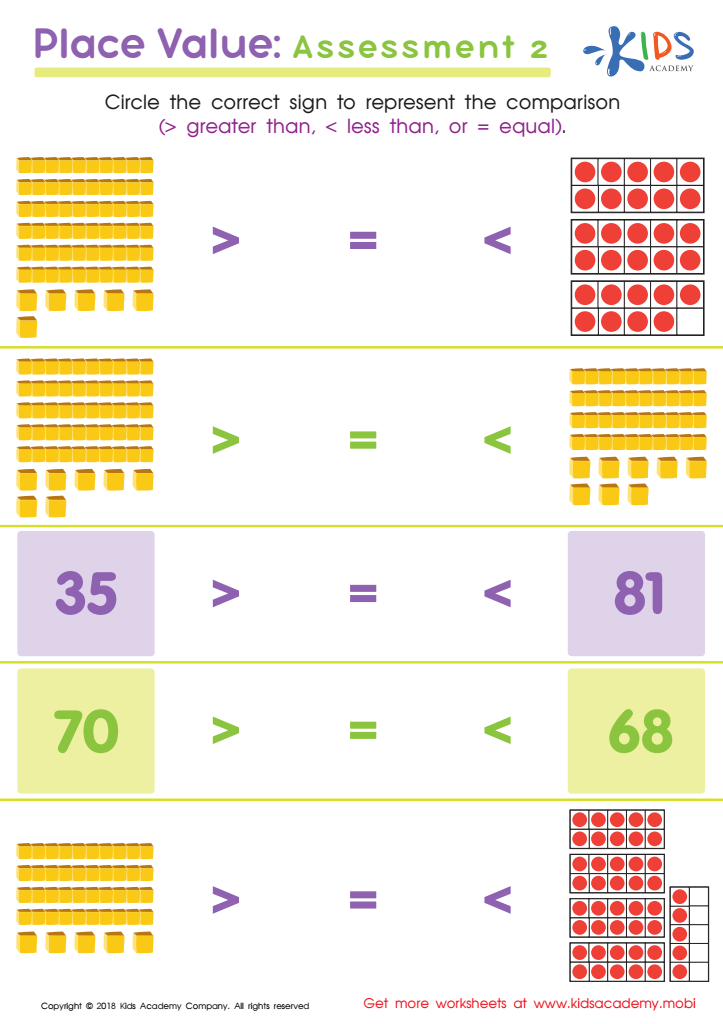
Place Value: Assessment 2 Worksheet
Children must learn to recognize the value of numbers and break them into chunks of ten. They must also be able to compare numbers to know if one is greater, less than or equal to another. The Place Value Assessment PDF is a great tool to assess their skills and identify what requires more practice.
Place Value: Assessment 2 Worksheet
Worksheet
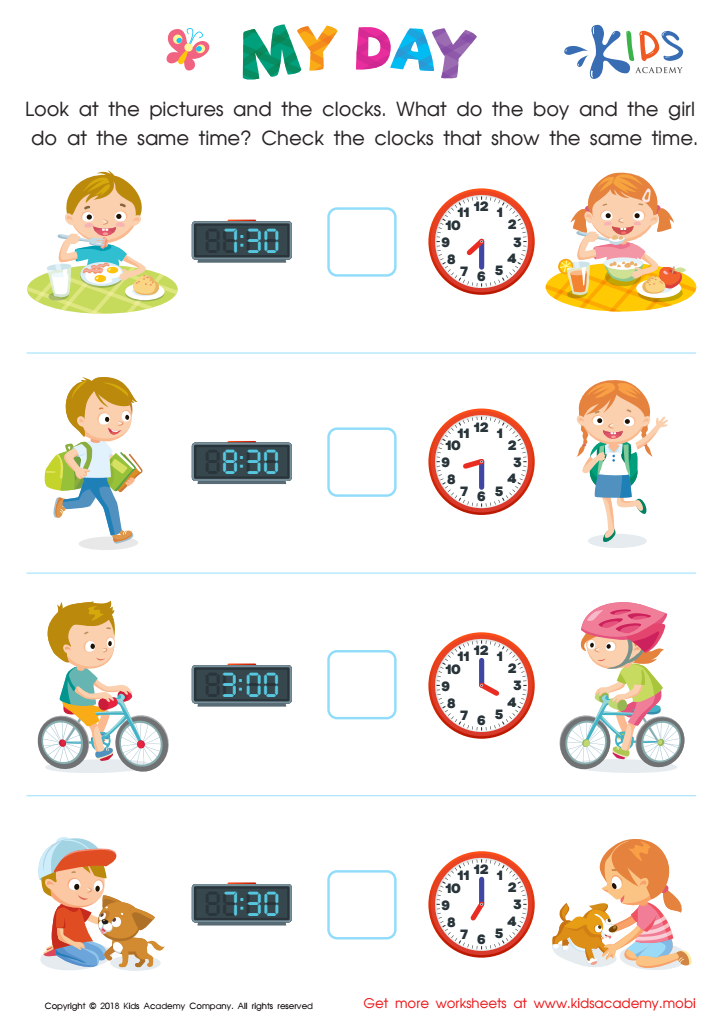
My Day Worksheet
Show your students the pictures and clocks in the colorful worksheet. Ask what the boy and girl are doing in each, then what time the clocks show. Finally, ask what activities they both do at the same time. Help them check the clocks showing the same time in both pictures.
My Day Worksheet
Worksheet
Join Kids Academy for Free
Who is primarily going to use this learning content?







Understanding time math is a fundamental skill that significantly impacts a child's daily life and academic growth. For parents and teachers, fostering this skill modulates a child's ability to manage activities, understand scheduling, and develop a strong sense of responsibility and punctuality.
Time math forms the backbone of numerous daily tasks, from waking up promptly to managing study sessions or adhering to sports practice schedules. Children adept at reading clocks and comprehending time intervals find it easier to transition efficiently between activities. This organized manner helps in reducing stress and enhancing productivity.
Academically, grasping time concepts enriches a child's mathematical skills, critical thinking, and problem-solving abilities. It makes advanced topics more approachable and cultivates practical, real-world applications of math that otherwise might seem abstract. For instance, recognizing elapsed time involves understanding both addition and subtraction.
Socially, understanding time helps children sync better with peers and participate fully in group activities, fostering a sense of belonging and teamwork. By prioritizing time math, parents and teachers equip children with life-long essential skills that foster independence, build confidence, and create well-rounded, punctual individuals ready to tackle more complex academic and life challenges.








