
Number Sequencing Matching Worksheets
4 filtered results
Difficulty Level
Grade
Age
-
From - To
Subject
Activity
Standards
Unlock your child's math potential with our engaging Number Sequencing Matching Worksheets! Designed for early learners, these worksheets promote essential skills in number recognition and sequencing through fun and interactive activities. Kids will enhance their critical thinking as they match numbers in ascending and descending order, reinforcing their understanding of numerical patterns. Perfect for classrooms or at-home learning, our printable resources cater to various learning levels, ensuring every child can thrive. Spark your child's love for math while building a strong foundation in numerical skills. Explore our vibrant collection and watch your child’s confidence soar as they master number sequencing!
Favorites
With answer key
Interactive
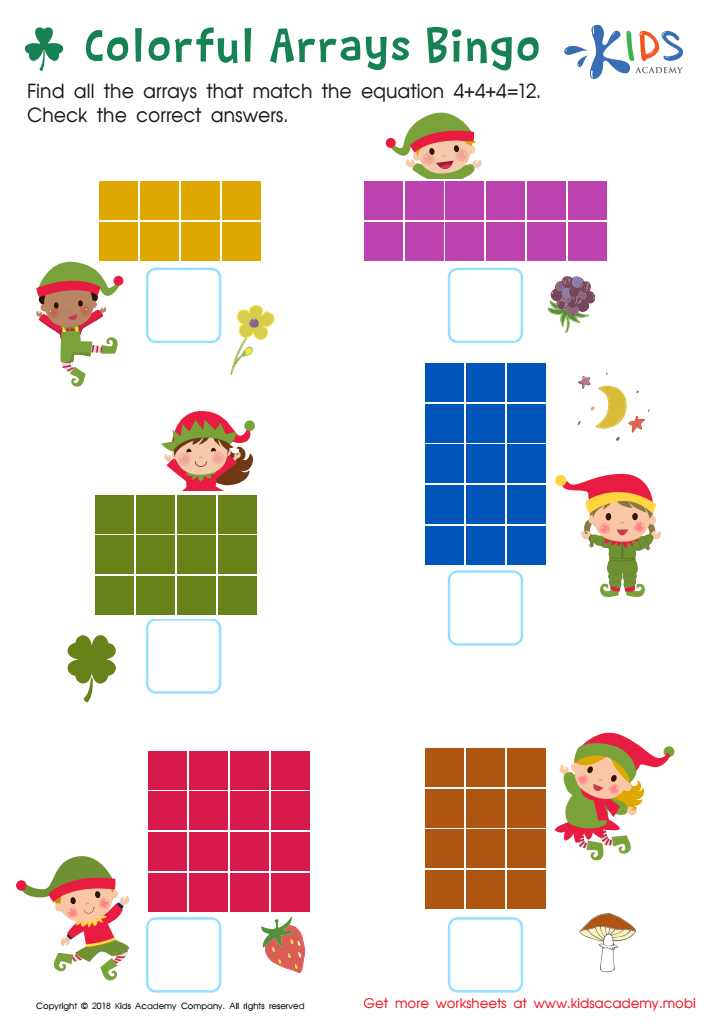
Colorful Arrays Bingo Worksheet
This worksheet stimulates thinking about arrays and how to represent them. Instruct students to count the 6 arrays and find which ones sum up to 12. Ask them to check the answers for accuracy.
 Assign to My Students
Colorful Arrays Bingo Worksheet
Worksheet
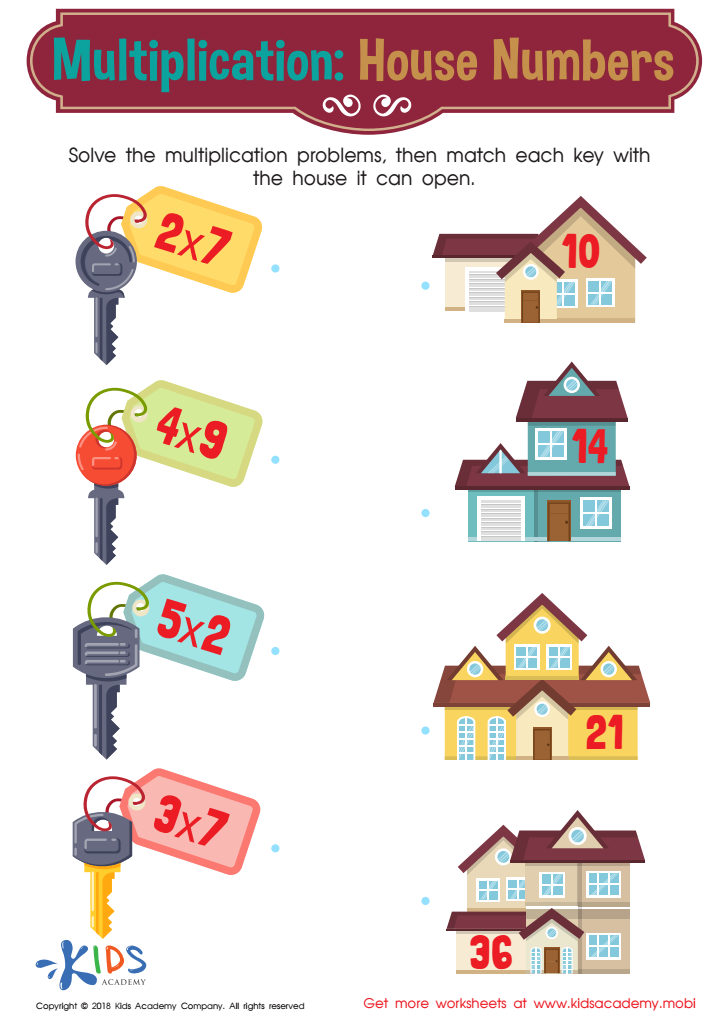
House Numbers Worksheet
This multiplication worksheet is perfect for grade 3 students to sharpen their math skills! Each problem unlocks the door to a house on the page - can they figure out which key fits which door? By solving each problem, they'll boost their multiplication skills and have fun along the way.
House Numbers Worksheet
Worksheet
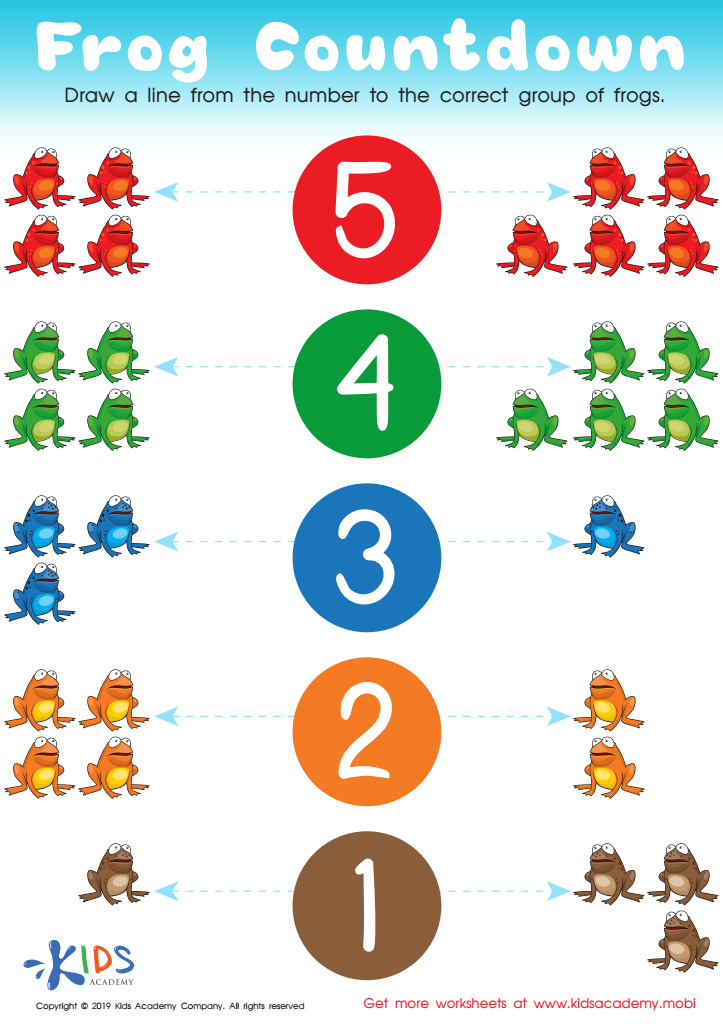
Frog Countdown Worksheet
Make learning fun for kids with traceable printouts! This exercise has kids counting frogs and drawing a line to match the number. Expand their knowledge with activities like this, beyond the basics they learn in school. Help them explore new ways of learning and make it enjoyable.
Frog Countdown Worksheet
Worksheet
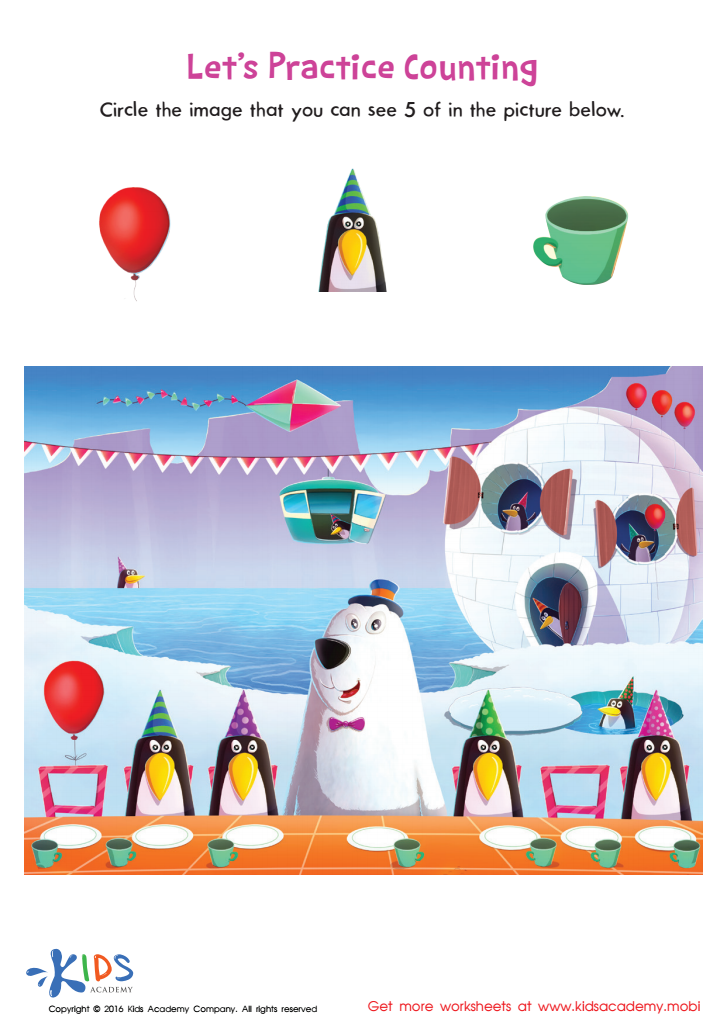
Counting Worksheet: Let's Practice Counting
Celebrate with the Arctic animals! This fun counting worksheet will help your child hone counting, problem-solving and attention skills. Let them explore important concepts through a process of elimination as they help the animals count guests and supplies. A great way to learn and have fun!
Counting Worksheet: Let's Practice Counting
Worksheet
Join Kids Academy for Free
Who is primarily going to use this learning content?








Number sequencing and matching are foundational skills that significantly contribute to a child's mathematical understanding and cognitive development. Parents and teachers should care about these skills because they form the building blocks for more complex mathematical concepts such as addition, subtraction, and number sense.
Firstly, number sequencing enables children to recognize patterns, which helps them predict and make connections in various mathematical contexts. Understanding sequences supports more advanced skills like skip counting, which is essential in solving multiplication and division problems.
Secondly, matching numbers reinforces recognition skills, aiding in the development of one-to-one correspondence, crucial for grasping more complex arithmetic. It also promotes cognitive skills such as memory, attention to detail, and problem-solving, which are valuable beyond mathematics.
Additionally, an early foundation in these skills fosters confidence and a positive attitude towards learning math. Confidence can lead to a lifelong interest and appreciation for mathematics, showing that math is not just a subject but a tool for understanding the world.
In turn, educators and parents can play a significant role in nurturing these skills through engaging activities that encourage playful learning, ultimately preparing children for academic success and everyday decision-making throughout their lives.








