Converting units Measurement Worksheets
4 filtered results
-
From - To
Transform your students' mathematical abilities with our Converting Units Measurement Worksheets. These engaging and meticulously designed worksheets are tailored for elementary learners, helping them master the vital skill of unit conversion in a fun and interactive way. From length, weight, and capacity to time conversions, our diverse exercises cater to all learning styles, ensuring comprehensive understanding and retention. By incorporating real-world examples and hands-on practice, our worksheets bridge the gap between theory and practical application, making math tangible and enjoyable. Perfect for classroom use or additional practice at home, these resources are essential for building a solid math foundation.
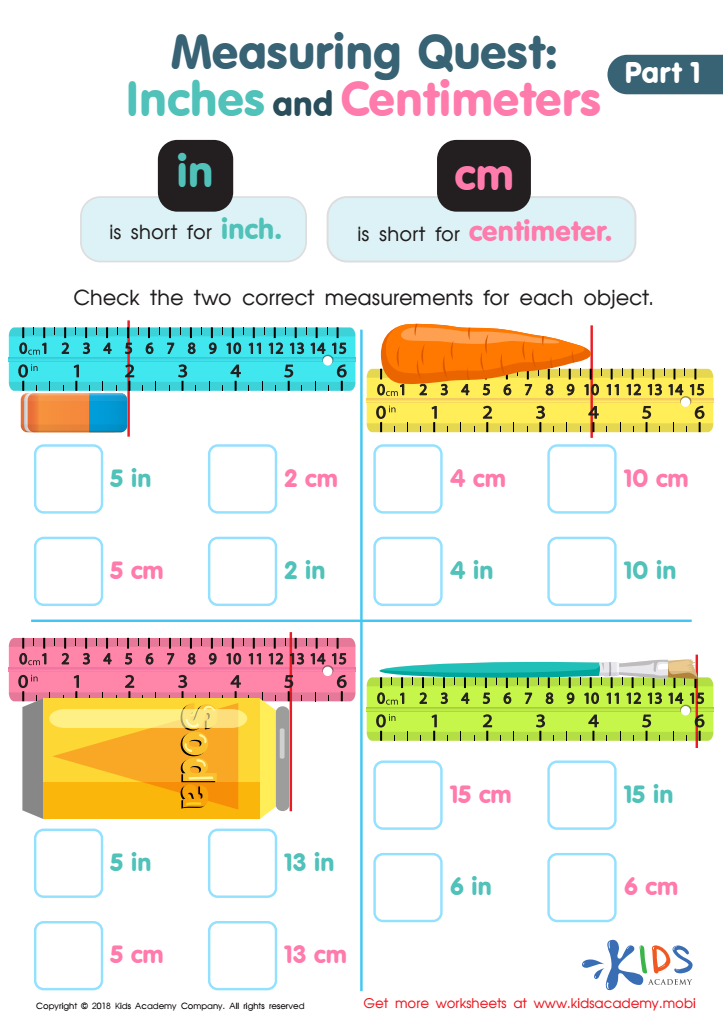
Measuring Quest: Inches and Centimeters Worksheet
 Assign to My Students
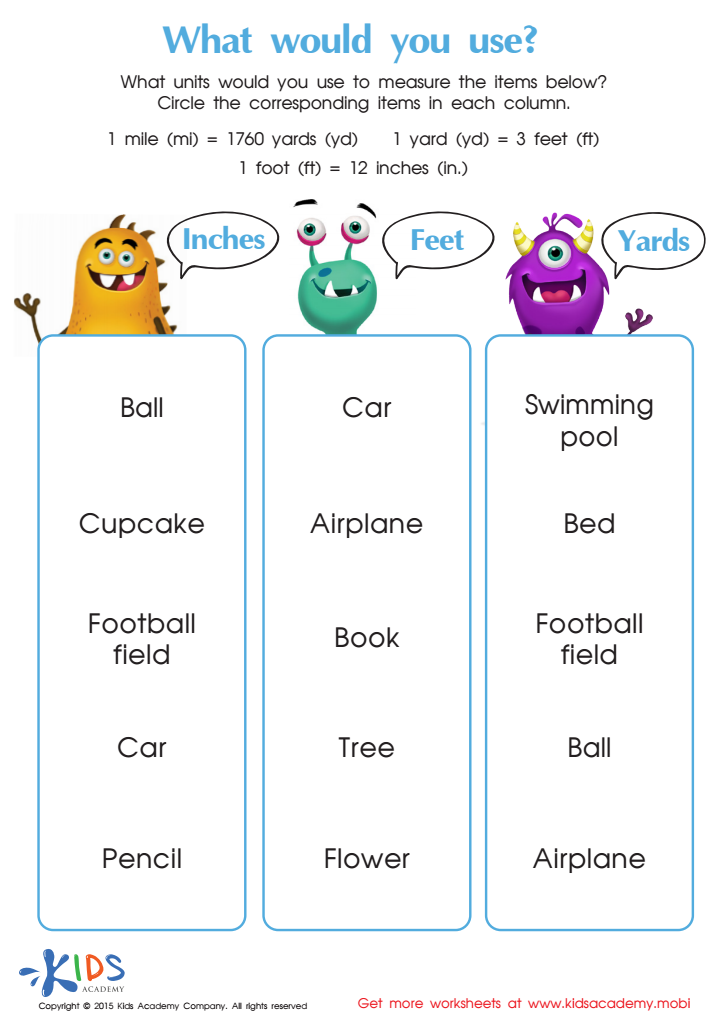
Learning about measuring objects in inches, feet and yards Worksheet
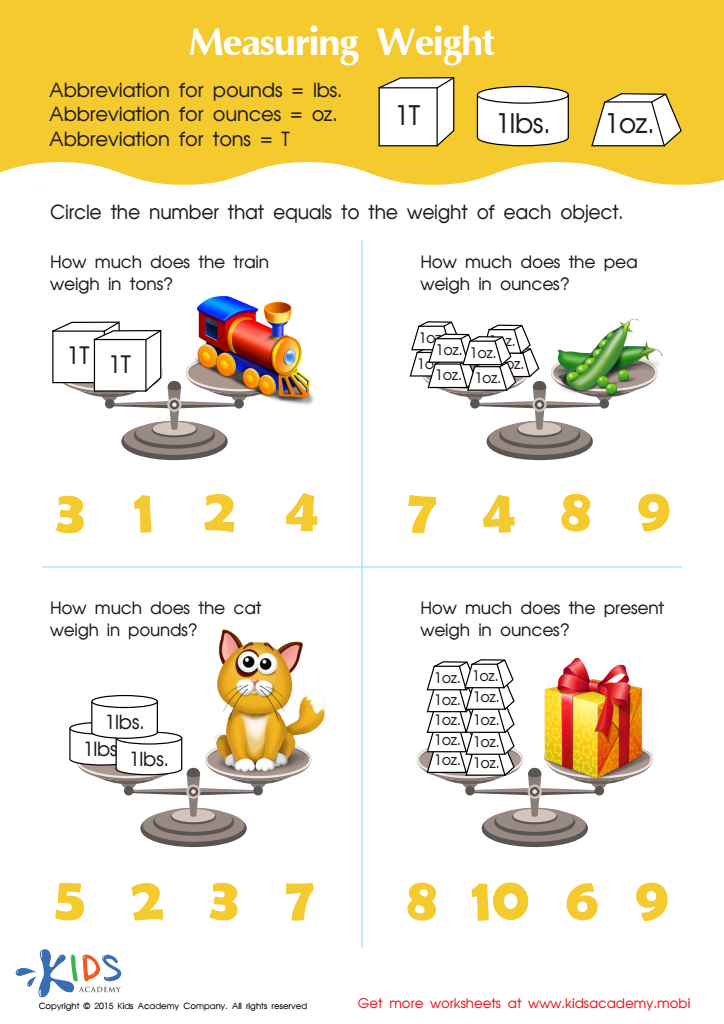
Measuring Weight in Ounces, Pounds and Tons Worksheet
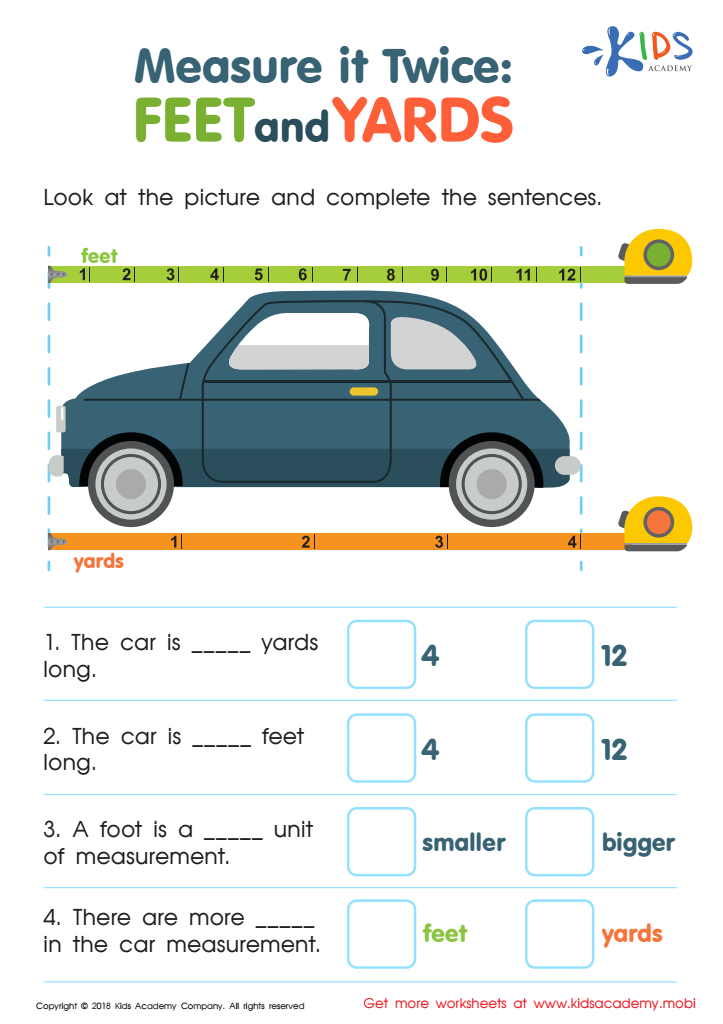
Measure It Twice: Feet and Yards Worksheet








Parents and teachers should care about teaching and understanding units of measurement because it is a fundamental skill that permeates many aspects of daily life and academic disciplines. For children, mastering the ability to convert units successfully can build a strong foundation for later learning in science, math, engineering, and even cooking or budgeting.
Accurate measurement conversion is critical in contexts like cooking, where ingredients need to be measured precisely to ensure the success of a recipe. For parents, this skill helps children recognize that quantity and proportion play essential roles in everyday tasks and hobbies. Furthermore, teaching unit conversion practices supports cognitive development by enhancing problem-solving skills and logical reasoning.
Academically, competence in converting units of measurement is indispensable in subjects such as chemistry and physics, where various systems of measurement — metric and imperial — are used. Proper understanding ensures children can solve problems accurately and efficiently, boosting their confidence and academic performance. For teachers, imparting this knowledge engages students and secures a thorough understanding of diverse scientific concepts.
Beyond the classroom, unit conversion knowledge is essential in a globalized world, where trade, travel, and communication often involve varying systems of measurement. Demonstrating its practical application helps children appreciate the relevance of this skill and encourages a deeper engagement with the world around them. Thus, fostering these capabilities enriches not only a child's cognitive abilities but also their practical life skills.








