Explore our "Data Interpretation Measurement Worksheets" designed to help young learners master essential math skills! These engaging, printable worksheets are perfect for teaching children how to analyze and interpret data using visual representations like charts and graphs. Students will develop critical thinking skills as they answer questions related to real-world data scenarios, enhancing their understanding of measurement concepts. Each worksheet caters to various learning styles, ensuring that children grasp the importance of data in everyday life. Help your students become confident problem-solvers with our comprehensive resources that include clear instructions and appealing illustrations, making math both fun and educational!

Check out this FREE Trial Lesson on Measurement!

Picture Graphs Word Problems

Favorites
With answer key
Interactive
  • Data interpretation
  • Measurement
Reading a Bar Graph Worksheet 3rd Grade

Reading Bar Graph Worksheet

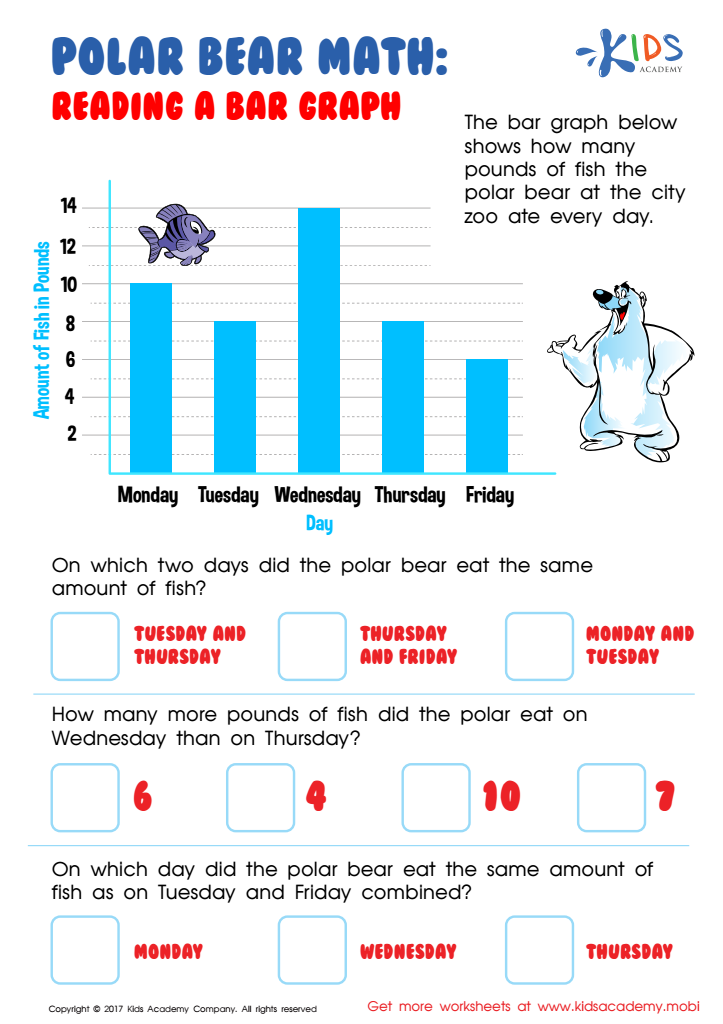
Take your child north to practice data reading with a polar bear friend! This worksheet challenges 3rd graders to interpret data on a graph and solve related math problems.
Reading Bar Graph Worksheet
Worksheet
Fruit Math: Picture Graphs Worksheet

Fruit Math: Picture Graphs Worksheet

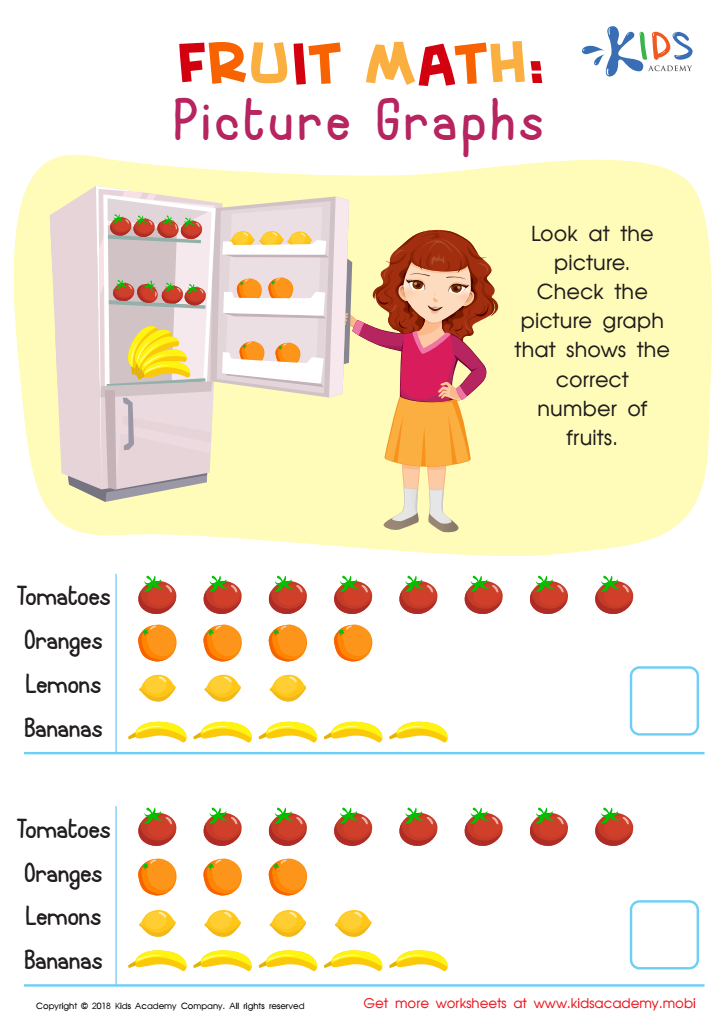
Help your child learn to draw graphs by having them look at pictures. Ask them to identify a graph that accurately portrays the data and have them explain why. This will prepare them to easily draw more complex graphs in the future. For example, have them look at the picture with the number of fruits in the colorful worksheet and explain why the graph is accurate.
Fruit Math: Picture Graphs Worksheet
Worksheet
Students Line Plot Worksheet

Students Line Plot Worksheet

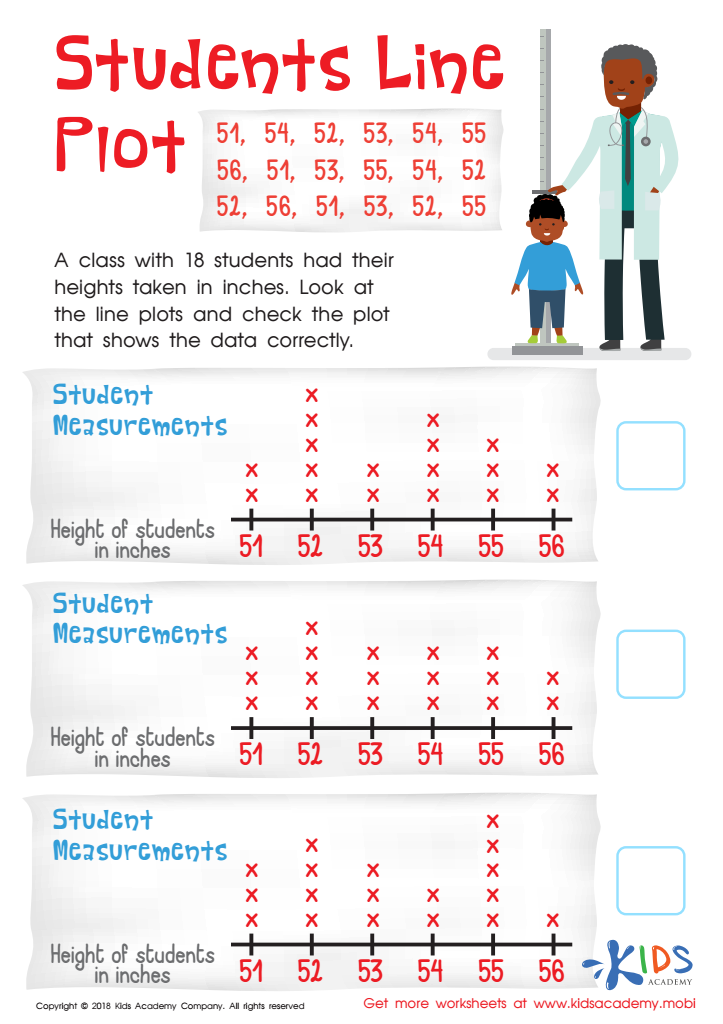
Help your students learn to draw a line plot correctly by giving real examples. In this exercise, they must check the data of a class of 18 students' heights (in inches). Have them compare two line plots and figure out which one is correct.
Students Line Plot Worksheet
Worksheet
Dog Math: Line Plots Worksheet

Dog Math: Line Plots Worksheet

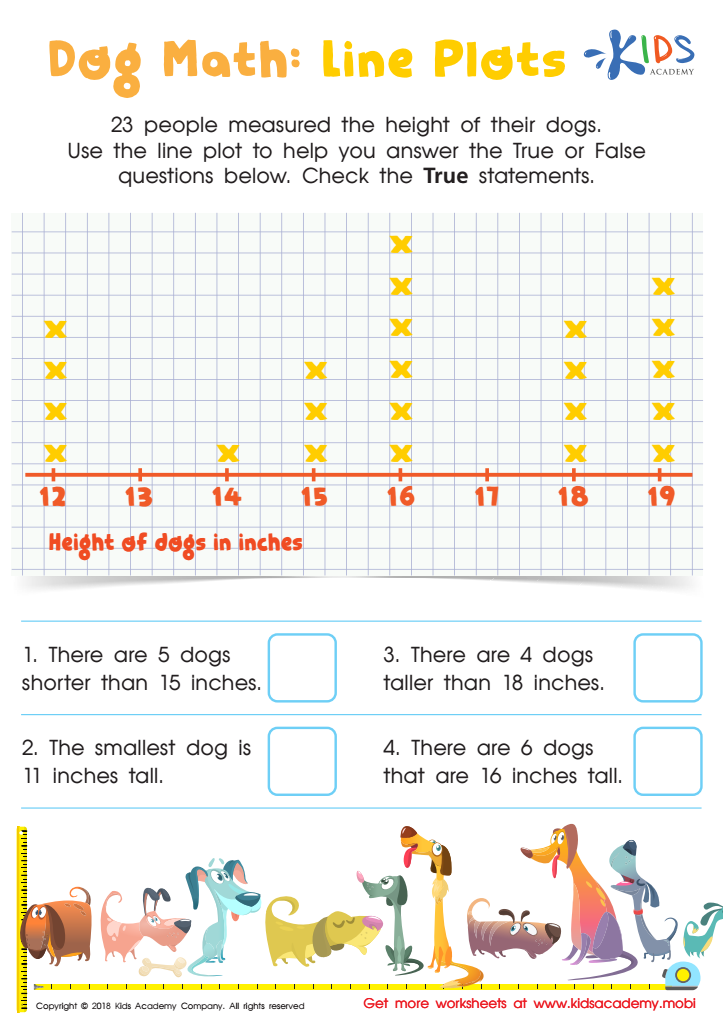
Do your kids love dogs? If you have family pets, your kids may be excited to do this worksheet. It involves a line plot and True/False questions about 23 people measuring their dogs' heights. Assist your kids in verifying the statements that are True.
Dog Math: Line Plots Worksheet
Worksheet
Coffeehouse Survey: Picture Graph Word Problems Worksheet

Coffeehouse Survey: Picture Graph Word Problems Worksheet

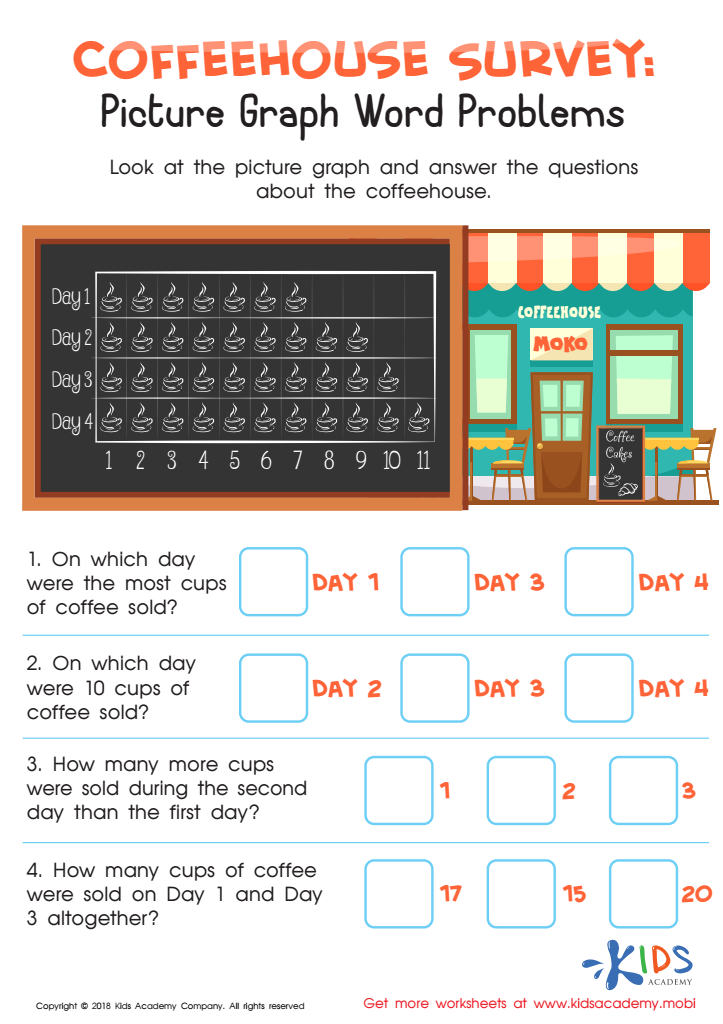
This coffeehouse survey helps children interpret pictures and answer questions. Your child will look at a picture graph displaying daily coffee cup sales from Day 1 to Day 4. Aid them in answering questions on the number of cups sold and which day had the most sales.
Coffeehouse Survey: Picture Graph Word Problems Worksheet
Worksheet
Data: Assessment 2 Worksheet

Data: Assessment 2 Worksheet

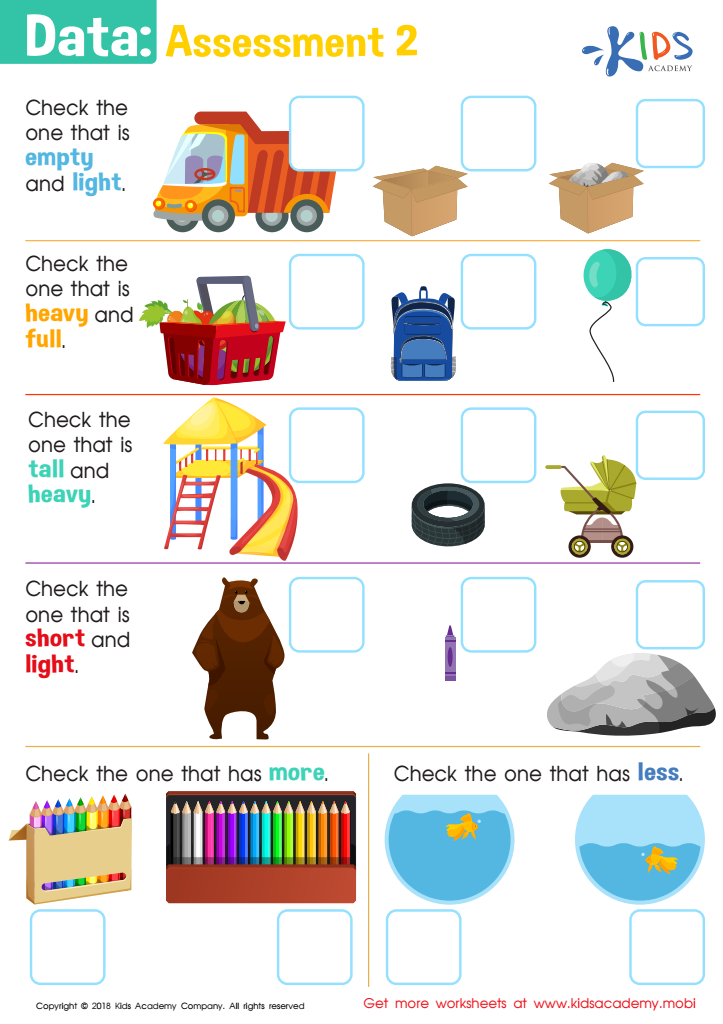
This PDF helps you assess your students' understanding of concepts like empty/light, full/heavy, tall/short, and more/less. With this worksheet, students use pictures to answer questions and check off the appropriate box. It's a fast, easy way to determine what concepts they have learned and which need more work.
Data: Assessment 2 Worksheet
Worksheet
Line plot worksheet for 2nd grade

Line Plot Worksheet

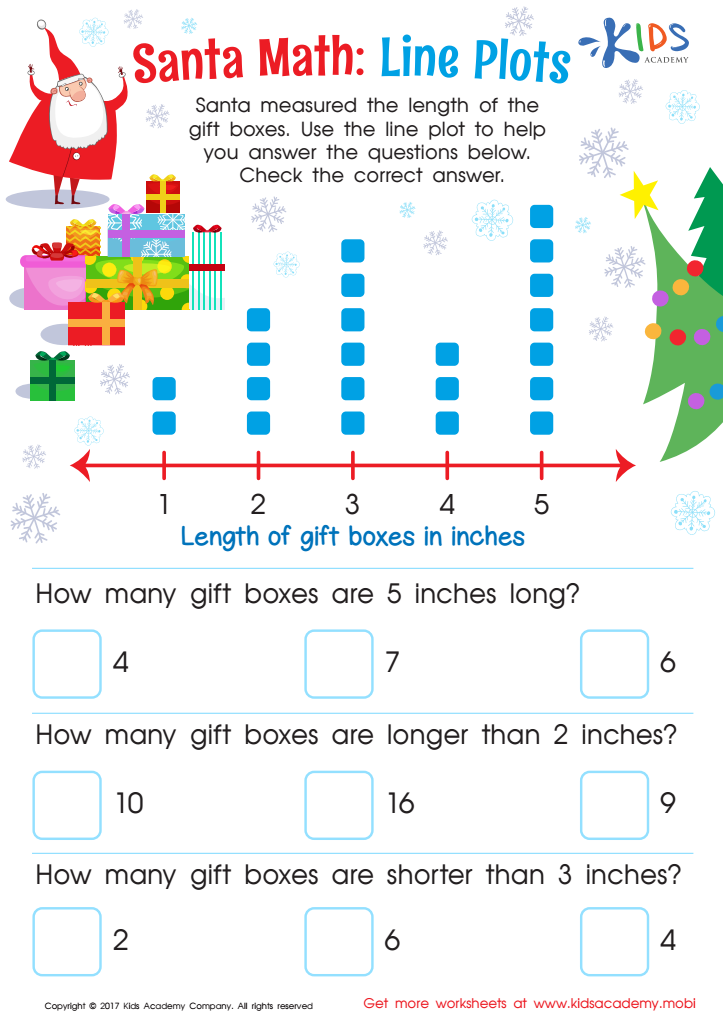
Help your child measure presents with Santa using this 2nd grade line plot worksheet! It's a fun way to boost math skills and analyze data. Plus, it's sure to delight your child!
Line Plot Worksheet
Worksheet
Pencil Math: Line Plots Worksheet

Pencil Math: Line Plots Worksheet

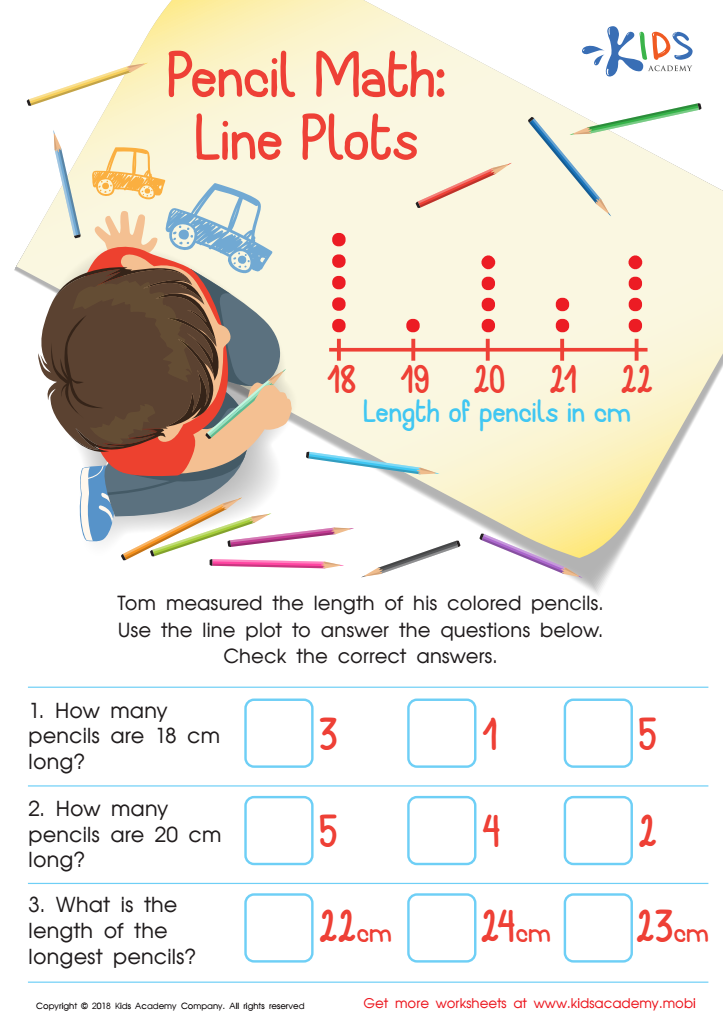
Your child will meet Tom in this worksheet, helping him find the length of his colored pencils. Tom has written the lengths in cm, and the line plot will help your kids answer the questions. Check the correct answers for each, including how many pencils are of a certain length. The line plot makes it easy to find the answers.
Pencil Math: Line Plots Worksheet
Worksheet
Pet Survey Worksheet

Pet Survey Worksheet

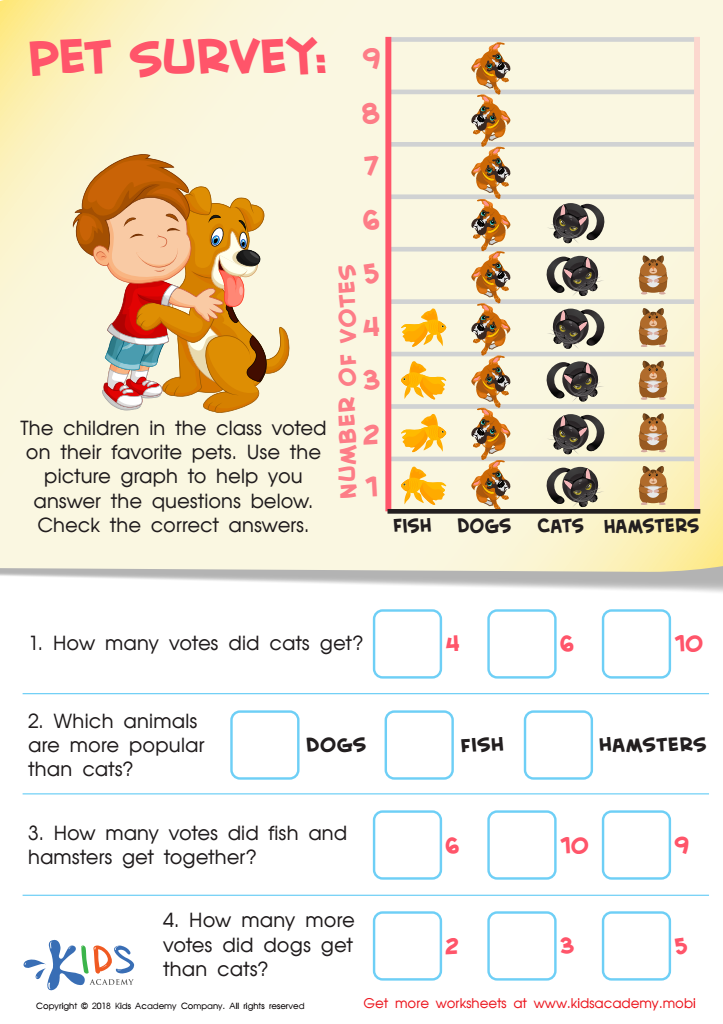
Do you have a furry family member? If the answer is yes and your kids love animals, they'll enjoy this worksheet. The picture graph shows the children's votes for their favorite pet - fish, dog, cat and hamster. Ask your child to use the graph to answer the questions. Guide them to check the right answer.
Pet Survey Worksheet
Worksheet
Farm Math: Line Plots Worksheet


Farm Math: Line Plots Worksheet

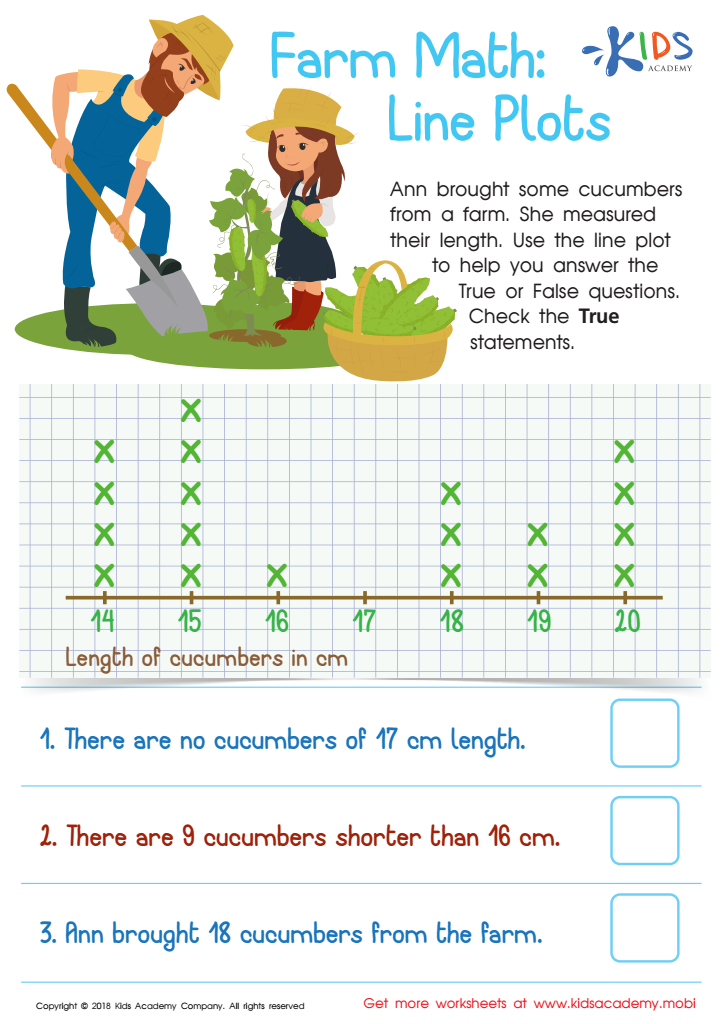
Ann brought cucumbers from a farm and measured their length. She drew a line plot for your students to use to answer True/False questions about the number and length of the cucumbers. Ask your students to check only the True statements. (80 words)
Farm Math: Line Plots Worksheet

Worksheet


Data interpretation and measurement are essential skills that underpin effective teaching and parental involvement in children's education. Understanding data allows educators and parents to make informed decisions about student learning, track progress, and identify areas needing improvement. When teachers analyze assessment data, they can tailor instructional strategies to better meet individual student needs, fostering a personalized learning environment.

For parents, being engaged with their child's academic data empowers them to support learning at home. By interpreting assessment results together, parents can help identify strengths and weaknesses, thus motivating their children and reinforcing positive behaviors. Additionally, understanding measurement concepts aids parents in supporting children’s real-world skills, such as critical thinking, problem-solving, and financial literacy that hinge on data representation.

Moreover, teaching children the importance of data interpretation develops their analytical skills crucial in the digital age, where information is abundant. Children who grasp these skills become proficient in assessing situations based on evidence, leading to better decision-making in the future.

Ultimately, fostering a collective understanding of data interpretation and measurement enhances educational outcomes, promotes lifelong learning, and nurtures responsible, informed citizens capable of navigating an information-driven world. Therefore, both parents and teachers should prioritize these skills for the growth of students.