Comparing Fractions Sorting Worksheets
3 filtered results
-
From - To
Explore our "Comparing Fractions Sorting Worksheets," designed to enhance students' understanding of fractions through engaging activities. These worksheets encourage young learners to differentiate between fractions by sorting them based on size and value. With colorful visuals and user-friendly layouts, children will enjoy practicing key math skills while developing critical thinking abilities. Ideal for classroom activities or home learning, these resources cater to various learning styles, promoting both individual and group work. By using these worksheets, students will gain confidence in comparing fractions, making math both fun and educational! Download your worksheets today and watch your little mathematicians thrive!
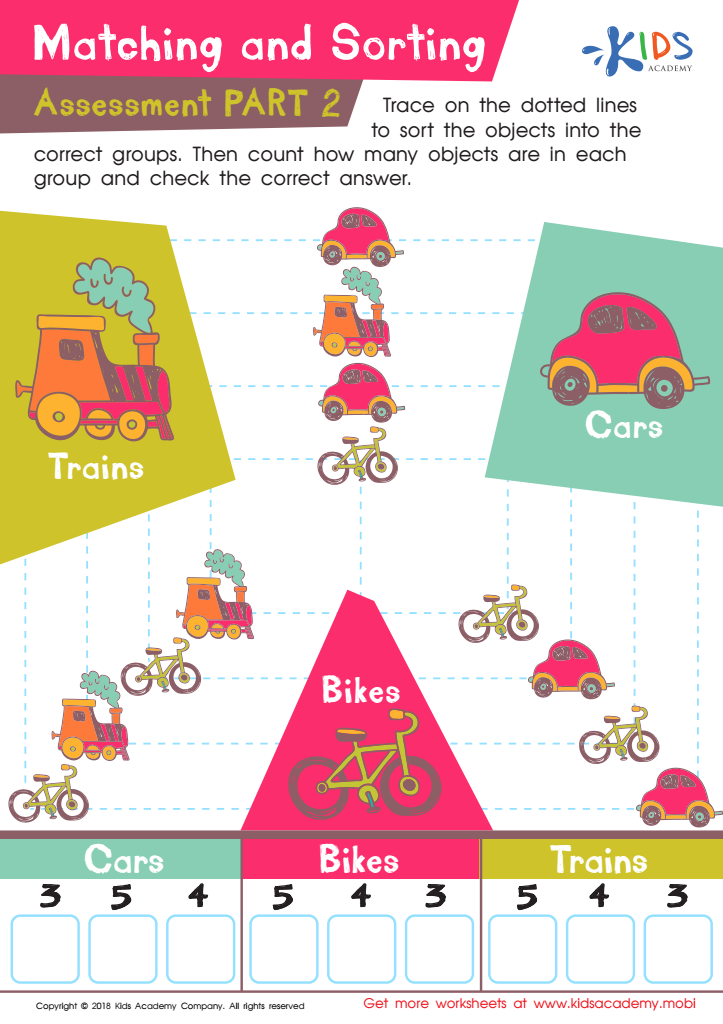
Matching and Sorting for Kindergarten: Assessment 2 Worksheet
 Assign to My Students
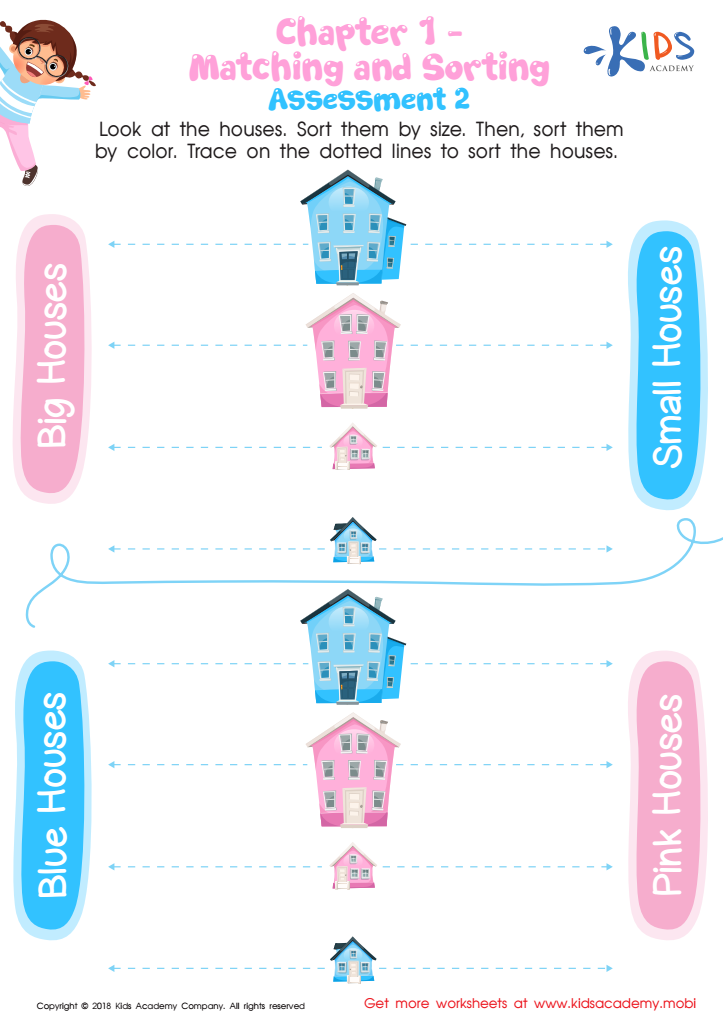
Matching and Sorting for Preschool: Assessment 2 Worksheet
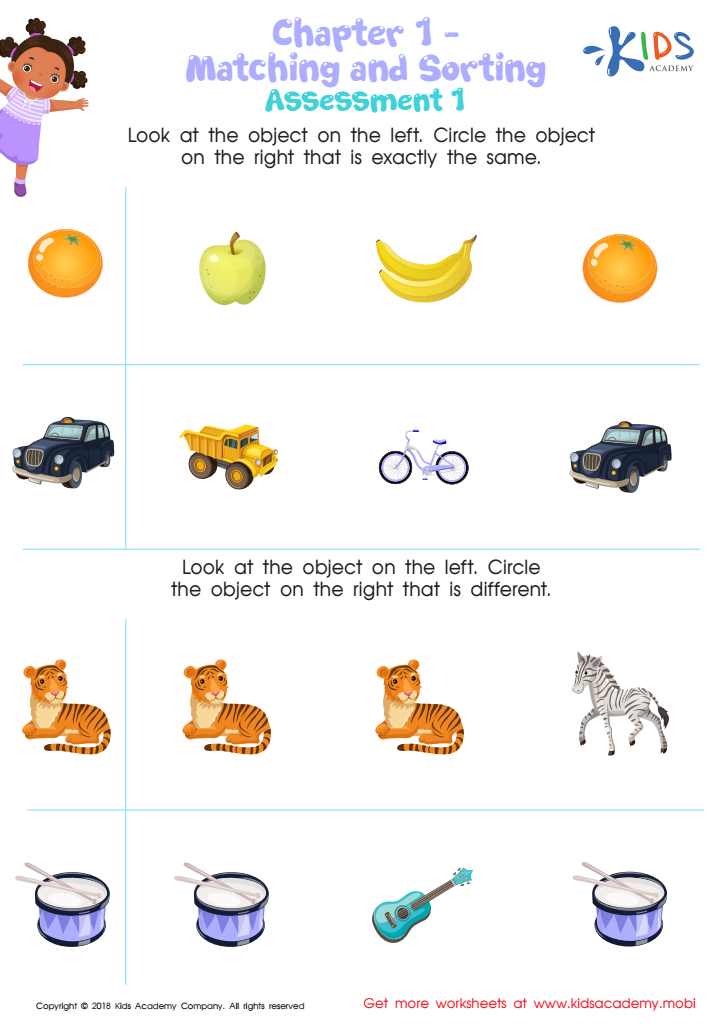
Matching and Sorting for Preschool: Assessment 1 Worksheet








Comparing fractions is a fundamental math concept that lays the groundwork for more advanced topics in mathematics. Parents and teachers should prioritize comparing fractions sorting because it enhances students' numerical fluency and critical thinking skills. Understanding how to align fractions by size is crucial for building a solid foundation in math.
When children learn to compare fractions, they develop important skills such as reasoning and problem-solving. These skills are transferable and beneficial beyond mathematics, promoting logical thinking that students can apply in various contexts. By sorting fractions, learners also practice their organizational abilities, an essential life skill.
Moreover, grasping fraction comparisons prepares students for real-life applications, such as cooking, budgeting, and measuring, where fractions are frequently encountered. It can also boost their confidence and engagement in math, fostering a positive attitude towards the subject.
Involving parents in this learning process can strengthen the home-school connection and provide a supportive environment for students. Engaging in activities like games or hands-on sorting allows families to reinforce math skills in an enjoyable way. Ultimately, prioritizing comparing fractions benefits not just mathematical abilities, but holistic development in critical thinking and problem-solving.








