
Time recognition Time Worksheets
3 filtered results
Difficulty Level
Grade
Age
-
From - To
Subject
Activity
Standards
Welcome to our Time Recognition Worksheets page! These engaging resources are designed to help early learners master the concept of time. With a variety of fun and interactive worksheets, children will practice reading clocks, understanding time increments, and distinguishing between AM and PM. Our materials cater to different learning styles, ensuring that every child develops a solid foundation in time-telling skills. Perfect for classroom use or home practice, these worksheets help enhance your child's math abilities while making learning enjoyable. Explore our collection today to support your child's journey in recognizing and understanding time!
Favorites
With answer key
Interactive
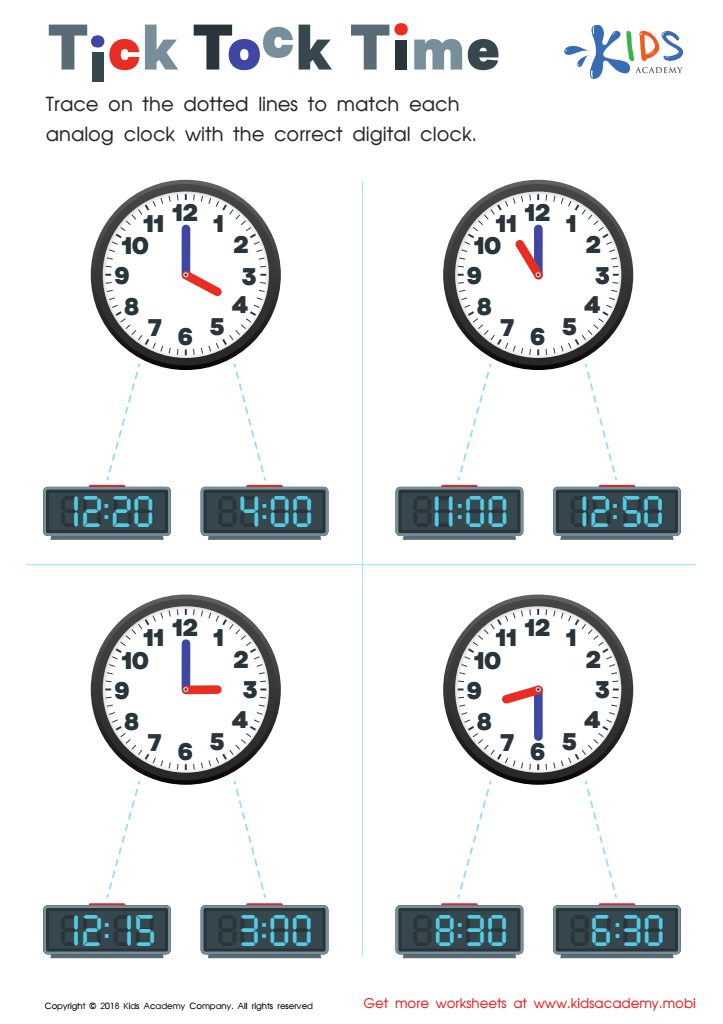
Tick Tock Time Worksheet
Trace the dotted lines on this worksheet to match analog and digital clocks! It's a great way to help your kids learn time-telling. They'll get better at converting analog to digital, and vice versa. Get your children to try it - it's a fun way to practice!
 Assign to My Students
Tick Tock Time Worksheet
Worksheet
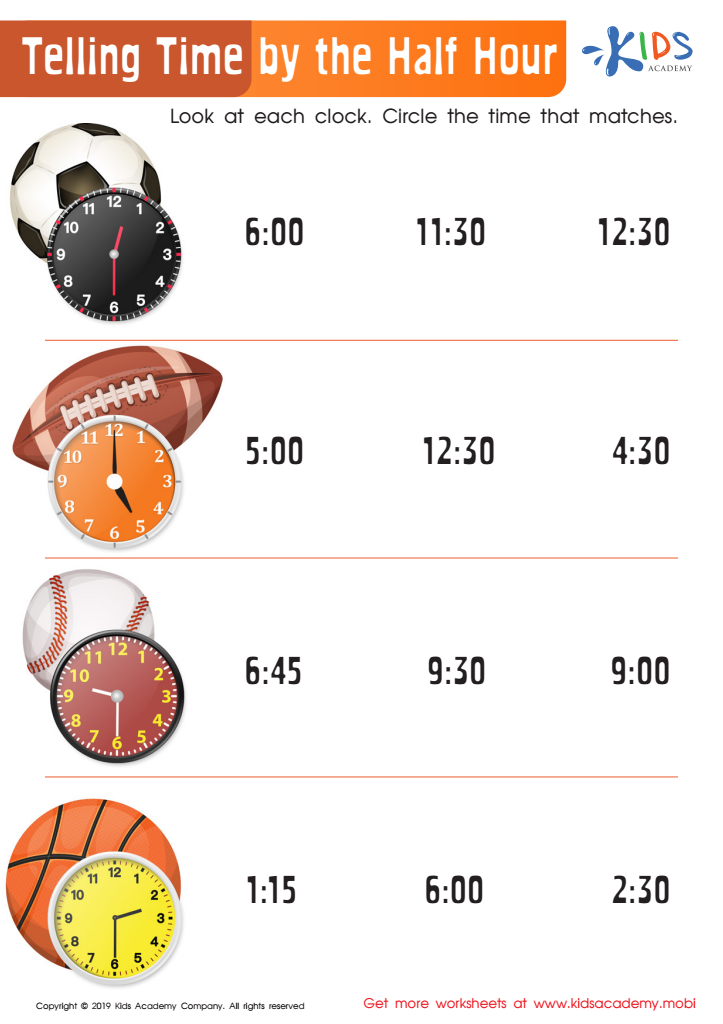
Telling Time by the Half Hour Worksheet
Teach kids to tell time with this worksheet! Four clocks are labeled with different times; help your child circle the right one. It's a great way to teach them to read analog and digital clocks, watches, and written times. Easy and fun learning!
Telling Time by the Half Hour Worksheet
Worksheet
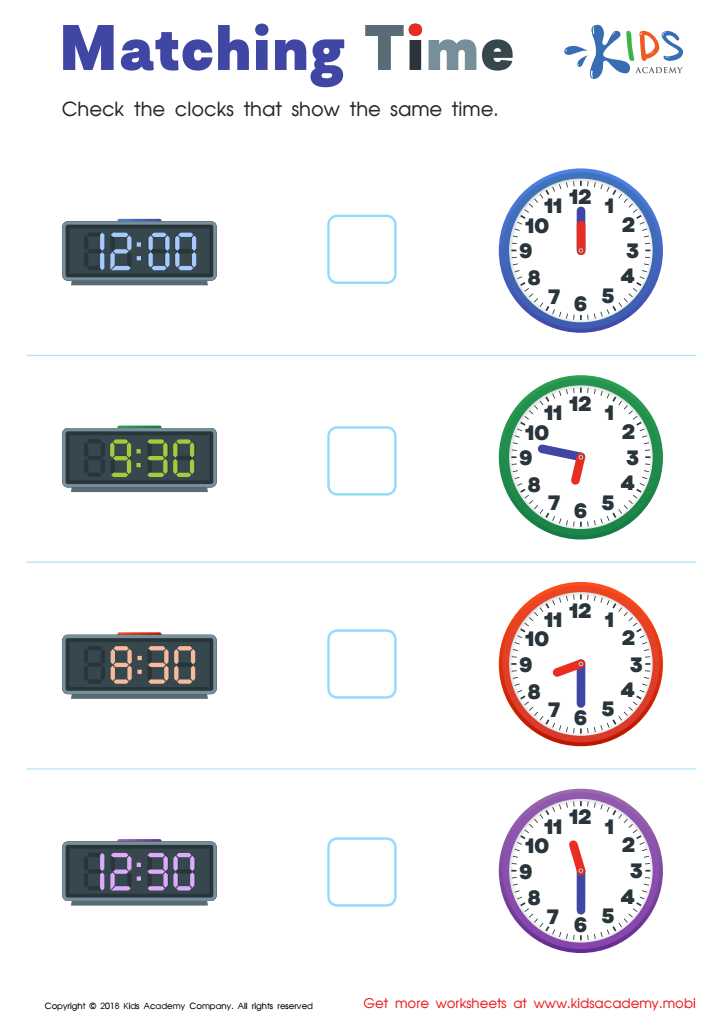
Matching Time Worksheet
Teach your child to read time in both digital and analog formats with this helpful printout. They'll identify clocks that match in both formats and check them off. Colorful and engaging, it's a great way to help your child understand the concept of time-telling.
Matching Time Worksheet
Worksheet
Join Kids Academy for Free
Who is primarily going to use this learning content?








Time recognition is a fundamental skill that plays a vital role in children's overall development and everyday functioning. As early grade teachers and parents, understanding the importance of time recognition can significantly impact a child's learning and life skills. Firstly, timely habits structure a child’s daily routine, boosting their independence and self-discipline. Knowing how to tell time helps children manage their schedules, plan activities, and transition smoothly between tasks—skills essential for academic success.
Moreover, time recognition fosters essential cognitive skills, such as numeracy and critical thinking. It encourages children to understand sequences and patterns, laying groundwork for more complex mathematical concepts. Understanding the passage of time also enhances their awareness of the world around them—aligning schedules with seasons, days, and historical events.
Furthermore, developing time recognition skills reduces anxiety in children, as they gain a sense of control over their environment and expectations. Importantly, teaching time introduces numerous opportunities for interactive learning through games, songs, and real-life applications, creating lifelong memories. By prioritizing time recognition, parents and teachers nurture essential life skills that extend beyond academics, preparing children for a successful and autonomous future.








