Lowercase identification Normal Alphabet Worksheets for Ages 3-4
4 filtered results
-
From - To
Introduce your child to the world of letters with our Lowercase Identification Normal Alphabet Worksheets, designed specifically for ages 3-4! These engaging worksheets help young learners recognize and identify lowercase letters through fun activities and colorful illustrations. Children will develop essential foundational skills while enhancing their literacy and writing abilities. Perfect for preschoolers, our worksheets promote interactive learning and are ideal for both classroom and home settings. Crafted with age-appropriate content, these resources encourage creativity and confidence as children embark on their reading journey. Download today to ignite your child's love for learning in a playful and supportive environment!
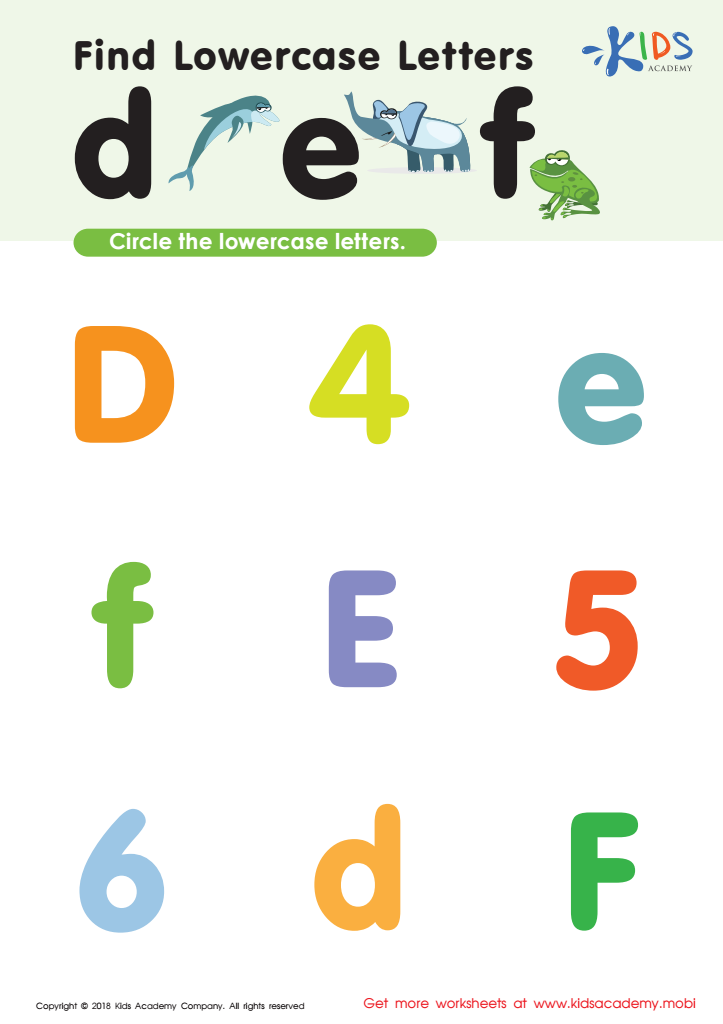
Find Lowercase Letters d e f Worksheet
 Assign to My Students
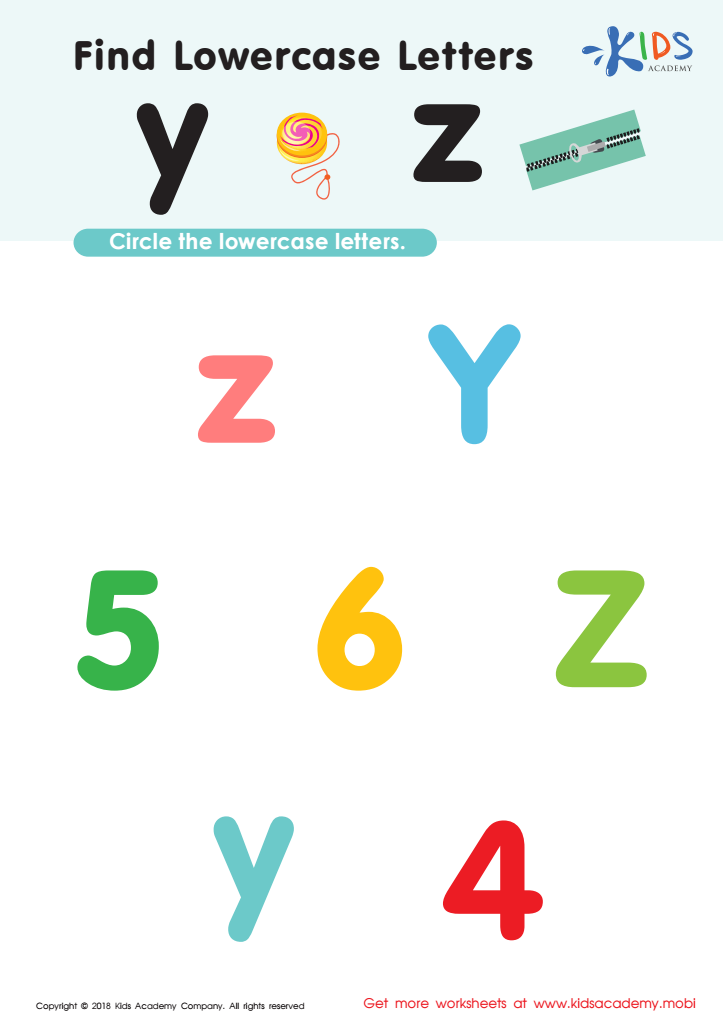
Find Lowercase Letters y z Worksheet

Find lowercase letters a b c Worksheet

Find Lowercase Letters v w x Worksheet







Lowercase letter identification is a crucial developmental milestone for children ages 3-4. It lays the foundation for literacy skills that are vital as they transition into more formal education. Understanding and recognizing lowercase letters supports phonemic awareness, which is the ability to hear, identify, and manipulate sounds in spoken words. This skill is essential for early reading and spelling.
At this age, children are naturally curious and absorb information quickly. Familiarity with lowercase letters helps them make connections between spoken and written language, enhancing their vocabulary and reading comprehension. It also builds their confidence, making them more eager to engage in reading and writing activities.
Moreover, lowercase letters are prevalent in written text, from storybooks to labels in schools. Children’s experiences, including reading with parents or teachers, spark interest and communication. Moreover, recognizing these letters supports early writing skills, as children begin to form words and express their thoughts through writing.
Ultimately, fostering lowercase letter identification encourages a love for reading and learning, setting the stage for academic success. By prioritizing this aspect of literacy development, parents and teachers can significantly impact a child's educational journey and overall cognitive growth.







