Basic geometry understanding Normal Worksheets for Ages 3-4
3 filtered results
-
From - To
Welcome to our "Basic Geometry Understanding Worksheets" designed specifically for children ages 3-4! These engaging worksheets introduce young learners to fundamental shapes and spatial relationships in a fun and interactive way. Featuring colorful illustrations and charming characters, each activity encourages creativity while enhancing essential skills in shape recognition, sorting, and matching. Ideal for preschool classrooms or home learning, our worksheets help foster a love for math early on. With child-friendly layouts and easy-to-follow instructions, your little one will develop their geometric vocabulary and cognitive skills effortlessly. Start their educational journey today with our delightful and educational worksheets!
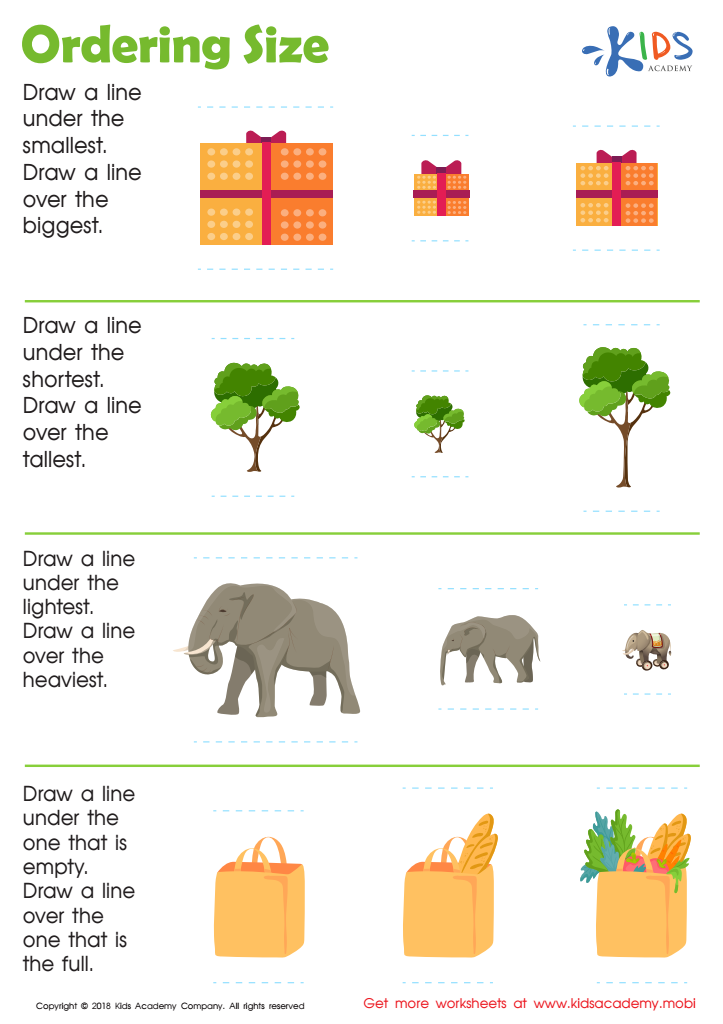
Ordering Size Worksheet
 Assign to My Students
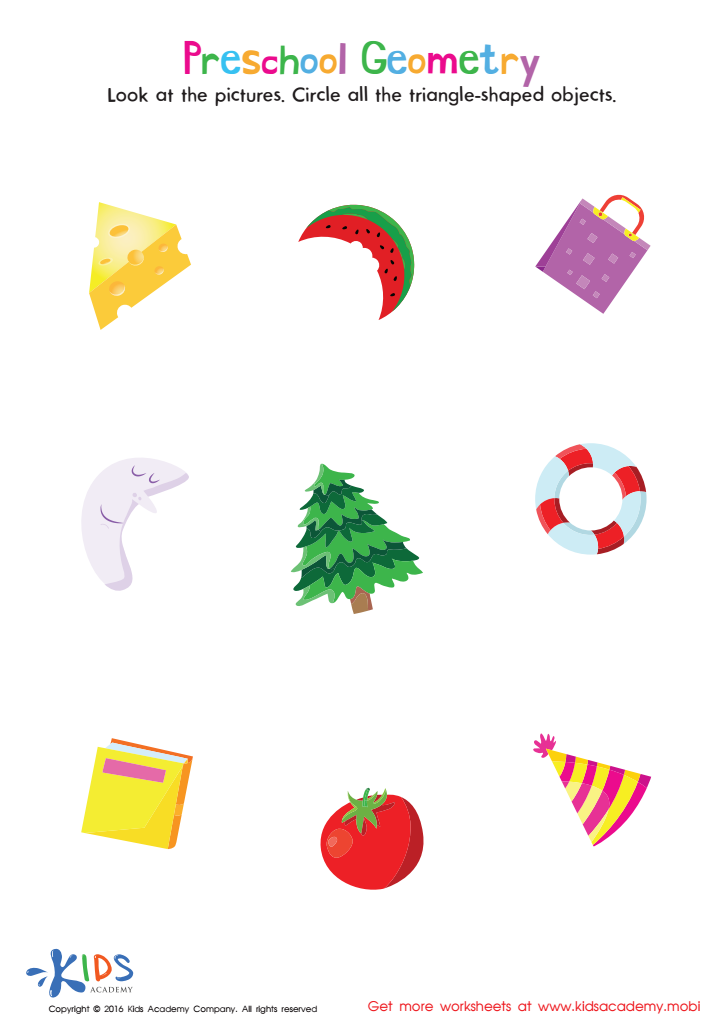
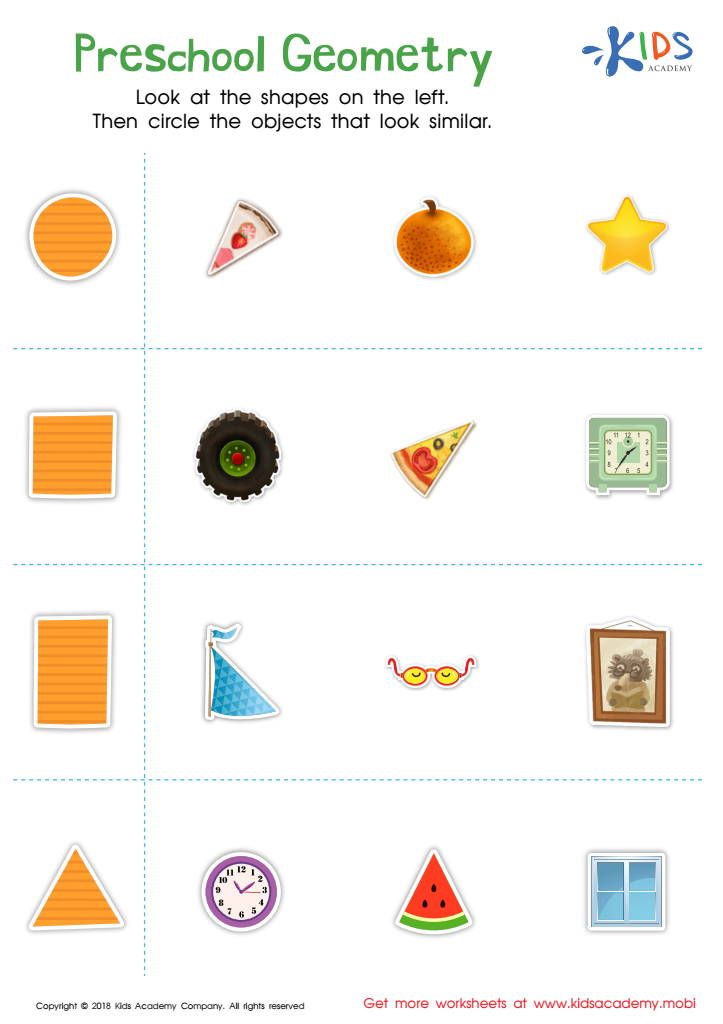
Preschool Geometry Worksheet







Understanding basic geometry is essential for young children aged 3-4 as it lays the foundation for later math skills and cognitive development. At this age, children begin to explore shapes, patterns, and spatial relationships, which are crucial for their growth in various areas.
Firstly, geometry encourages critical thinking and problem-solving skills. By recognizing and categorizing shapes like circles, squares, and triangles, children strengthen their ability to analyze and differentiate between objects, which is a fundamental cognitive skill. Secondly, learning about spatial relationships helps children understand their environment better, promoting practical skills such as navigation and organization.
Additionally, geometry connects to language development. As children describe shapes and their attributes, they expand their vocabulary and enhance their communication skills. Activities involving shapes also promote fine motor skills as children learn to manipulate objects, trace shapes, or engage in hands-on crafts.
Ultimately, fostering an understanding of basic geometry at an early age can instill a love for learning in children. Parents and teachers play a vital role in integrating geometric concepts through play and everyday observations, making math relatable and enjoyable while ensuring children are well-prepared for future academic challenges.








