
Rhyming skills development Normal Worksheets for Ages 3-4
3 filtered results
Difficulty Level
Grade
Age
-
From - To
Subject
Activity
Standards
Our "Rhyming Skills Development Normal Worksheets for Ages 3-4" are designed to nurture early literacy skills in young learners. These engaging worksheets offer a captivating blend of fun activities that help children recognize and produce rhyming words, a crucial step in phonemic awareness. Each worksheet is crafted to spark imagination and curiosity, making learning enjoyable and effective. Suitable for preschoolers, these resources support foundational language skills, preparing them for reading success. Discover a delightful way to enhance your child's rhyming abilities and boost their confidence through interactive, thoughtfully designed activities. Make learning rhymes an adventure with our expertly crafted worksheets!
Favorites
With answer key
Interactive
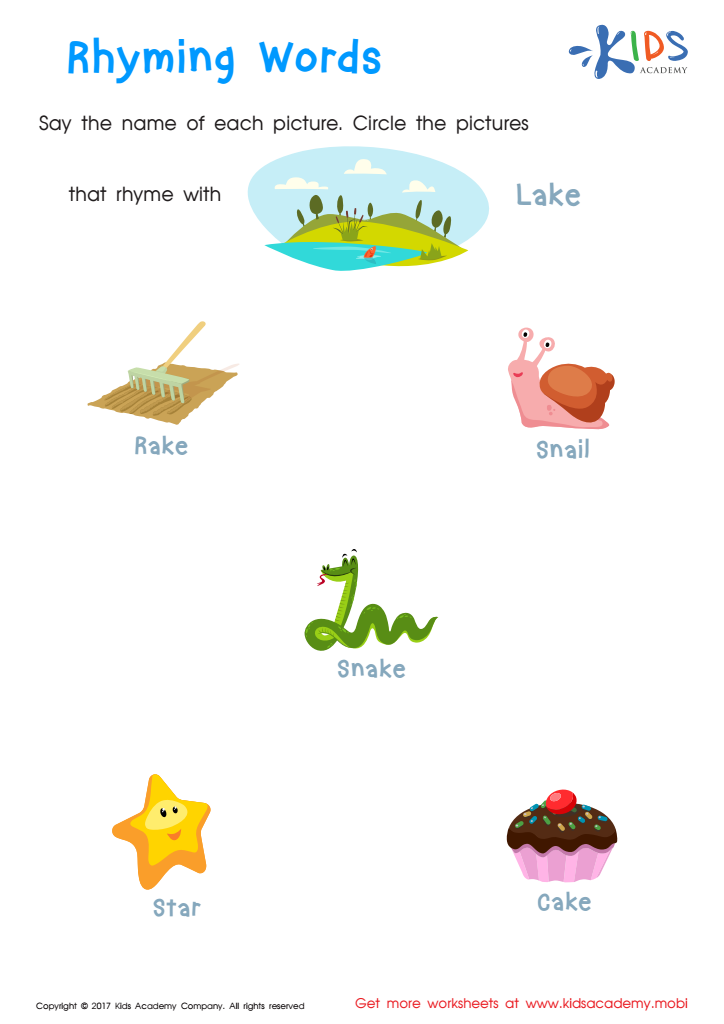
Rhyming Words Rhyming Worksheet
This worksheet is great for honing pre-reading skills. It helps kids make connections between pictures and written words, use problem-solving, and recognize sounds and words that rhyme. Have fun exploring rhyming words with your child, and they'll be rhyming in no time!
 Assign to My Students
Rhyming Words Rhyming Worksheet
Worksheet
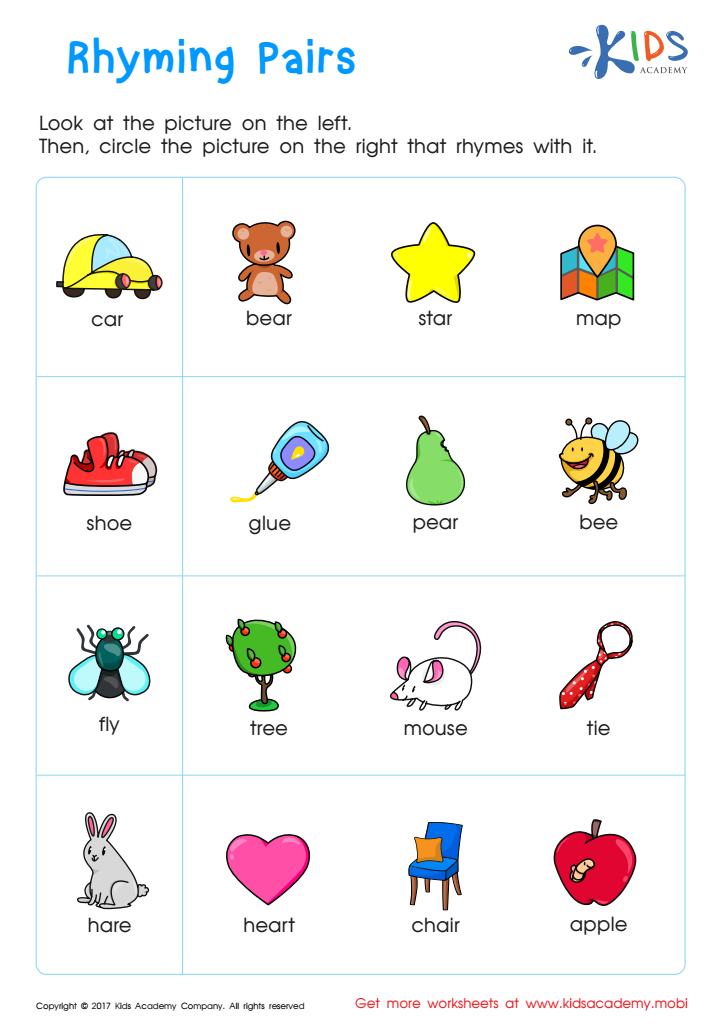
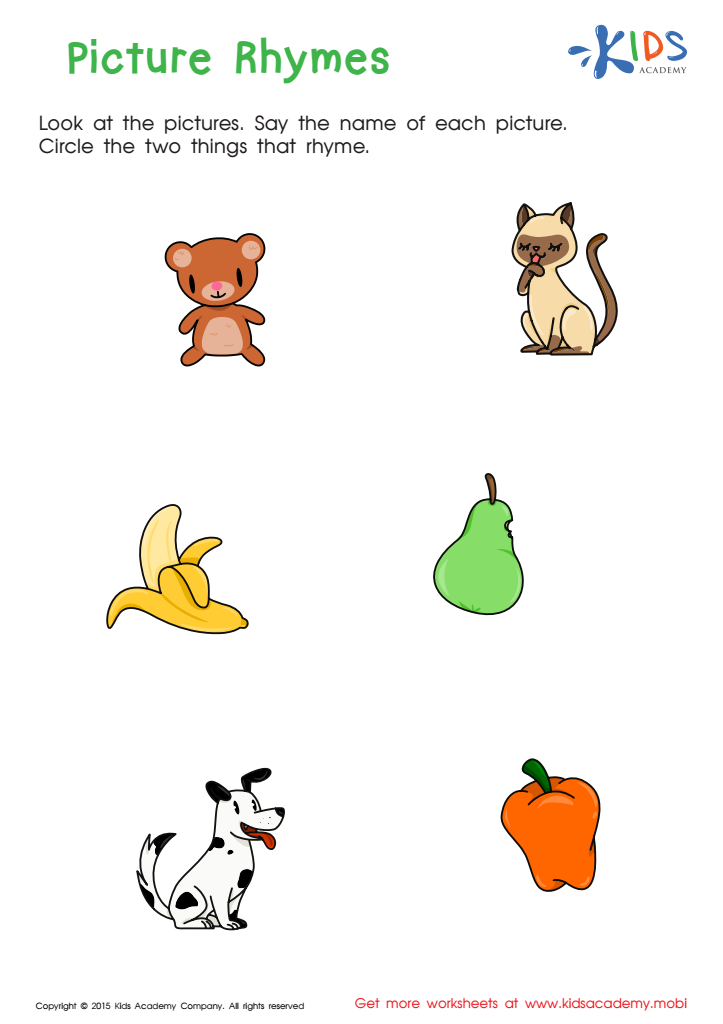
First Words: Picture Rhymes Worksheet
Rhyming helps kids understand language, read and write better. This printable worksheet boosts problem-solving and cognitive skills with vibrant pictures. It teaches kids to identify words, recognize rhymes, complete mental tasks and write words. An extra activity: show them how rhyming words share some of the same letters.
First Words: Picture Rhymes Worksheet
Worksheet
Join Kids Academy for Free
Who is primarily going to use this learning content?








Rhyming skills are foundational for early literacy development, and parents or teachers should prioritize them for children aged 3-4 for several key reasons. Firstly, rhyming helps in phonemic awareness, the recognition and manipulation of sounds within words, a vital skill for learning to read. When children engage in rhyming activities, they start to notice sound patterns, which enhances their ability to decode words, facilitating smoother, more confident reading later on.
Moreover, rhyming promotes memory and recall. Children enjoy rhythmic and repetitive structures, which makes it easier for them to remember and retrieve information. This enjoyment and familiarity enrich their vocabulary and language structures. Additionally, it supports cognitive connections between sounds and meanings, which benefits overall language development.
Socially and emotionally, rhyming read aloud sessions or songs create bonding moments between parents or teachers and children. This positive reinforcement encourages a love for language, reading, and learning in general.
In essence, fostering rhyming skills not only underpins critical early literacy for ages 3-4 but also strengthens memory, language development, and emotional bonding, setting the stage for lifelong learning success. Parents and teachers who emphasize rhyming significantly contribute to a child's joyful, cognitive, and social growth.








