Syllable identification Normal Worksheets for Ages 3-4
3 filtered results
-
From - To
Introduce young learners to the world of phonetics with our Syllable Identification Normal Worksheets designed specifically for ages 3-4. These engaging and educational worksheets help children develop essential pre-reading skills by focusing on syllable identification. Bright colors and fun illustrations make learning exciting, while simple exercises keep them motivated. Perfect for both classroom and at-home learning, these printable resources foster early language development, improve auditory discrimination, and enhance your child's ability to break words into syllables. Build a strong foundational skill set that paves the way for successful reading and language proficiency with our expertly crafted worksheets.
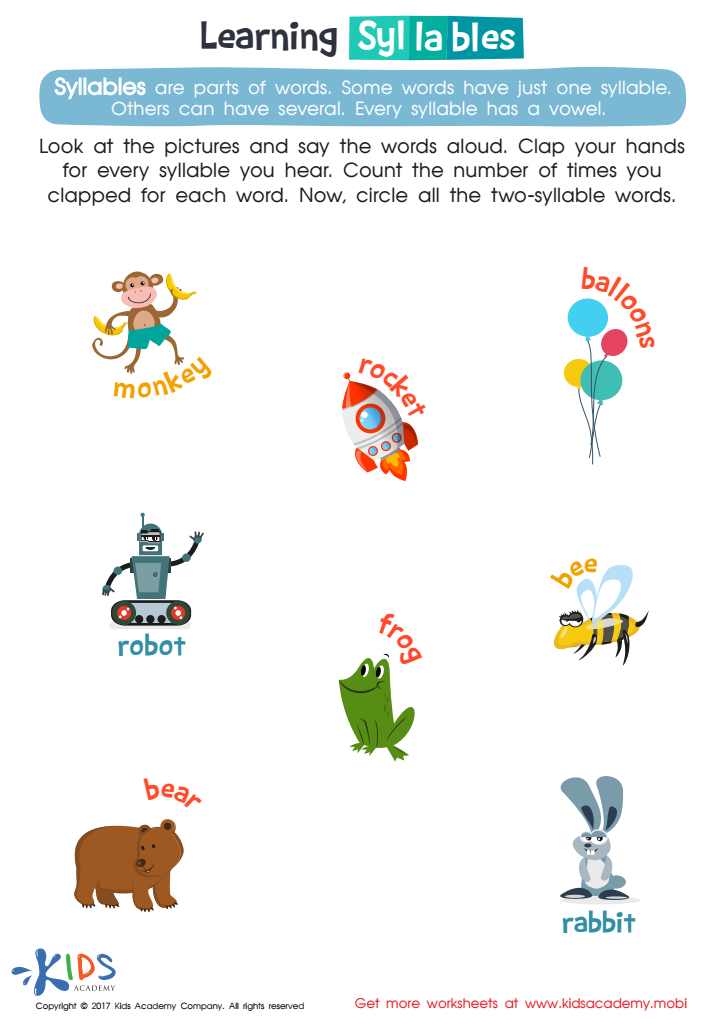
Learning Syllables Word Structure Worksheet
 Assign to My Students
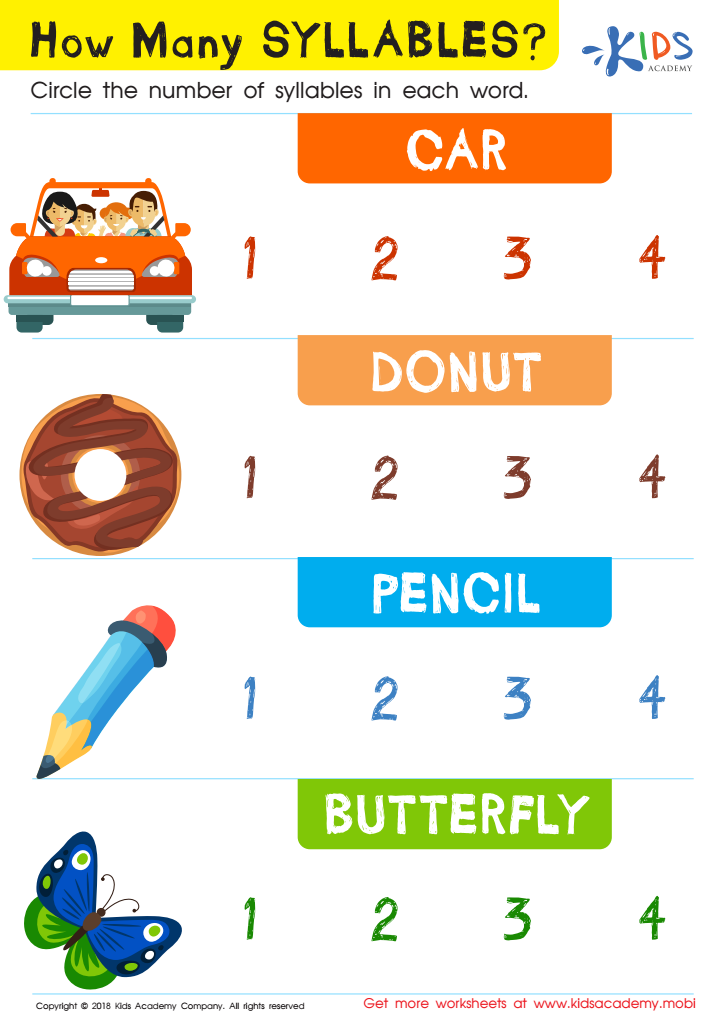
How Many Syllables? Worksheet
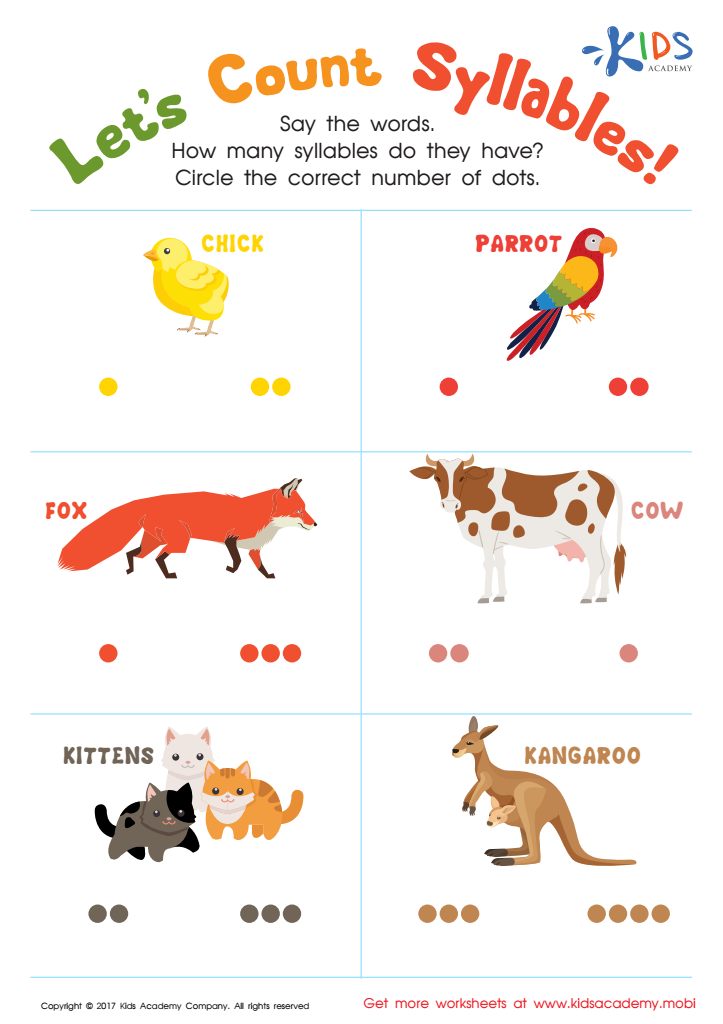
Lets Count Syllables Worksheet








Syllable identification is foundational for young children, particularly ages 3-4, as it is a crucial stepping stone in language development and early literacy. At this age, children are rapidly acquiring language skills, and recognizing syllables helps them understand the rhythmic and melodic aspects of speech. Syllable identification involves breaking words into smaller, more manageable parts, which makes it easier for children to learn new vocabulary and develop phonological awareness—the ability to recognize and work with sounds in spoken language.
By caring about syllable identification, parents and teachers can support a child's ability to segment words into syllables, a skill directly linked to their future reading success. For instance, being able to break down a word like “butterfly” into “but-ter-fly” helps children understand that words are made up of smaller sound units. This awareness boosts their proficiency in matching sounds to letters during early reading and writing activities.
Furthermore, engaging activities like clapping out syllables in words can make learning interactive and fun, fostering a positive attitude toward education. The importance of focusing on syllable identification today sets the groundwork for children’s academic achievements and gives them the tools they need for effective communication, thereby forming a solid foundation for successful literacy acquisition.








