Understanding habitats Normal Worksheets for Ages 3-4
4 filtered results
-
From - To
Explore our "Understanding Habitats Normal Worksheets" designed for children aged 3-4! These engaging worksheets introduce young learners to various ecosystems, enabling them to recognize different habitats and the animals that inhabit them. With fun, age-appropriate activities, kids will enhance their observation skills while developing a love for nature. Each worksheet encourages creativity and critical thinking, making learning about habitats both educational and enjoyable. Perfect for preschool classrooms or at-home learning, these resources support early childhood development by integrating essential ecological concepts. Start your child's adventure into the diverse world of habitats today with these delightful and interactive worksheets!
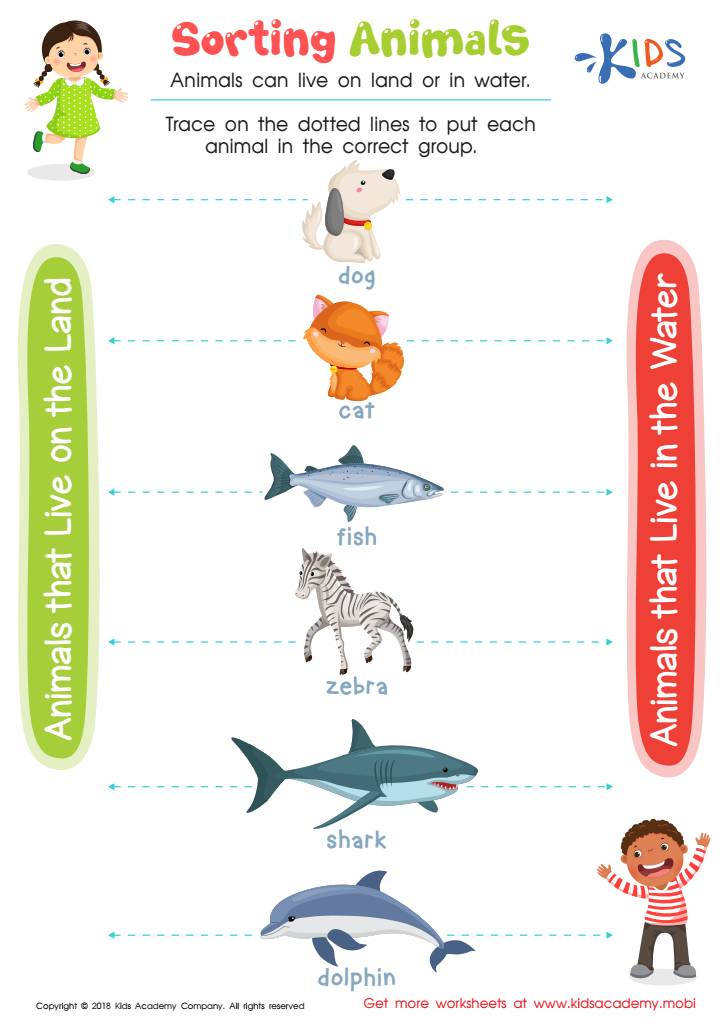
Sorting Animals Worksheet
 Assign to My Students
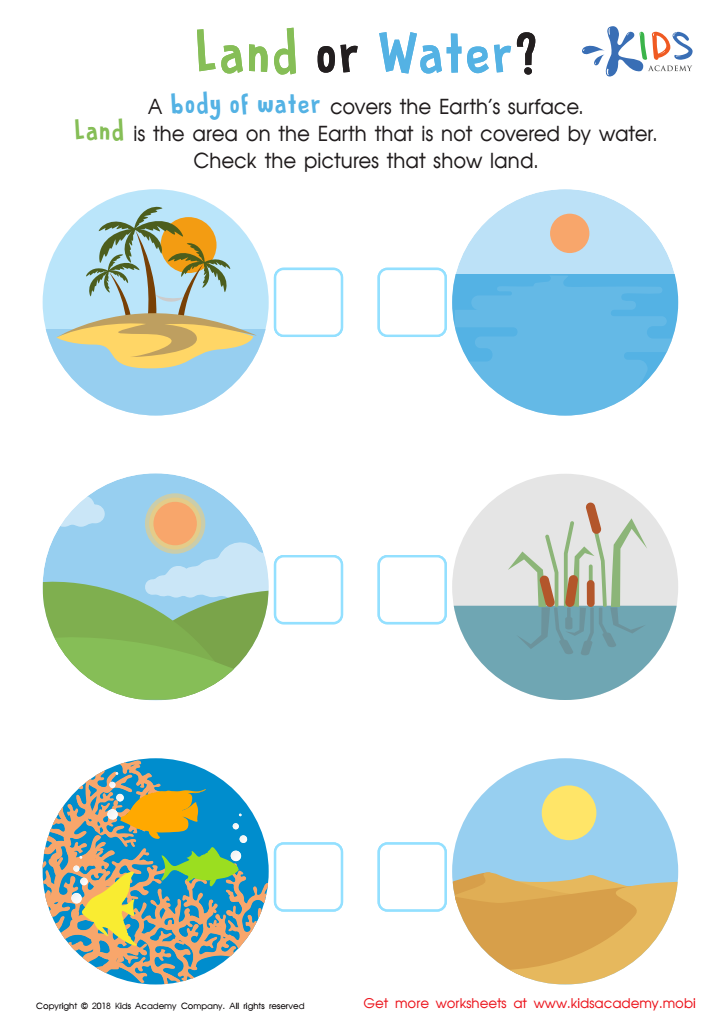
Land or Water Worksheet
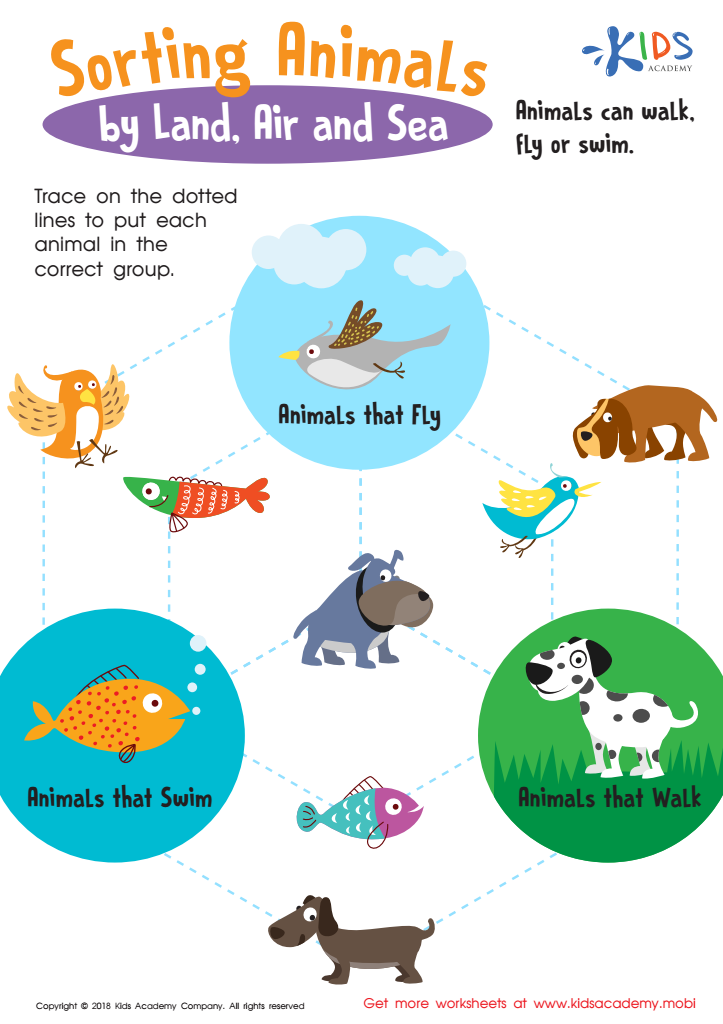
Sorting Animals by Land, Air and Sea Worksheet
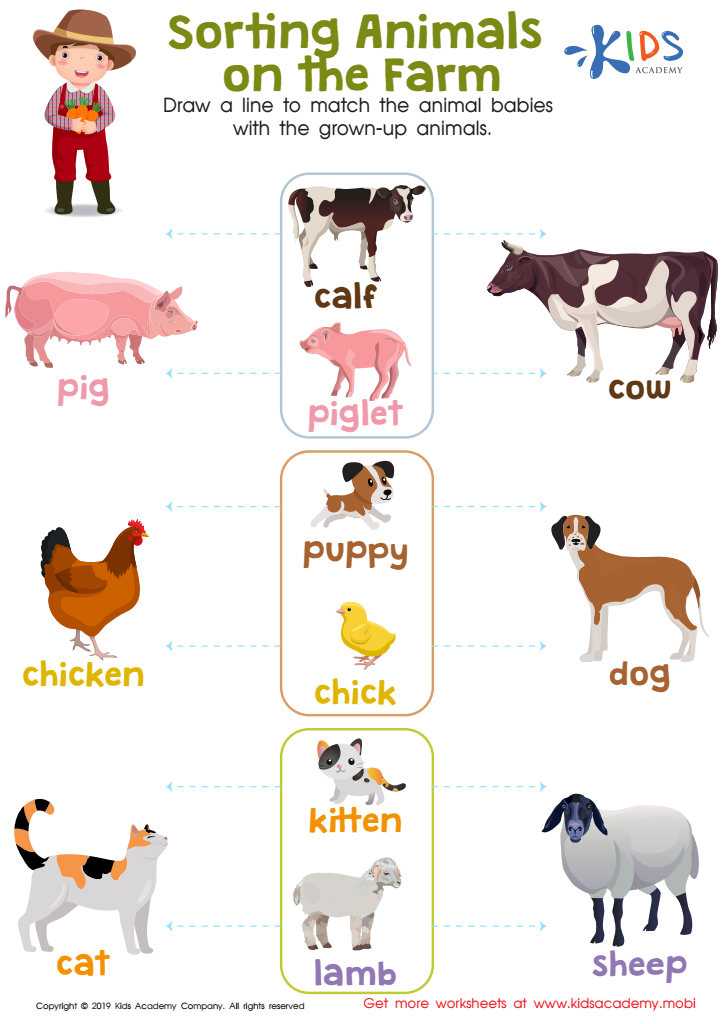
Sorting Animals on the Farm Worksheet







Understanding habitats is crucial for children aged 3-4 as it lays the foundation for their appreciation of the environment. At this age, children are naturally curious about the world around them. By learning about different habitats, such as forests, oceans, and deserts, they begin to grasp the diversity of life and the interconnectedness of living things.
Parents and teachers play a vital role in fostering this understanding. Engaging kids in discussions about where various animals and plants live encourages them to explore their surroundings. Simple activities, such as nature walks or storytelling, can spark interest and make learning fun.
Moreover, understanding habitats instills a sense of responsibility toward nature. When children learn about the importance of each habitat and its ecosystems, they become aware of the need to protect them. This early knowledge can cultivate future generations of environmentally conscious individuals, ensuring the preservation of our planet.
Additionally, integrating habitat studies into daily activities enhances cognitive skills and language development. This rich, interactive learning environment promotes curiosity, critical thinking, and respect for all living beings, shaping compassionate and informed individuals. Thus, the effort to teach about habitats is invaluable for holistic child development.








