Understanding prepositions Normal Worksheets for Ages 3-4
5 filtered results
-
From - To
Introduce your little learners to the world of prepositions with our "Understanding Prepositions Normal Worksheets for Ages 3-4." These engaging and age-appropriate worksheets are designed to help young children grasp the basics of prepositions through fun and interactive activities. Each worksheet combines colorful illustrations with simple exercises, ensuring children not only learn the concept but retain it through hands-on practice. Ideal for both classroom and at-home learning, these resources support early language development and spatial awareness. Foster your child's understanding of placement words and set the foundation for advanced grammar skills with these thoughtfully crafted worksheets.
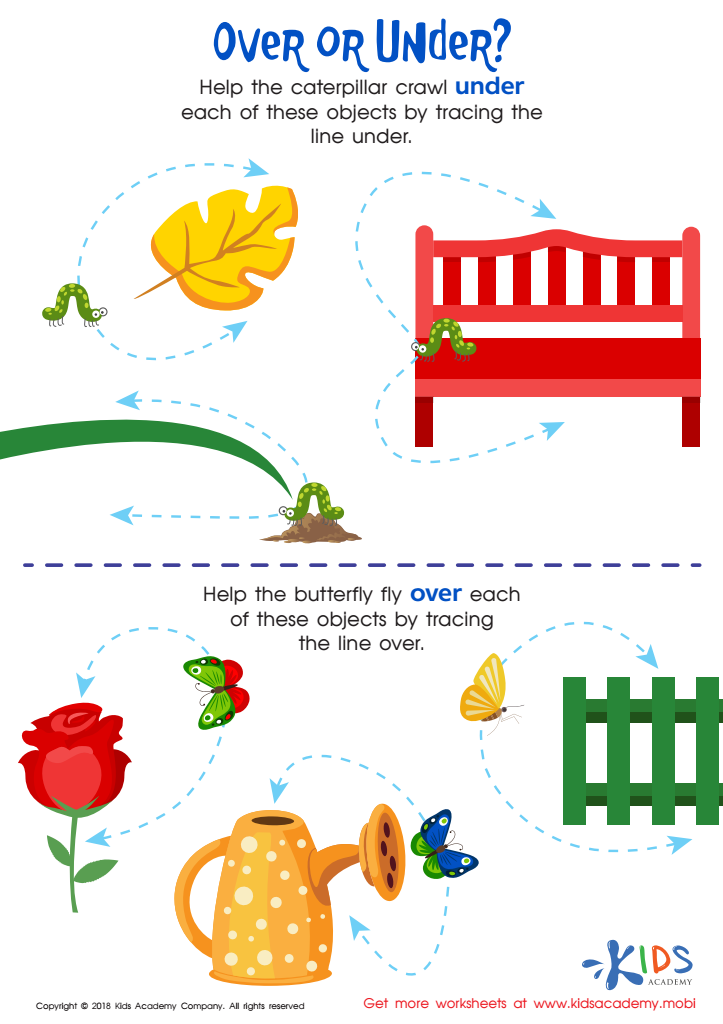
Over or Under? Worksheet
 Assign to My Students
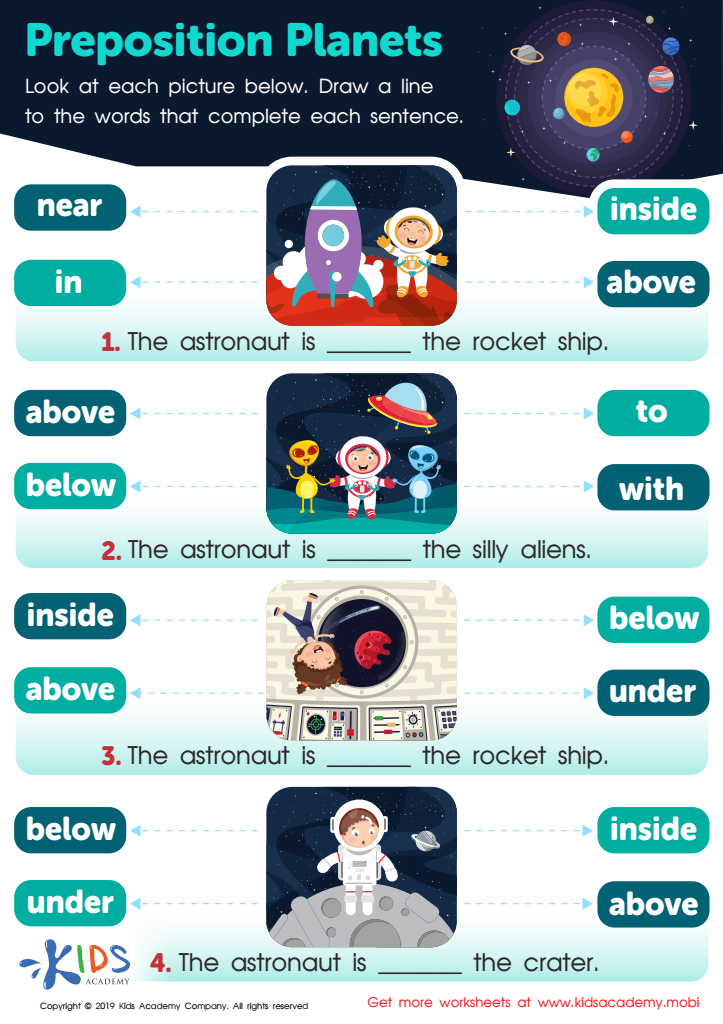
Preposition Planets Worksheet
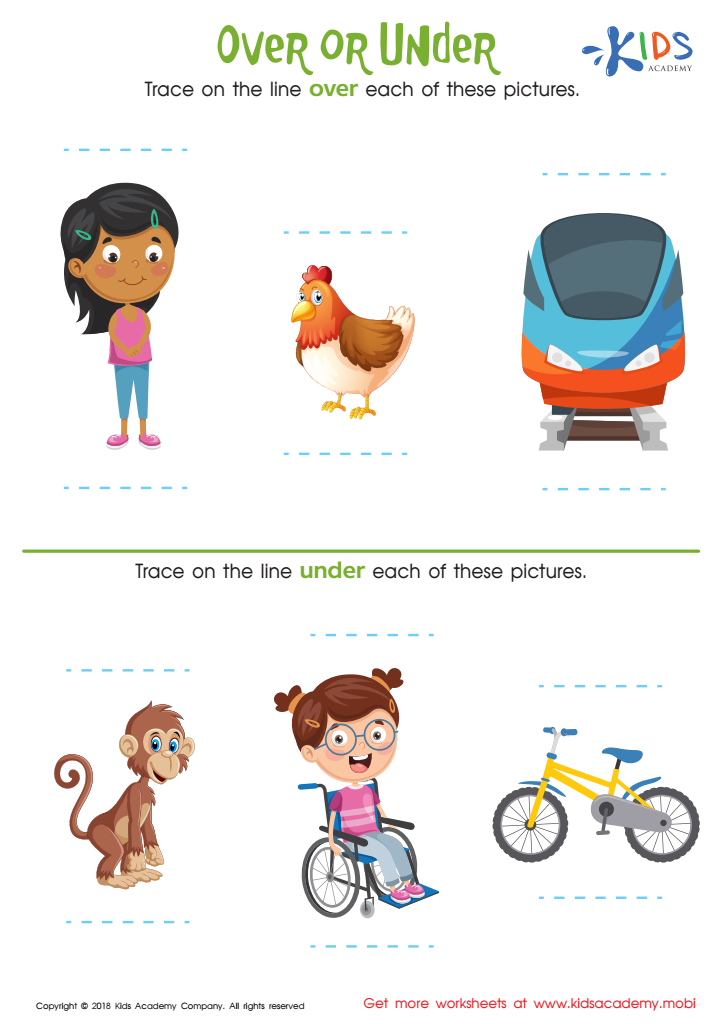
Over or Under Worksheet
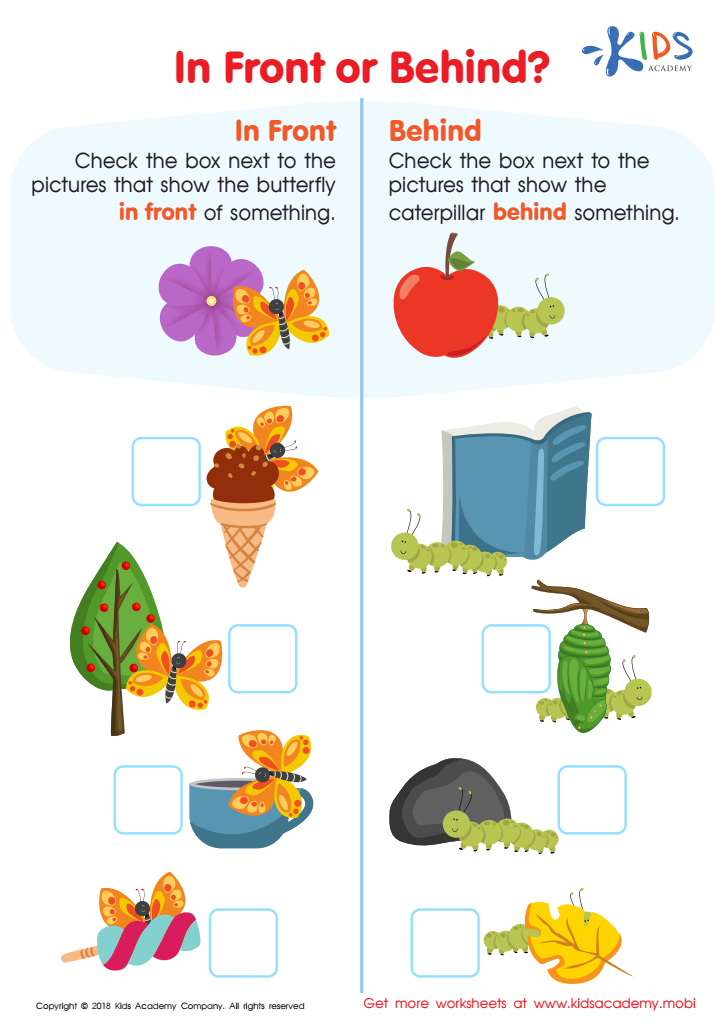
In Front or Behind Worksheet
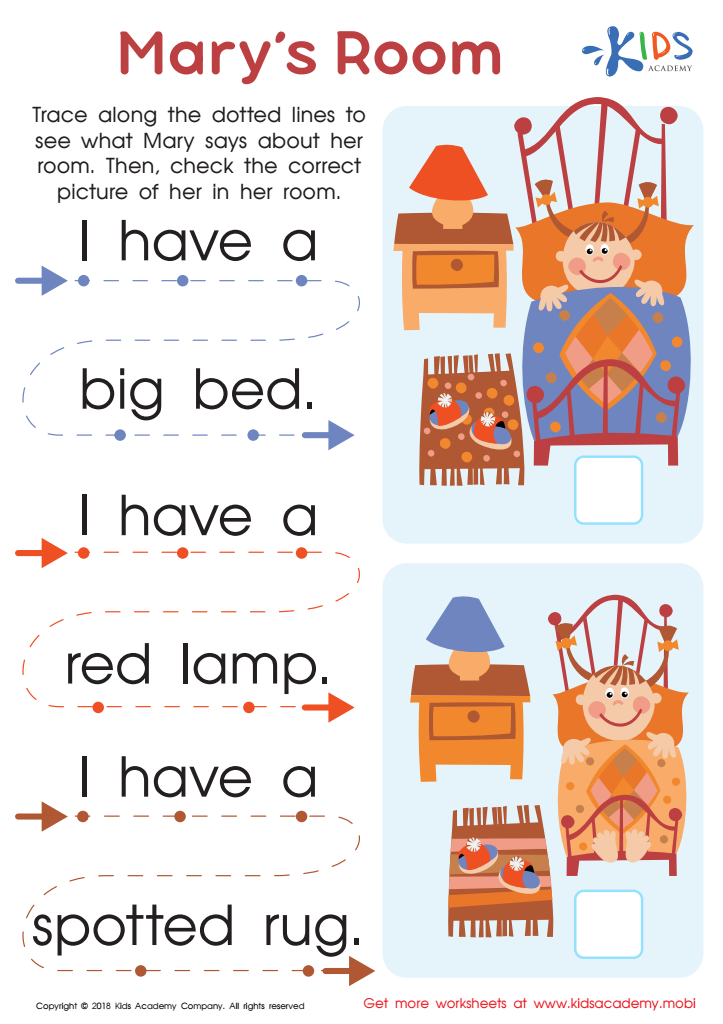
Mary's Room Worksheet




Understanding prepositions is vital for young children because it significantly contributes to their language development and effective communication skills. At ages 3-4, children's brains are incredibly receptive to learning new words and grammatical structures, including prepositions. These small but mighty words—such as "in," "on," "under," "above," and "next to"—help children describe positions, locations, and relationships between objects and people. When children grasp prepositions, they can follow directions more accurately, enhancing their safety and independence. For instance, understanding "Your toy is under the bed" or "Put your cup on the table" aids in executing tasks without confusion.
Additionally, prepositions lay the groundwork for reading comprehension and writing skills in later years. Early mastery helps children understand stories better and compose more descriptive narratives. Prepositions are also integral for problem-solving and spatial reasoning abilities. If children cannot grasp where objects are or how they relate to one another spatially, they may struggle with puzzles and other activities requiring spatial awareness.
Therefore, parents and teachers should care about teaching prepositions to provide a solid linguistic foundation, foster comprehension and descriptive capabilities, and promote cognitive development. Using games, stories, and everyday conversations can make learning prepositions fun and engaging for young minds.








