
Subtraction skills Normal Addition & Subtraction Worksheets for Ages 3-4
3 filtered results
Difficulty Level
Grade
Age
-
From - To
Subject
Activity
Standards
Explore our engaging Subtraction Skills worksheets designed specifically for children ages 3-4! These interactive resources help young learners grasp the concept of subtraction through fun activities that promote critical thinking and foundational math skills. Our Normal Addition & Subtraction Worksheets offer colorful illustrations and relatable themes to make learning enjoyable. Children will practice their spatial awareness and number recognition as they progress through various exercises tailored to their developmental stage. Ideal for home or classroom use, these worksheets support early education and encourage a positive attitude towards math. Start fostering a love for learning today with our platform!
Favorites
With answer key
Interactive
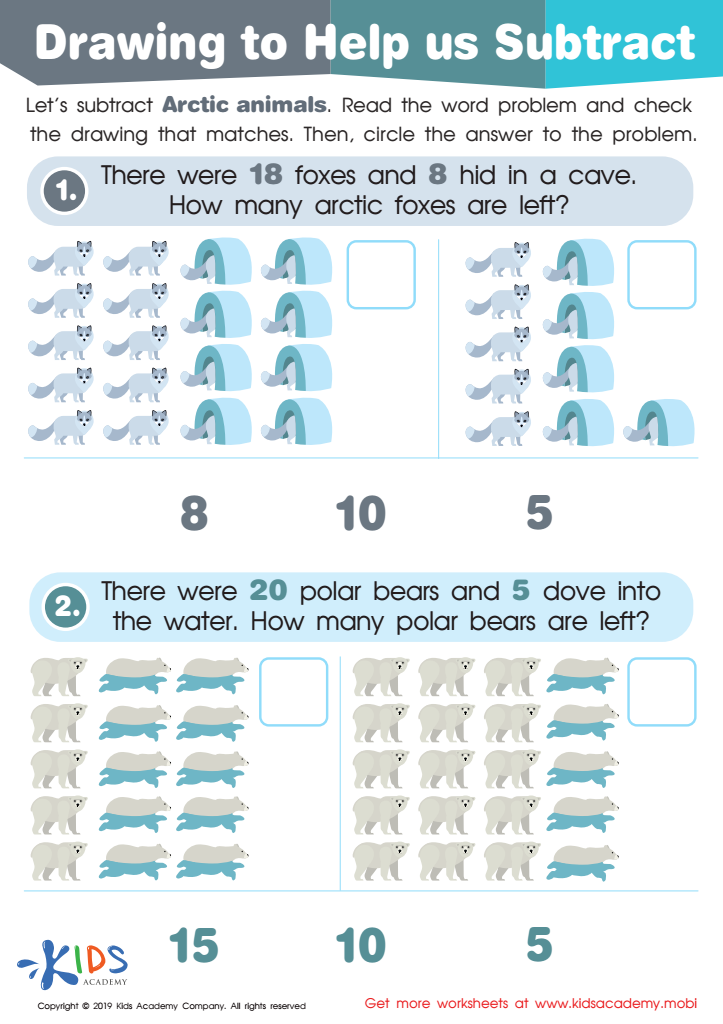
Drawing to Help Us Subtract Worksheet
Math is made fun with this free worksheet featuring Arctic animal pictures to solve basic subtraction word problems. Kids read the problem and choose the correct drawing of the animals to represent the solution. They'll have a blast with their cool animal friends while learning math!
 Assign to My Students
Drawing to Help Us Subtract Worksheet
Worksheet
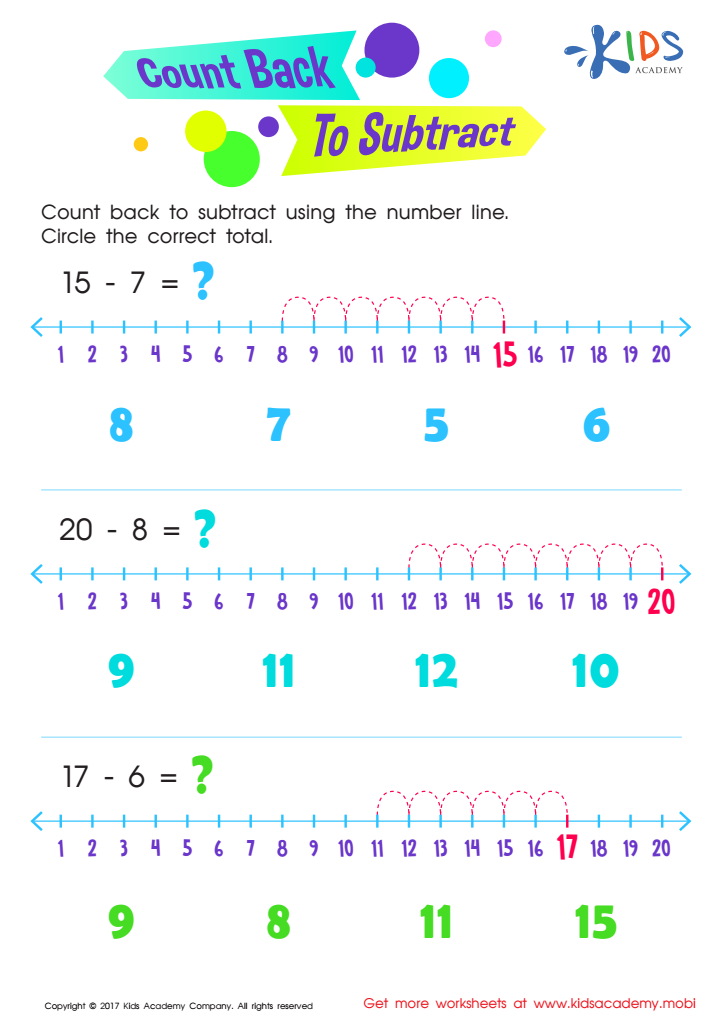
Count Back to Subtract Substraction Worksheet
With this worksheet, your child can visually see and count each number they’re subtracting.
This worksheet provides a number line to help your child master subtraction visually. Counting back on the line will give them a deeper understanding of the concept. It's a great way to teach subtraction and help children gain confidence with the subject.
Count Back to Subtract Substraction Worksheet
Worksheet
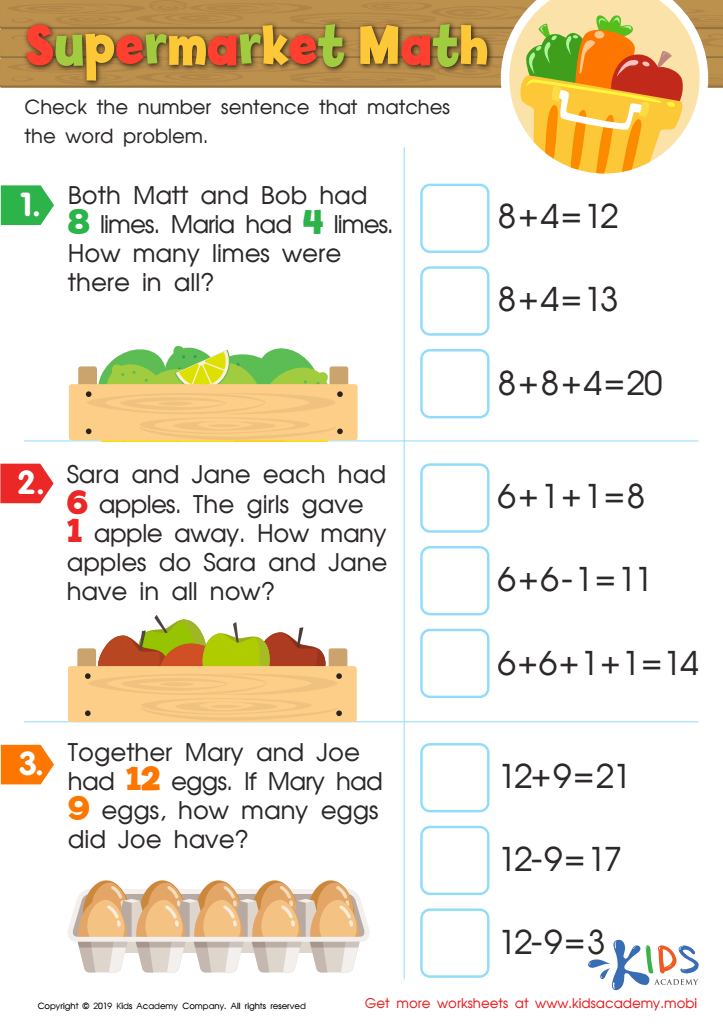
Supermarket Math Worksheet
Take your kids to the supermarket and ask what they're looking forward to buying. Help them solve the three questions in the worksheet by interpreting each one into an equation, then choose the right answer.
Supermarket Math Worksheet
Worksheet
Join Kids Academy for Free
Who is primarily going to use this learning content?








Subtraction skills, along with normal addition and subtraction, are crucial for children ages 3-4 as they form the foundation for mathematical understanding and problem-solving abilities. At this young age, children are naturally curious and develop cognitive skills rapidly. Mastering these basic mathematical concepts helps boost their confidence, encouraging a positive attitude towards learning in the future.
Understanding subtraction allows children to grasp the concept of “taking away,” helping them make sense of the world around them. For instance, they can apply these skills in real-life situations, such as sharing snacks or counting down to an event, enhancing both their numerical comprehension and social interactions. Furthermore, these early skills promote critical thinking as children learn to evaluate quantities and relationships between numbers.
Parents and teachers should actively engage young learners in fun and interactive activities that stress subtraction and addition. This can foster a love for math and develop essential cognitive skills. Establishing a strong mathematical foundation at this age can lead to greater success in school and beyond, as students build on their knowledge and experience more complex concepts in later grades. Consequently, early exposure to subtraction is vital for holistic development in children.








