Filters

7 filtered results

Clear all filters
Favorites
With answer key
Interactive

7 filtered results

Difficulty Level

Grade


Discover our engaging Counting Skills Normal Addition Worksheets designed specifically for children aged 3-4. These worksheets offer a fun and interactive way to introduce young learners to the world of addition while reinforcing essential counting skills. Each activity encourages hands-on engagement, promotes number recognition, and helps children understand basic math concepts in a playful manner. Perfect for homeschooling or classroom use, these resources are tailored to meet early childhood learning standards. Support your child's mathematical journey with our thoughtfully crafted worksheets that make learning addition both enjoyable and effective. Start building a strong foundation in math today!

Check out this FREE Trial Lesson on Addition for age 3-4!

Adding with 2's

Favorites
With answer key
Interactive
  • 3-4
  • Counting skills
  • Addition
  • Normal
Math PDF Worksheet: Count Funny Animals

Count Funny Animals Worksheet

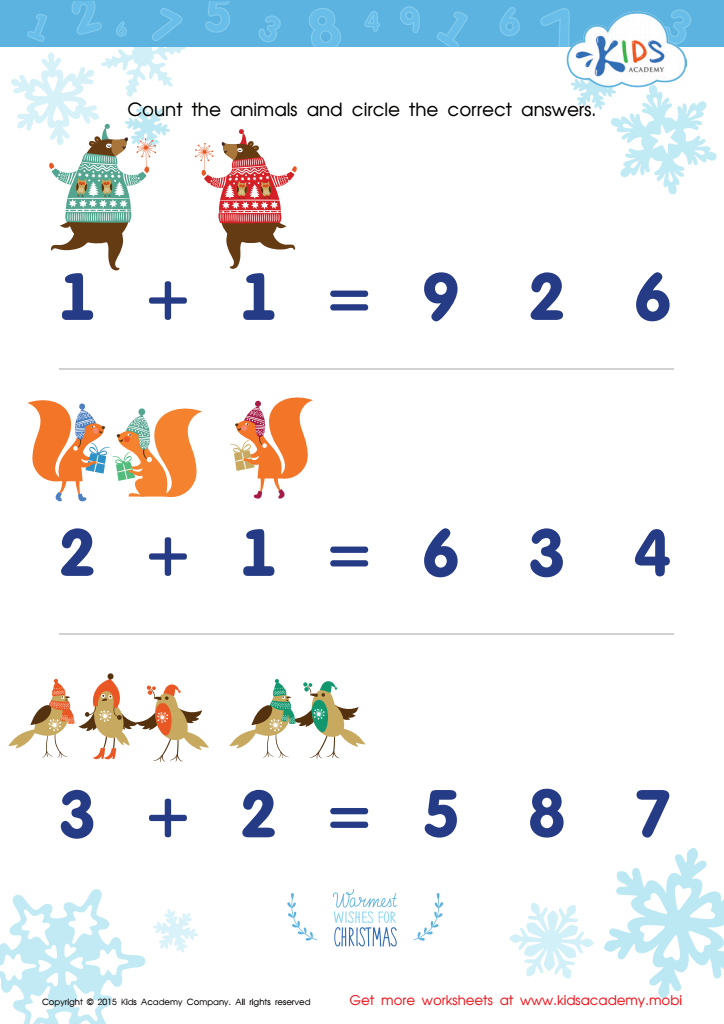
Get your kid in the Christmas spirit with this festive addition worksheet! They'll have fun counting the colorful animals and writing in the numbers. Our graphic layout makes it easy for them to visualize and solve the task. Print it out and help your kid keep their math skills sharp this winter with Kids Academy!
Count Funny Animals Worksheet
Worksheet
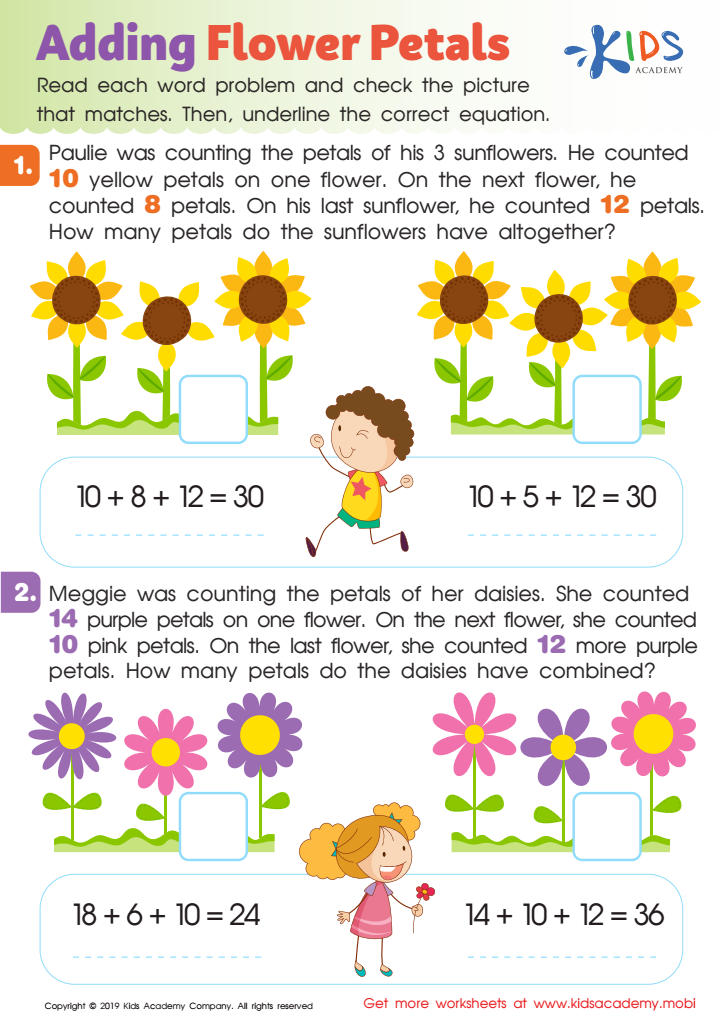
Adding Flower Petals Worksheet

Adding Flower Petals Worksheet

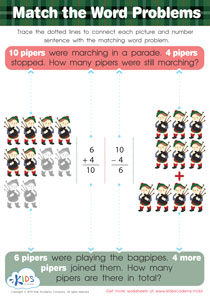
This free worksheet helps little mathematicians learn to understand word problems. They'll read each one and match it to the corresponding picture. Important info is highlighted, teaching kids to look for key info when solving problems. Then they'll underline the correct number equation that matches the picture. A great way to practice problem-solving skills!
Adding Flower Petals Worksheet
Worksheet
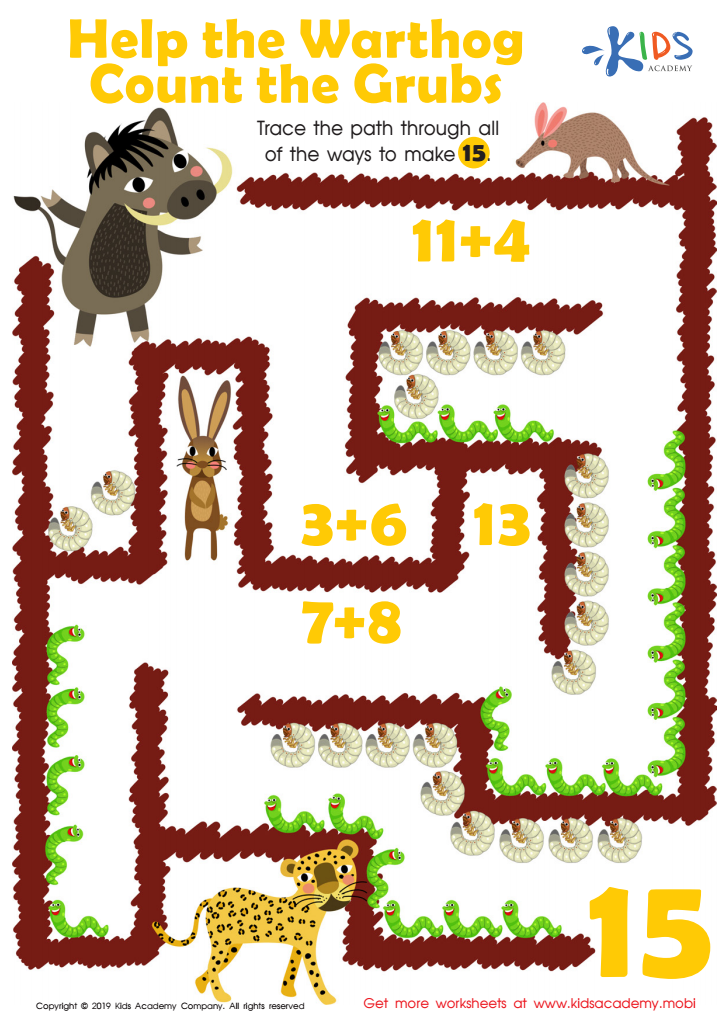
Help the Warthog Count the Grubs Worksheet

Help the Warthog Count the Grubs Worksheet

Test your kids' knowledge of wild animals. Ask them to name some they know, then have them identify the animals on this worksheet. If they can't, take the time to tell them the names. Finally, trace the warthog's path through the maze by solving the equations and going through paths that make 15.
Help the Warthog Count the Grubs Worksheet
Worksheet
Collect Sticks Worksheet

Collect Sticks Worksheet

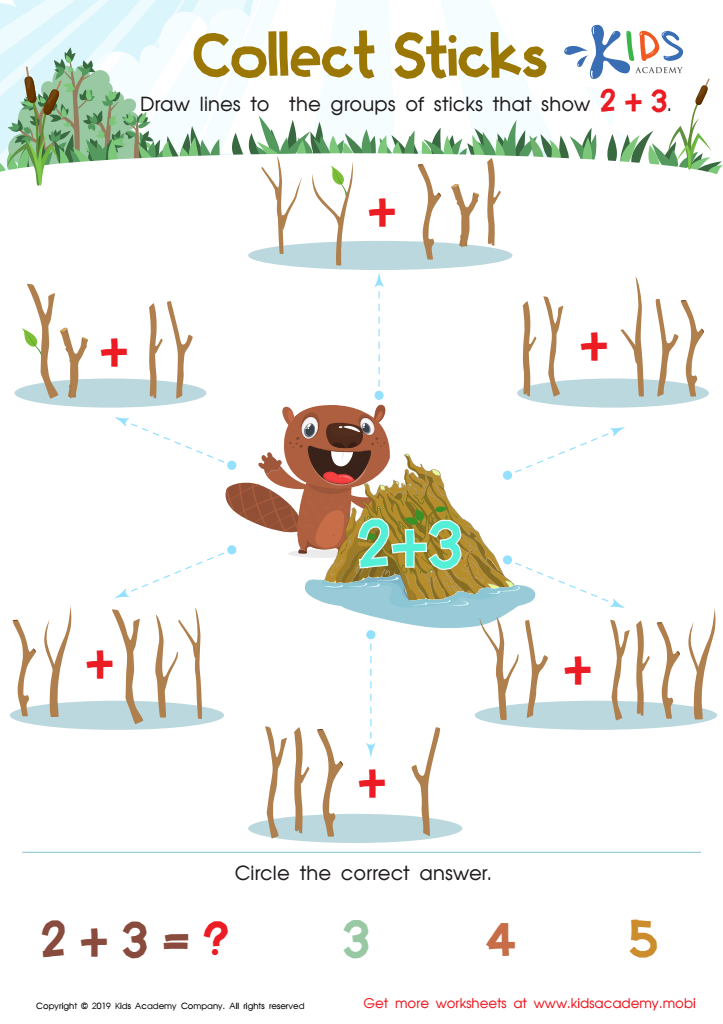
Let math be fun for your kids with a simple and colorful worksheet exercise. Addition and subtraction can be daunting, but you can make it enjoyable with exercises like this one. Get them to draw lines to the groups of sticks that show 2+3 and watch them light up.
Collect Sticks Worksheet
Worksheet
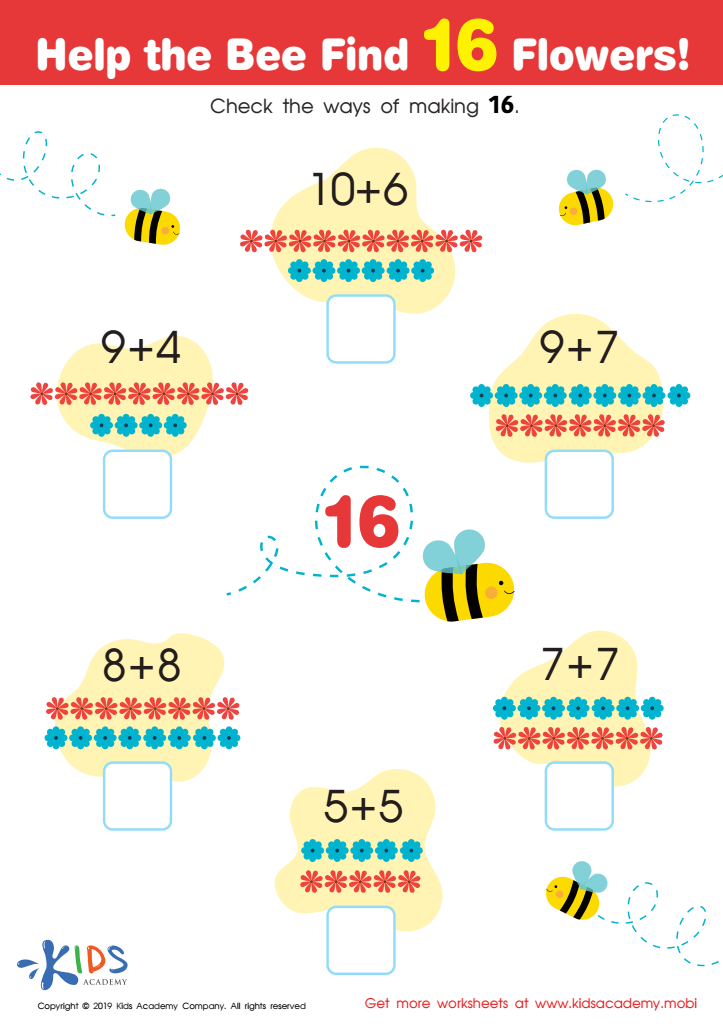
Help the Bee Find 16 Flowers Worksheet

Help the Bee Find 16 Flowers Worksheet

Ask your students to count as high as they can. Show them that different numbers can equal the same figure with examples like 2+2=4 and 3+1=4. Ask for more examples, then help the bees find 16 flowers by checking the ways of making 16.
Help the Bee Find 16 Flowers Worksheet
Worksheet
14 in School Worksheet

14 in School Worksheet

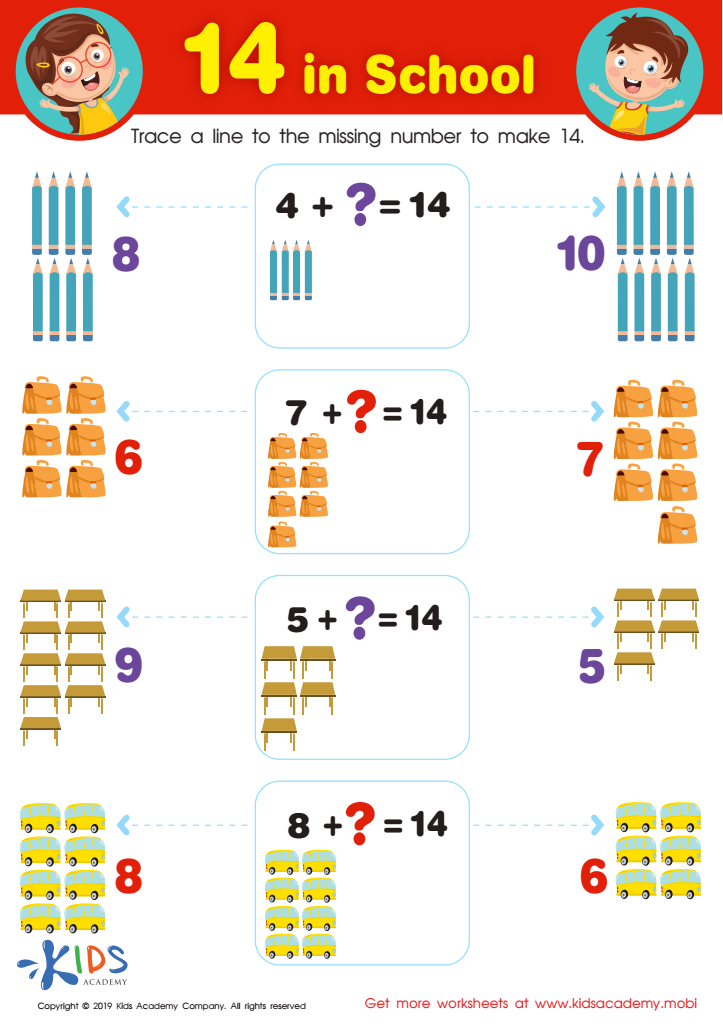
Remind your kids that adding different sets of numbers can give the same total (e.g. 2+3=5, 4+1=5). Ask them for more examples. Afterwards, work through the exercise. Help them count the objects and trace a line to the missing number that makes the total 14.
14 in School Worksheet
Worksheet
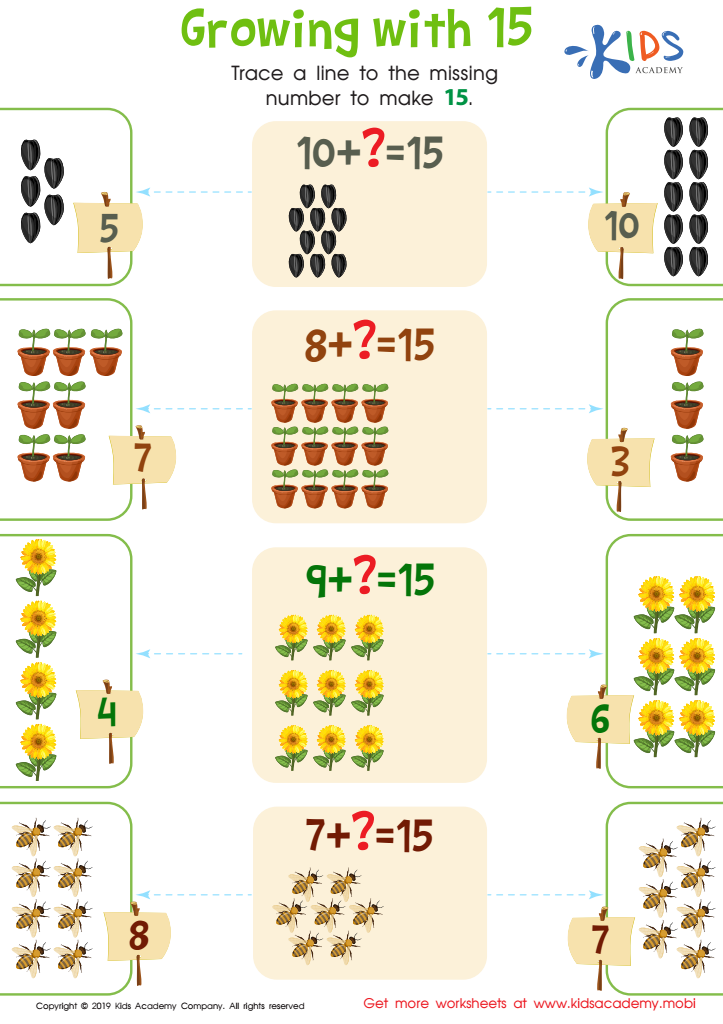
Growing with 15 Worksheet


Growing with 15 Worksheet

Remind your kids that adding different sets of numbers can give the same total (e.g. 2+3=5, 4+1=5). Test their understanding by asking them for more examples. Move onto the worksheet: count objects, then trace the line to the number making a total of 15.
Growing with 15 Worksheet
Worksheet


Counting skills and basic addition are fundamental building blocks for early childhood math education, especially for children aged 3 to 4. At this age, children are naturally curious and eager to learn, making it an ideal time for parents and teachers to introduce these concepts. Understanding counting and normal addition lays the groundwork for more complex mathematical skills later on, fostering a positive attitude towards math.

Developing counting skills enhances a child’s ability to recognize numbers, understand quantity, and develop cognitive skills such as problem-solving and critical thinking. Mastering these skills can also improve social interactions, as children begin to use numbers during play and sharing activities.

Moreover, engaging children in counting and simple addition boosts their language development, as they learn to articulate numbers and understand terms like “more,” “less,” and “total.” Incorporating games, songs, and everyday scenarios—like counting toys or snacks—can make learning enjoyable and relatable.

By laying this foundation, parents and teachers not only equip children with essential skills but also instill confidence and a love for learning that will serve them well throughout their educational journey. Early investment in these skills significantly enhances a child's overall academic success.