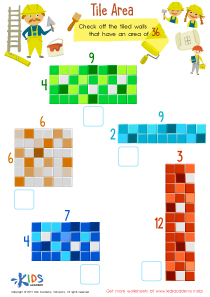
Matching numbers Normal Numbers Worksheets for Ages 3-4
5 filtered results
-
From - To
Introduce your young scholars to the world of numbers with our exciting "Matching Numbers Normal Numbers Worksheets for Ages 3-4". Designed to enhance early math skills, these engaging worksheets help children identify and match numbers through fun activities and colorful illustrations. Ideal for preschoolers, the exercises not only promote number recognition but also improve fine motor skills and hand-eye coordination. Perfect for parents and educators looking to provide seamless learning opportunities at home or in the classroom. Explore our selection today to give your little learners a strong foundation in mathematics while boosting their confidence and curiosity.

Count and Match Boxes with Vegetables
 Assign to My Students
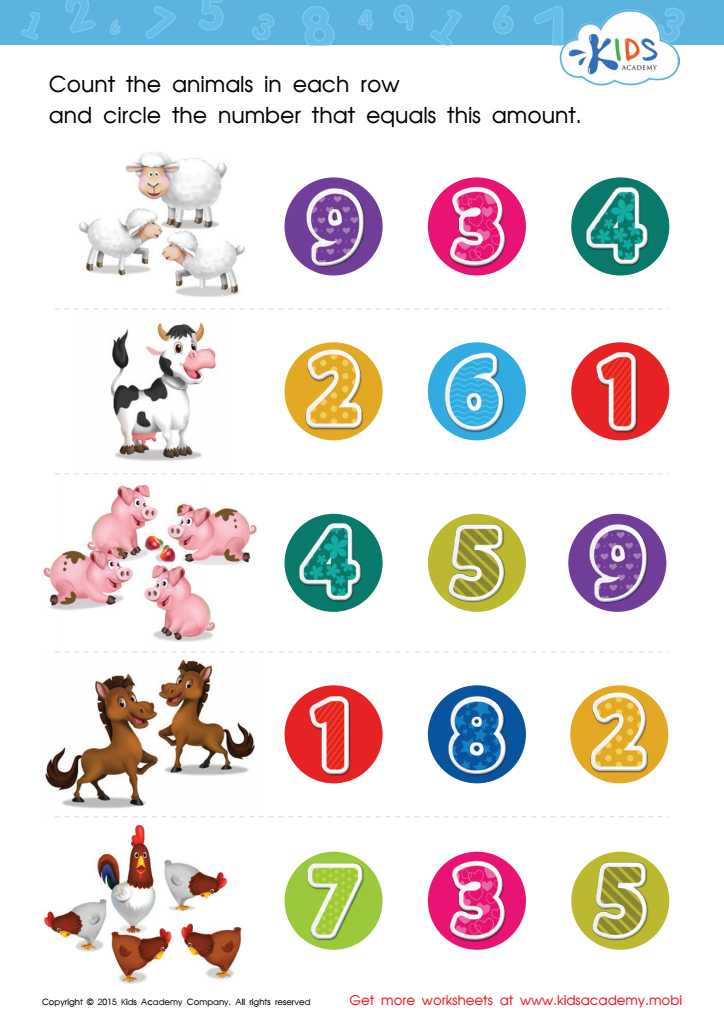
Count and Match 1 – 5 Math Worksheet
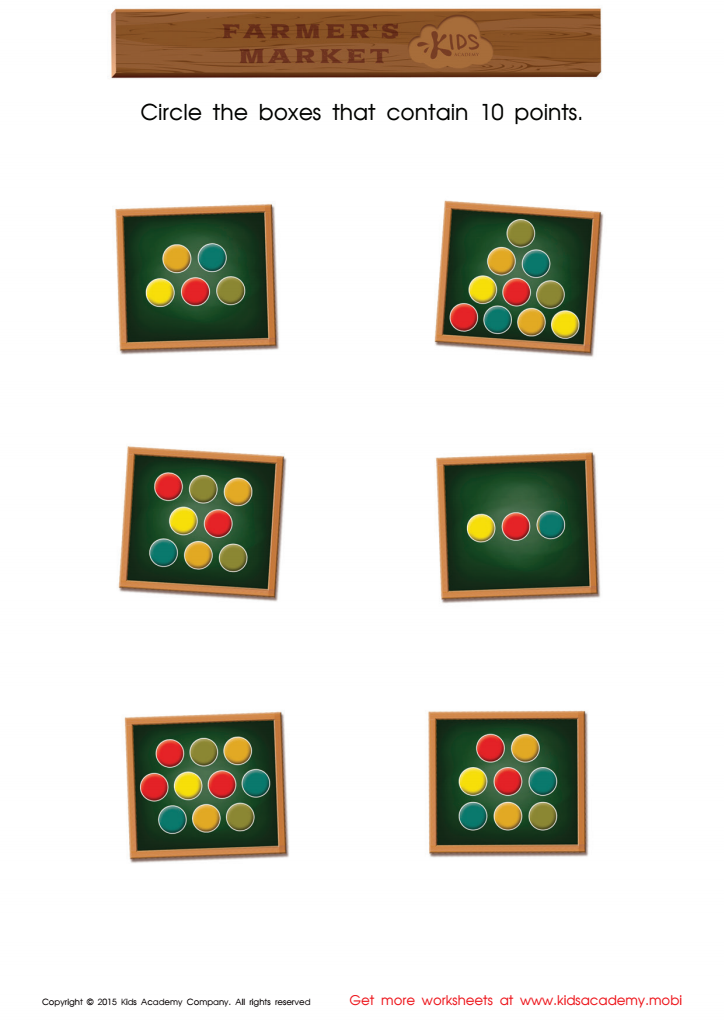
Count and Match Points 10 Math Worksheet
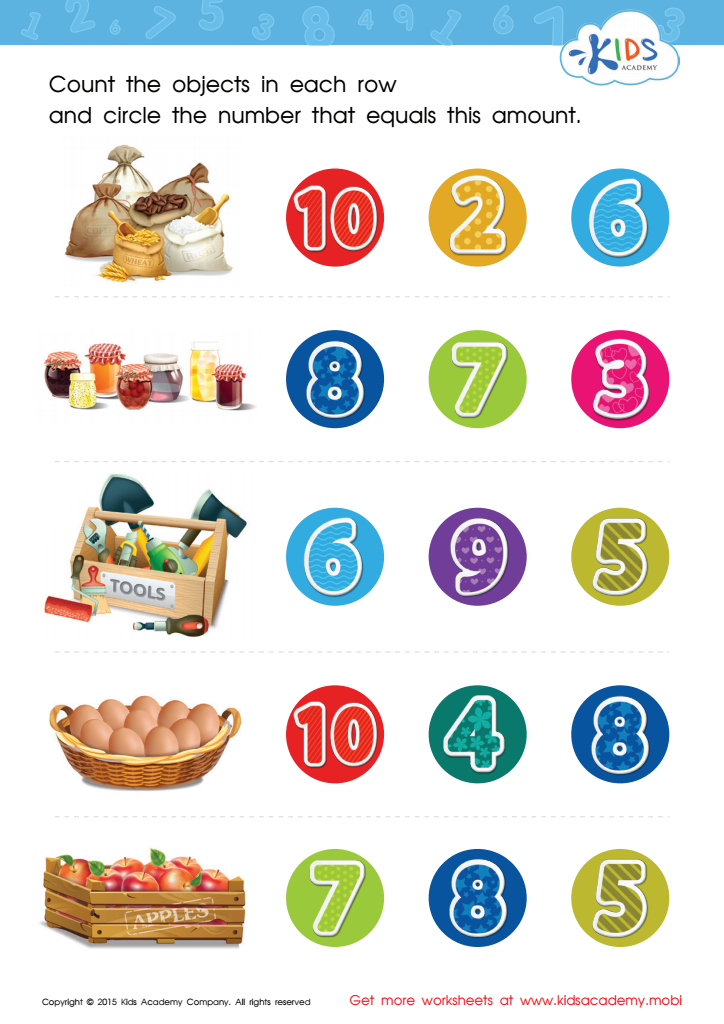
Count and Match 6 – 10 Math Worksheet
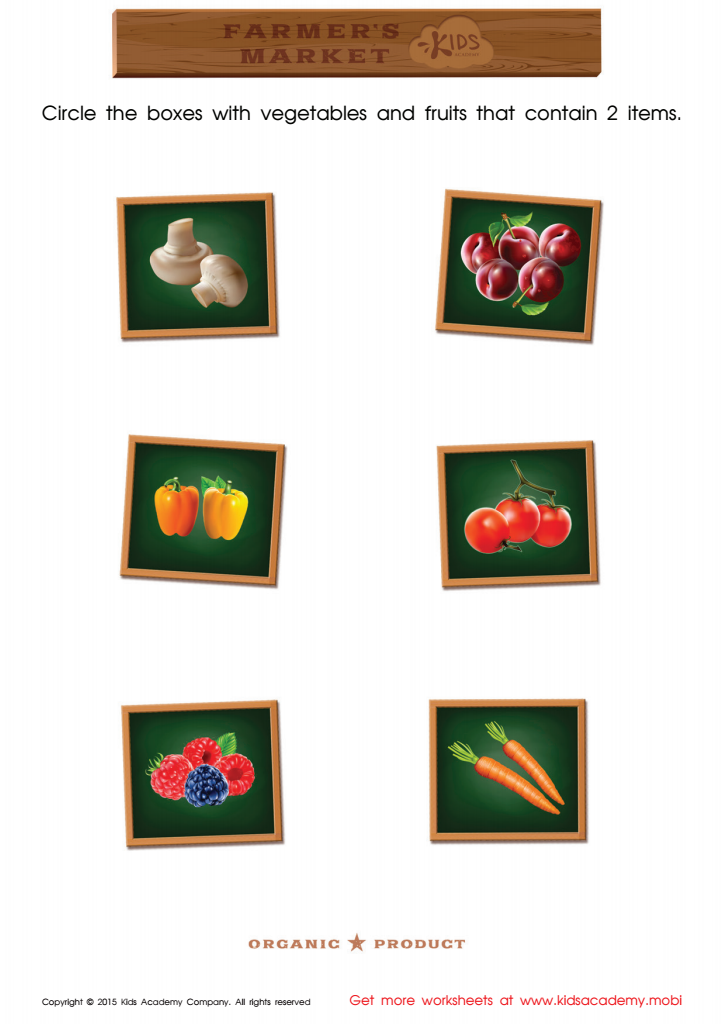
Count and Match Vegetables and Points Math Worksheet








Parents and teachers should deeply care about matching and recognizing normal numbers for children aged 3-4, as it lays a pivotal foundation for their cognitive development and future academic success. At this formative stage, young minds are incredibly receptive to new information and learning experiences. Introducing numbers in a fun and engaging way helps preschoolers develop early numeracy skills essential for everyday life and later mathematical learning.
Matching numbers not only enhances a child's ability to identify and understand numerical order but also improves their cognitive abilities, such as memory, pattern recognition, and problem-solving skills. By engaging in activities like matching games, children also develop fine motor skills and hand-eye coordination, which are critical for tasks such as writing.
Furthermore, such activities foster a sense of achievement and build self-confidence, encouraging a positive attitude towards learning. They also promote social interaction and collaborative play when done in group settings, enhancing communication skills and teamwork. For parents and teachers, incorporating number recognition exercises into daily routines ensures children are equipped with essential skills that will underpin their educational journey. Therefore, emphasizing matching and recognizing numbers is a crucial step in nurturing well-rounded, confident, and capable young learners.