Spatial reasoning Normal Math Worksheets for Ages 3-4
3 filtered results
-
From - To
Enhance your child's cognitive abilities with our spatial reasoning normal math worksheets designed specifically for ages 3-4. These fun, engaging activities will help your little one develop crucial spatial skills, such as recognizing shapes, understanding spatial relationships, and strengthening hand-eye coordination. Our expertly crafted worksheets integrate playful exercises with educational content to make learning exciting and effective. Ideal for preschoolers, these printable sheets provide a strong foundation for mathematical concepts and problem-solving skills. Transform playtime into a valuable learning experience with our spatial reasoning worksheets, tailored to spark curiosity and foster lifelong learning.
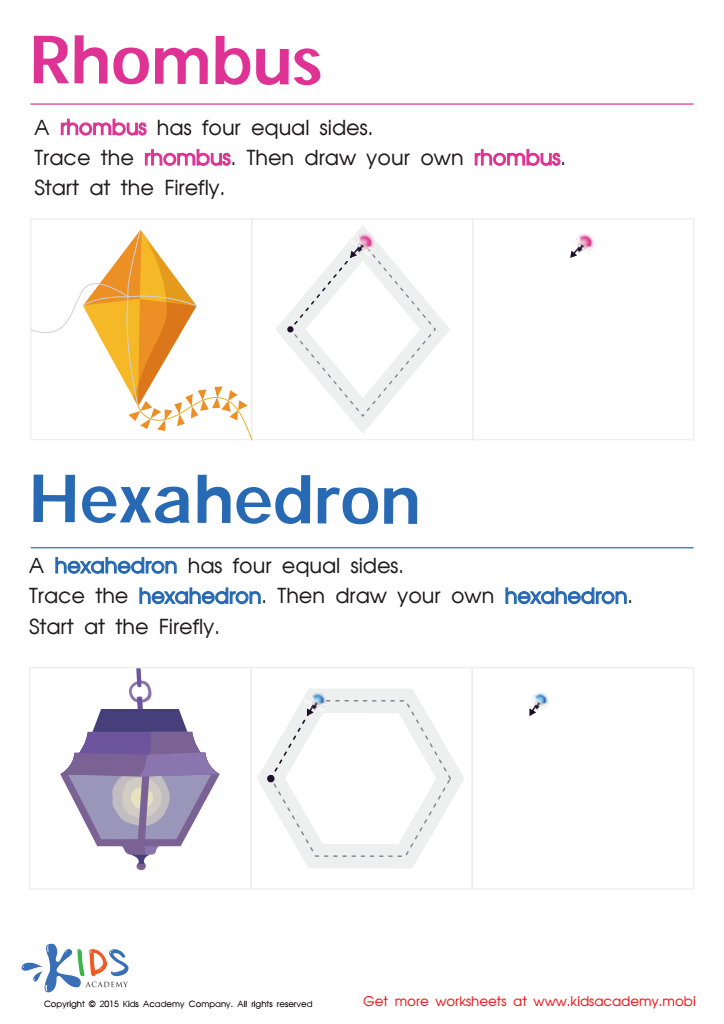
Draw a Rhombus And a Hexahedron Printable
 Assign to My Students
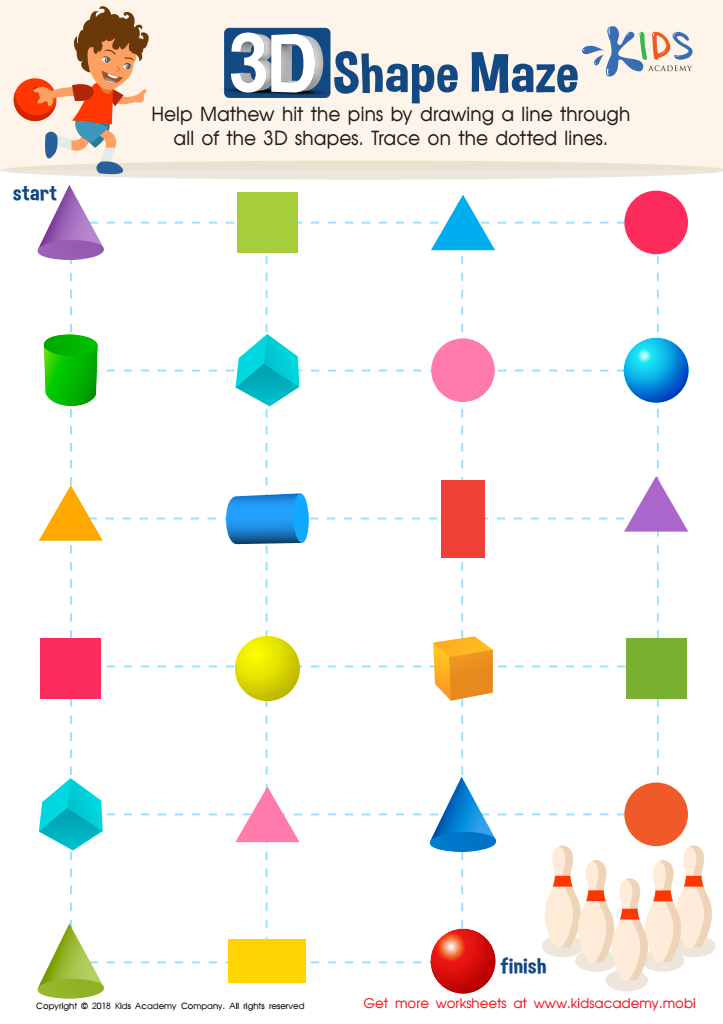
Shapes Maze Geometry Worksheet
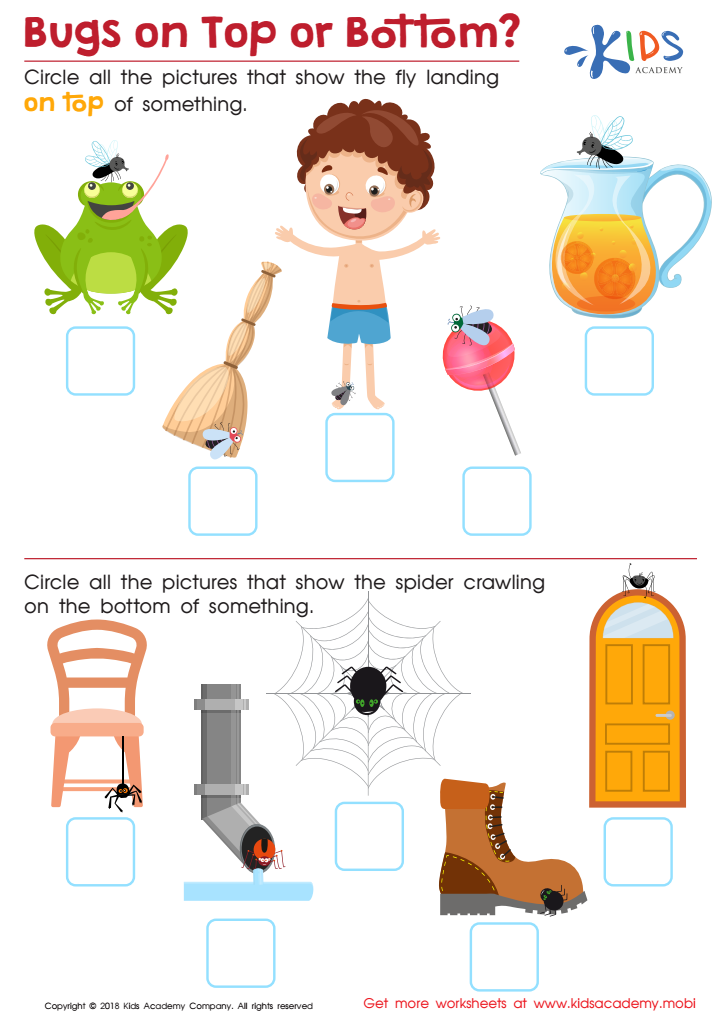
Bugs on Top or Bottom? Worksheet







Spatial reasoning is the ability to understand and interact with the space around us. For children ages 3-4, developing strong spatial reasoning skills can have profound impacts on their overall cognitive development and future success in various subjects, particularly in STEM (Science, Technology, Engineering, and Math) fields.
Early exposure to spatial reasoning helps children understand basic mathematical concepts such as shapes, sizes, positions, and the relationships between objects. These foundational skills are critical for later success in more complex areas of math, such as geometry and algebra. Engaging children in activities that develop spatial reasoning, like puzzles, building blocks, and spatial vocabulary, supports their ability to visualize and manipulate objects mentally.
Moreover, spatial reasoning is closely linked to problem-solving skills. Young children who develop strong spatial skills tend to be better at visualizing problems, engaging in mental rotation, and navigating their environments. This capacity to think through problems and manage their spatial world enhances their capacity for abstract thinking and strategic planning.
Parents and teachers who foster spatial reasoning in early childhood encourage confidence and proficiency in mathematics. This early foundation can contribute to lifelong learning and curiosity, empowering children to explore and excel in various educational and occupational fields as they grow. Prioritizing spatial reasoning for young children is essentially providing them with crucial tools for thinking and learning effectively.








