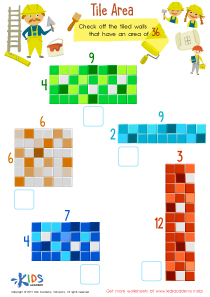
Critical Thinking Normal Matching Worksheets for Ages 3-4
4 filtered results
Difficulty Level
Grade
Age
-
From - To
Subject
Activity
Standards
Enhance your child's problem-solving skills with our "Critical Thinking Normal Matching Worksheets for Ages 3-4". These expertly designed activities help young learners boost their analytical abilities while having fun. Each worksheet encourages kids to identify patterns, match objects, and make connections, fostering early critical thinking. Perfect for preschoolers, these engaging exercises promote cognitive development and prepare children for future academic success. Suitable for homeschooling or supplemental practice, our worksheets are a valuable resource for parents and educators. Start your child's journey toward becoming a confident thinker with our playful and educational matching activities today.
Favorites
With answer key
Interactive
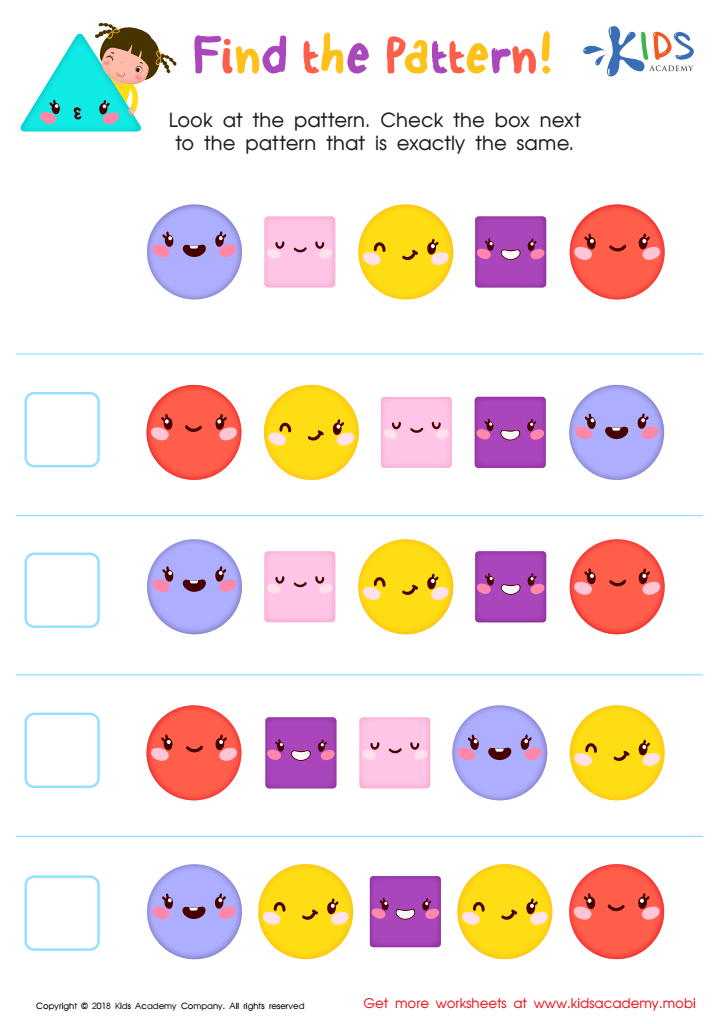
Find the Pattern Worksheet
This colorful pattern worksheet is perfect for testing your kids' pattern recognition. The bright colors will keep them engaged, while they check the box next to the pattern that is the same. Ask your kids to identify the colors used and see how well they can spot similarities!
 Assign to My Students
Find the Pattern Worksheet
Worksheet
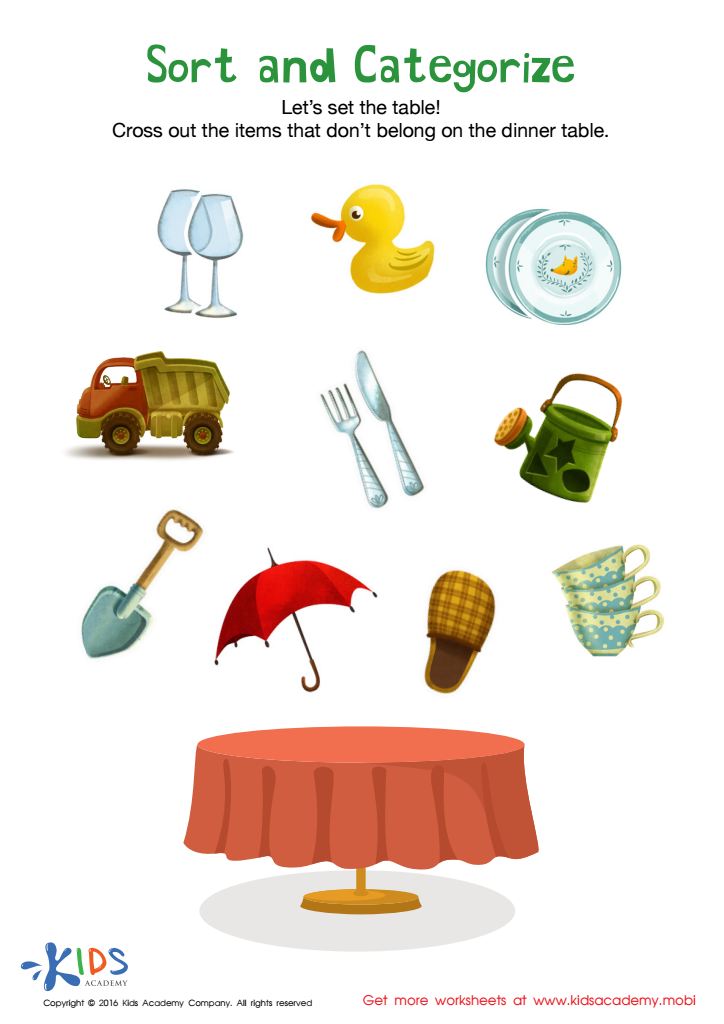
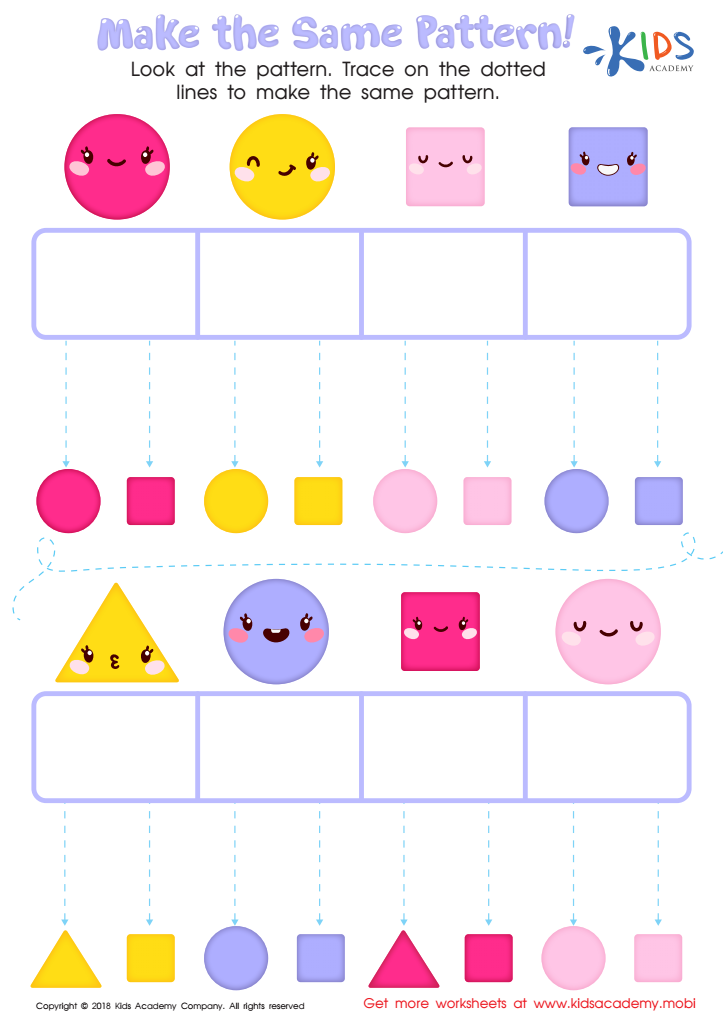
Make the Same Pattern Worksheet
Help your child look at the patterns in the tracing sheet and guide them to trace the dotted lines to match the shapes. This exercise tests their ability to copy pictures correctly, so emphasize the importance of paying attention to the instructions and details.
Make the Same Pattern Worksheet
Worksheet
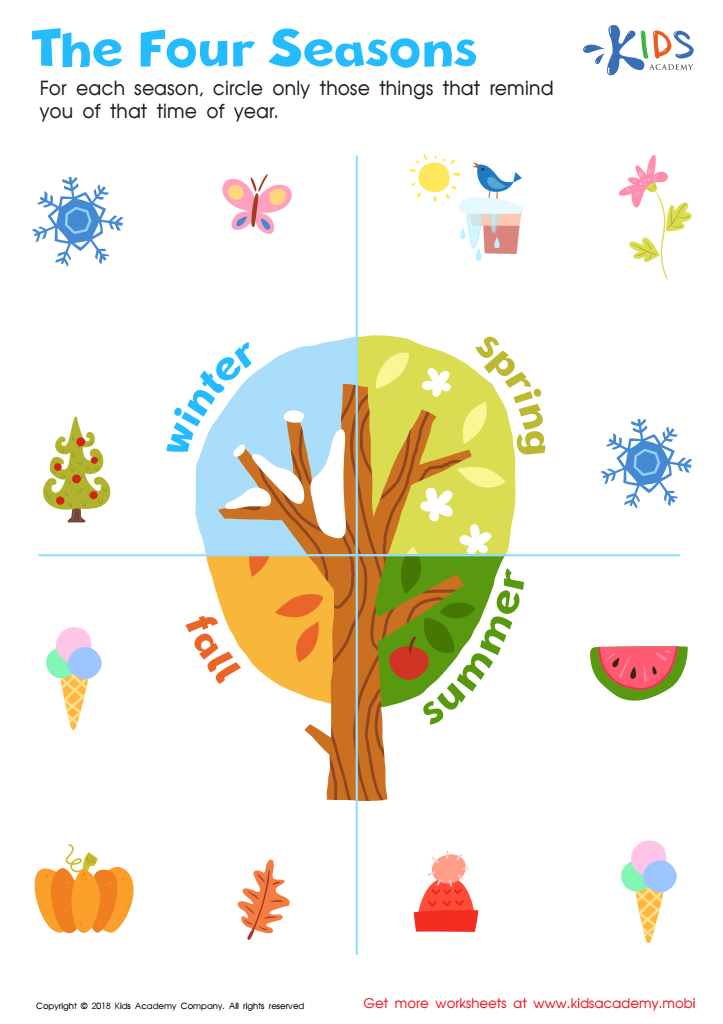
The Four Seasons Worksheet
Tell your child to circle things that remind them of each season. The tree has four squares, one for each season. Some things in each square match the season, others don't. Ask if any are out of place. Help them circle only items that remind them of that season.
The Four Seasons Worksheet
Worksheet
Join Kids Academy for Free
Who is primarily going to use this learning content?








Critical thinking skills play a foundational role in early childhood development, even for children as young as ages 3-4. At this age, they begin to explore the world around them with curiosity. Integrating critical thinking exercises, like normal matching activities, into their daily routine can significantly enhance their cognitive development.
Normal matching tasks can involve pairing objects, pictures, or concepts that are identical in key attributes or belong to familiar categories. When preschoolers engage in these activities, they practice several key cognitive skills. First, they learn to observe details, identify patterns, and recognize relationships between different items. Such tasks establish the habit of looking beyond immediate visual cues, a precursor to more complex problem-solving.
Second, by requiring children to directly compare and contrast, these exercises can improve memory and organizational skills. These are essential components for later learning in subjects such as mathematics, reading, and science.
For parents and teachers, the benefit lies in these exercises fostering an early love for learning and inquisitiveness. Encouraging critical thinking from a young age helps children become independent thinkers. Engaged young minds develop into innovative and capable adults. Additionally, nurturing these skills in a supportive environment strengthens the caregiving bond and demonstrates the value of positive learning experiences. In essence, integrating critical thinking through matching activities helps build a foundation for lifelong cognitive strengths.