Analytical skills Normal Reading Comprehension Worksheets for Ages 3-4
5 filtered results
-
From - To
Unlock your child’s potential with our engaging Analytical Skills Normal Reading Comprehension Worksheets designed specifically for ages 3-4! These worksheets aid in developing critical thinking and analytical abilities essential for early learning. Each activity is tailored to enhance children's reading comprehension through fun, age-appropriate stories that stimulate curiosity and conversation. As little ones practice identifying key details, making predictions, and connecting ideas, they cultivate a strong foundation for future learning. Explore our interactive worksheets and encourage your child's analytical thinking skills while fostering a lifelong love of reading. Perfect for home or classroom use, these resources are essential for young learners!
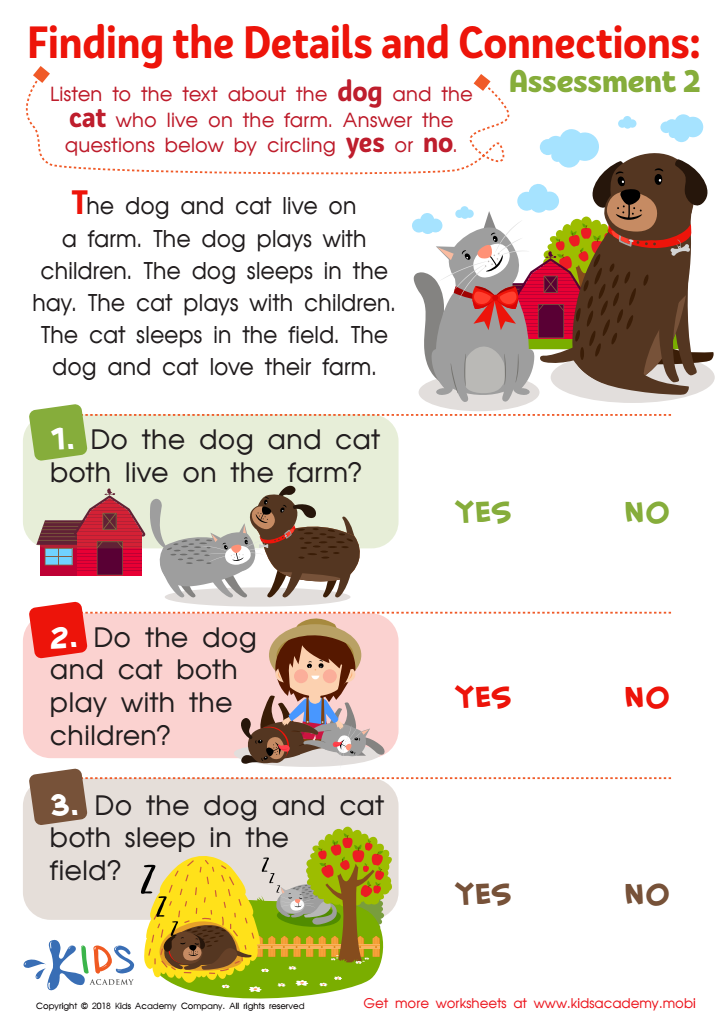
Finding the Details and Connections: Assessment 2 Worksheet
 Assign to My Students
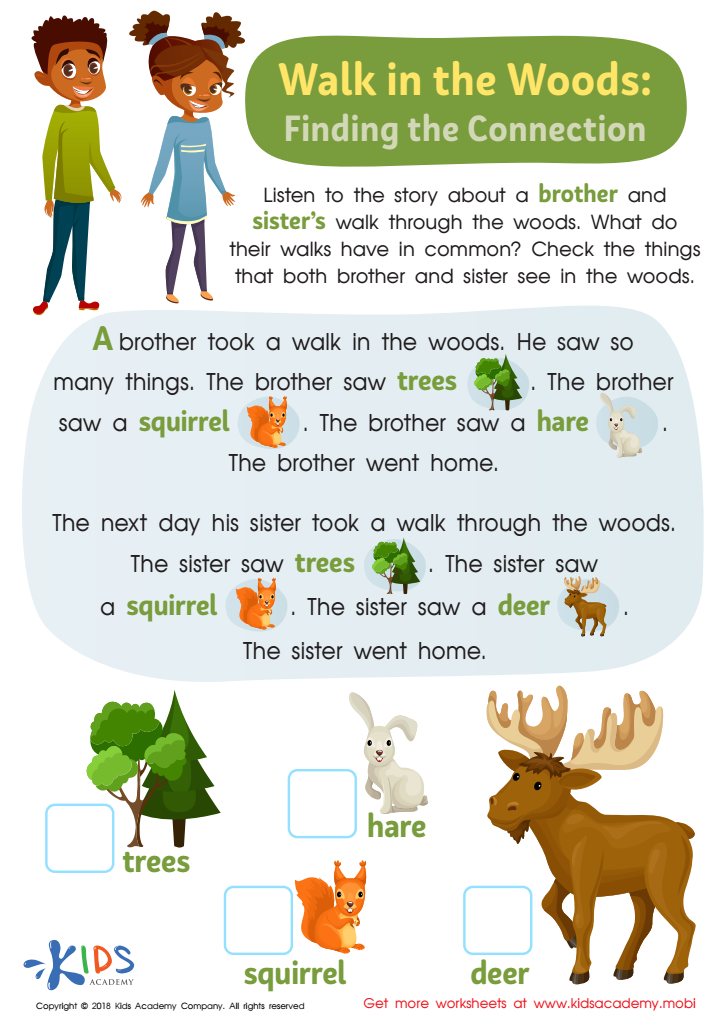
Walk In the Woods: Finding Connections Worksheet
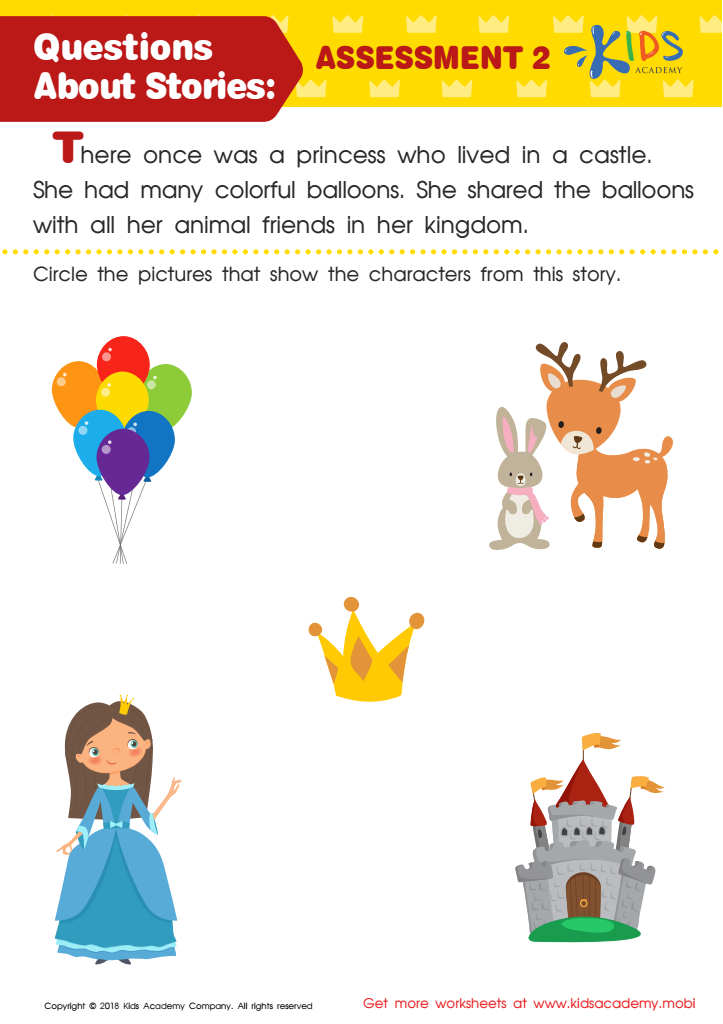
Questions About Stories: Assessment 2 Worksheet
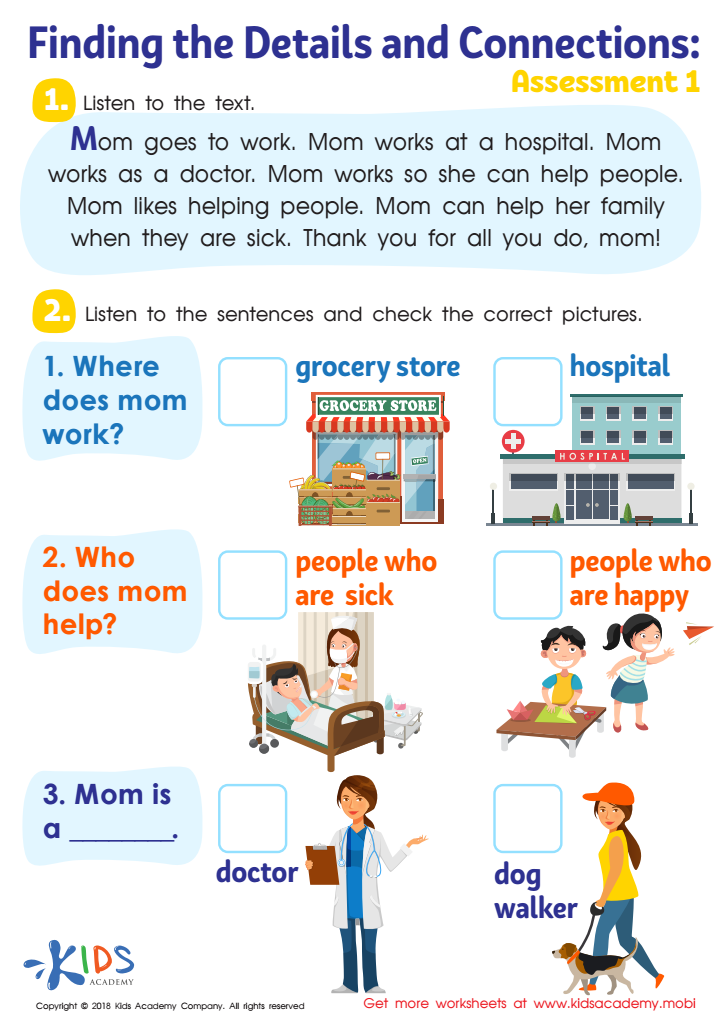
Finding the Details and Connections: Assessment 1 Worksheet
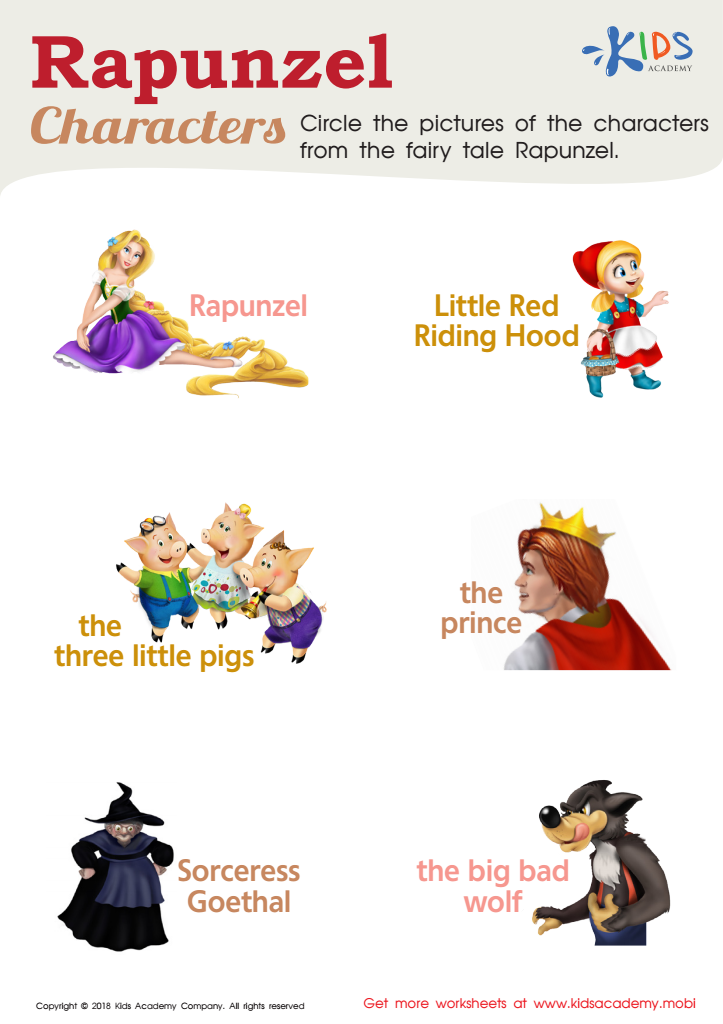
Rapunzel Characters Worksheet








Analytical skills are essential to a child’s cognitive development, especially in the early years of learning. For children aged 3-4, normal reading comprehension serves as a foundation for these skills. Understanding stories, characters, and basic plot structures helps children learn to process information critically. At this stage, when children engage with books and stories, they enhance their ability to identify patterns, make predictions, and draw conclusions—all key components of analytical thinking.
Parents and teachers should care about these skills because they are vital for academic success later on. Children with strong reading comprehension can better navigate complex texts in the future, facilitating learning across all subjects. Furthermore, analytical skills foster problem-solving abilities and creativity, empowering children to approach challenges effectively as they progress through school.
Moreover, nurturing reading comprehension at a young age encourages a lifelong love for reading, which can enhance vocabulary, language development, and social skills. Ultimately, prioritizing analytical skills and reading comprehension in early childhood education sets the stage for holistic growth and development, ensuring children are well-equipped to thrive in their educational journey and in life.








