
Analytical skills Normal Worksheets for Ages 3-5
6 filtered results
Difficulty Level
Grade
Age
-
From - To
Subject
Activity
Standards
Enhance your child's analytical skills with our engaging worksheets designed for ages 3-5! These printable activities foster critical thinking, problem-solving, and cognitive development through fun and interactive exercises. Children will explore patterns, sorting, categorization, and reasoning tasks that promote logical thinking. Our carefully curated worksheets cater to young learners, ensuring they are age-appropriate and aligned with early childhood education goals. With vibrant designs and diverse challenges, kids will enjoy honing their analytical abilities while boosting their confidence. Discover a world of learning and creativity that helps your little ones think independently and systematically. Equip your preschoolers for success with our analytical skills worksheets today!
Favorites
With answer key
Interactive
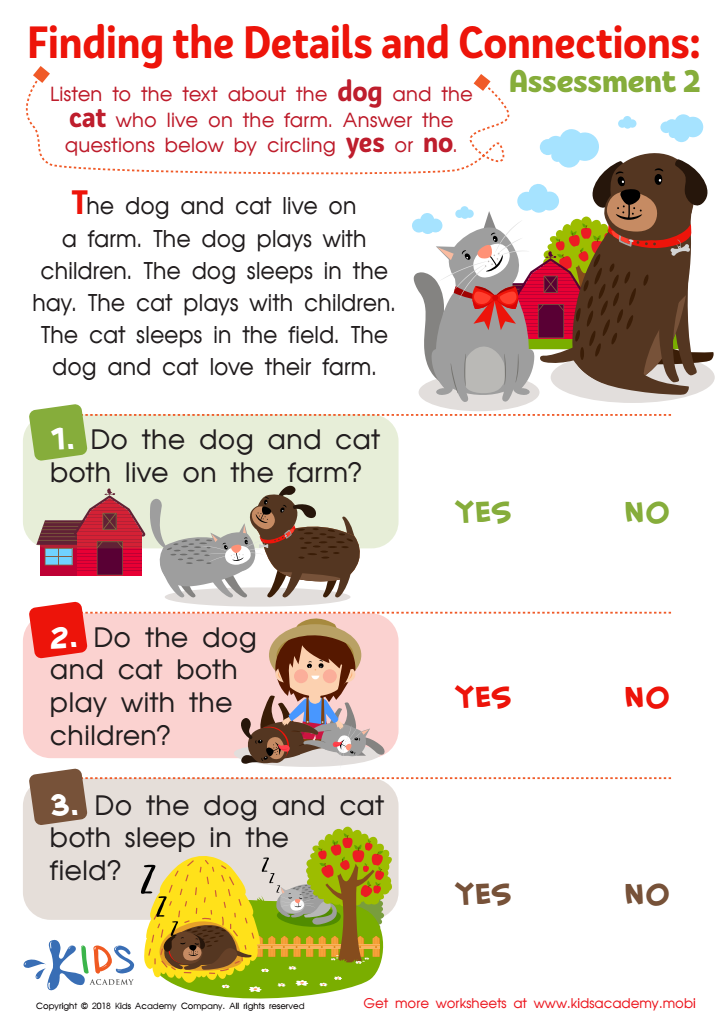
Finding the Details and Connections: Assessment 2 Worksheet
Does your child love animals? If you have pets, they'll relate to the text in this worksheet. Read it aloud to them and help them answer the simple questions by circling yes or no. The story is about a dog and cat living on a farm. Let your child read it aloud to you if they can.
 Assign to My Students
Finding the Details and Connections: Assessment 2 Worksheet
Worksheet
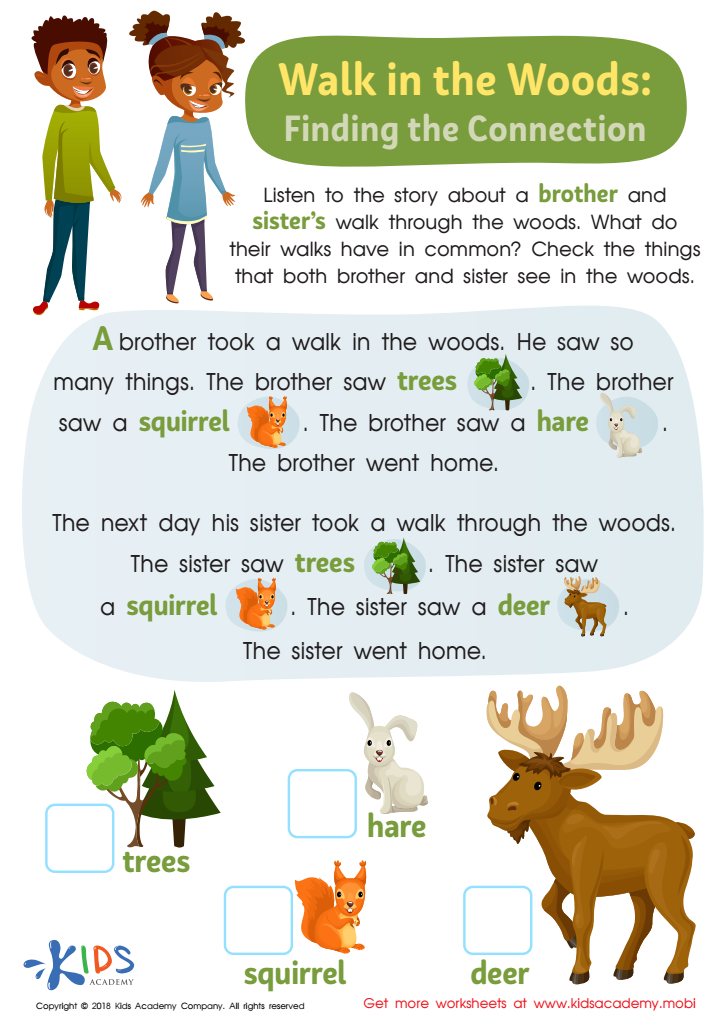
Walk In the Woods: Finding Connections Worksheet
Brother and sister took a walk in the woods to connect with nature and get some exercise. As they went, they noted different things like birds and plants, which they share in this story. Read it to your little ones, and help them check off the items the two saw. It's a great way to learn about nature and enjoy the outdoors.
Walk In the Woods: Finding Connections Worksheet
Worksheet
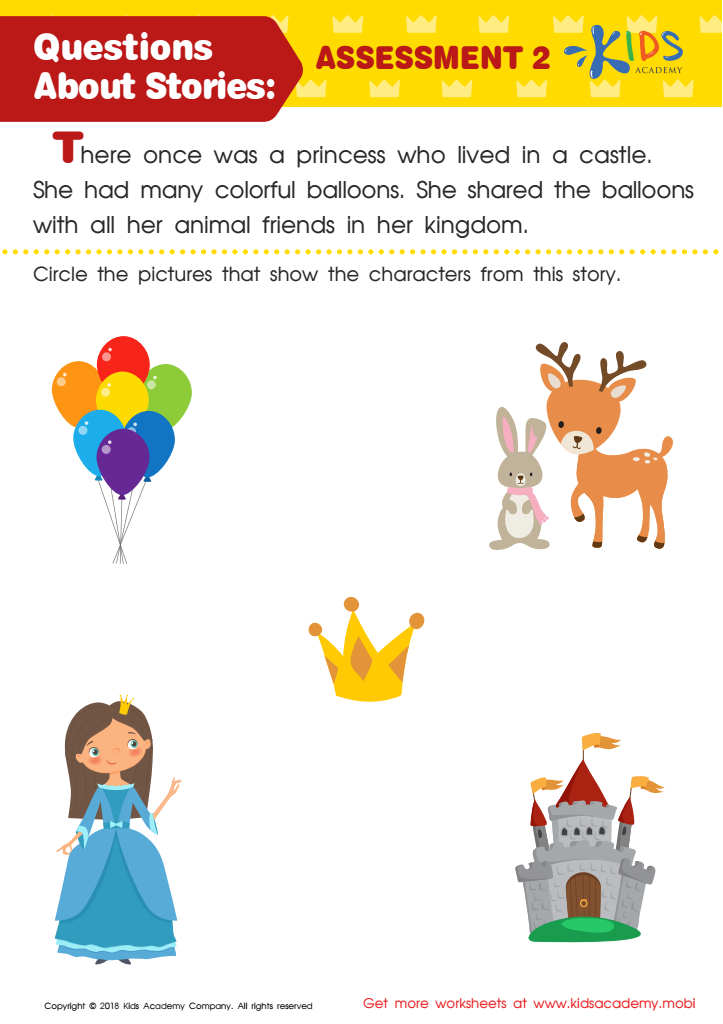
Questions About Stories: Assessment 2 Worksheet
Talk to your child about what a princess is and what activities they associate with that word. Then, read the story to them and help them identify characters in the pictures. Look out for details and ask them questions to ensure they understand.
Questions About Stories: Assessment 2 Worksheet
Worksheet
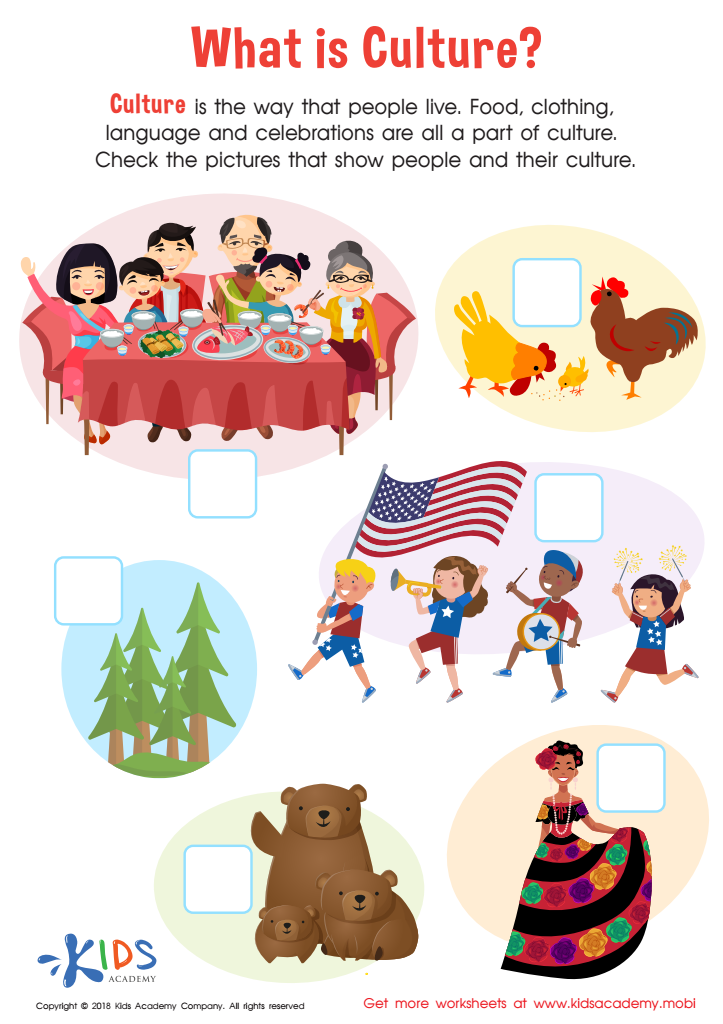
What Is Culture? Worksheet
Before beginning, talk to your kids about different cultures and how they may differ from yours. Explain that culture is the way of life and includes food, clothing, language and celebrations. Ask if they know any friends or classmates with a different culture and see if they can tell you about it. Then, help them look through this printout and check the pictures that show people and their culture.
What Is Culture? Worksheet
Worksheet
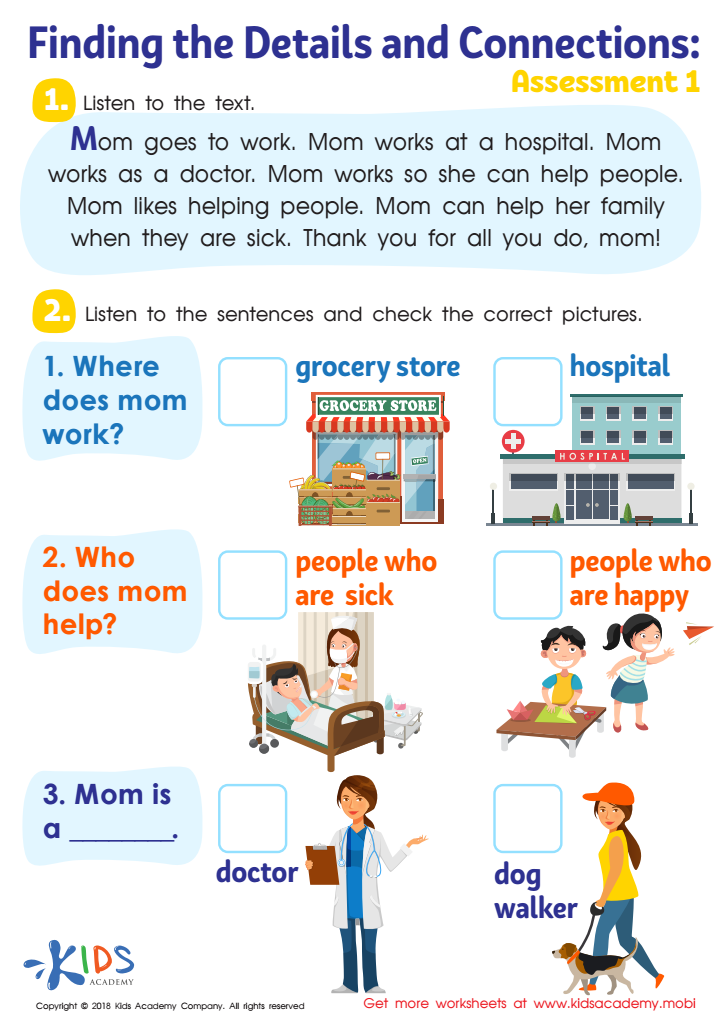
Finding the Details and Connections: Assessment 1 Worksheet
Ask your students what their parents do for a job. Do they know what profession their mom is in and where she works? Professionals have places they go to do their job. In this task, Mom goes to a hospital and is a doctor. Read the text and help them check the right pictures.
Finding the Details and Connections: Assessment 1 Worksheet
Worksheet
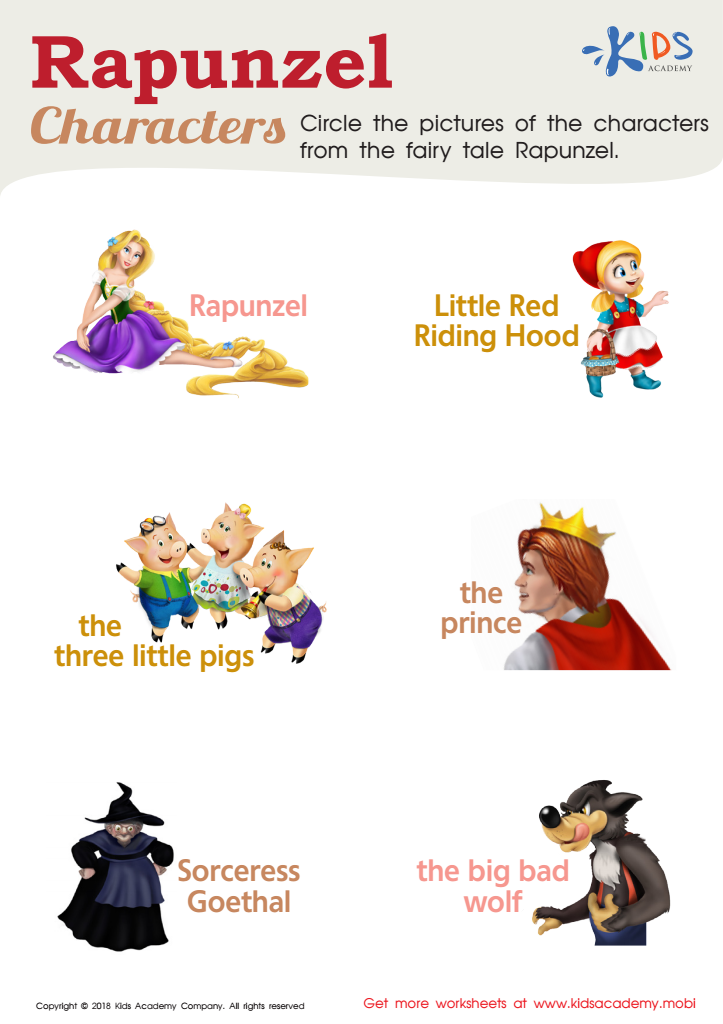
Rapunzel Characters Worksheet
This fun and colourful worksheet is perfect to see what your kids have learned from story time. Test their knowledge with a Rapunzel-themed exercise! Ask them to circle the pictures of the characters from the fairy tale. Helping them to remember the lessons taught in the stories you have read.
Rapunzel Characters Worksheet
Worksheet
Join Kids Academy for Free
Who is primarily going to use this learning content?








Analytical skills are fundamental for children aged 3-5 as they form the bedrock of cognitive development and lifelong learning. At this stage, children are naturally curious, and fostering analytical skills helps them make sense of the world around them. Parents and teachers should care about these skills because they encourage critical thinking, problem-solving, and the ability to draw relationships between concepts.
When children engage in activities that promote analytical thinking—such as sorting, classifying, and comparing—they develop the ability to analyze information, identify patterns, and form conclusions. This not only enhances their understanding of academic subjects but also improves their decision-making capabilities in everyday situations.
Further, promoting analytical skills helps boost children's confidence. When they can approach tasks methodically and think through solutions, they feel empowered to tackle challenges. Supportive environments that cultivate these skills stimulate curiosity and creativity, leading to a love of learning.
Finally, analytical skills pave the way for success in later educational stages. By prioritizing their development in early childhood, parents and teachers lay a strong foundation for children's ability to navigate academic challenges and become effective, independent learners. Ultimately, this investment benefits not only individual children but society as a whole.








