Basic geometry understanding Normal Worksheets for Ages 3-5
3 filtered results
-
From - To
Explore our engaging Basic Geometry Understanding Worksheets designed specifically for children ages 3-5! These colorful, interactive activities help young learners grasp essential geometric concepts like shapes, sizes, and spatial relations. Each worksheet encourages creativity and critical thinking while promoting early math skills. Perfect for home or classroom use, our worksheets provide a fun environment for little ones to explore and understand geometry through play. With various exercises suited for different learning styles, children will enjoy identifying shapes, sorting them, and completing fun illustrations. Support your child's educational journey with our thoughtfully crafted resources today!
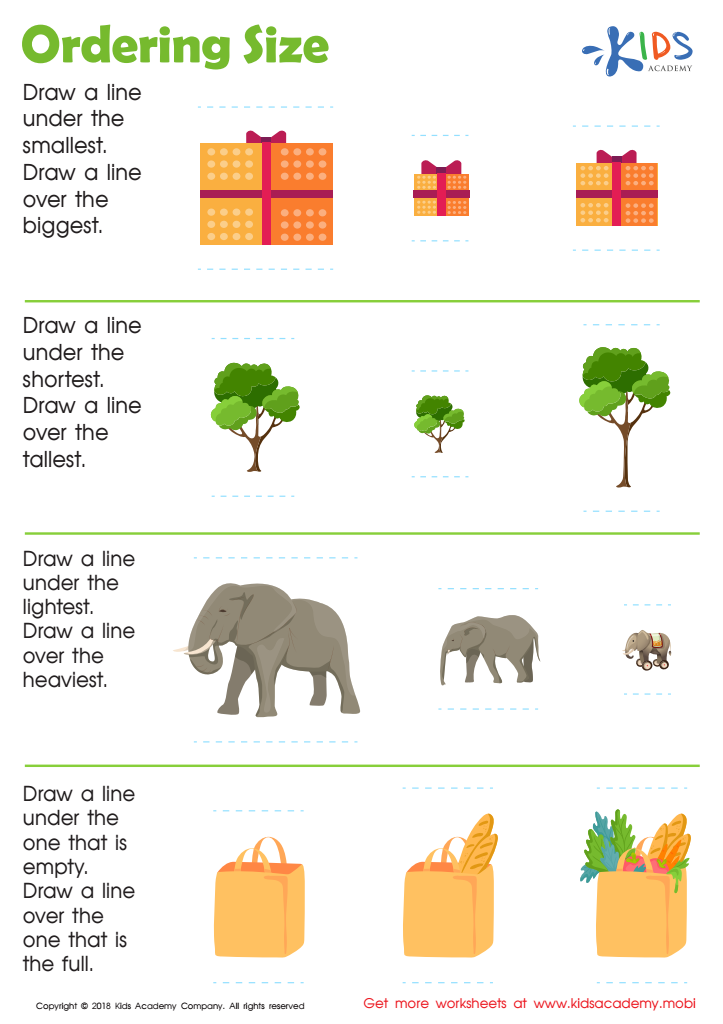
Ordering Size Worksheet
 Assign to My Students
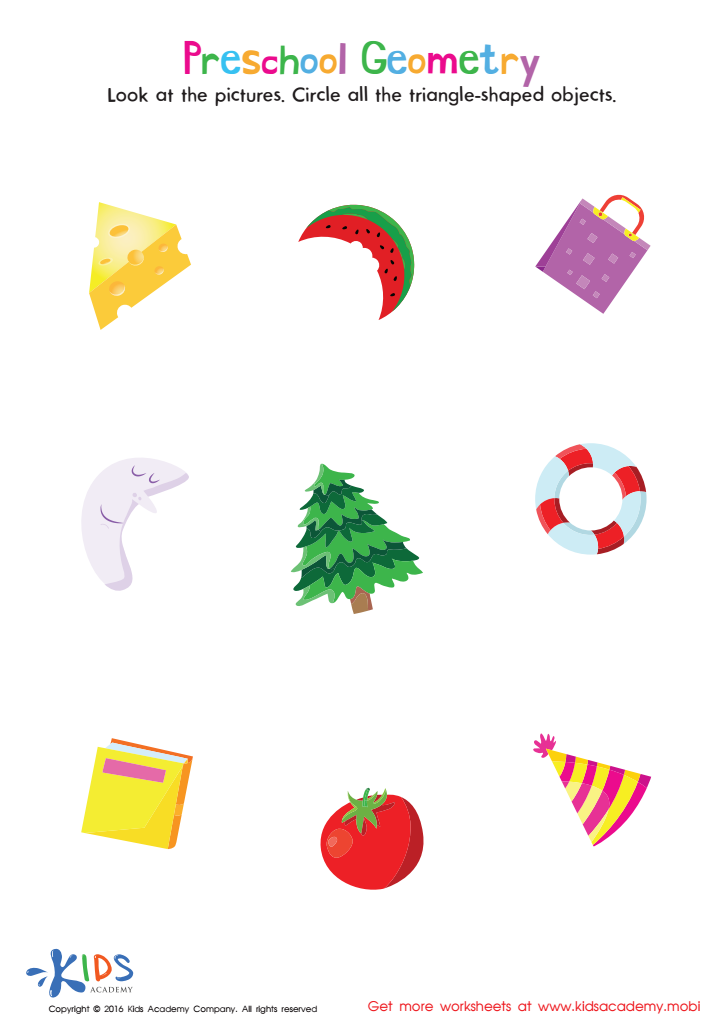
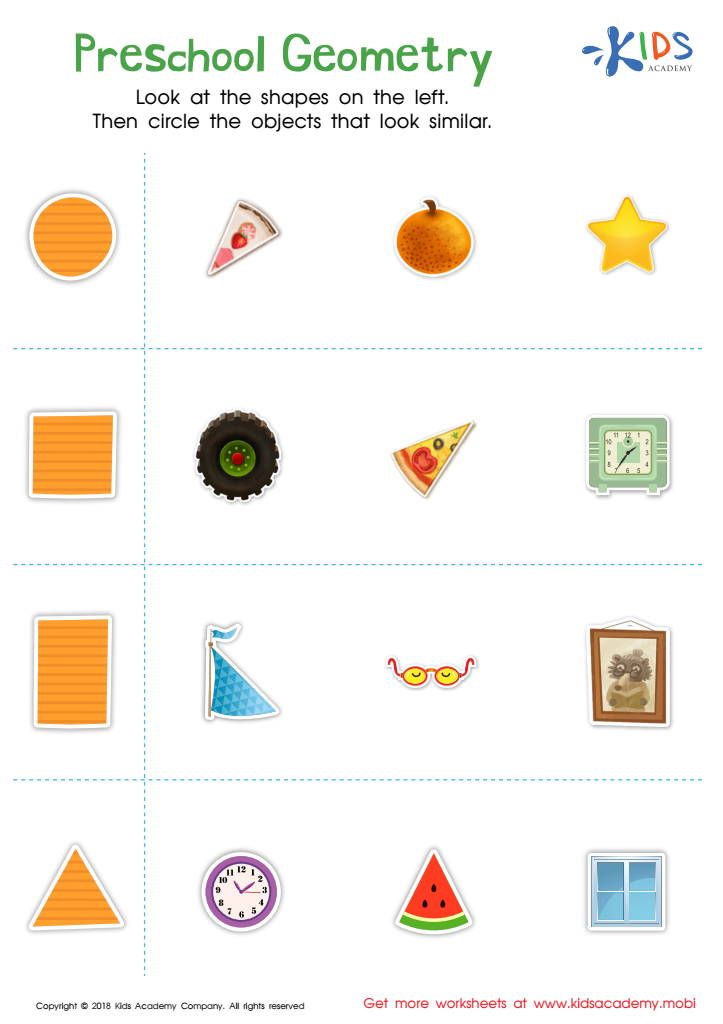
Preschool Geometry Worksheet



.jpg)




Basic geometry understanding is essential for children aged 3-5 as it lays the groundwork for critical thinking and problem-solving skills. At this developmental stage, children are naturally curious and eager to explore the world around them. Introducing basic geometric concepts helps them identify shapes, spatial relations, and patterns. This foundational knowledge not only strengthens their cognitive skills but also enhances their ability to reason and categorize information.
Furthermore, early geometry skills feed into later mathematics understanding, such as addition, subtraction, and even more complex concepts. Shape recognition and an understanding of dimensions boost children's ability to visualize and manipulate objects, essential skills in daily life and future learning. Through playful activities, parents and teachers can engage young learners in hands-on experiences that make geometry accessible and enjoyable, such as sorting shapes, building with blocks, or engaging in art projects.
Moreover, spatial awareness gained through basic geometry enhances children’s motor skills, as they learn to navigate their environments. Ultimately, fostering a strong foundation in geometry during these formative years not only supports academic success but also nurtures creativity, analytical thinking, and a lifelong love for learning. Parents and teachers play a vital role in guiding this exploration, making their involvement essential.








