
Rhyming skills development Normal Worksheets for Ages 3-5
3 filtered results
Difficulty Level
Grade
Age
-
From - To
Subject
Activity
Standards
Discover engaging Rhyming Skills Development Worksheets designed for children ages 3-5! Our thoughtfully crafted resources encourage young learners to explore the fun of rhyming, fostering their language skills and phonemic awareness. Each worksheet includes playful activities that challenge children to identify, match, and create rhymes, making learning both effective and enjoyable. Ideal for parents and educators, these worksheets support early literacy development while keeping little ones entertained. Enhance your preschooler's vocabulary and auditory skills with our accessible, printable materials. Start the journey to mastering the art of rhyming today and watch them flourish in their language development!
Favorites
With answer key
Interactive
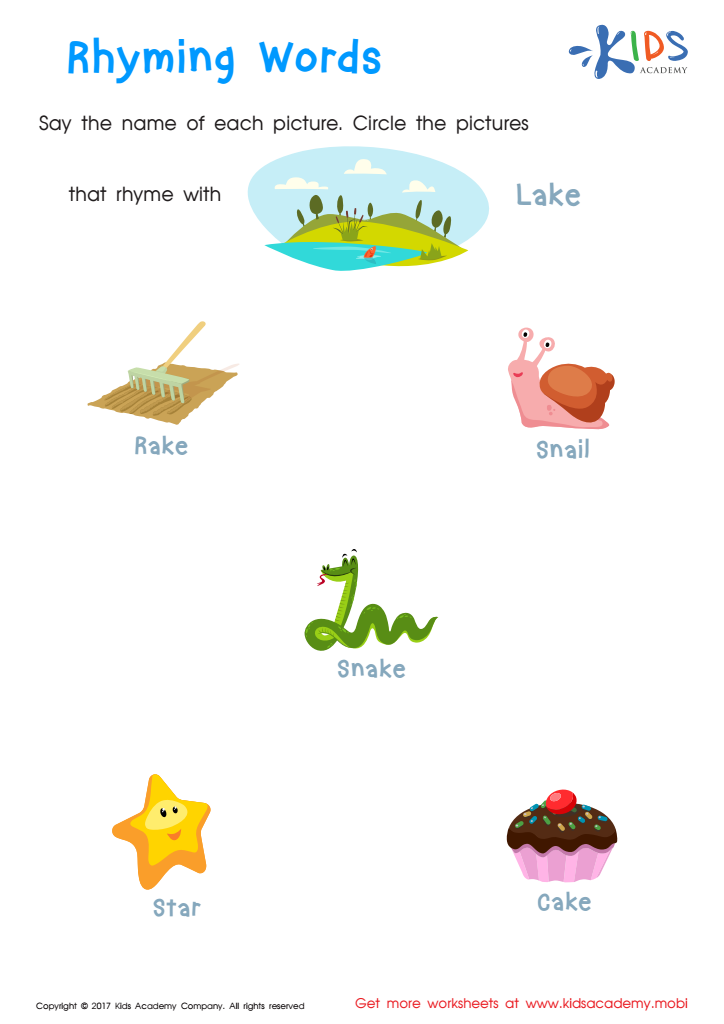
Rhyming Words Rhyming Worksheet
This worksheet is great for honing pre-reading skills. It helps kids make connections between pictures and written words, use problem-solving, and recognize sounds and words that rhyme. Have fun exploring rhyming words with your child, and they'll be rhyming in no time!
 Assign to My Students
Rhyming Words Rhyming Worksheet
Worksheet
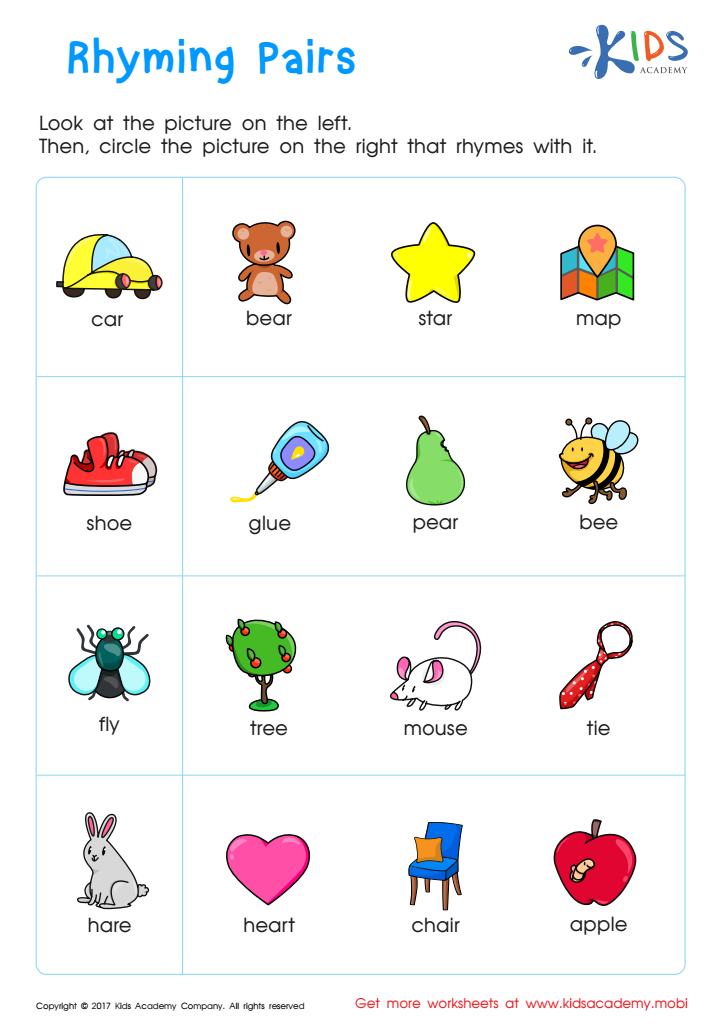
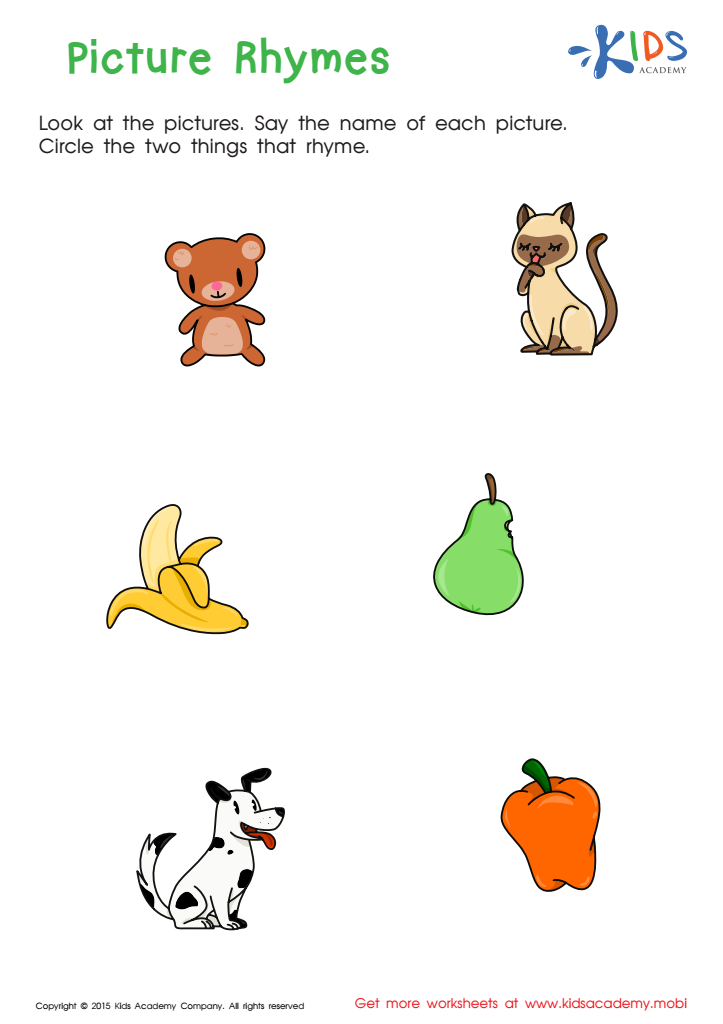
First Words: Picture Rhymes Worksheet
Rhyming helps kids understand language, read and write better. This printable worksheet boosts problem-solving and cognitive skills with vibrant pictures. It teaches kids to identify words, recognize rhymes, complete mental tasks and write words. An extra activity: show them how rhyming words share some of the same letters.
First Words: Picture Rhymes Worksheet
Worksheet
Join Kids Academy for Free
Who is primarily going to use this learning content?






.jpg)

Rhyming skills development is crucial for children ages 3-5, as it plays a significant role in their early literacy and language acquisition. At this stage, children are rapidly developing their phonemic awareness, the understanding of sounds in spoken language, which is foundational for reading skills later on. Rhyming helps enhance this awareness by allowing children to identify and manipulate sounds in words, fostering their ability to hear patterns, syllables, and sounds.
Additionally, engaging with rhymes aids vocabulary expansion and promotes expressive language skills. When children are exposed to rhyming activities—such as songs, nursery rhymes, and playful poetry—they develop an ear for language and the nuances of word choice. This exposure boosts their motivation and interest in reading and storytelling.
Furthermore, rhyming can increase memory skills. The repetitive and predictable nature of rhymes creates a fun learning environment, making it easier for children to remember words and concepts. It also enhances listening and attentiveness, which are vital for successful learning.
In essence, instilling rhyming skills in early childhood cultivates a love for language, setting the foundation for literacy while improving cognitive, social, and emotional development. Thus, parents and teachers should prioritize engaging children in rhyming activities.








