Welcome to our Story Sequencing Worksheets for Ages 3-5! Designed to spark your child's imagination and enhance their understanding of narrative structure, these engaging worksheets help young learners organize events in a logical order. Perfect for preschoolers, each activity promotes critical thinking and boosts comprehension skills as they explore fun, age-appropriate stories. With vibrant illustrations and simple instructions, your little ones will enjoy sorting events while developing their language abilities. Support your child's educational journey with these interactive and entertaining resources, fostering a love for storytelling and enhancing communication skills in a playful manner. Start their adventure today!

Check out this FREE "Story sequencing" Trial Lesson for age 3-5!

Identify Characters, Settings, and Major Events in a Story

Favorites
With answer key
Interactive
  • 3-5
  • Story sequencing
  • Normal
“The Princess and the Pea” and “Cinderella” Worksheet

“The Princess and the Pea” and “Cinderella” Worksheet

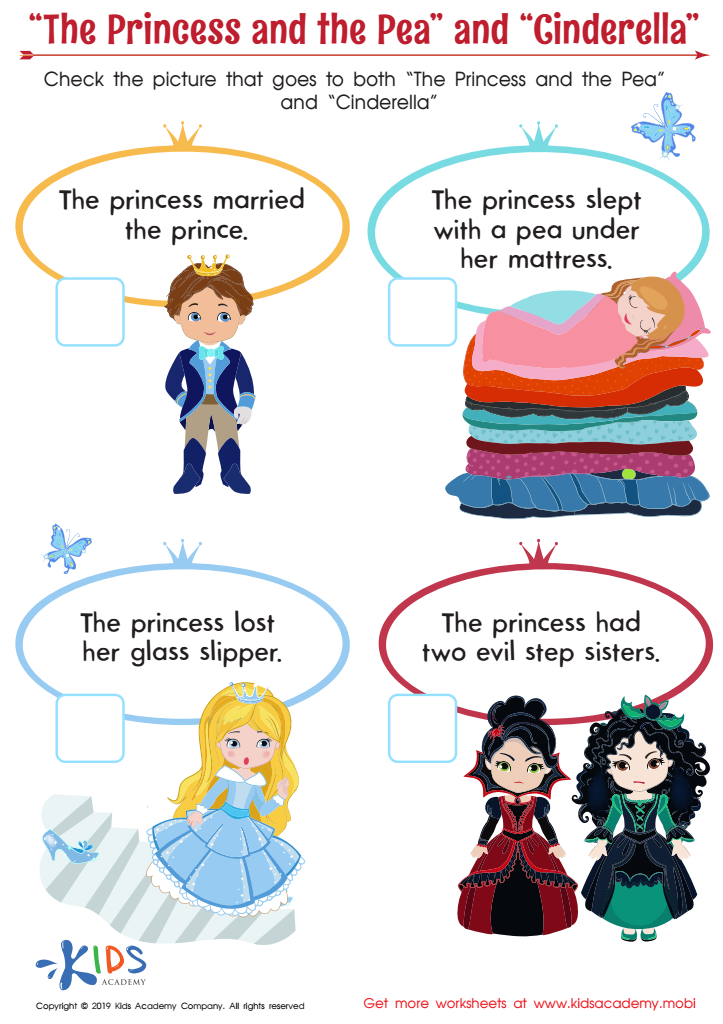
Read "Cinderella" and "The Princess and the Pea" to your little ones. Ask them what their favorite parts were and what similarities they found in the princesses. This worksheet has four pictures of scenes from the stories. Ask your kids which picture goes with both tales.
“The Princess and the Pea” and “Cinderella” Worksheet
Worksheet
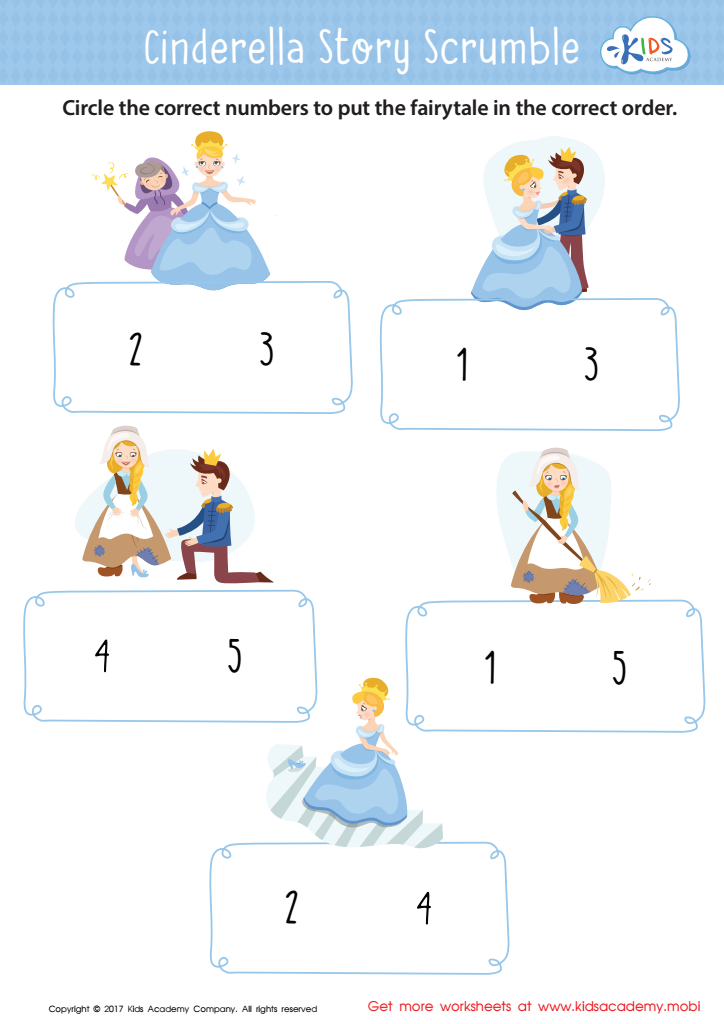
Cinderella story sequencing worksheet

Cinderella Story Sequencing Worksheet
This worksheet helps strengthen reading comprehension skills by getting your child to remember key moments from the Cinderella story. They'll be asked to place pictures in the right order to tell the story.
Cinderella Story Sequencing Worksheet
Worksheet
Picture in Books Worksheet

Picture in Books Worksheet

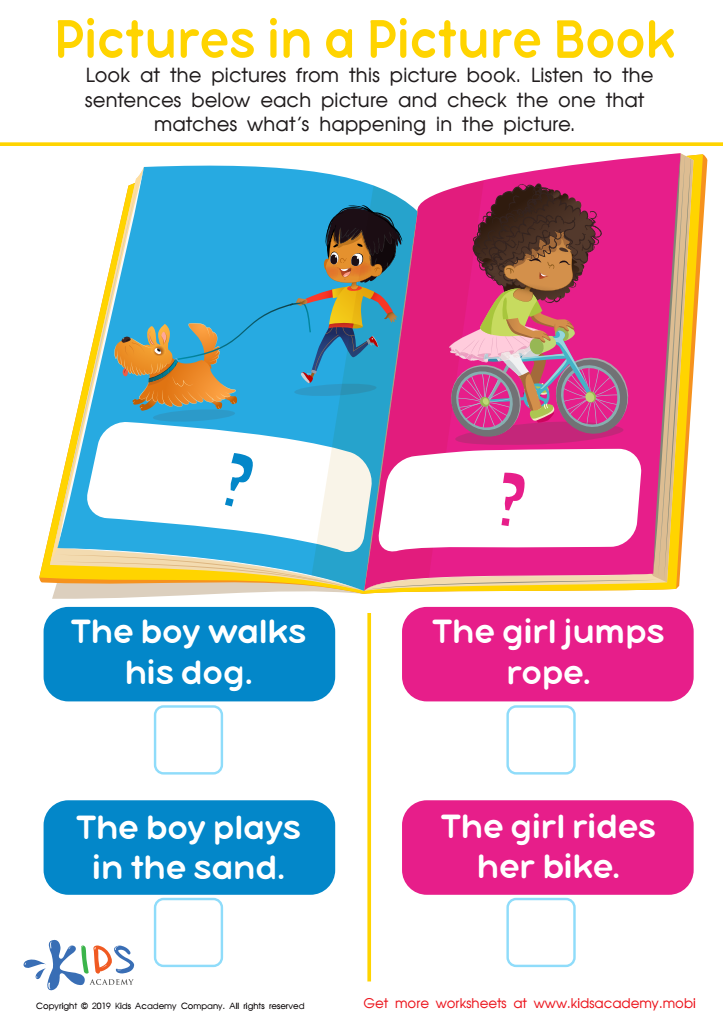
Picture books are popular with students - they're easier to read and understand because of the captions and illustrations. With preschoolers, look at the pictures in the book and read the sentences in the worksheet. Help them choose the one that matches the scene.
Picture in Books Worksheet
Worksheet
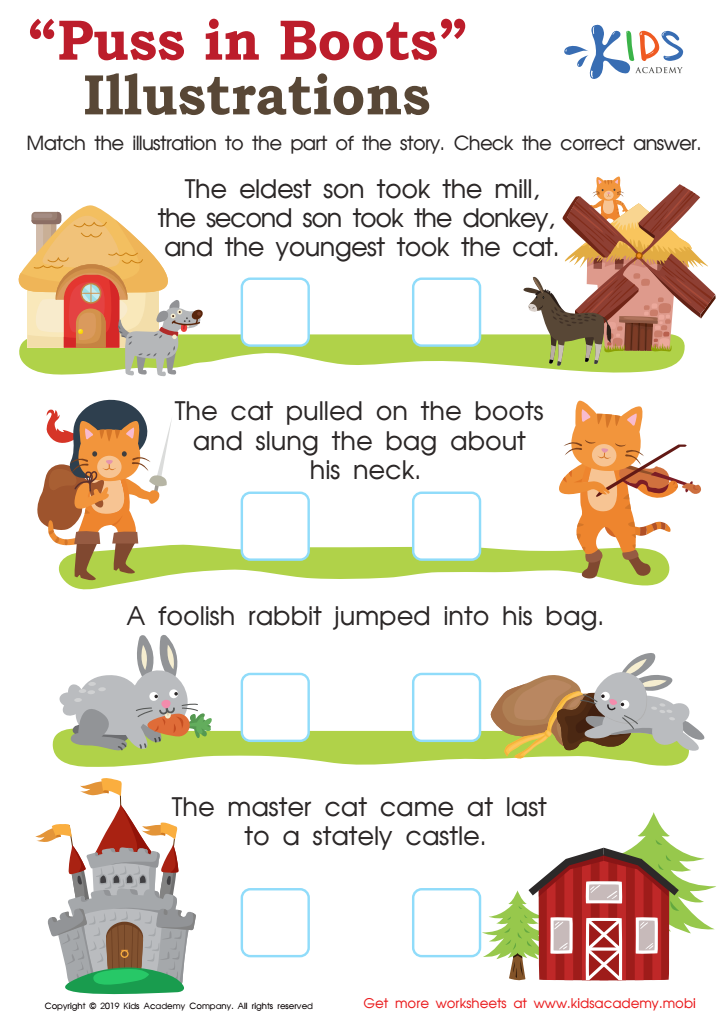
Puss in Boots Illustrations Worksheet

Puss in Boots Illustrations Worksheet

This Puss In Boots Illustrations worksheet is a great way to help kids learn about retelling stories. They'll match images to different parts of the story and check off the correct answer. As they recall events and put them in sequence they'll enjoy this fun and creative activity.
Puss in Boots Illustrations Worksheet
Worksheet
Three Little Pigs Questions Worksheet

Three Little Pigs Questions Worksheet

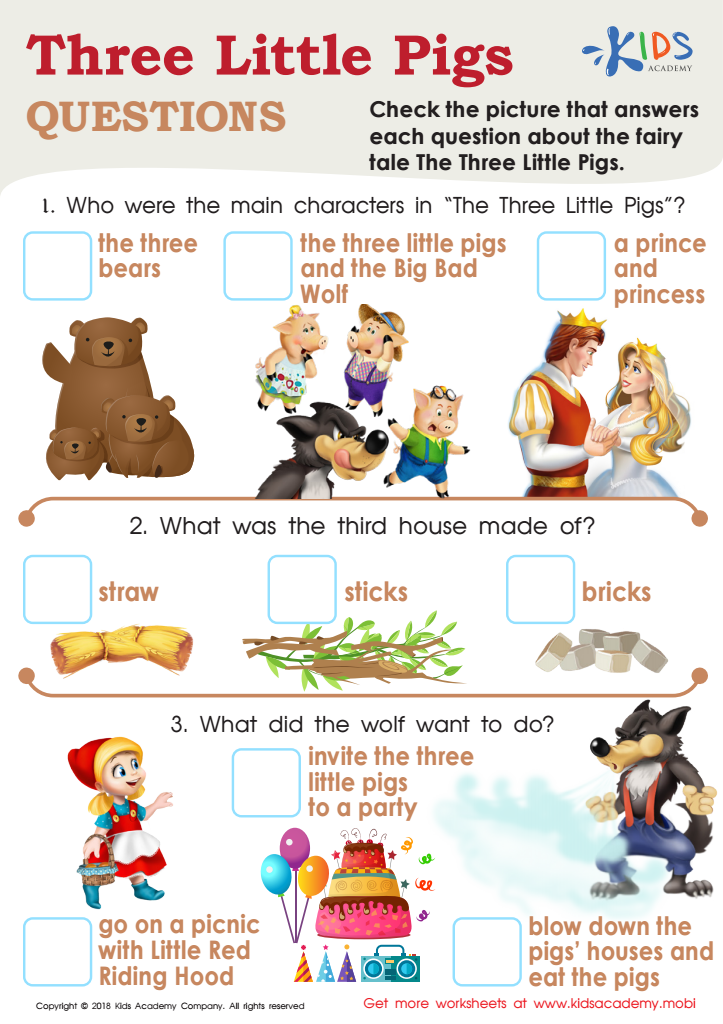
Does your kid love bedtime stories? Test their classic fairytale knowledge with this worksheet! If they mention The Three Little Pigs, they're in luck - this pdf has them answering questions based off the classic fairytale. They'll check the picture that answers each question about the story. Is their fairytale knowledge up to scratch?
Three Little Pigs Questions Worksheet
Worksheet
Printable Matching Games for Kids

Matching: Plants Worksheet

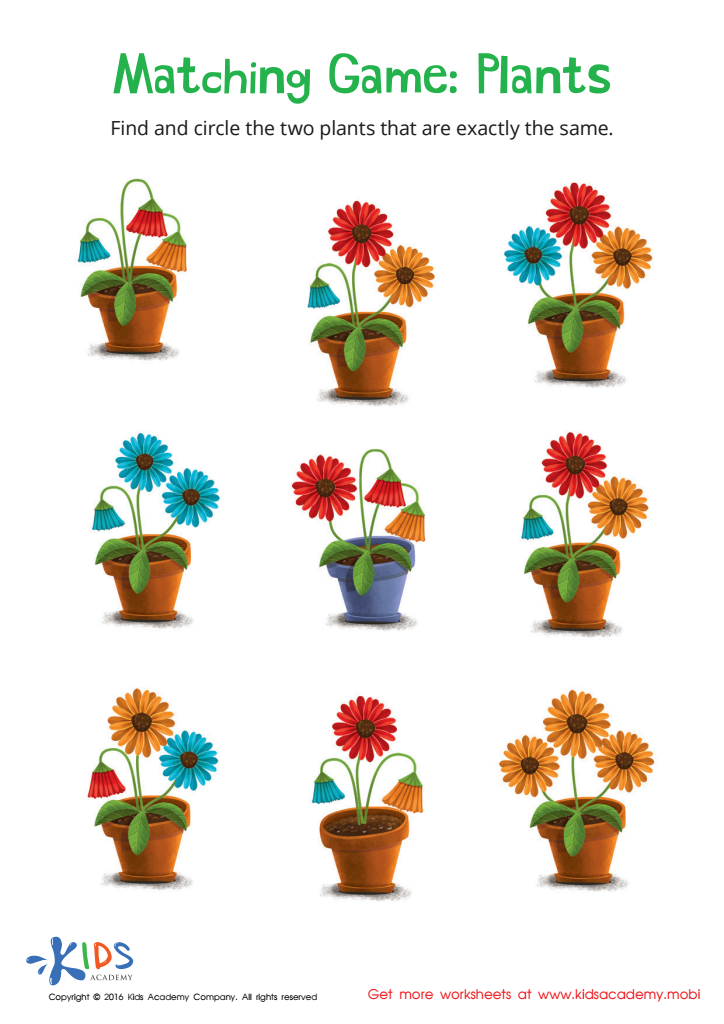
This worksheet helps your child focus on details to build pattern recognition, problem solving and sorting/matching skills. Your child will enjoy the challenge of searching for similar images that match. Point out how small differences can exist in similar things and excite them with bright pictures and a fun challenge.
Matching: Plants Worksheet
Worksheet
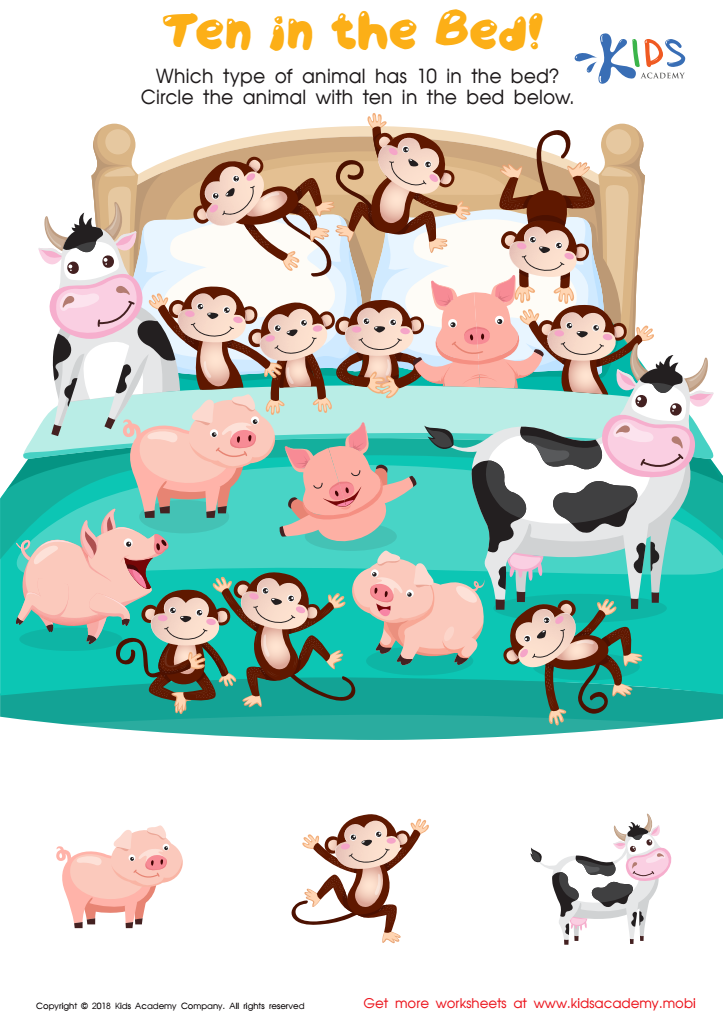
Ten in the Bed Worksheet

Ten in the Bed Worksheet

This fun worksheet has your kids counting and sorting friendly animal faces in a bed of ten! It's a great way for them to practice their mental math skills, like adding and multiplying more efficiently. Plus, it brings a new meaning to the classic song "Monkeys Jumping on the Bed"!
Ten in the Bed Worksheet
Worksheet
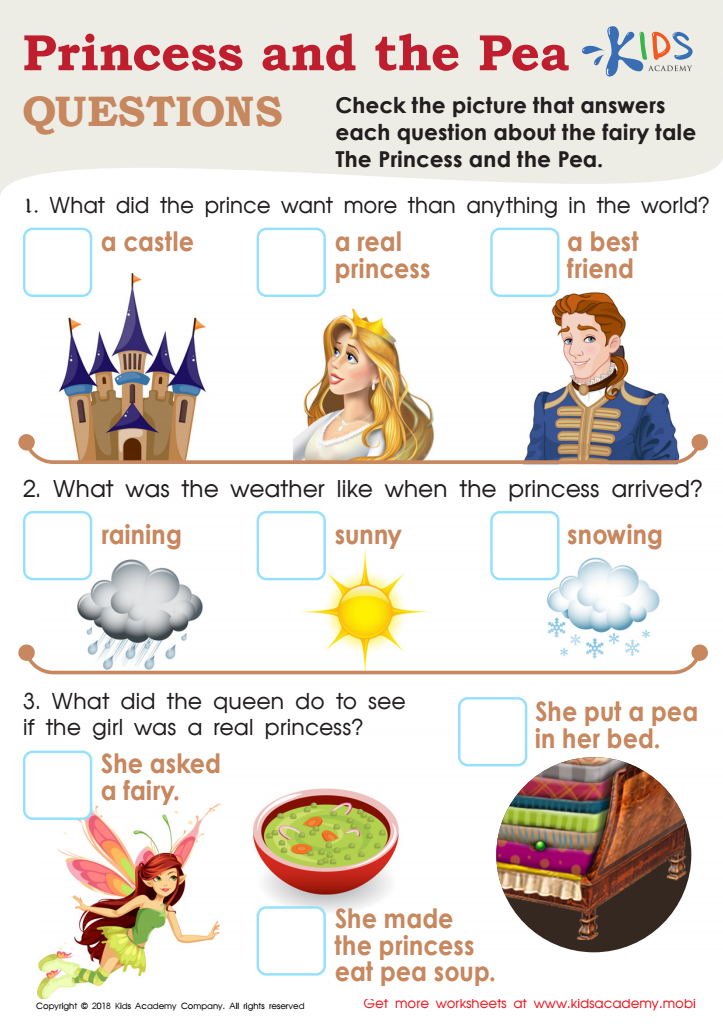
Princess and the Pea Questions Worksheet


Princess and the Pea Questions Worksheet
Your kid knows The Princess and the Pea inside-out? Test their knowledge with this worksheet. Ask your little one to read the questions and match each one to the picture. It's a fun way to see just how much attention they've paid to their bedtime story.
Princess and the Pea Questions Worksheet

Worksheet


Story sequencing is a vital skill for children ages 3-5 as it lays the foundation for their cognitive, language, and social development. For parents and teachers, understanding its importance can significantly enhance a child's learning experience.

First, story sequencing helps children develop critical thinking and comprehension skills. By learning to arrange events in a logical order, they practice recognizing patterns in narratives, which deepens their understanding of cause and effect. This skill is not only applicable in storytelling but also in daily life situations, fostering independent problem-solving abilities.

Additionally, sequencing encourages language development. As children articulate the sequence of events, they expand their vocabulary and narrative skills, enabling them to express themselves more clearly and confidently. This lays the groundwork for proficient reading and writing as they progress in their educational journey.

Furthermore, engaging in story sequencing activities can promote social skills as children often work together in groups, discussing and negotiating story order. This collaborative aspect nurtures teamwork and communication skills essential for their social-emotional development.

In essence, emphasizing story sequencing offers children a robust framework to thrive academically and socially, making it a crucial focus for parents and teachers alike.