Critical Thinking Normal Geometry Worksheets for Ages 3-5
5 filtered results
-
From - To
Unlock your child's potential with our engaging Critical Thinking Normal Geometry Worksheets designed for ages 3-5. These interactive activities foster essential cognitive skills while introducing young learners to fundamental geometric concepts. Our worksheets encourage children to explore shapes, sizes, and spatial relationships, helping them develop critical thinking and problem-solving abilities in a fun, nurturing way. Each activity is crafted to promote creativity and enhance early learning experiences. Suitable for home or classroom use, these worksheets are a valuable resource for educators and parents alike, supporting your child's journey into the world of mathematics with confidence and curiosity. Download now to inspire learning!
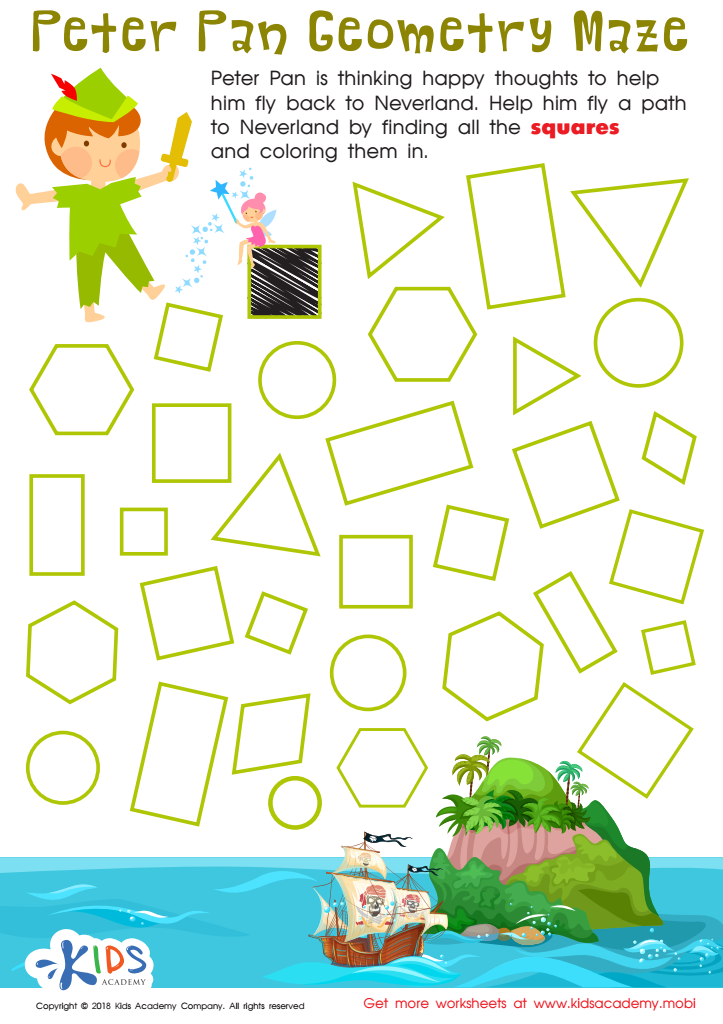
Peter Pan Worksheet
 Assign to My Students











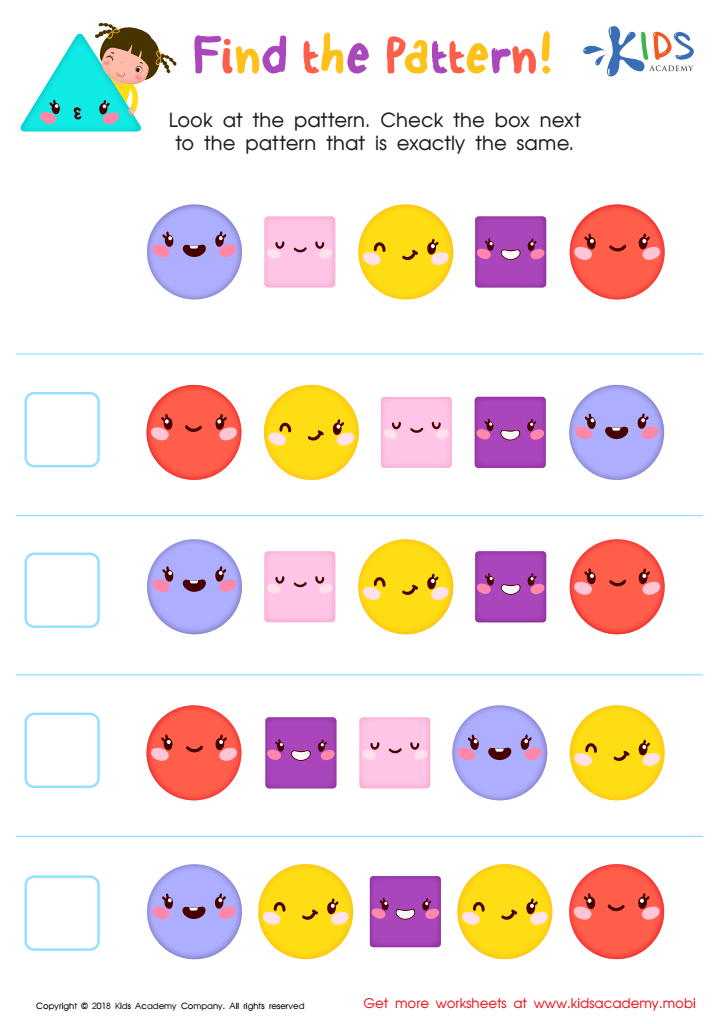
Find the Pattern Worksheet
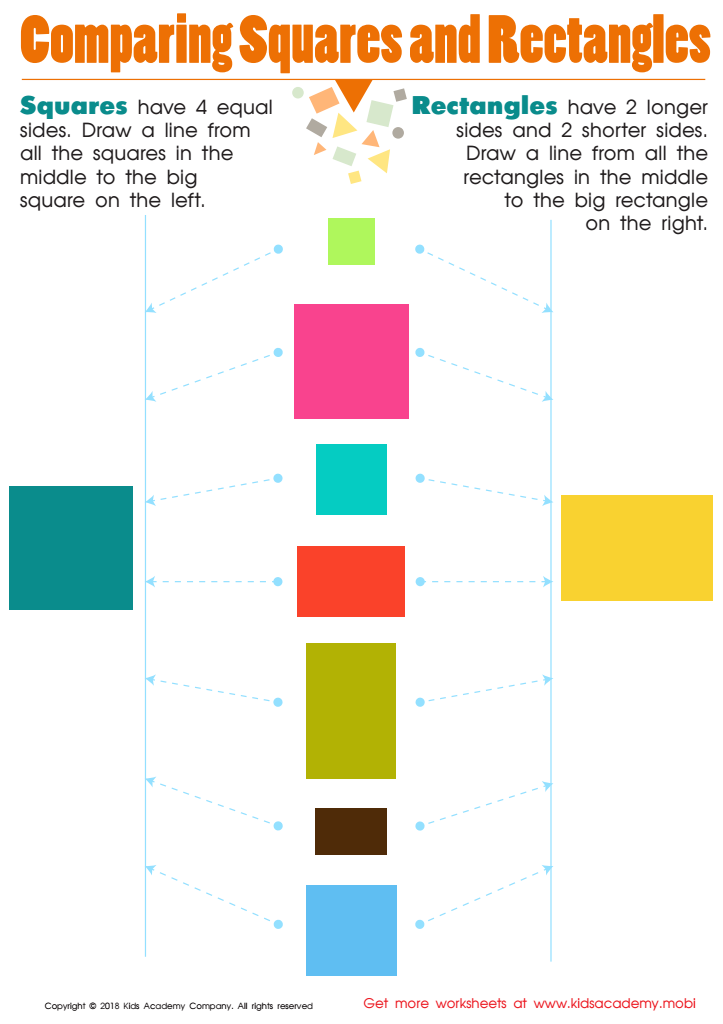
Comparing Squares Rectangles Worksheet
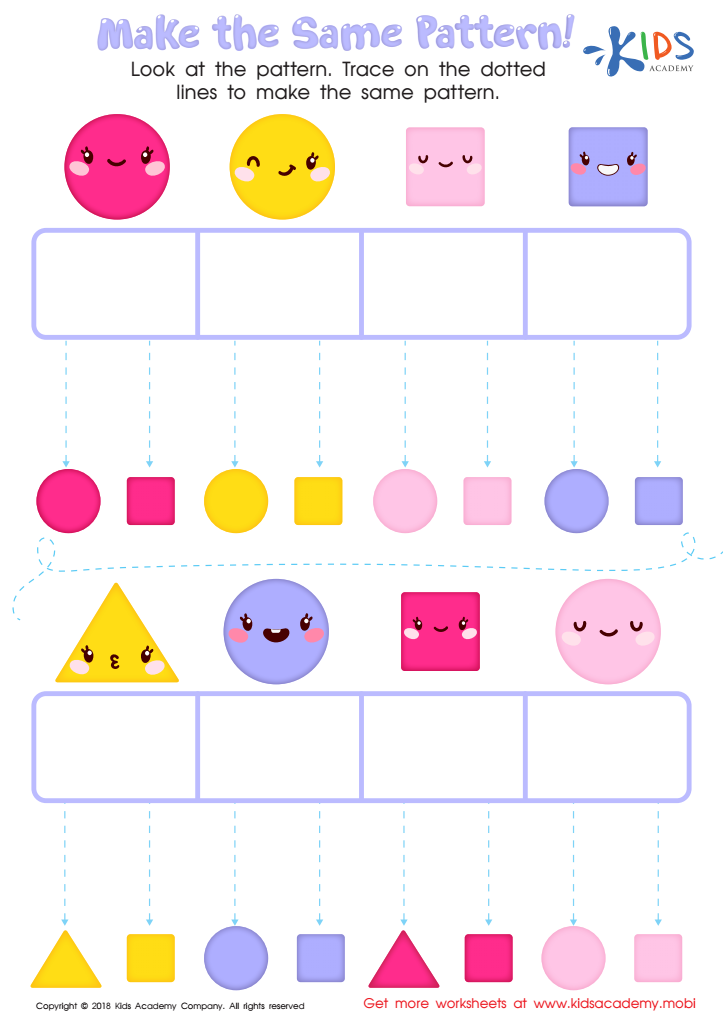
Make the Same Pattern Worksheet
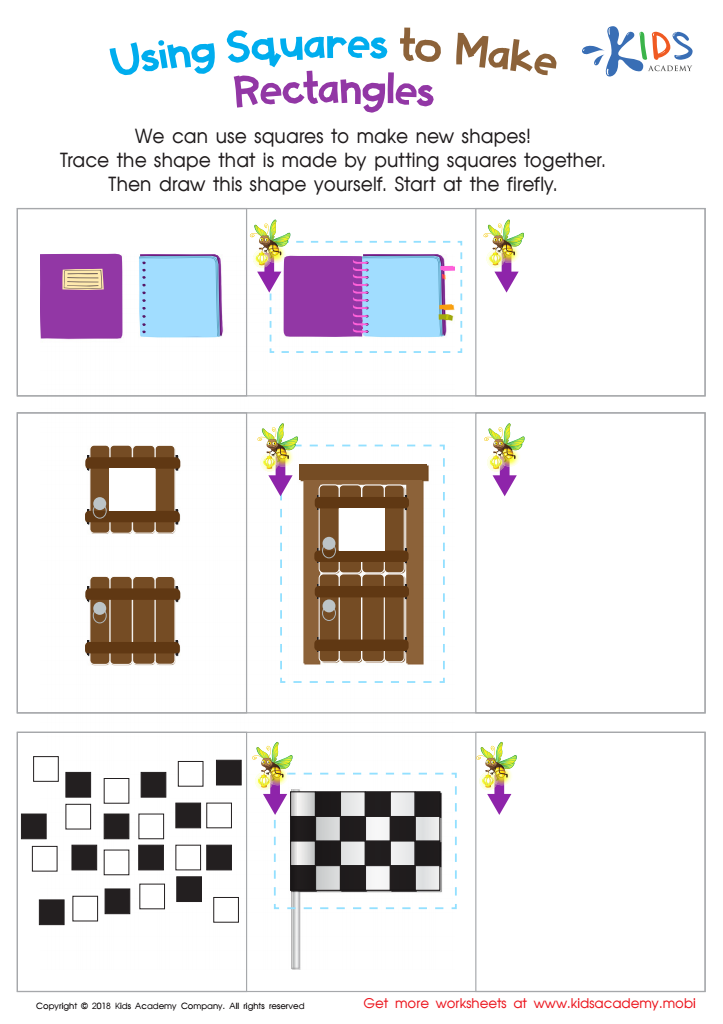
Using Squares to Make Rectangles Worksheet








Critical Thinking Normal Geometry for Ages 3-5 is essential for young children's cognitive development. Early exposure to geometric concepts nurtures spatial awareness, problem-solving abilities, and logical reasoning skills. These foundational math skills are key for later academic success and can influence a child's confidence in learning.
When parents and teachers prioritize critical thinking in geometry at this stage, they encourage children to explore relationships between shapes, recognize patterns, and engage in hands-on problem-solving. By manipulating objects and visualizing concepts, children develop a strong mental foundation that supports advanced math and critical thinking in later grades.
Moreover, geometry is not just confined to the classroom; it permeates daily life. Whether identifying shapes on the playground or arranging toys, toddlers continuously interact with geometric concepts. Guiding them through these experiences enhances their observational skills and promotes curiosity.
Additionally, nurturing critical thinking through geometry fosters communication skills as children learn to articulate their observations and reasoning. This interactive process cultivates self-direction and empowers young learners to become confident thinkers. Ultimately, parents and teachers who support critical thinking in normal geometry provide children with tools they need to succeed academically and thrive in an increasingly complex world.








