Understanding prepositions Normal Geometry Worksheets for Ages 3-5
3 filtered results
-
From - To
Explore our "Understanding Prepositions Normal Geometry Worksheets" designed specifically for children aged 3-5! These engaging worksheets introduce young learners to fundamental prepositional concepts through fun geometry-themed activities. Children will enhance their spatial awareness by identifying positional relationships using vibrant images and interactive tasks. Our resources support early language development, helping little ones grasp the essentials of position words such as "above," "below," "next to," and more. Perfect for home or classroom use, these worksheets foster both math and language skills in a playful and nurturing environment. Ignite curiosity and boost learning with our thoughtfully crafted geometry worksheets!
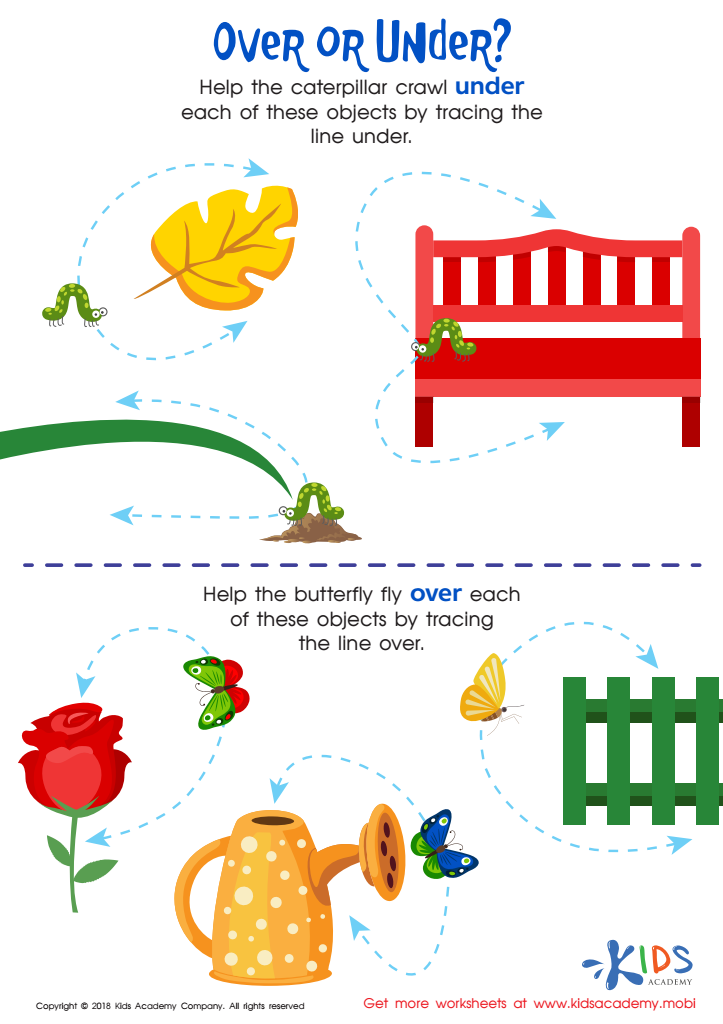
Over or Under? Worksheet
 Assign to My Students











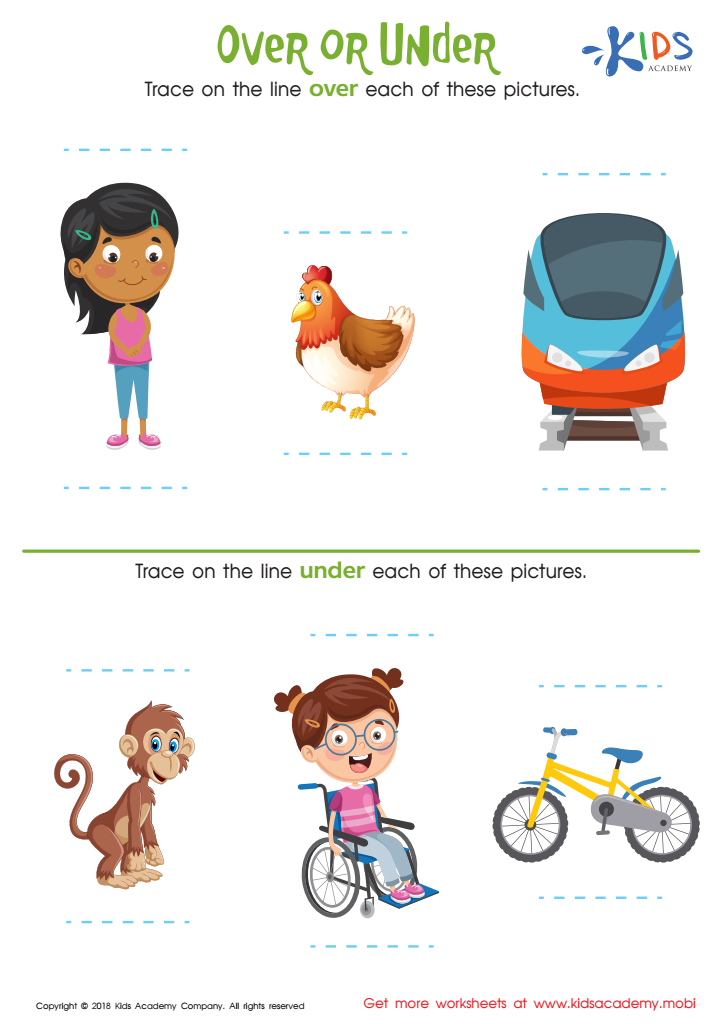
Over or Under Worksheet
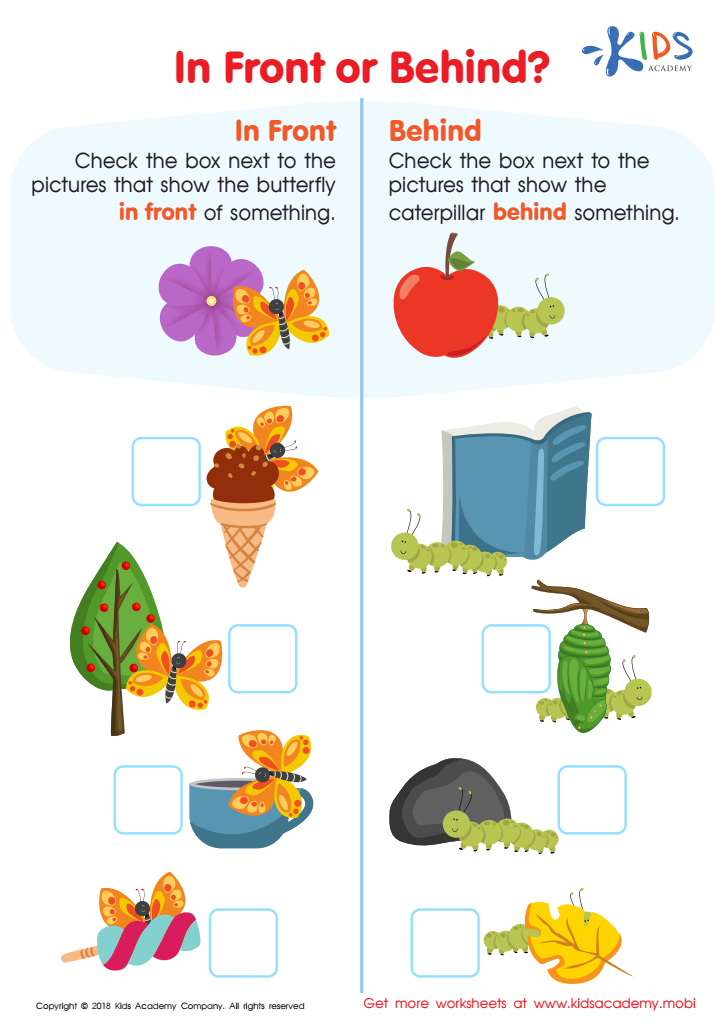
In Front or Behind Worksheet








Understanding prepositions and basic geometric concepts is crucial for children ages 3-5 as they lay the foundation for language skills and spatial awareness. Prepositions, such as “in,” “on,” “under,” and “between,” help children describe their environment, communicate effectively, and understand relationships between objects, which is essential as they begin to formulate thoughts and express ideas.
Additionally, introducing concepts in normal geometry—like shapes and spatial orientation—helps children recognize patterns, categorize objects, and develop problem-solving skills. Activities involving shapes such as circles, squares, and triangles foster cognitive development and hand-eye coordination through sorting and building activities. Learning geometry promotes critical thinking as children apply their knowledge in everyday situations.
Furthermore, integrating prepositions with geometric tools can make learning interactive and fun. For example, guiding children to place a block "on" a table or "under" a chair incorporates movement and real-life examples, enhancing understanding.
Ultimately, grasping these concepts at an early age supports literacy, numeracy, and overall cognitive development, equipping children with essential skills that will benefit them as they progress in their educational journey. Parents and teachers play a vital role in facilitating this learning, ensuring children are ready for future academic challenges.








