Basic geometry understanding Normal Math Worksheets for Ages 3-5
3 filtered results
-
From - To
Introduce your child to the exciting world of shapes with our "Basic Geometry Understanding" worksheets for ages 3-5. These normal math worksheets are designed to develop early geometry skills through fun and engaging activities. Your little one will learn to identify and differentiate between basic shapes like circles, squares, and triangles, as well as practice essential skills like sorting, matching, and counting. With colorful illustrations and easy-to-follow instructions, these worksheets make learning geometry a delightful experience for preschoolers and kindergarteners. Boost your child's confidence and mathematical foundation with these expertly crafted educational resources.
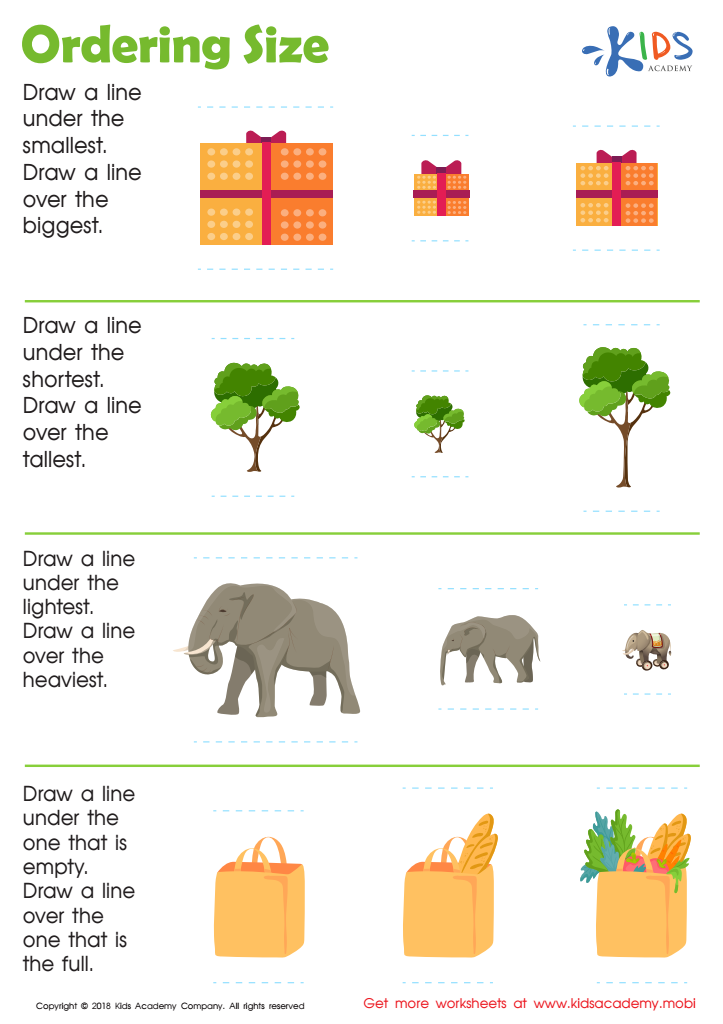
Ordering Size Worksheet
 Assign to My Students
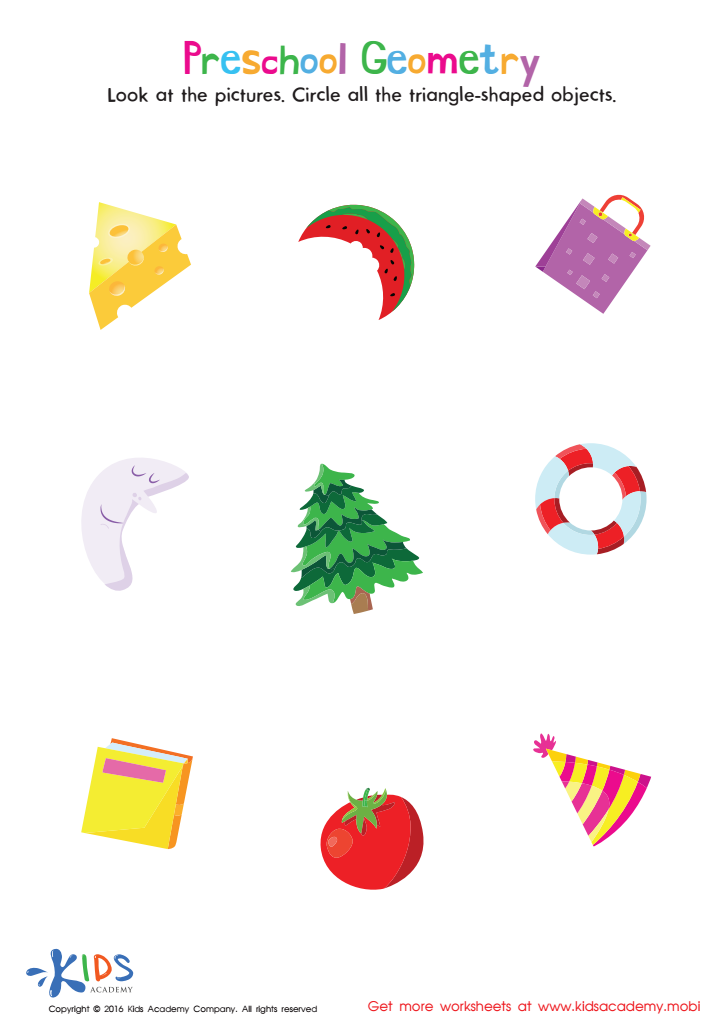
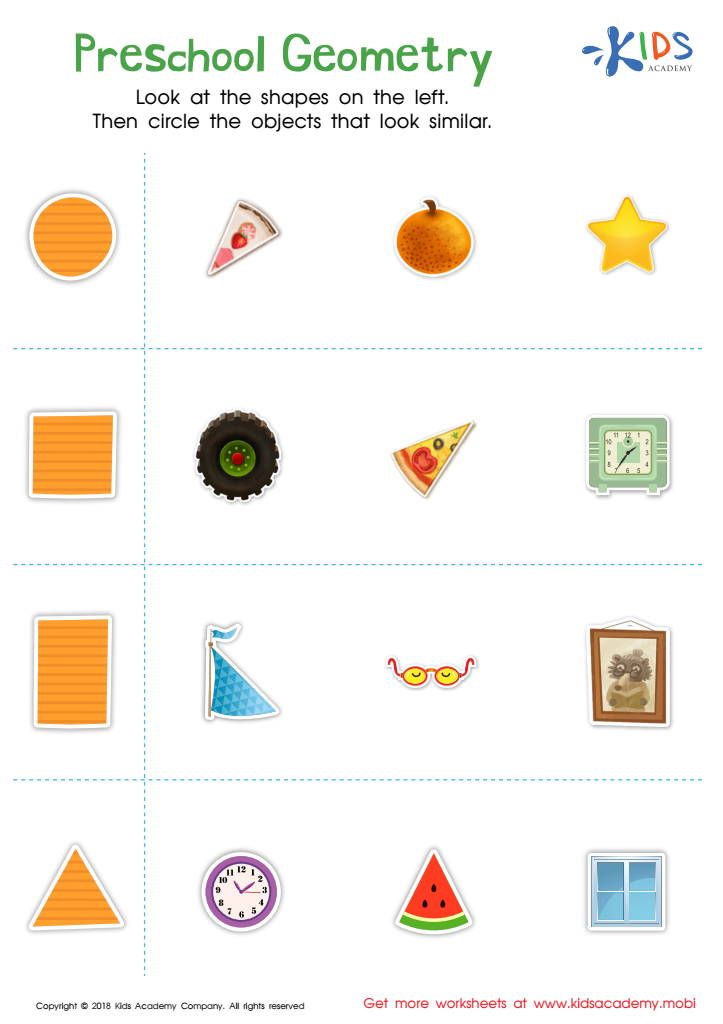
Preschool Geometry Worksheet







Basic geometry understanding is fundamental for children aged 3-5 as it builds a solid foundation for later mathematical learning and everyday life skills. At this young age, children are incredibly receptive to new concepts, and introducing them to geometry through playful and engaging activities can foster a lifelong interest in math.
Shapes, patterns, and spatial reasoning are key components of geometry that help children make sense of the world around them. Recognizing shapes such as circles, squares, and triangles helps children with visual and tactile identification, which is crucial for everything from reading to solving problems. For example, understanding that a square is different from a rectangle helps in distinguishing letters and numbers, an essential skill for literacy.
Spatial reasoning, another critical element of geometry, aids children in understanding directions, locations, and navigating their environment. These skills are crucial when they learn to organize objects, follow maps, or give and receive directions, fostering their independence and confidence.
Moreover, basic geometry fosters critical thinking and problem-solving skills. Kids learn to observe objects and patterns, compare and contrast them, and make predictions. These abilities are transferable to a wide range of disciplines and everyday situations.
In essence, incorporating basic geometry in early education equips children with indispensable skills that support their cognitive development, laying a strong groundwork for academic success and well-rounded development.








