Spatial reasoning Normal Math Worksheets for Ages 3-5
3 filtered results
-
From - To
Explore our engaging collection of spatial reasoning normal math worksheets designed specifically for young learners aged 3-5. These worksheets serve as a fun and interactive way to help children develop essential spatial awareness skills that are foundational for future math success. Through colorful illustrations and age-appropriate exercises, kids will practice sorting, matching, and visualizing shapes and patterns. Our carefully crafted activities not only enhance critical thinking but also foster a love for learning math concepts in a playful environment. Perfect for parents and educators looking to boost early learning experiences, these printable worksheets make mastering spatial reasoning easy and enjoyable!
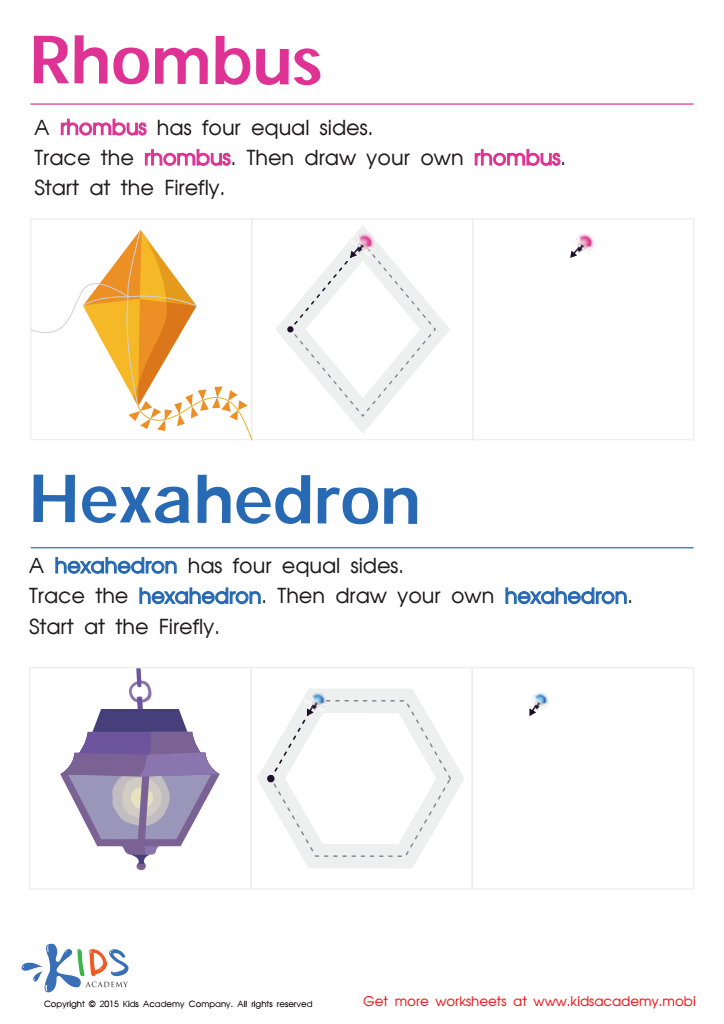
Draw a Rhombus And a Hexahedron Printable
 Assign to My Students
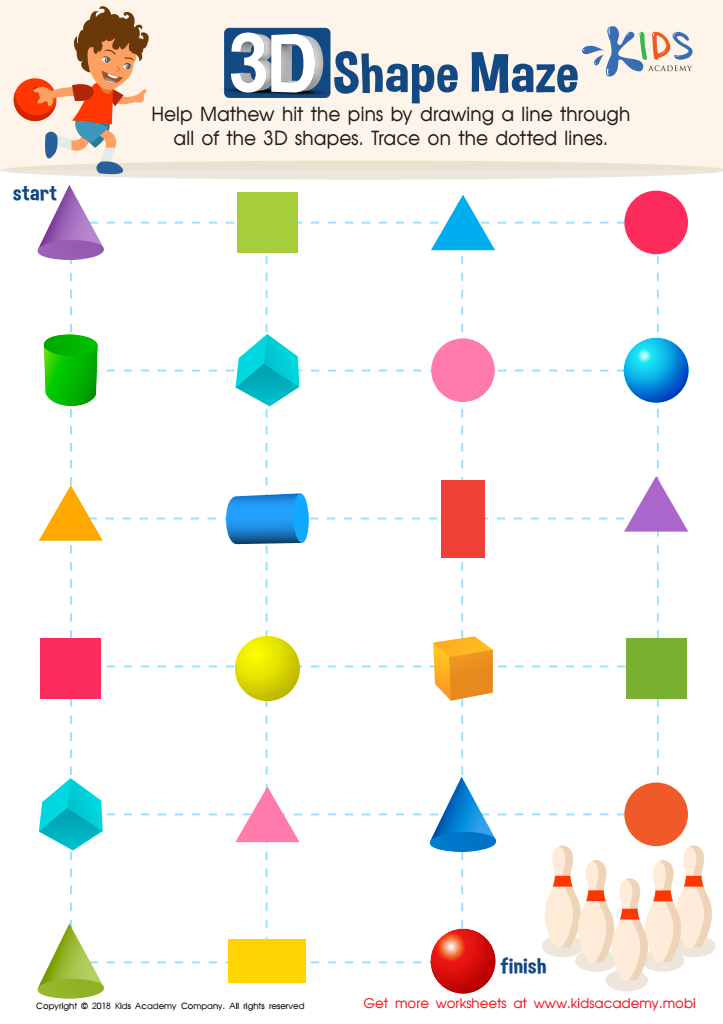
Shapes Maze Geometry Worksheet
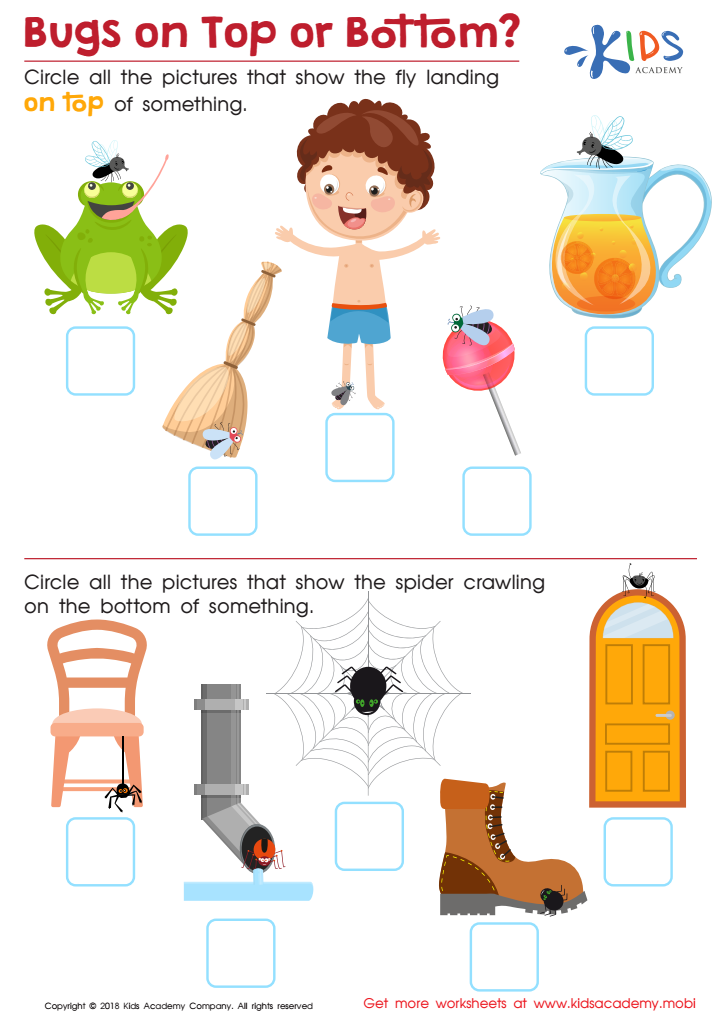
Bugs on Top or Bottom? Worksheet




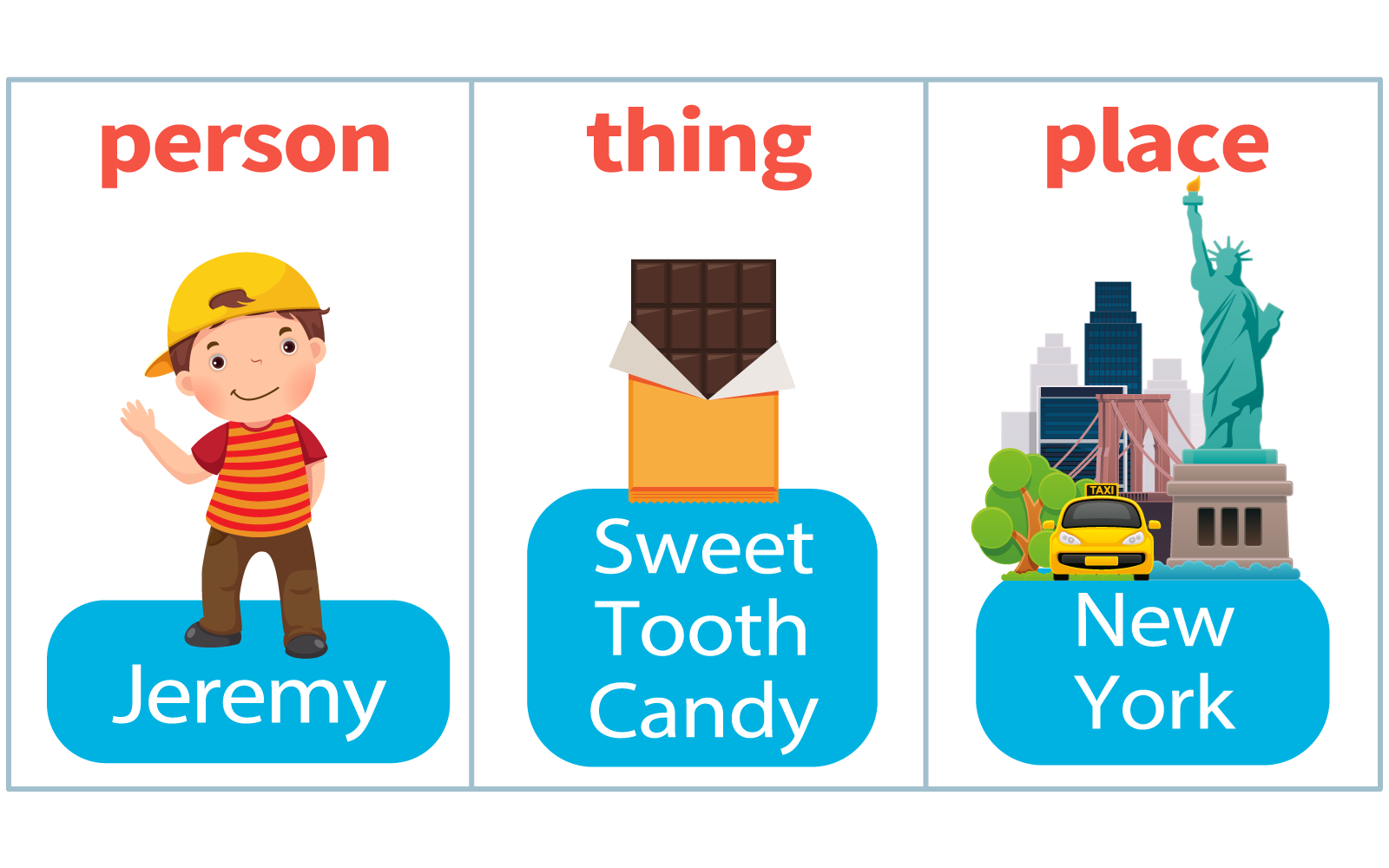


.jpg)
Spatial reasoning skills are crucial for children's early math development, particularly for those aged 3-5. Parents and teachers should prioritize these skills because they form a foundational component for understanding more advanced mathematical concepts, such as geometry, measurement, and problem-solving.
Spatial reasoning involves the ability to visualize, manipulate, and understand the relationships between objects in space, and it is closely linked to critical thinking and cognitive development. Thus, fostering the development of these skills can lead to improved performance in math and related disciplines as children progress through their education.
In early childhood, engaging in activities that promote spatial reasoning—such as building with blocks, playing with puzzles, or exploring movement through dance and games—encourages creativity, enhances motor skills, and supports language development through descriptive vocabulary.
Moreover, research indicates that strong spatial skills can predict later academic success, particularly in STEM fields, which are essential for future workforce opportunities. By investing time and resources into enhancing spatial reasoning in young children, parents and teachers equip them with necessary skills, boost their confidence in mathematics, and lay the groundwork for a lifelong love of learning.








