
Visual Perception Skills Normal Math Worksheets for Ages 3-5
3 filtered results
Difficulty Level
Grade
Age
-
From - To
Subject
Activity
Standards
Enhance your child's early math abilities with our Visual Perception Skills Normal Math Worksheets, designed specifically for ages 3-5. At Kids Academy, our printable resources focus on developing key visual perception skills, essential for young learners' mathematical understanding. These engaging worksheets include activities like matching, comparing, and recognizing patterns, which not only make learning fun but also set a strong foundation for future academic success. Foster your child's cognitive growth and prepare them for school with our expertly crafted, attention-holding exercises. Nurture their curiosity and confidence in math through hands-on learning and visual exploration.
Favorites
With answer key
Interactive
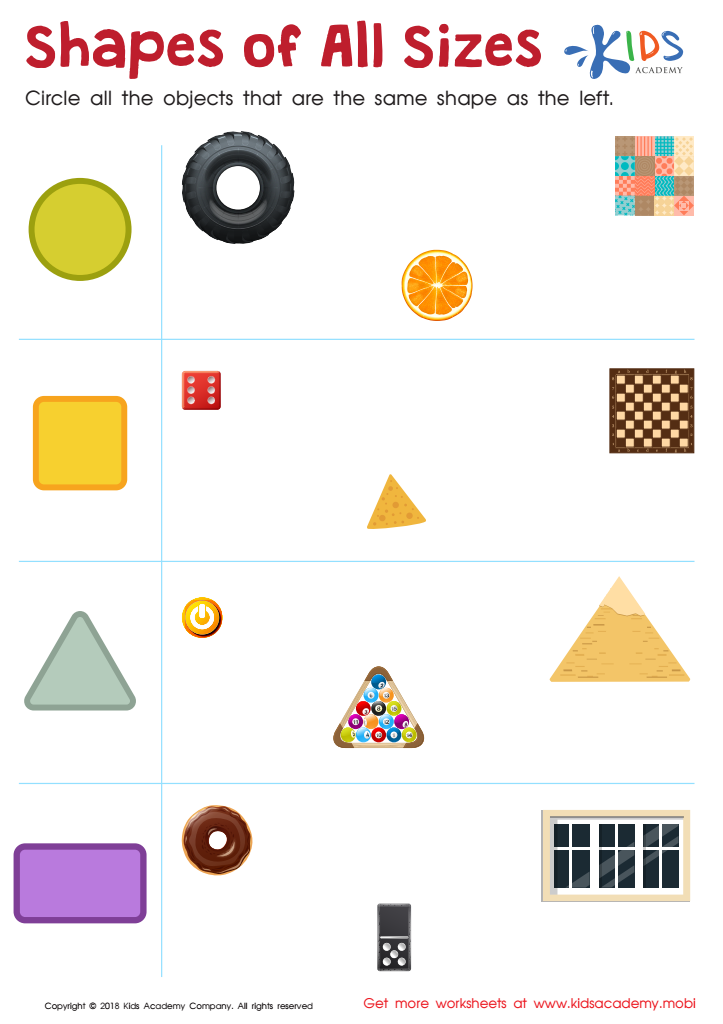
Shapes of All Sizes Worksheet
Students will have fun comparing basic shapes to familiar objects with this worksheet. It's an excellent way to help them recognize similarities in geometric shapes, building strong foundations for understanding congruence and similarity.
 Assign to My Students
Shapes of All Sizes Worksheet
Worksheet
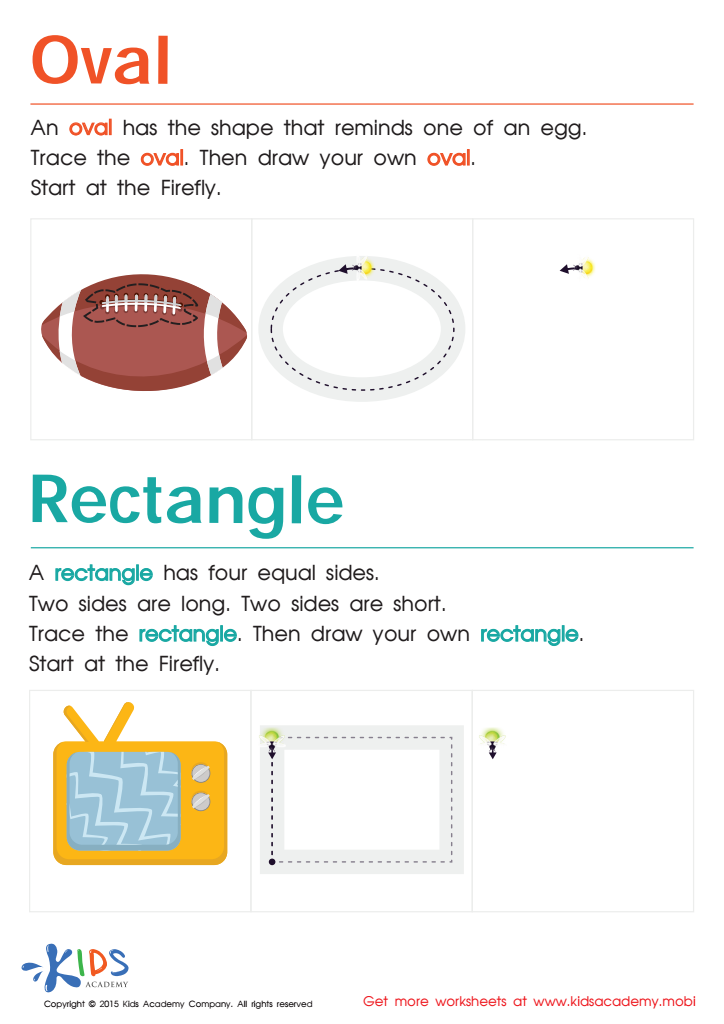
Easy Drawing of Ovals And Rectangles Worksheet
Kids Academy offers free geometry worksheets to make learning more fun and interesting. Trace an oval, rectangle, and many other shapes!
Easy Drawing of Ovals And Rectangles Worksheet
Worksheet
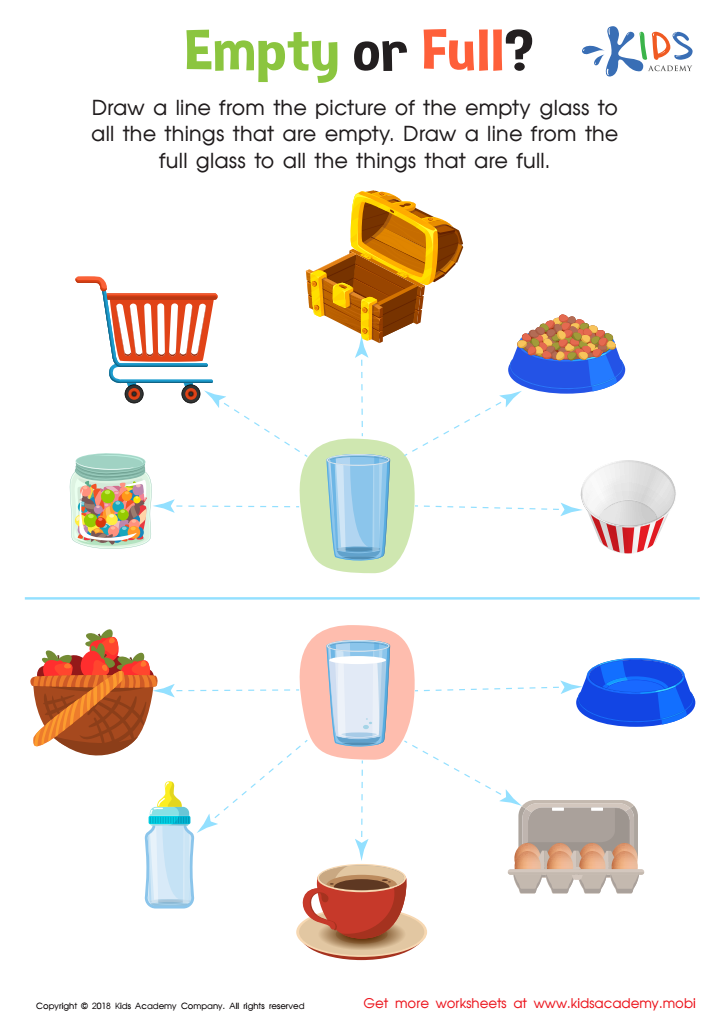
Empty or Full? Worksheet
Let students get to grips with the concepts of empty and full with this PDF worksheet. It uses fun, bright pictures to help them comprehend the difference and also helps develop fine-motor skills with tracing lines. Kids will be proud of themselves as they get answers right!
Empty or Full? Worksheet
Worksheet
Join Kids Academy for Free
Who is primarily going to use this learning content?







Visual perception skills are crucial building blocks in a child's early development, providing the foundation for effective learning and overall cognitive development. For ages 3-5, these skills go beyond simply being able to see; they encompass the brain’s ability to interpret, organize, and understand visual information. Both parents and teachers should prioritize the enhancement of visual perception skills because they directly influence a child's ability to succeed in various academic tasks, particularly in math.
Early math involves recognizing patterns, shapes, numbers, and spatial relationships – all of which are visual in nature. Strong visual perception skills help children better grasp mathematical concepts like counting, sorting, and basic geometry. For instance, when a child can accurately perceive different shapes and sizes, they can more easily comprehend geometric principles and perform tasks such as puzzles and block building. These activities, in turn, help sharpen problem-solving skills and logical thinking.
Furthermore, early proficiency in visual perception can positively affect other fundamental areas like reading, writing, and motor coordination. Children with well-developed visual perceptual abilities are often more confident and motivated learners. Consequently, both parents and teachers should actively include activities that strengthen these skills to support holistic educational development and set the stage for long-term academic success in children.








