Counting skills Normal Word Problems Worksheets for Ages 3-5
4 filtered results
-
From - To
Discover our engaging Counting Skills Normal Word Problems Worksheets designed specifically for children aged 3 to 5. These worksheets promote early math skill development through fun, relatable scenarios that make learning enjoyable. Each activity encourages young learners to practice counting while solving simple word problems, fostering critical thinking and problem-solving abilities. Ideal for both home and classroom environments, these resources support early numeracy and build a strong foundation for future math success. Watch your child gain confidence and mastery in counting as they explore various engaging themes, from animals to everyday objects. Start their counting adventure today!
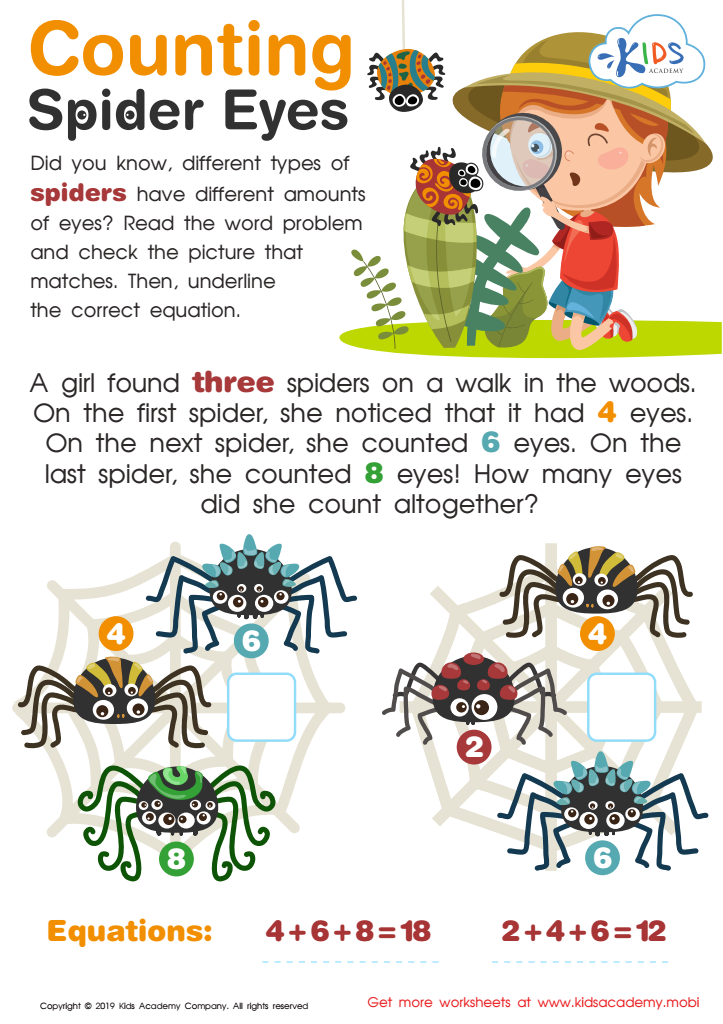
Counting Spider Eyes Worksheet
 Assign to My Students
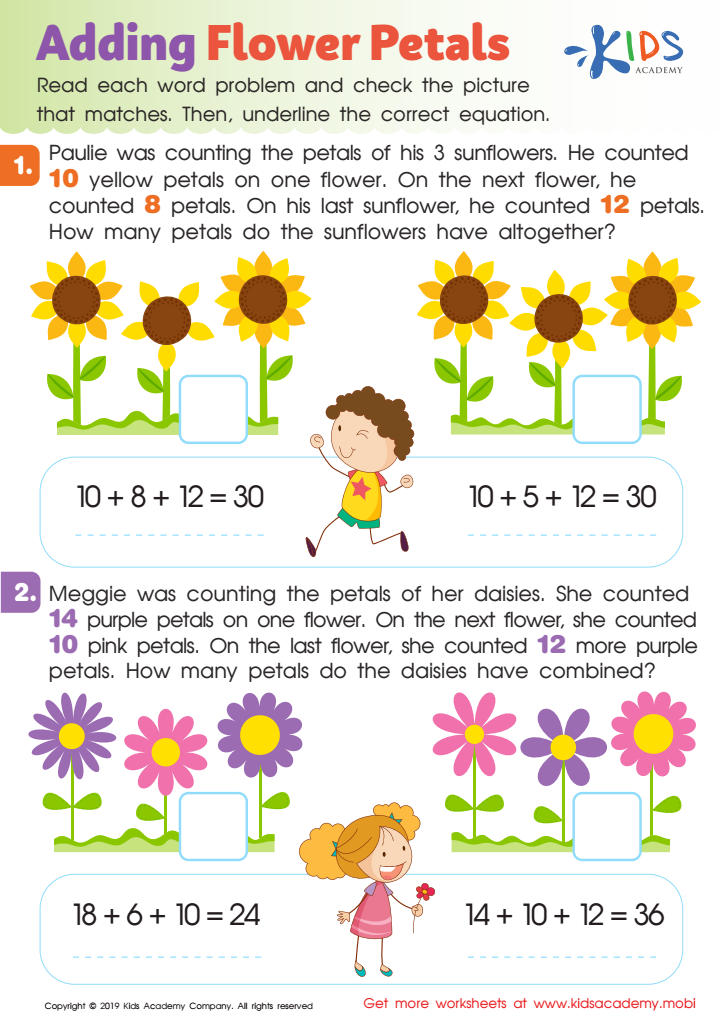
Adding Flower Petals Worksheet
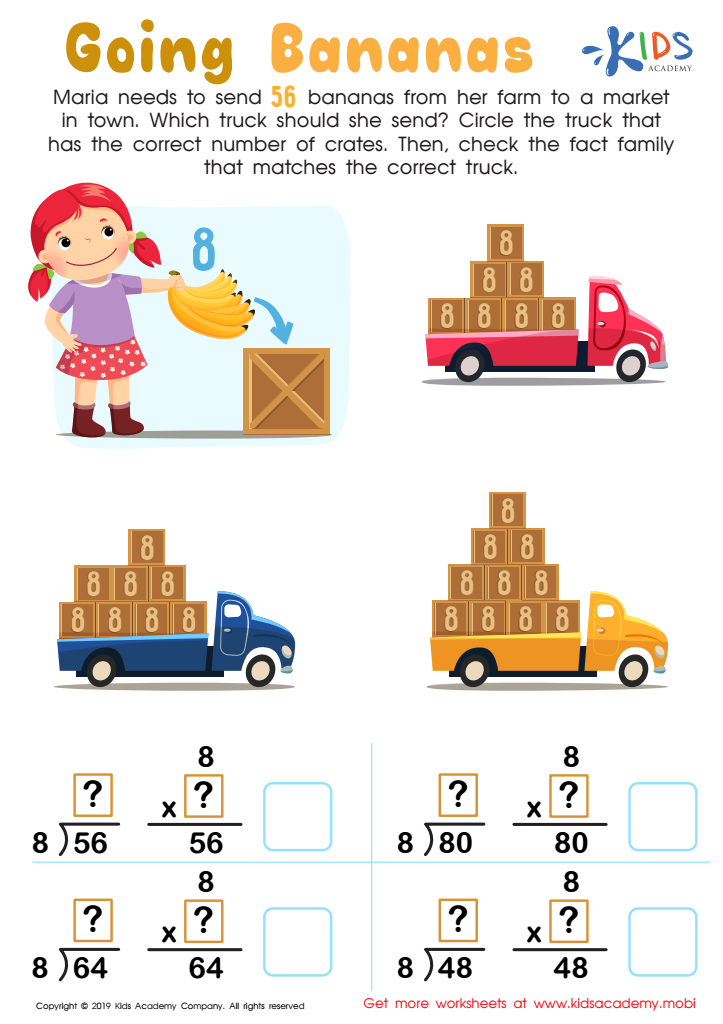
Going Bananas Worksheet
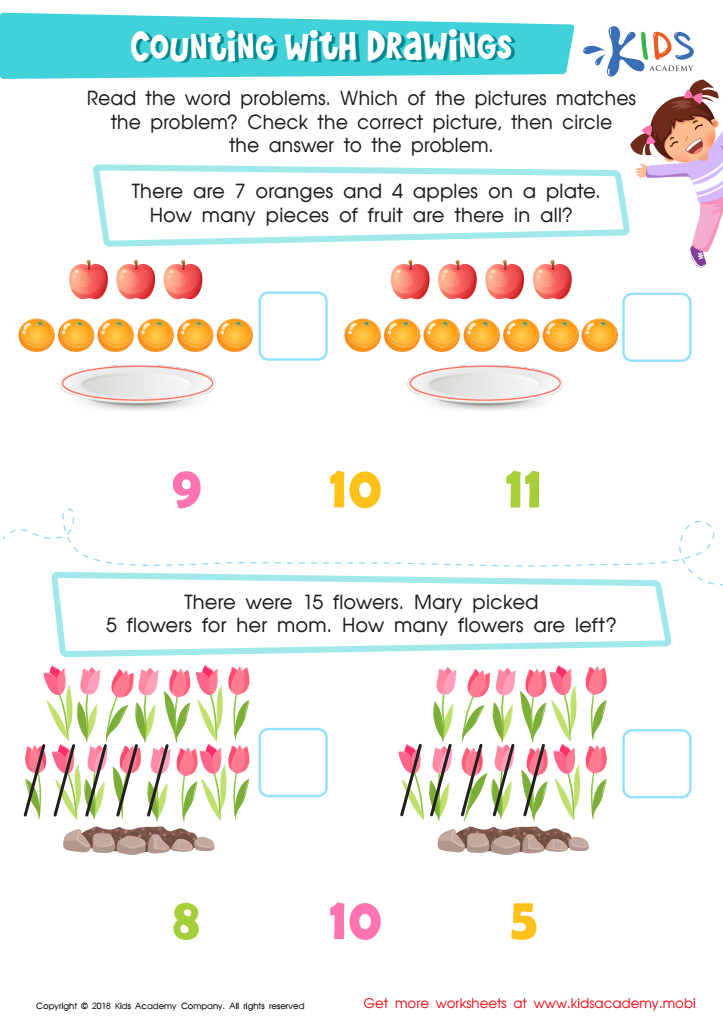
Counting with Drawings:Fruits & Flowers Worksheet





.jpg)


Early counting skills are foundational for children's overall mathematical development and cognitive growth. For parents and teachers working with children aged 3-5, understanding counting skills through normal word problems is essential. At this age, children are naturally curious, learning through play, and beginning to make sense of the world around them. Introducing everyday scenarios that involve counting helps children make connections between math and real-life experiences.
Normal word problems engage young learners, promoting critical thinking and problem-solving abilities. When children encounter situations such as counting apples or sharing toys, they can visualize and grasp mathematical concepts more effectively. Additionally, these problems encourage language development as children learn to articulate their thought processes.
Furthermore, developing counting skills in early childhood lays the groundwork for more advanced mathematical concepts later in life, such as addition and subtraction. By fostering a strong foundation in counting, parents and teachers support children's confidence in math, encouraging a positive attitude toward learning.
Overall, focusing on counting skills through relatable word problems helps children build essential cognitive frameworks, enhances their communication skills, and instills a love for learning at an early age, setting them up for future academic success.








