Reading comprehension Normal Word Problems Worksheets for Ages 3-5
8 filtered results
-
From - To
Welcome to our "Reading Comprehension Normal Word Problems Worksheets" designed for children ages 3 to 5! These engaging worksheets enhance early literacy skills by incorporating math concepts into fun, relatable scenarios. Each activity is crafted to stimulate curiosity and improve reading comprehension, allowing young learners to decode simple problems with ease. Children will explore different themes, fostering critical thinking as they learn to interpret text and apply their newfound skills. Perfect for parents and educators, these worksheets serve as enjoyable tools to build a solid foundation in reading and mathematics. Boost your child's confidence and love for learning today!
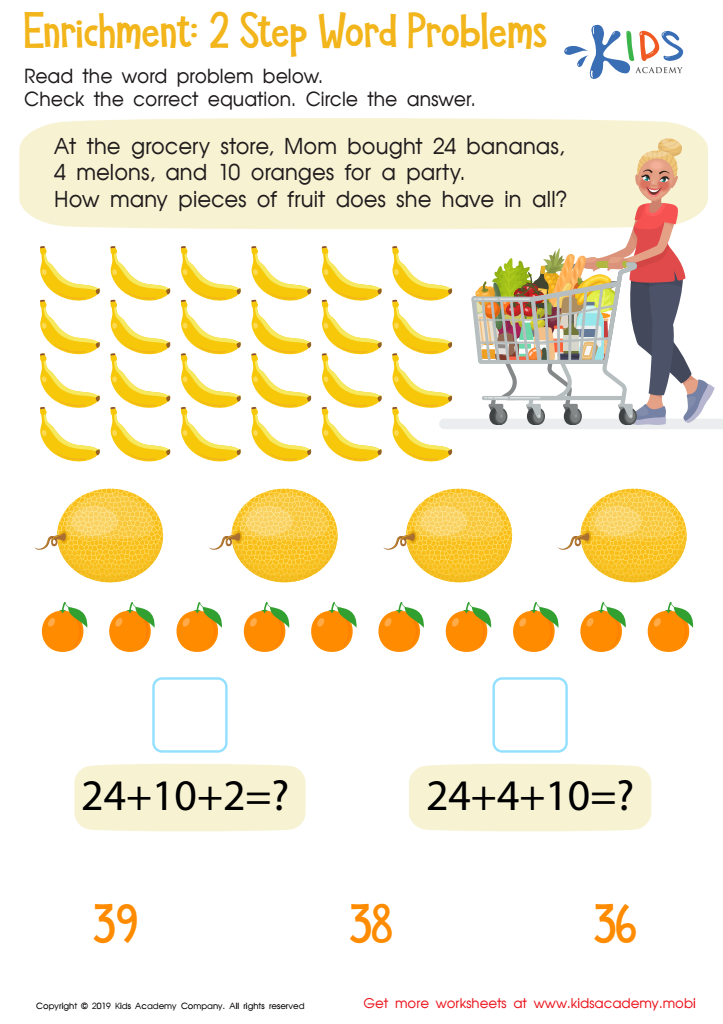
Enrichment -2 Step Word Problems Worksheet
 Assign to My Students
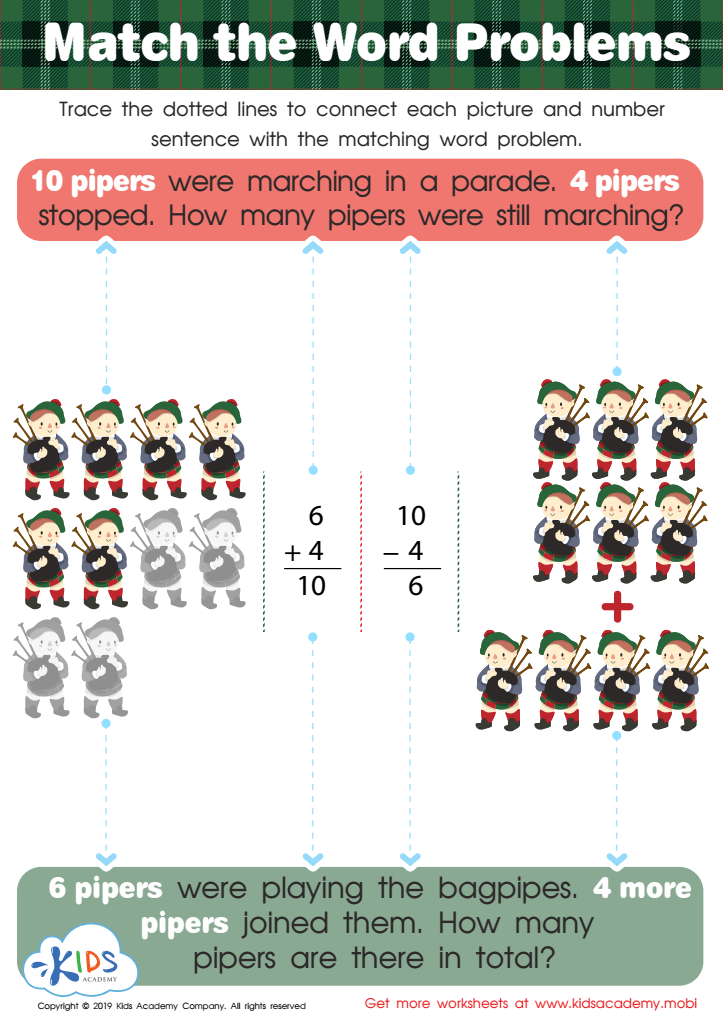
Match the Word Problems Worksheet
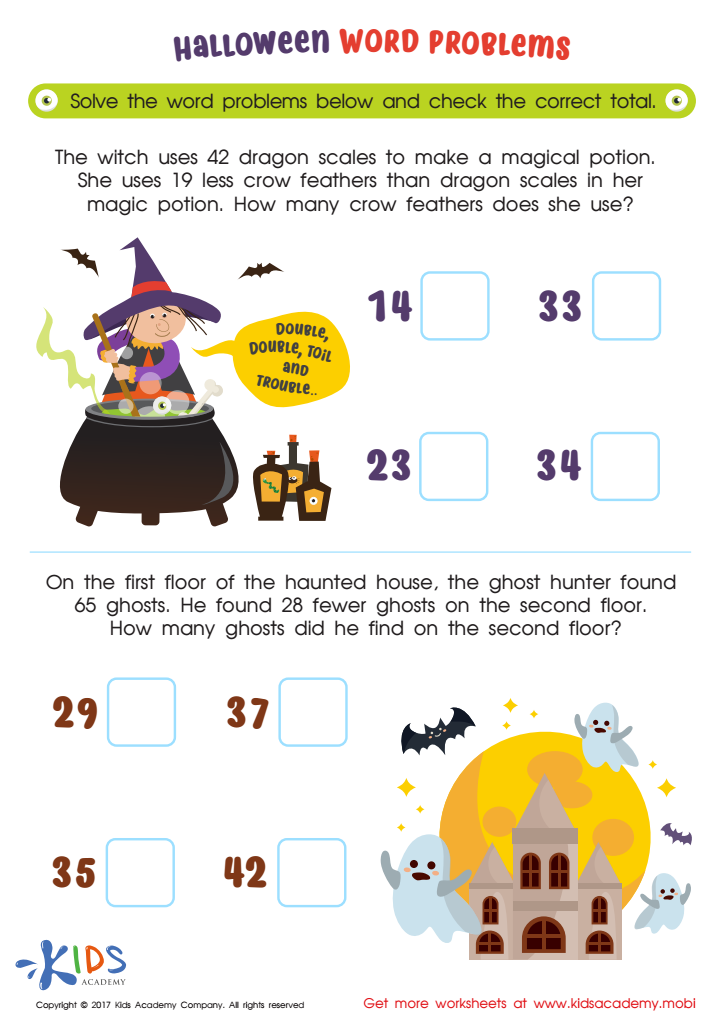
Halloween Word Problems Printable
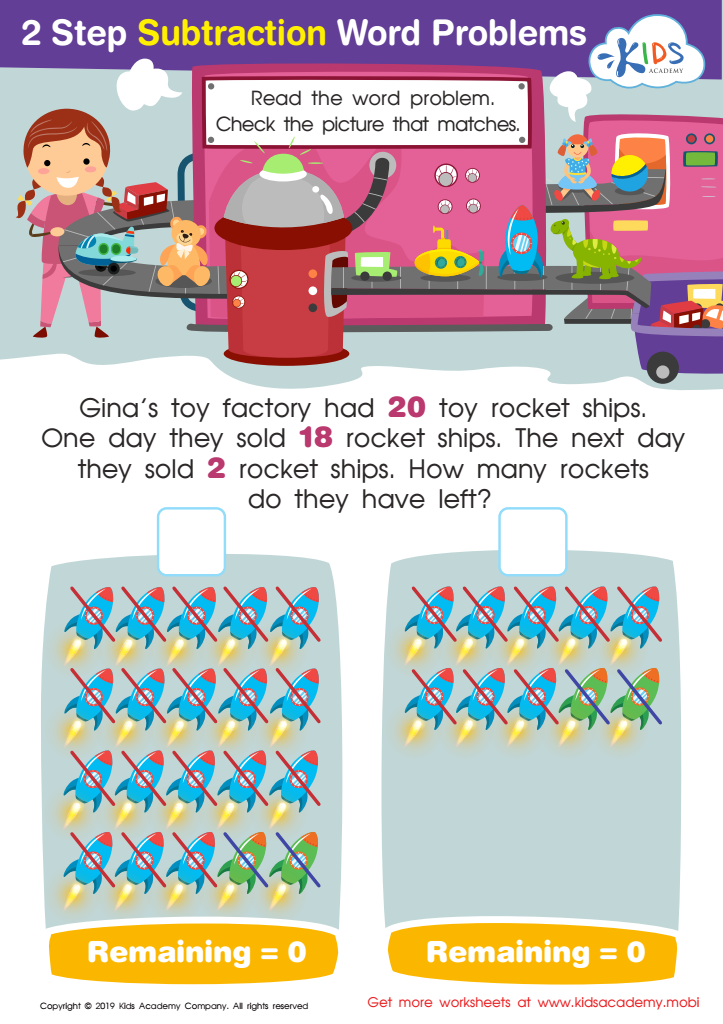
Step Subtraction Word Problems Worksheet
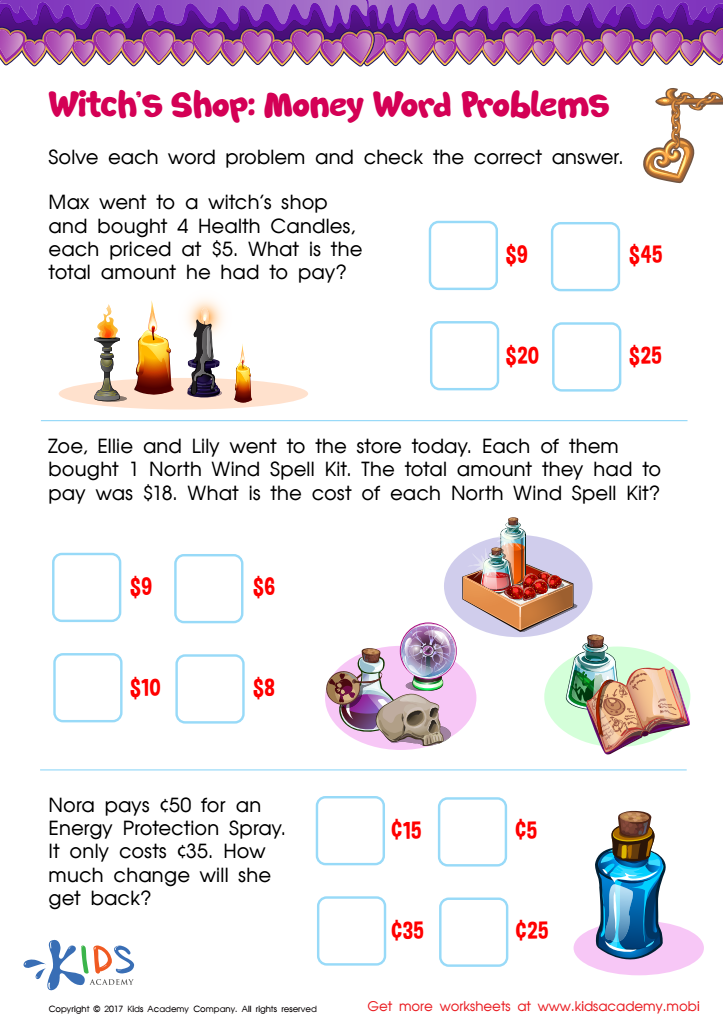
Money Word Problems Printable
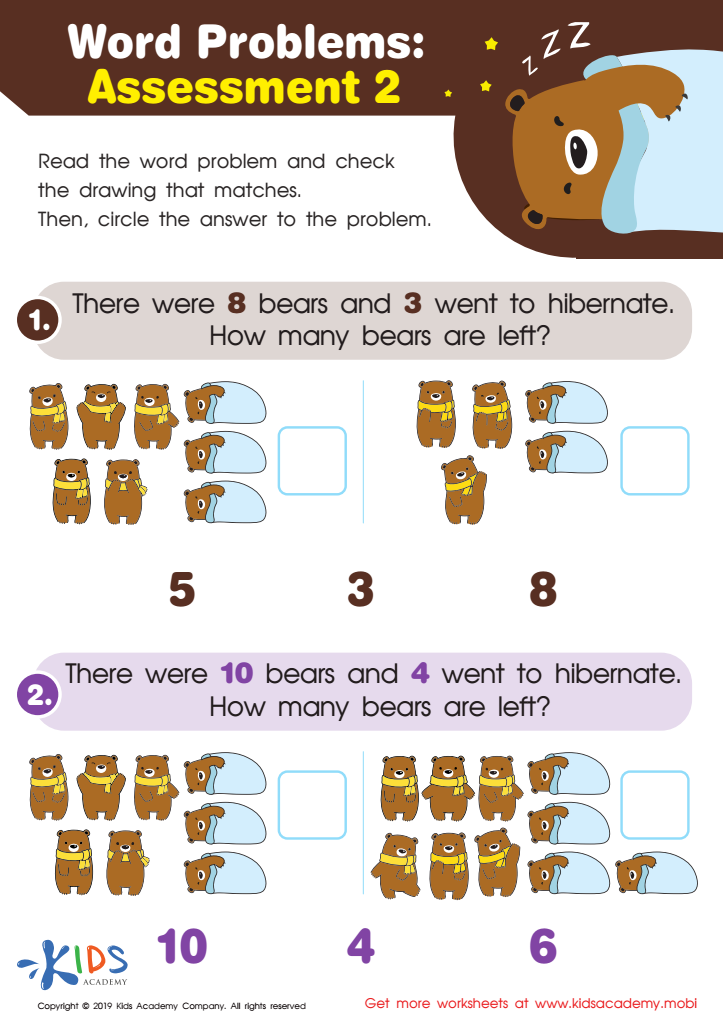
Word Problems: Assessment 2 Worksheet
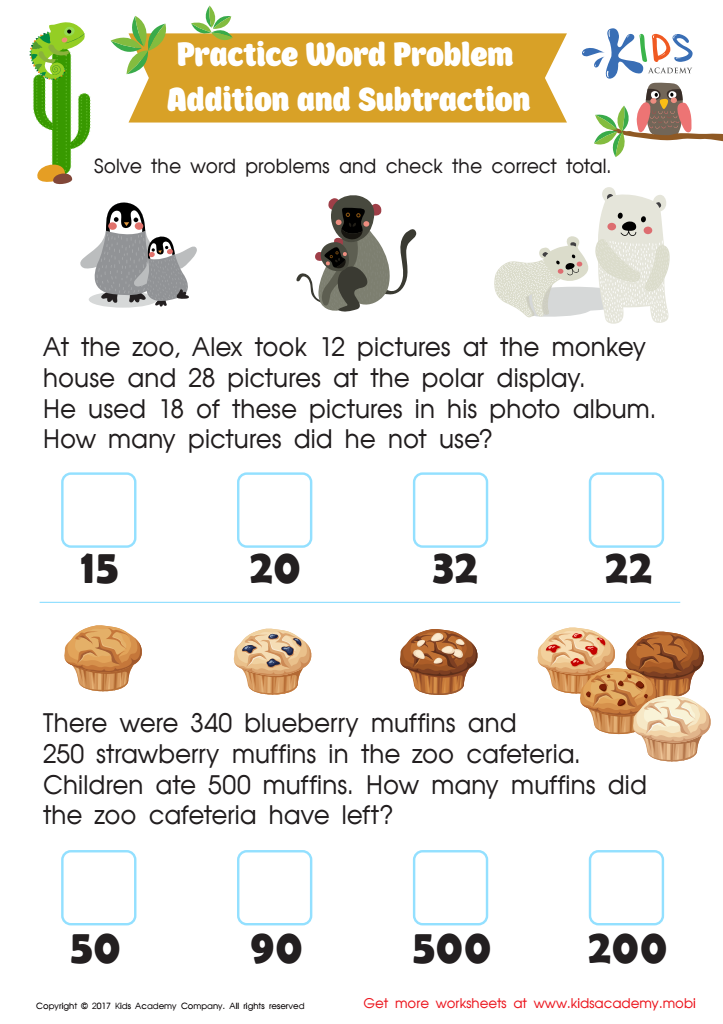
Addition and Subtraction: Word Problems Worksheet
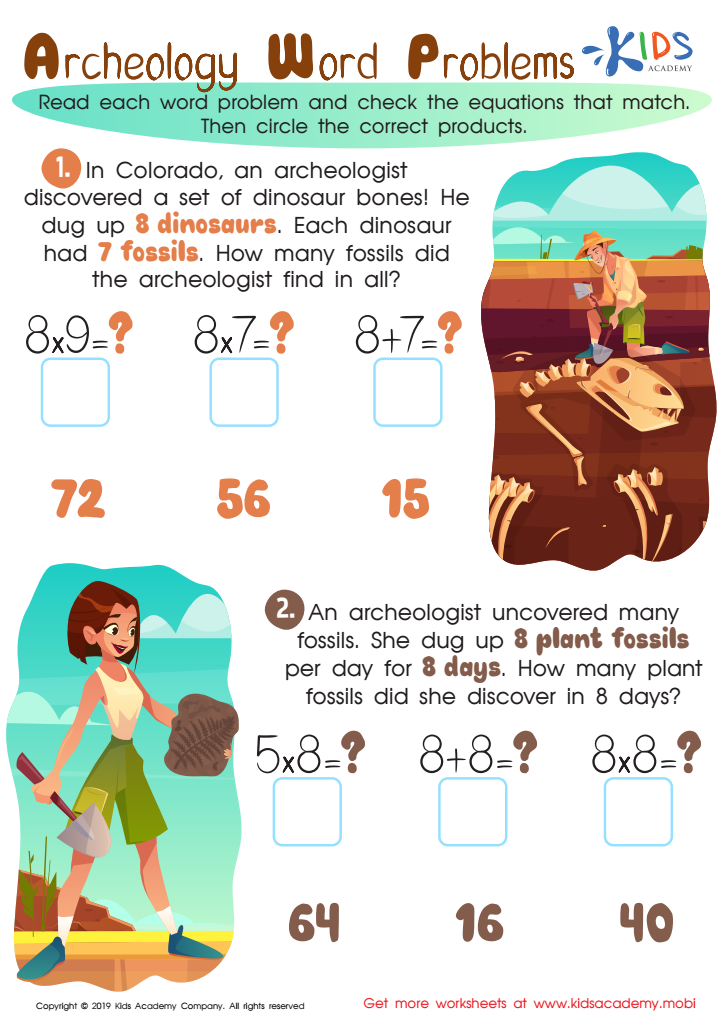
Archeology Word Problems Worksheet








Reading comprehension and normal word problems are foundational skills that significantly influence a child's academic journey, particularly for ages 3-5. At this early stage, children are developing critical cognitive and language abilities. Engaging with reading comprehension helps them make connections between words and meanings, enhancing vocabulary and comprehension skills.
Word problems introduce children to logic, reasoning, and problem-solving in a narrative context. This approach supports their understanding of different scenarios, fostering creativity and imaginative play. As children work through these problems, they learn to analyze information, recognize patterns, and apply their understanding to real-life situations.
Moreover, reading comprehension and word problems lay the groundwork for future literacy and numeracy skills, essential for success in school. When parents and teachers foster a child's ability to comprehend stories and solve problems, they are cultivating a lifelong love for learning and promoting critical thinking skills.
Engaging with normal word problems not only enhances children's academic skills but also builds their confidence and willingness to tackle challenges, preparing them emotionally and cognitively for the complexities of education ahead. Thus, prioritizing these areas can lead to significant long-term benefits for children's overall development.








