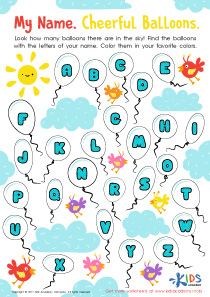
Letter recognition Normal ABC Order Worksheets for Ages 3-6
8 filtered results
Difficulty Level
Grade
Age
-
From - To
Subject
Activity
Standards
Our "Letter Recognition Normal ABC Order Worksheets for Ages 3-6" offer a fun and engaging way for young learners to master the alphabet. Designed specifically for preschoolers and kindergarteners, these worksheets help children recognize and order letters from A to Z. With colorful illustrations and simple exercises, kids will develop essential early literacy skills while enjoying every step of the learning process. Ideal for at-home practice or classroom activities, these worksheets provide a solid foundation for budding readers. Download now to support your child's alphabet journey with ease and joy!
Favorites
With answer key
Interactive
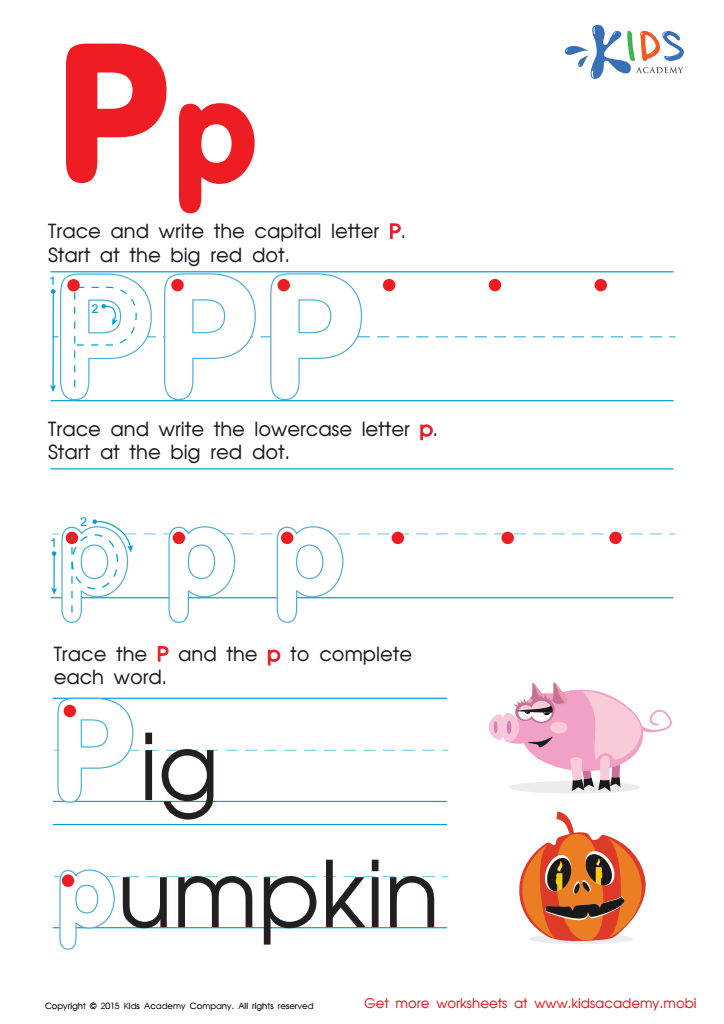
Letter P Tracing Page
Trace the lines from the red dot to learn to write "P"! Then practice this letter with the fun activities: complete the word "Pig" and "Pumpkin". Check out Kids Academy to get more free ABC worksheets.
 Assign to My Students
Letter P Tracing Page
Worksheet


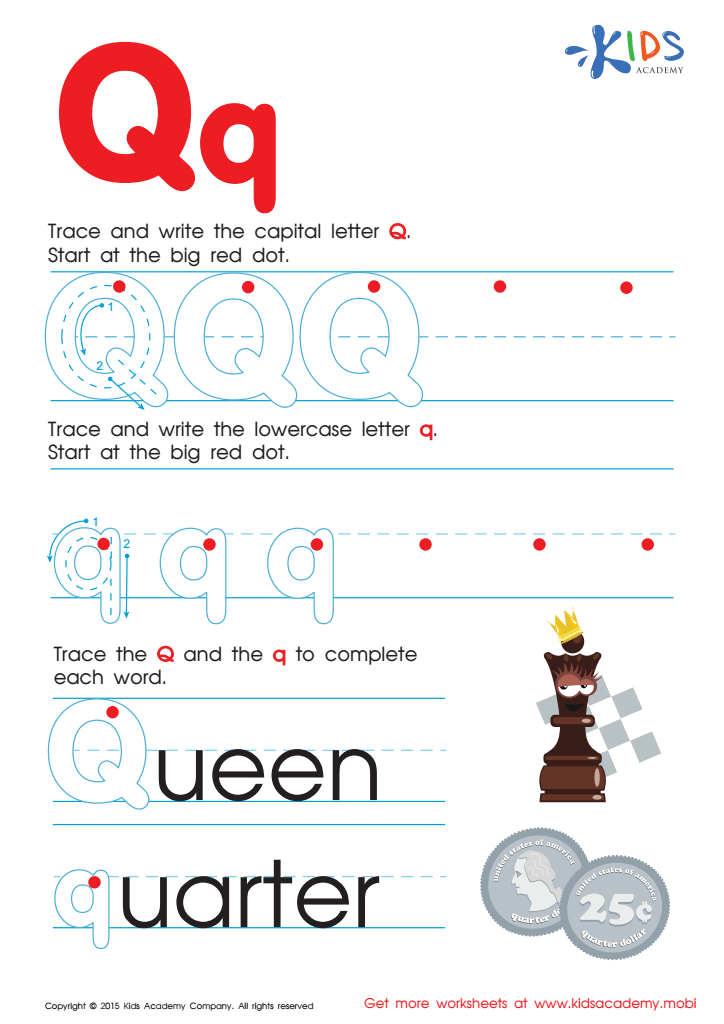
Letter Q Tracing Page
Learn the letter "Q"! Trace and write it a few times in upper and lowercase. Then help the Queen by writing her initial letter. Finally, write "quarters" and practice with more alphabet worksheets.
Letter Q Tracing Page
Worksheet
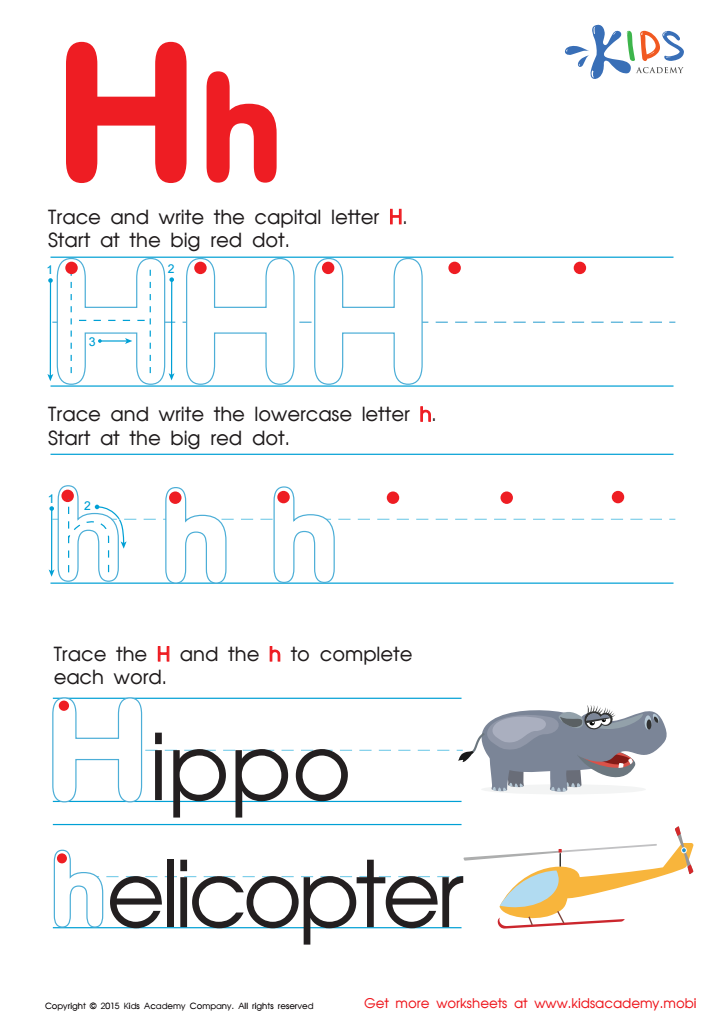
Letter H Tracing Page
Trace the letter "H", then practice writing its lowercase form. Finally, choose your favorite form of transport and ride away! Get our worksheets to make learning fun and easy.
Letter H Tracing Page
Worksheet
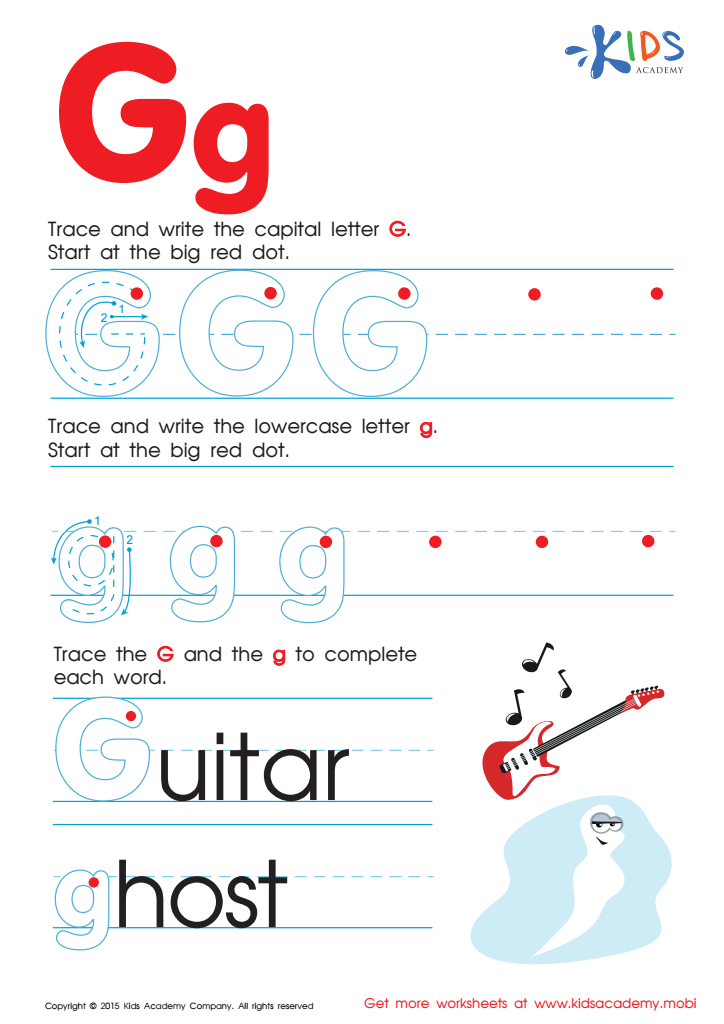
Letter G Tracing Page
Get ready to trace the letter "G" – with a big red spot as the starting point, trace the lines and watch the letter appear. Uppercase and lowercase letters are both easy and fun to write. Give it a go and finish the word "go". Play the guitar and say "hello" to a funny ghost!
Letter G Tracing Page
Worksheet
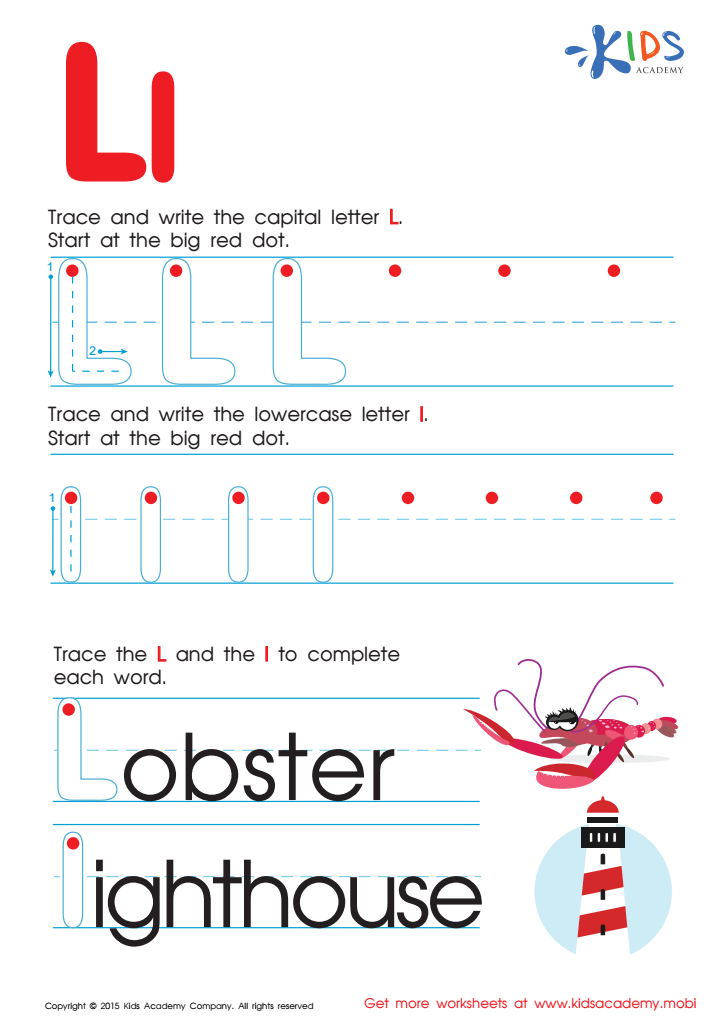
Letter L Tracing Page
Trace uppercase and lowercase letters to practice writing. Pay attention to the lowercase letters, like the "L", that are not as tall as an uppercase "I" or as short as a lowercase "i". Words like "lobster" and "lighthouse" are waiting to be completed. Enjoy!
Letter L Tracing Page
Worksheet
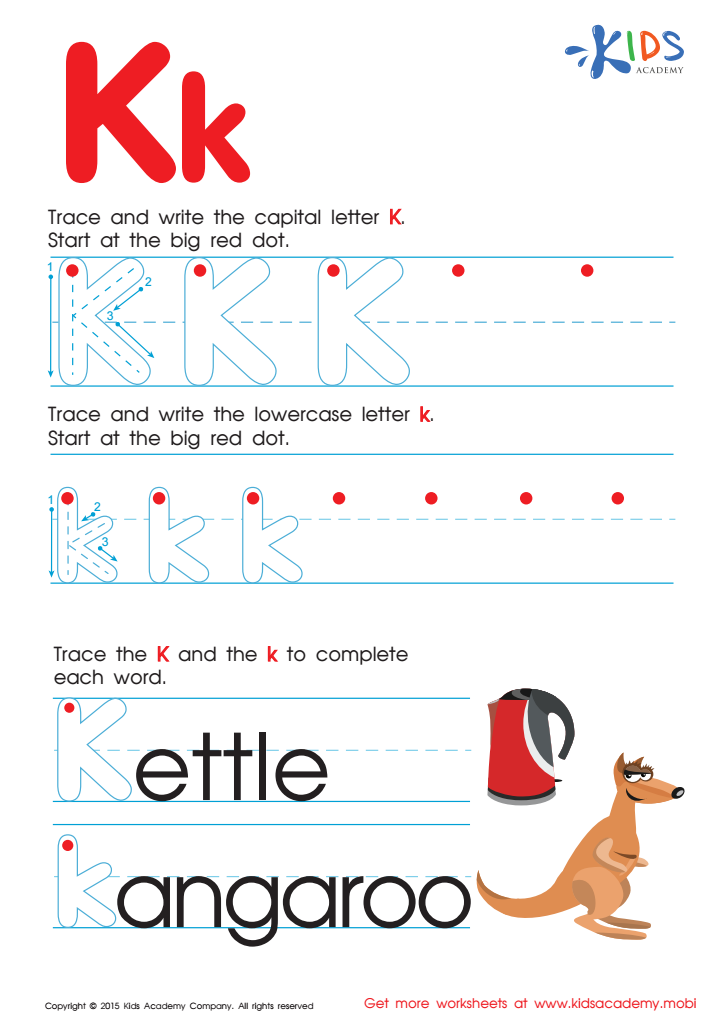
Letter K Tracing Page
Trace and write the letter K; start at the big red dot. Use it to complete words like "Kettle" and "Kangaroo". Visit Kids Academy for more free alphabet worksheets for kindergarten.
Letter K Tracing Page
Worksheet
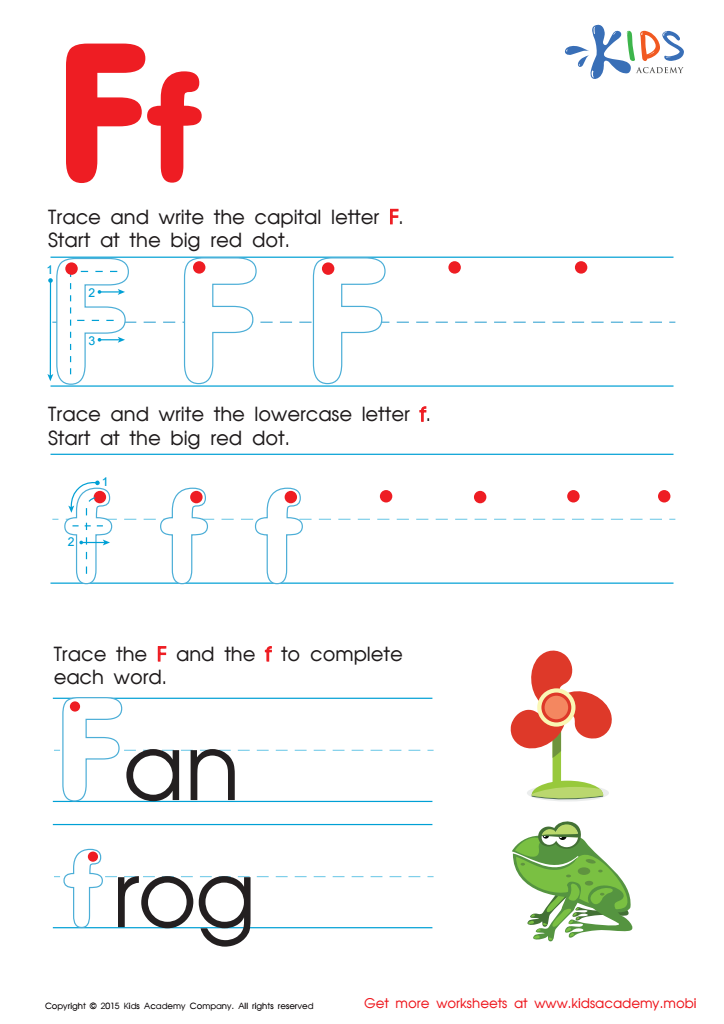
Letter F Tracing Page
Trace "F" with your pencil! Start at the red dot and draw lines — it's fun! Check it out — it looks great! Keep practicing to make it even better. Then, try completing words. Help out the broken fan and funny frog! Get free alphabet worksheets and activities for your kids. Come see our new tracing pages!
Letter F Tracing Page
Worksheet

Letter D Tracing Page
Trace and write capital and lowercase letter "D" with our free printable alphabet worksheet! Be careful not to mix up "b" and "d" - just look at the ducks and write their first letter. The dolphin wants to join the fun too - do you like dolphins? Get more fun worksheets and activities at Kids Academy!
Letter D Tracing Page
Worksheet
Join Kids Academy for Free
Who is primarily going to use this learning content?







Letter recognition in the normal ABC order is foundational for children aged 3-6 as it lays the groundwork for reading proficiency and overall literacy development. During these early years, children's brains are particularly receptive to language and symbolic representation. By familiarizing them with the alphabet in the standard sequence, parents and teachers provide a structured framework that helps children make sense of written language. Recognizing letters in order aids in the cognitive processing of stories, signs, and labels they encounter in daily life, making these experiences more comprehensible and less intimidating.
Additionally, knowing the ABC order assists young learners in developing essential skills such as alphabetical sorting and sequencing, critical for more advanced language tasks. Mastery of this order also supports vocabulary acquisition; when children can easily identify and name letters, they are better equipped to grasp spelling patterns and word formation.
Moreover, proficiency in letter recognition boosts confidence and enthusiasm for learning. It builds a sense of achievement and encourages curiosity, fostering a positive attitude toward school and education. Parents and teachers play a vital role in championing these early skills, thus ensuring a smooth transition into more complex literacy activities that follow, such as reading and writing. Prioritizing letter recognition is, therefore, crucial for the cognitive and emotional development of young children.