Word Recognition Normal Consonant Digraphs Worksheets for Ages 3-6
5 filtered results
-
From - To
Discover our engaging "Word Recognition Normal Consonant Digraphs Worksheets" designed for children ages 3-6. These interactive resources help young learners master essential phonics skills by focusing on consonant digraphs like "ch," "sh," and "th." Each worksheet features fun activities that promote word recognition and reinforce sound-letter relationships, enhancing early literacy development. Perfect for classroom or home learning, these worksheets encourage students to identify and read words, fostering a love for reading. Support your child's literacy journey with our thoughtfully crafted worksheets that make learning enjoyable and effective! Explore the magic of language with us today!
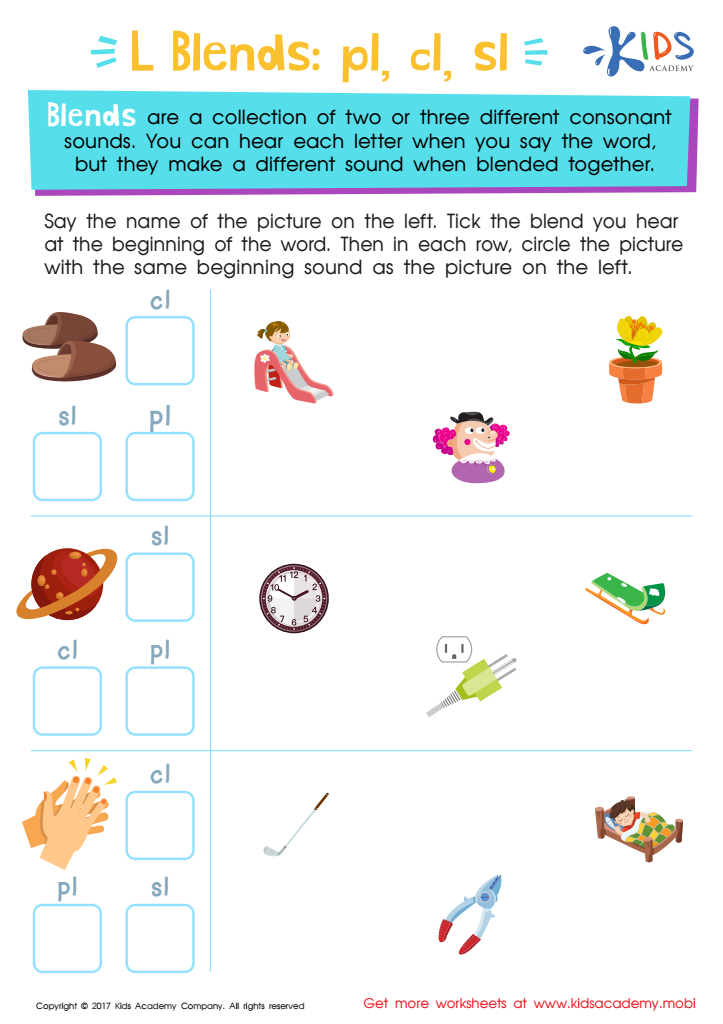
L Blends: "Pl", "Cl" and "Sl" Printable
 Assign to My Students
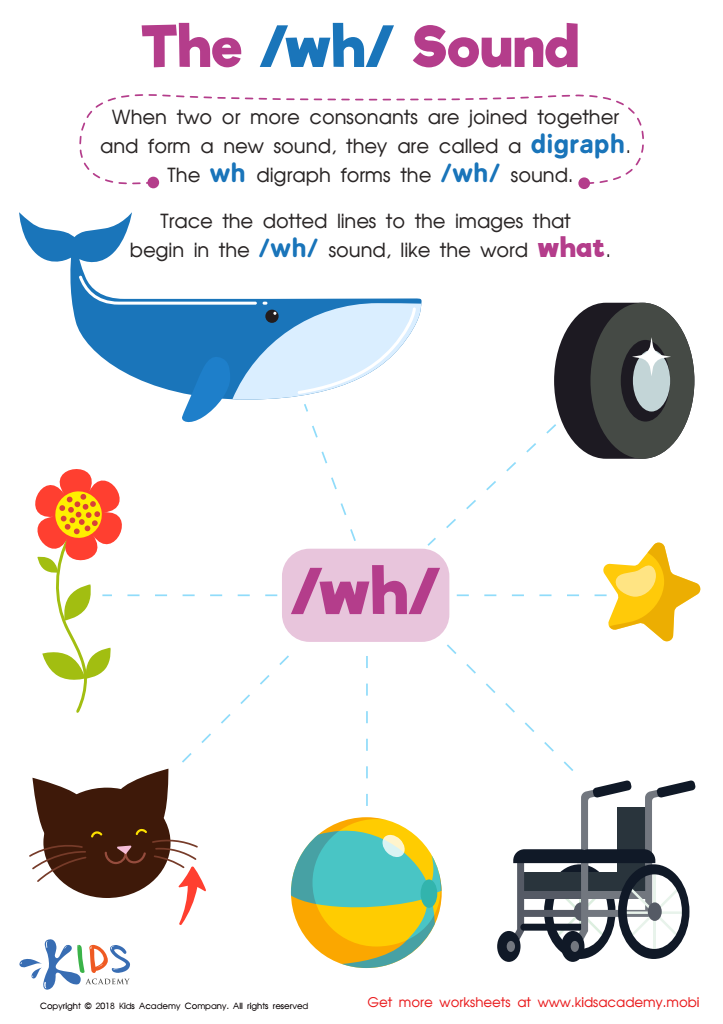
The /wh/ Sound Worksheet
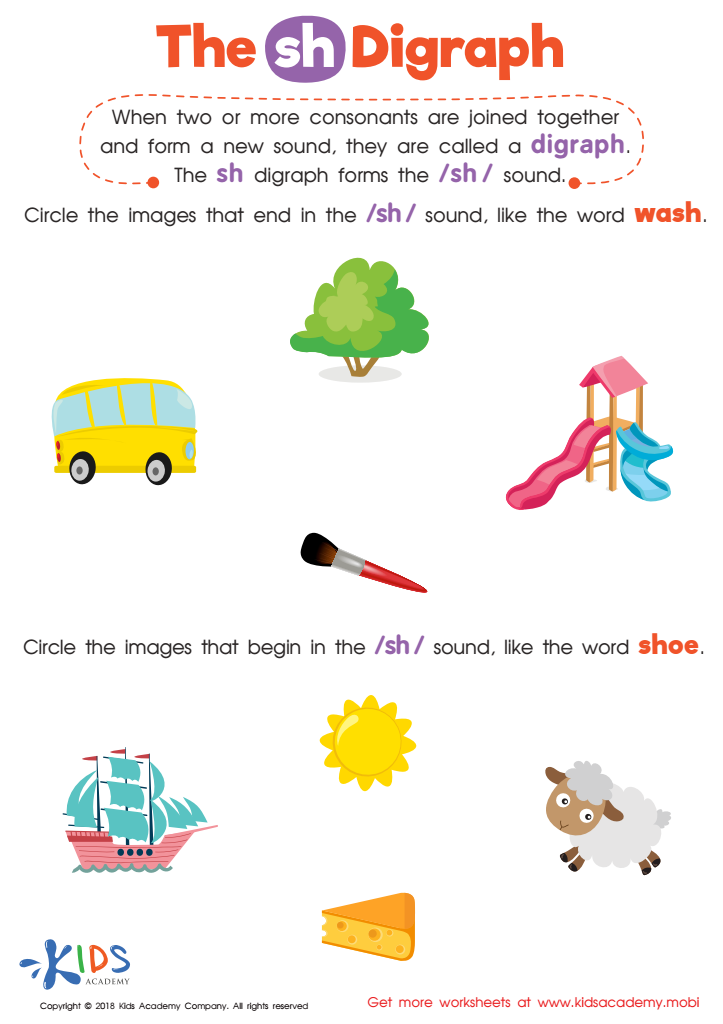
The SH Digraph Worksheet
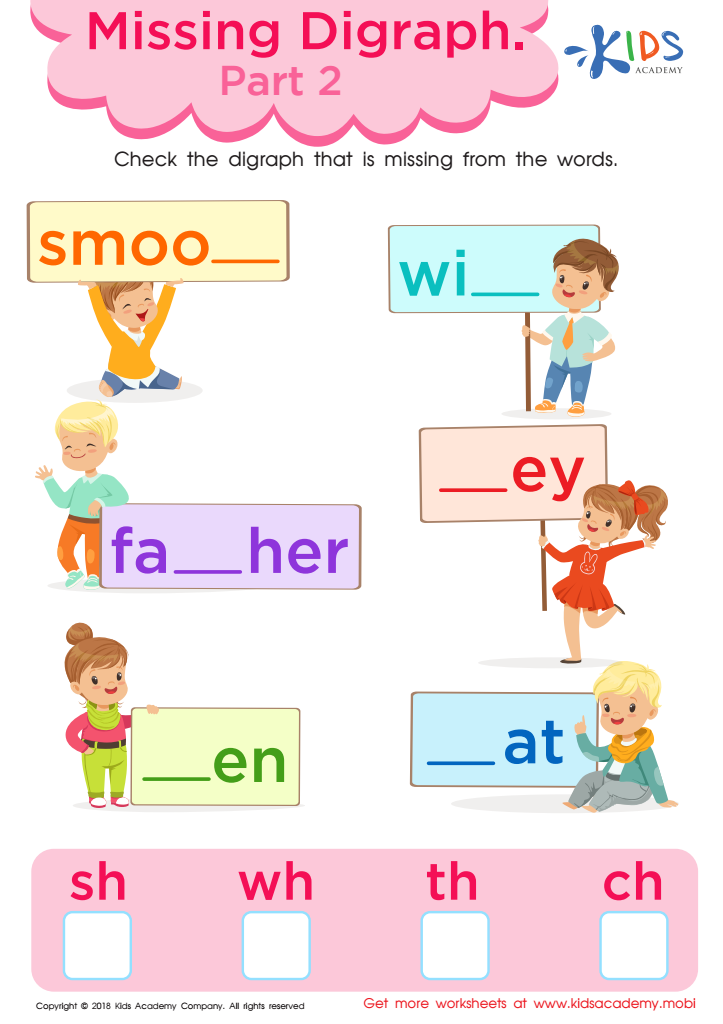
Missing Digraph: Part 2 Worksheet
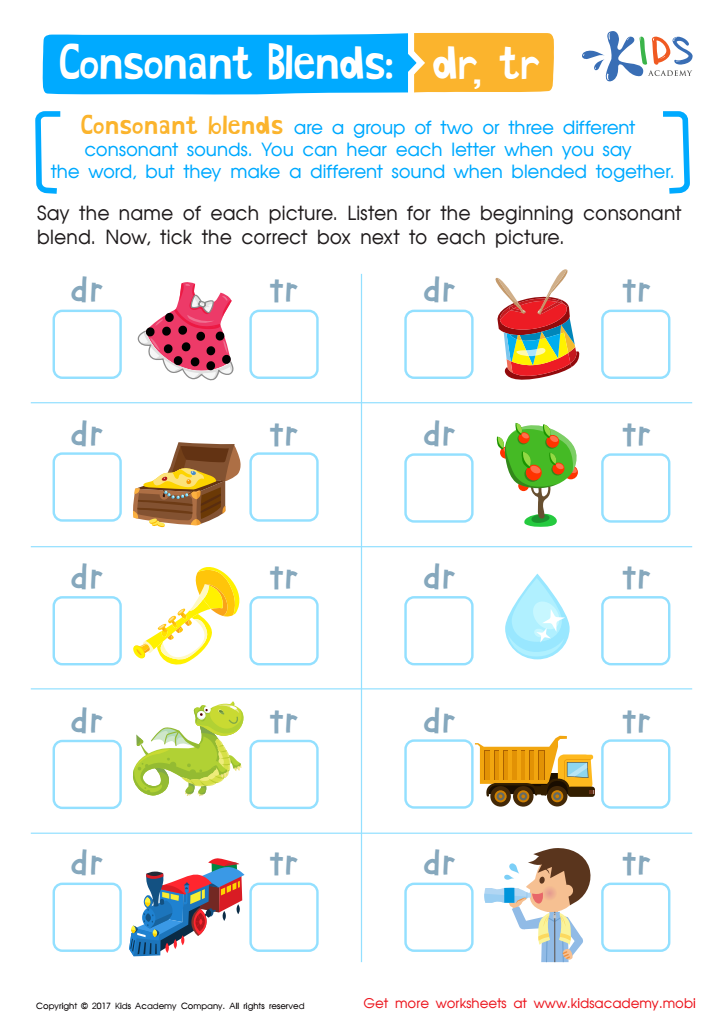
Consonant Blends: "Dr" and "Tr" Printable


Word recognition, particularly through understanding normal consonant digraphs, is vital for children ages 3-6 as it lays the foundation for reading skills. Consonant digraphs, like 'sh,' 'th,' and 'ch,' involve two consonants that create a unique sound, differing from just blending the individual sounds. Early exposure to these phonetic concepts helps children decode words more effectively, which boosts their confidence as emergent readers.
Parents and teachers should prioritize this skill development to enhance children's literacy and communication skills. Mastery of digraphs encourages stronger phonemic awareness, making it easier for children to tackle more complex words as they progress. Additionally, understanding these sounds fosters vocabulary growth and aids in developing effective spelling techniques.
By integrating activities that involve consonant digraphs through reading, writing, and playful engagement, adults can create a rich, interactive learning environment. As children learn these essential sound patterns, they not only become proficient readers but also develop a lifelong love for reading and learning. Thus, emphasizing word recognition through consonant digraphs is crucial in preparing young children for academic success, enhancing cognitive growth, and promoting effective communication skills that will benefit them for years to come.