
Reading skills improvement Normal Phonics Worksheets for Ages 3-6
7 filtered results
Difficulty Level
Grade
Age
-
From - To
Subject
Activity
Standards
Enhance your child's reading skills with our engaging Normal Phonics Worksheets, designed specifically for ages 3-6. These carefully crafted resources introduce essential phonics concepts, fostering early literacy development through fun and interactive activities. Each worksheet is tailored to help young learners identify letters, decode sounds, and blend phonemes, promoting confidence in reading. Our user-friendly format encourages parental involvement, making learning enjoyable and effective at home. Ideal for preschoolers and kindergarteners, these worksheets provide a solid foundation for lifelong reading success. Start your child's reading journey today with keenly designed materials that spark curiosity and inspire a love for learning!
Favorites
With answer key
Interactive
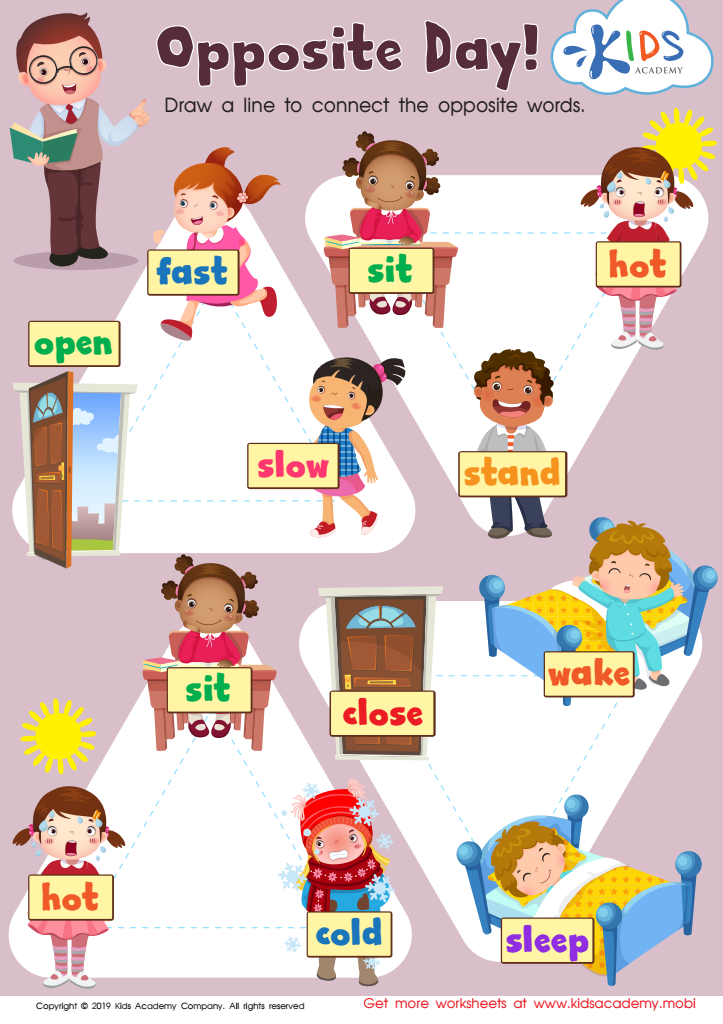
Opposite Day Worksheet
Early learners need to know about opposites to improve their higher-order thinking and critical thinking. This fun worksheet helps them understand the concept, practice opposite words, read high-frequency words and work on fine motor skills. Download the traceable PDF to get started.
 Assign to My Students
Opposite Day Worksheet
Worksheet
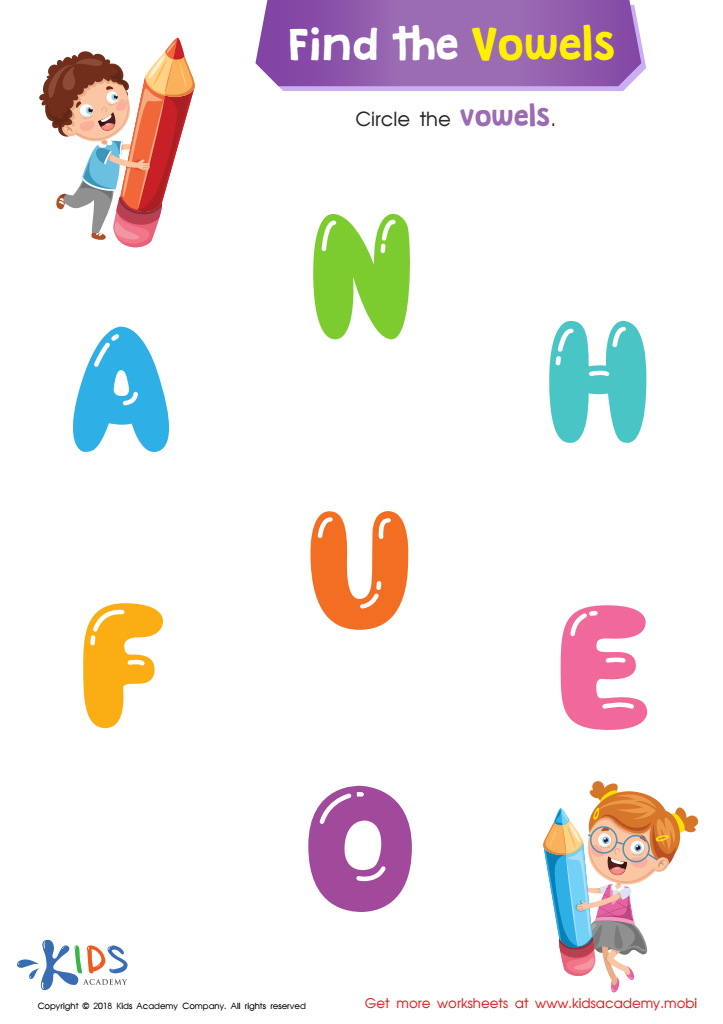
Find the Vowels Reading Worksheet
This worksheet helps kids identify vowels with bright colors and engaging activities to strengthen their visual discrimination and fine motor skills. Young learners will find it easy to succeed and be excited to keep reading!
Find the Vowels Reading Worksheet
Worksheet
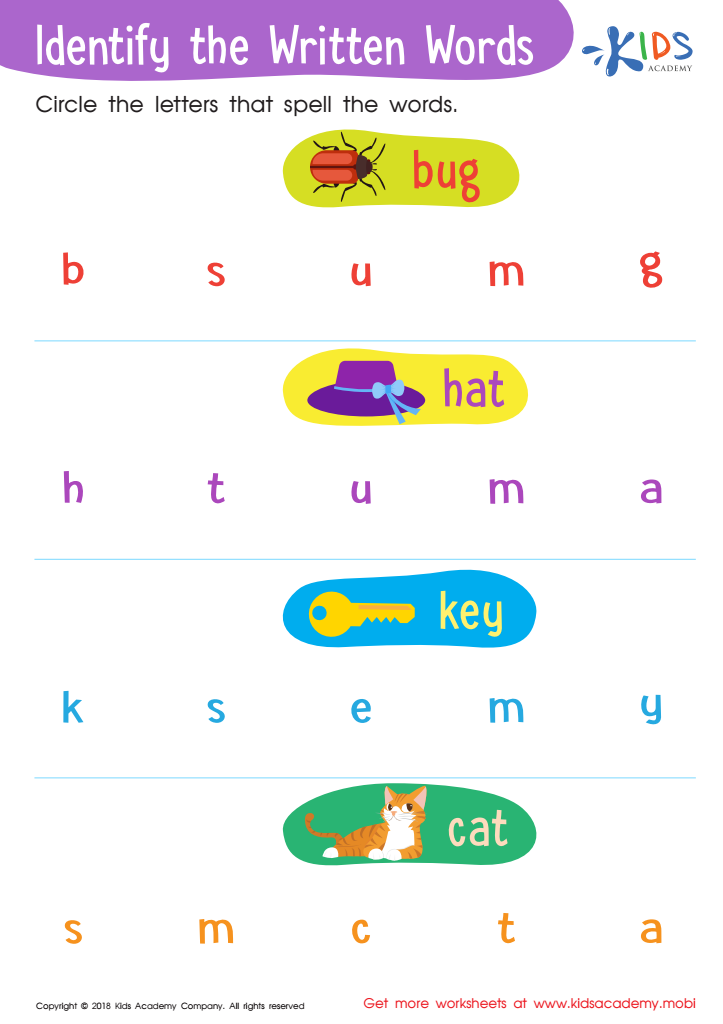
Identify the Written Words Worksheet
Have your students identify the objects on the printout, then spell the words. If they already know how to spell, this exercise should be easy. Help them circle the correct letters from the set to spell out the words. This is a great way to reinforce reading and spelling skills. Max 80 words.
Identify the Written Words Worksheet
Worksheet
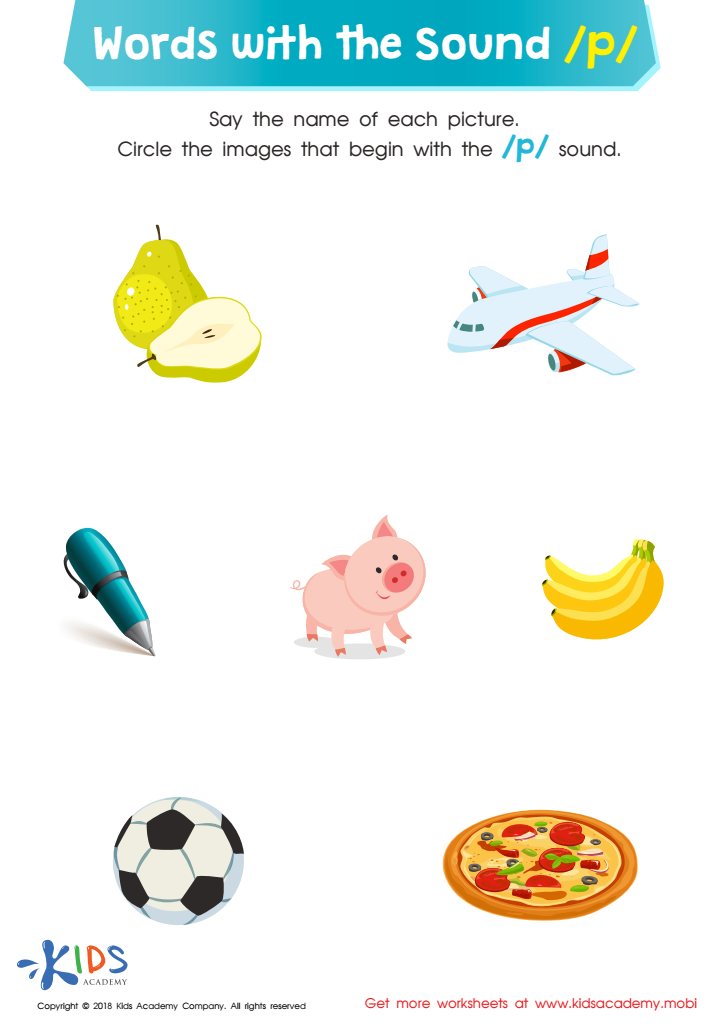
Words with sound p Reading Worksheet
Working on this fun worksheet? Name each picture aloud and listen carefully before circling those that start with the letter «p»! Pizza, pig, plane, or banana - practice phonics to help your child recognize the letter «p» sound for successful early reading and decoding!
Words with sound p Reading Worksheet
Worksheet
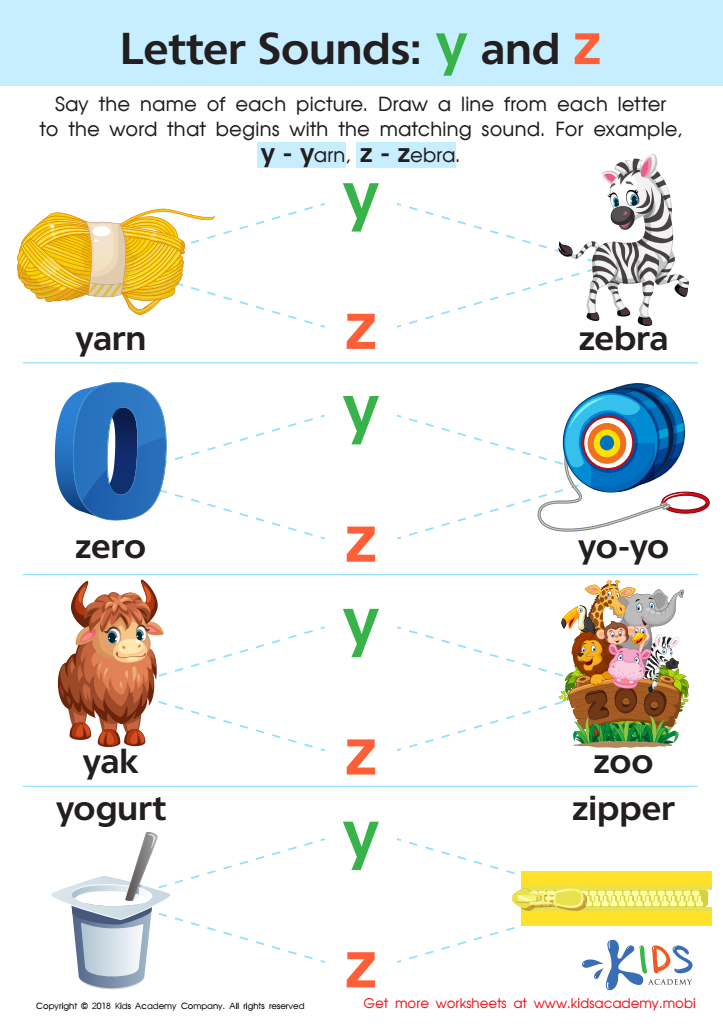
Letter Y and Z Sounds Worksheet
Y and Z can be tricky for kids to learn. Kids Academy has the answer with a great worksheet. "Yo-yo", "yak" and "zebra" help kids recognize, say and trace each letter. Plus, they can read the words and match them to images! Let your child try and help them master phonics at the end of the alphabet.
Letter Y and Z Sounds Worksheet
Worksheet
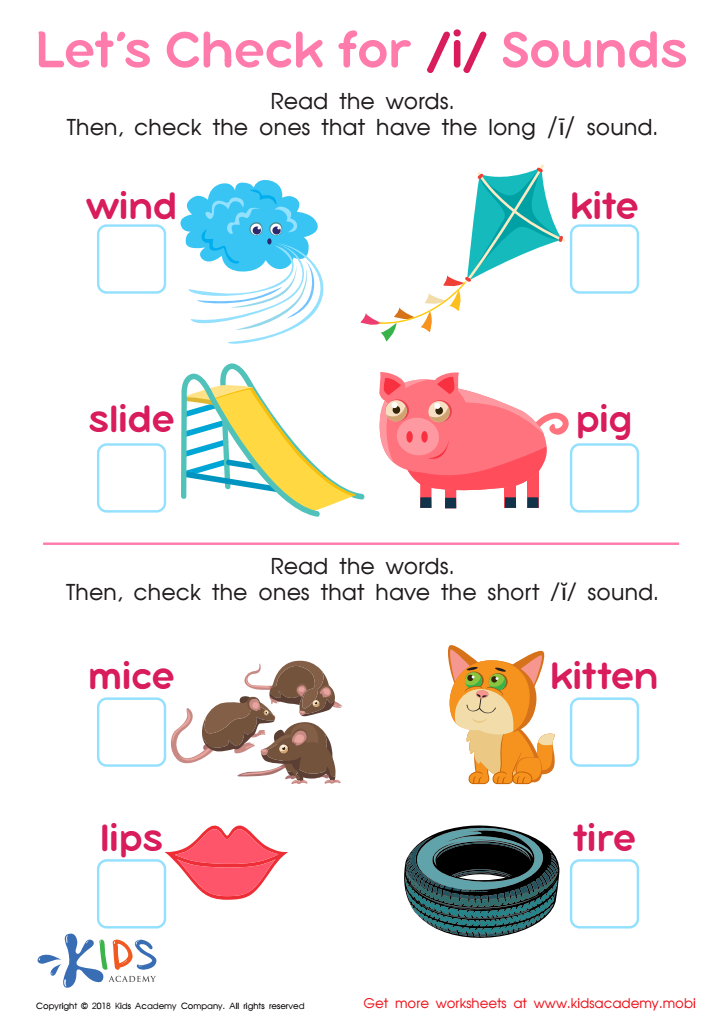
Let's Check for «i» Sounds Worksheet
This fun worksheet with pictures boosts phonics skills - differentiating between long «ī» and short «i» sounds in 1- and 2-syllable words. Kids use picture clues to read words, then check off the correct ones. It's a great way for new readers to practice early reading skills and find success on their own.
Let's Check for «i» Sounds Worksheet
Worksheet
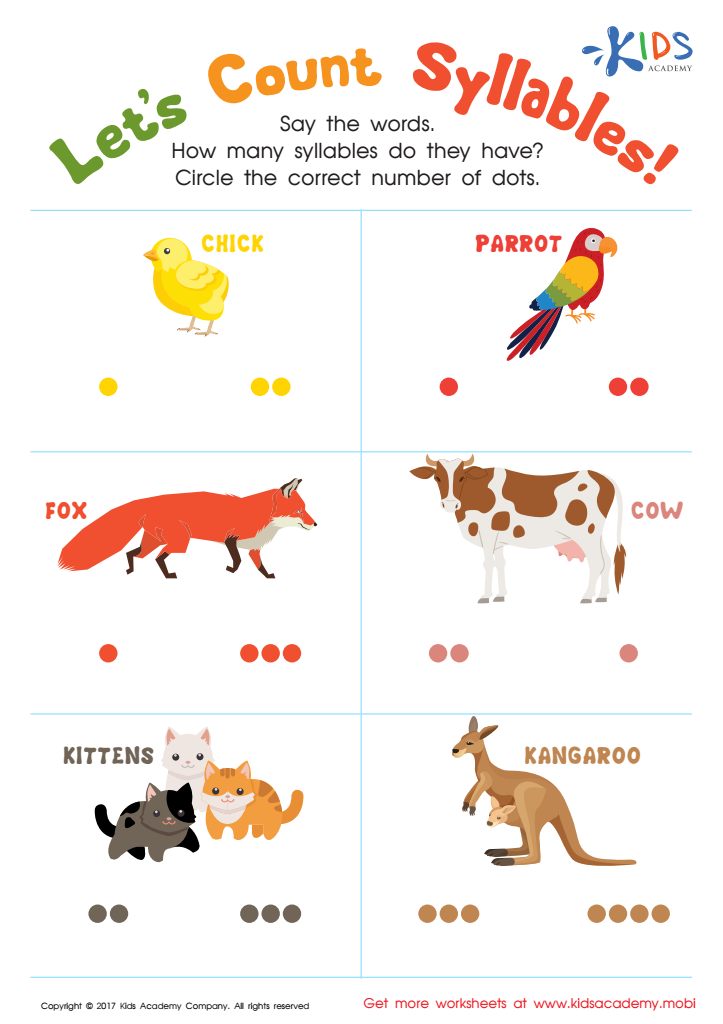
Lets Count Syllables Worksheet
This fun animal worksheet makes learning to read easier by breaking words into syllables. Bright, cheery pictures give context and help kids choose the right syllable count. Count together and enjoy as your child learns and gains success!
Lets Count Syllables Worksheet
Worksheet
Join Kids Academy for Free
Who is primarily going to use this learning content?








Parents and teachers should prioritize improving reading skills through phonics for children aged 3-6 because early literacy is fundamental to a child’s overall development. Phonics introduces young learners to the connections between sounds and letters, which is essential for decoding words. Mastering these skills builds a strong foundation for reading fluency, enhancing comprehension and encouraging a love for reading.
Early reading proficiency has a profound impact on a child's academic success. Children who grasp phonics skills are more likely to excel in future literacy tasks, reducing future struggles in spelling and writing. Furthermore, cognitive development is stimulated by engaging with text, enriching vocabulary, and enhancing critical thinking skills.
Additionally, strong reading skills can boost a child’s confidence. When children can read competently, they are more inclined to participate in classroom discussions and explore literature independently. This autonomy fosters a lifelong love for learning.
Moreover, promoting reading readiness through phonics aligns with developmental goals. By supporting early interventions, parents and teachers can minimize the risk of reading difficulties later on. Ultimately, prioritizing phonics is an investment in children’s futures, equipping them with crucial skills for academic and personal achievement.







