Comparing objects Normal Worksheets for Ages 3-6
3 filtered results
-
From - To
Explore our collection of engaging "Comparing Objects" Normal Worksheets tailored for children ages 3-6! These worksheets are designed to enhance young learners' understanding of similarities and differences through fun activities. Your little ones will delight in comparing sizes, shapes, and colors while developing critical thinking skills. Each worksheet encourages interactive learning, helping children to observe details and make connections in the world around them. Perfect for preschool and early grade classrooms, our worksheets promote collaborative learning and creativity. Download and print these resources for an exciting addition to your educational toolkit, ensuring children gain essential skills in a playful and enjoyable manner!
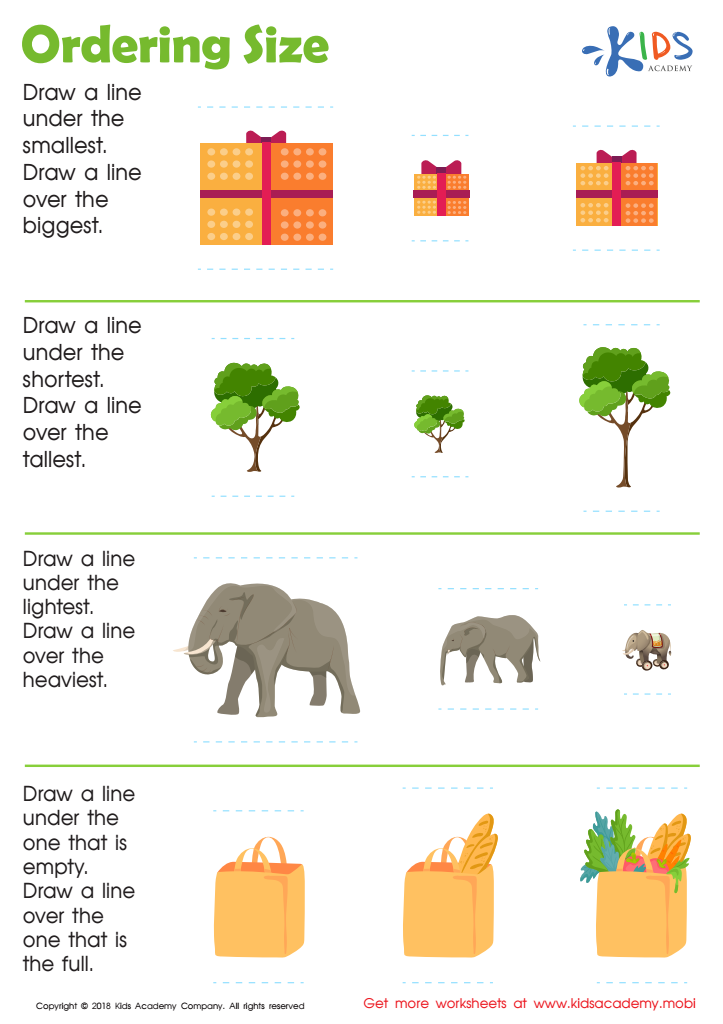
Ordering Size Worksheet
 Assign to My Students
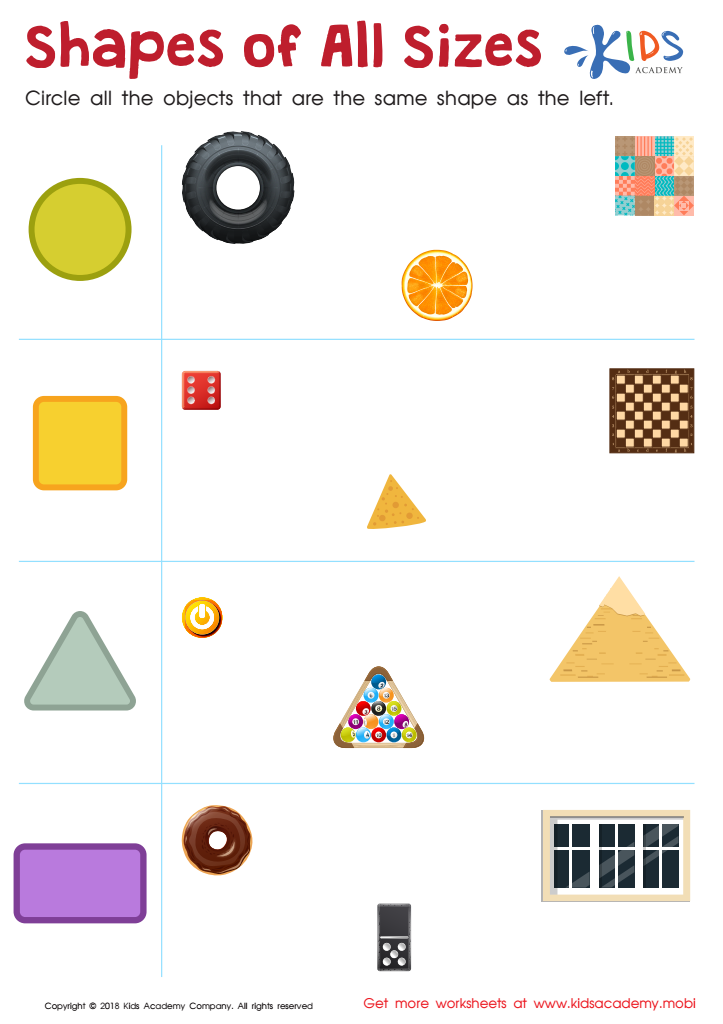
Shapes of All Sizes Worksheet
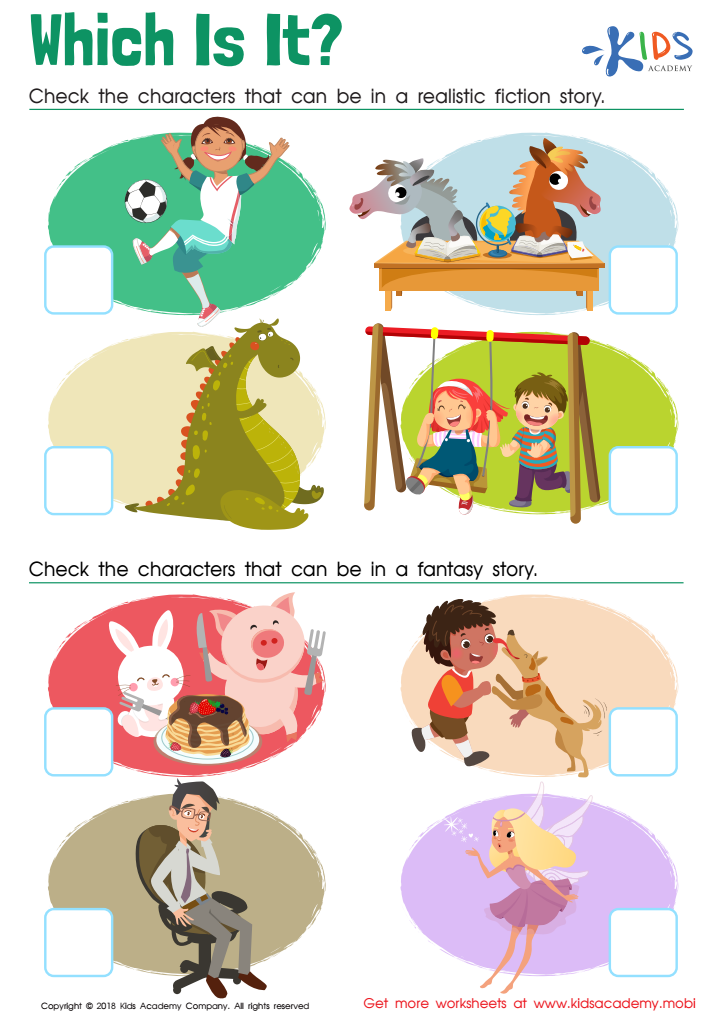
Which Is It? Worksheet





Comparing objects is a fundamental skill that plays a crucial role in early childhood development, particularly for children aged 3 to 6. At this stage, children are naturally curious and eager to make sense of the world around them. Engaging in comparison activities helps them develop critical cognitive abilities such as observation, differentiation, and reasoning.
When parents and teachers encourage children to compare objects, whether by size, weight, shape, or color, they are laying the groundwork for essential mathematical concepts. This skill not only supports early numeracy but also enhances language development, as children learn vocabulary related to measurements and descriptions. For example, as they discuss which object is taller, heavier, or larger, they practice articulation and expand their expressive language skills.
Furthermore, comparing objects cultivates analytical thinking and problem-solving abilities. Children learn to make judgments based on characteristics and to identify similarities and differences, skills that are applicable in various contexts throughout their education and lives.
In summary, comparing objects enriches a child's learning experience, promoting cognitive, linguistic, and social development. Parents and teachers should actively participate in these activities to foster a strong foundation for lifelong learning.








