Developing math skills Normal Worksheets for Ages 3-6
3 filtered results
-
From - To
Welcome to our Developing Math Skills Normal Worksheets for Ages 3-6, designed to make early learning engaging and effective! These worksheets help young learners build a strong foundation in essential math concepts, including counting, number recognition, and basic addition. Our colorful and interactive activities stimulate creativity while reinforcing critical thinking skills. Each worksheet is tailored to suit the developmental stages of preschoolers, making math fun and accessible. Perfect for home or classroom use, these resources promote confidence in young mathematicians. Discover a world of learning and set your child on the path to success in math with our delightful worksheets!
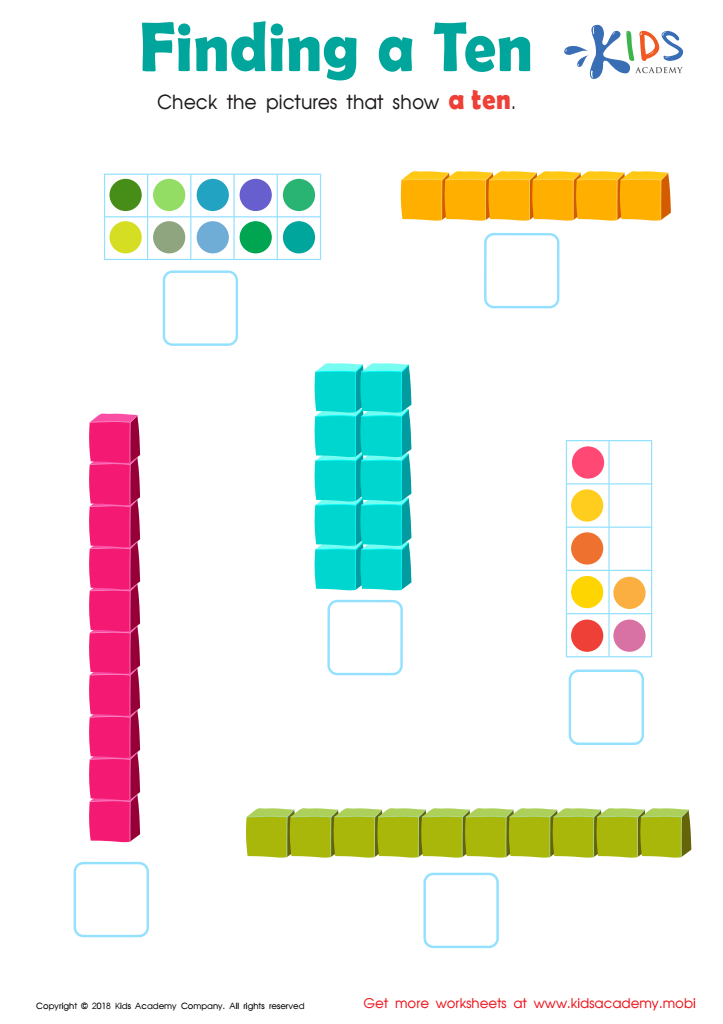
Finding a Ten Worksheet
 Assign to My Students
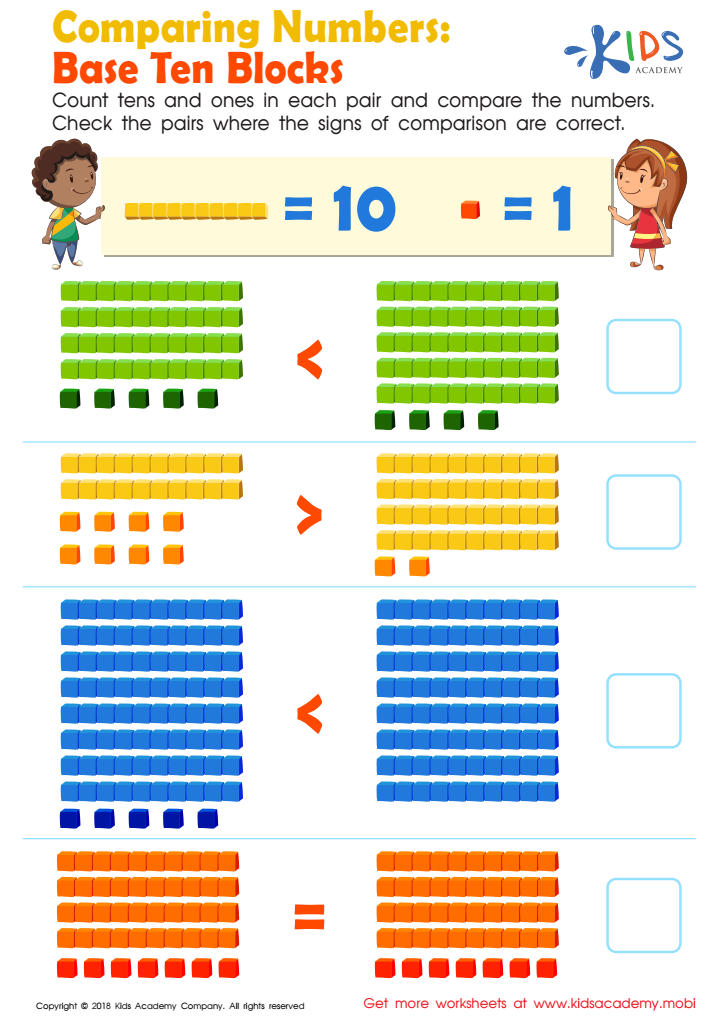
Comparing Numbers: Base Ten Blocks Worksheet
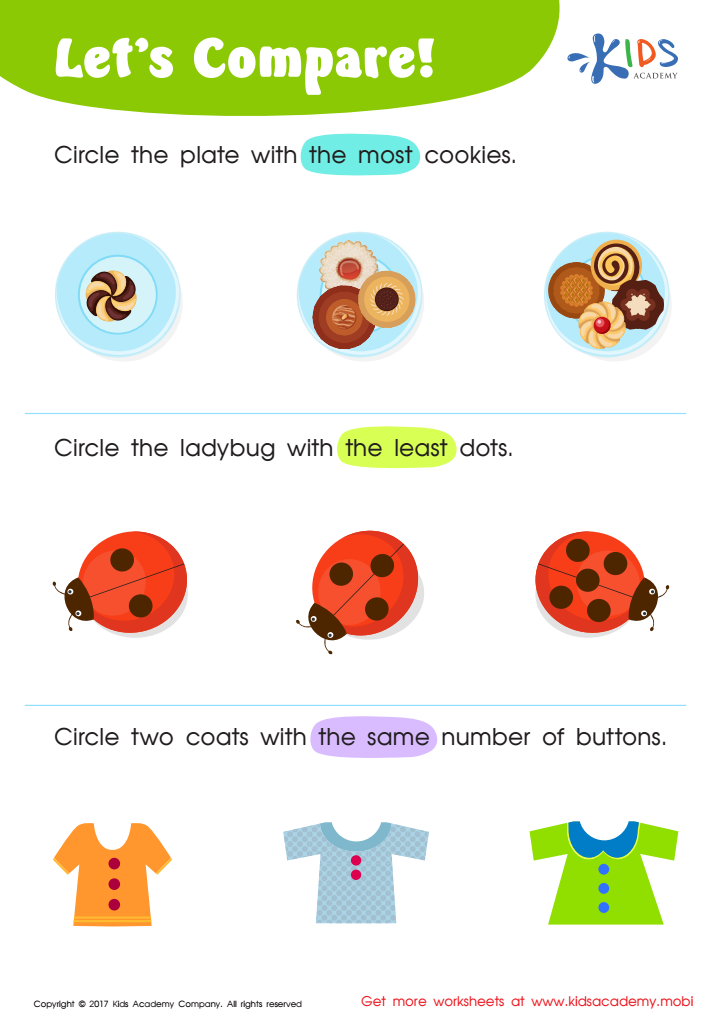
Matching: Classifying Toys by Size Worksheet


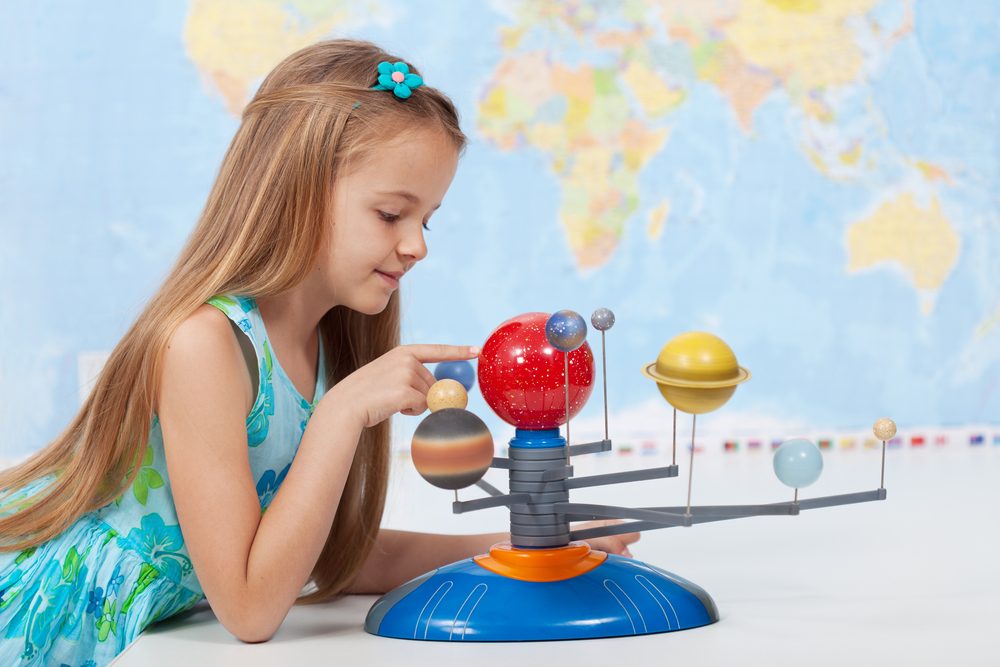



Developing math skills in children aged 3 to 6 is crucial for several reasons. First, early math literacy lays the foundation for a child's overall academic success. Research shows that children who grasp basic mathematical concepts, such as counting, recognizing patterns, and understanding shapes, are more likely to excel in later grades.
Second, math skills foster critical thinking and problem-solving abilities. Engaging young learners in activities that involve measuring, sorting, or comparing helps them develop logical reasoning and spatial awareness, which are essential for daily life tasks beyond academics.
Third, foundational math skills contribute to building confidence and a positive attitude toward learning. When children feel competent in their abilities to understand numbers and solve simple problems, they are more likely to embrace challenges and contribute meaningfully in group settings.
Moreover, math is not just about numbers—it integrates with language, social skills, and even emotional development. Simple games, playful activities, and everyday interactions centered around math create bonding experiences and stimulate children's curiosity about the world around them. Thus, parents and teachers play a pivotal role in nurturing early math skills to ensure children enter their academic journey with joy and enthusiasm.








