Phonics improvement Normal Worksheets for Ages 3-6
3 filtered results
-
From - To
Discover our "Phonics Improvement Normal Worksheets" designed specifically for children aged 3-6! These engaging and interactive worksheets provide a fun way for young learners to develop essential phonics skills. With vibrant illustrations and age-appropriate activities, children will enhance their letter recognition, blending, and word formation abilities. Our resource encourages both individual and collaborative learning, making it perfect for classroom settings or home practice. Help your child build a solid foundation in reading and language through enjoyable exercises that promote early literacy. Explore a world of phonics mastery and watch as your child's confidence in reading grows!
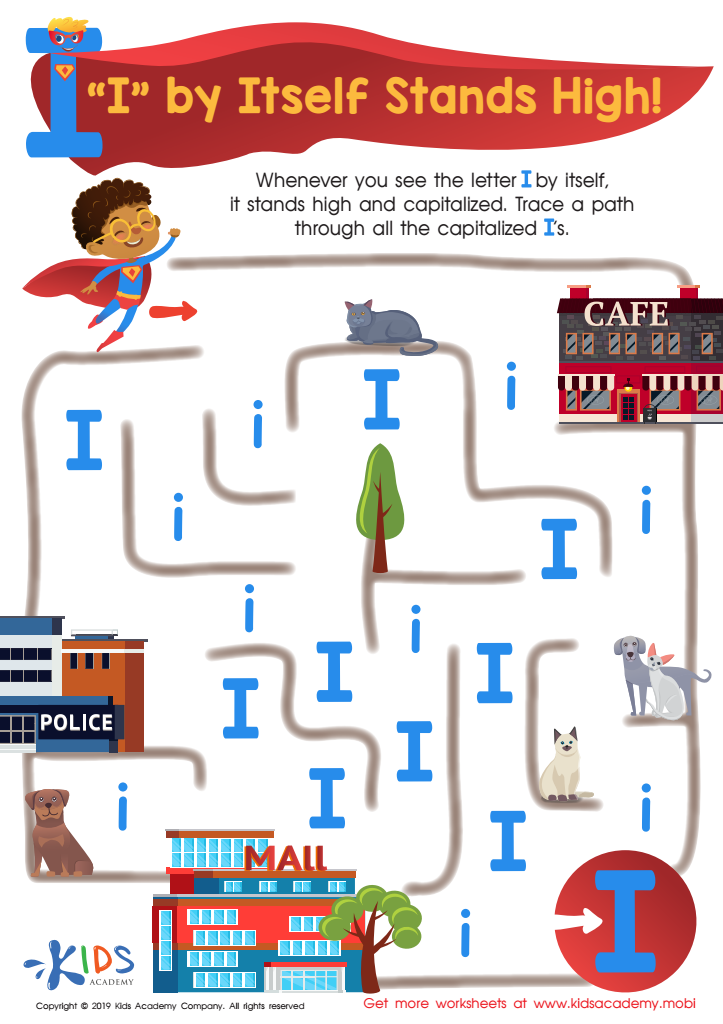
I Stands High Worksheet
 Assign to My Students
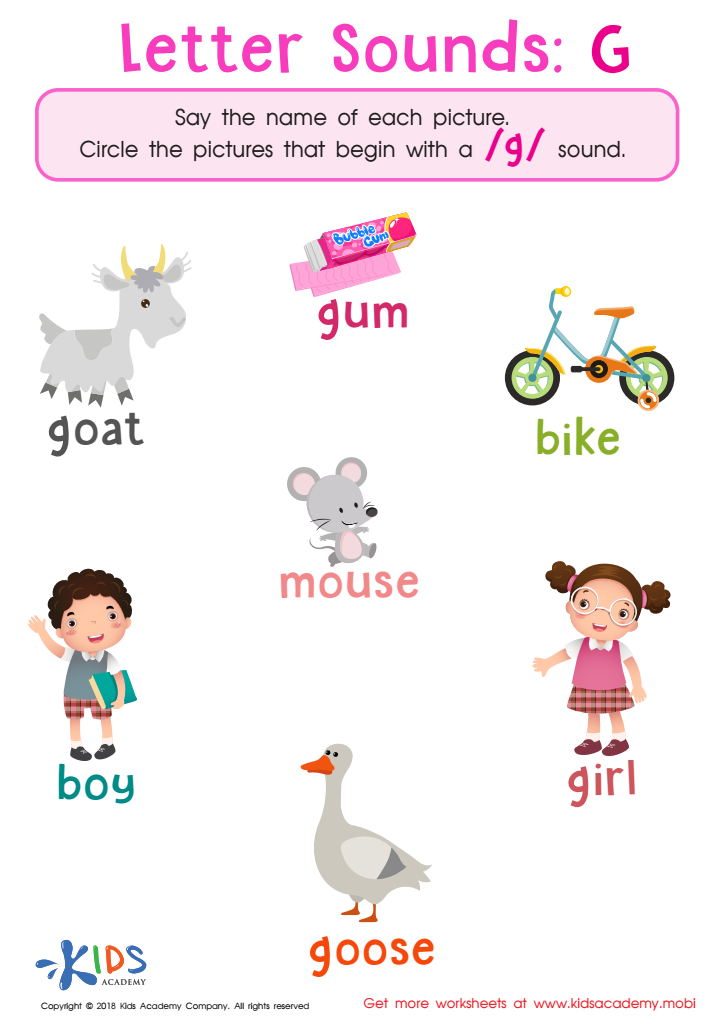
Letter G Sounds Worksheet



.jpg)




Phonics is a vital foundational skill for early literacy development, making it essential for parents and teachers to prioritize phonics improvement in children aged 3-6. During these formative years, children's brains are highly receptive to language acquisition, and phonics provides the tools they need to decode and understand written language. By mastering phonics, children learn to connect sounds with letters, enabling them to read words independently.
Improving phonics skills also fosters confidence in young learners. As they begin to read, children experience a sense of accomplishment, which can motivate them to engage more actively with literacy activities. Additionally, strong phonics skills contribute to better comprehension and vocabulary development, laying the groundwork for future academic success.
Moreover, research indicates that children who receive explicit phonics instruction are more likely to become proficient readers, which is essential for their overall educational trajectory. Early intervention has a lasting impact; when teachers and parents invest time in phonics education early on, they help combat reading difficulties later in life.
In summary, phonics improvement in early childhood is crucial as it not only enhances reading and comprehension skills but also fosters a love for learning and contributes to long-term academic achievement.








