Phonological awareness Normal Worksheets for Ages 3-6
3 filtered results
-
From - To
Discover our engaging phonological awareness worksheets designed for children ages 3-6! These expert-developed resources aim to enhance early literacy skills by focusing on sound recognition, rhyming, syllable segmentation, and more. Our carefully crafted activities promote fun while ensuring your child develops essential auditory discrimination skills. Printable and interactive, these worksheets cater to various learning styles, making phonological awareness enjoyable and effective. Perfect for parents and educators seeking to enrich their curriculum or learning at home, our resources will ensure every child builds a solid foundation for future reading success. Explore now and watch your little ones thrive in their literacy journey!
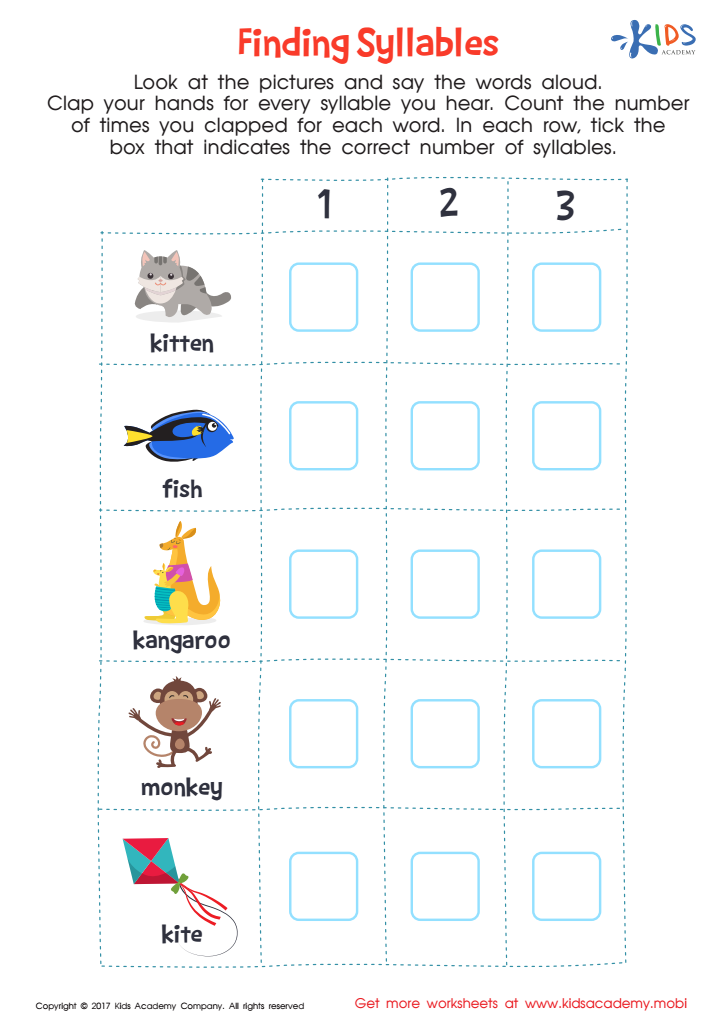
Finding Syllables Word Structure Worksheet
 Assign to My Students
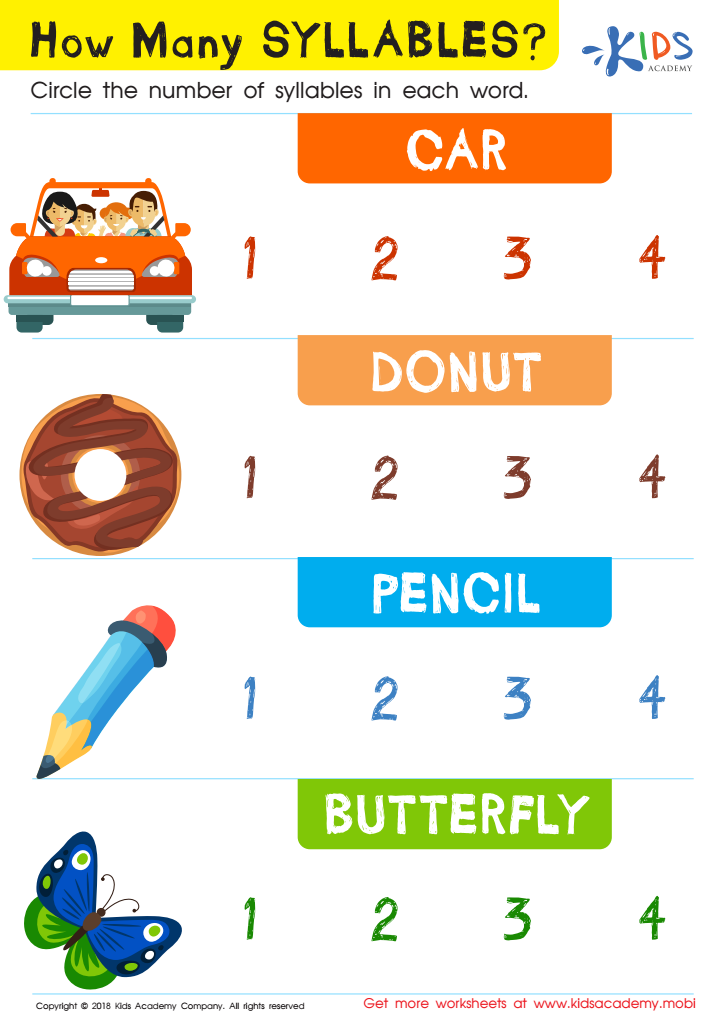
How Many Syllables? Worksheet
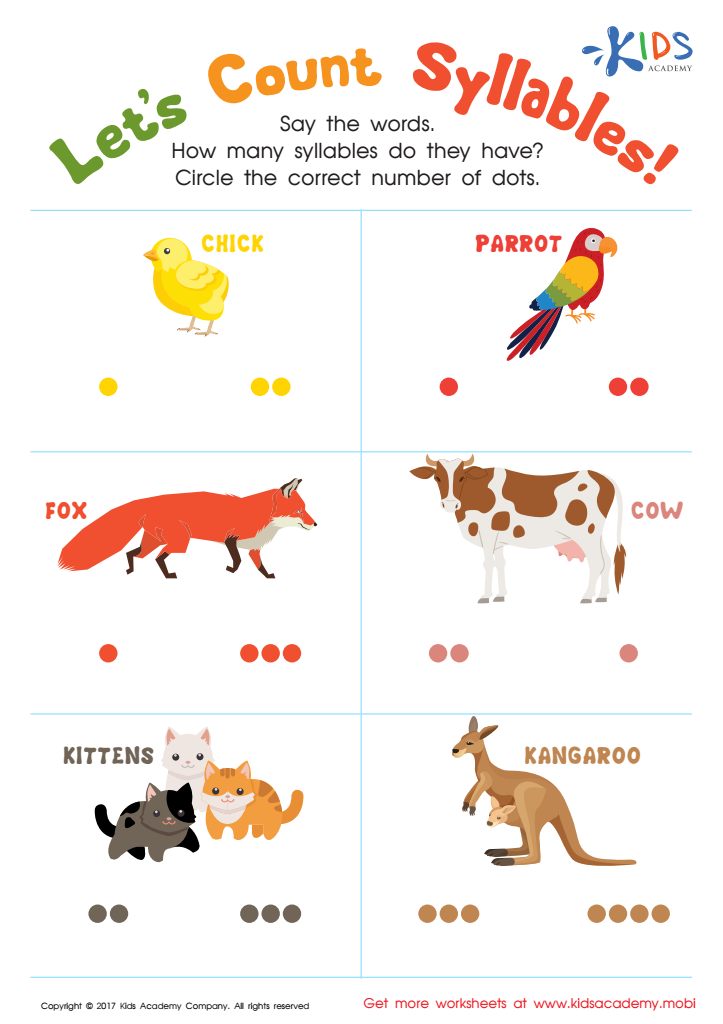
Lets Count Syllables Worksheet








Phonological awareness is a critical foundational skill for reading and literacy development in young children, particularly between the ages of 3 and 6. Parents and teachers should care about this aspect of early learning because it significantly impacts a child's ability to decipher written language. Phonological awareness involves recognizing and manipulating sounds in spoken language, which includes skills such as rhyming, syllable segmentation, and phoneme identification.
By fostering phonological awareness, caregivers can help children develop listening skills, improve vocabulary, and enhance overall language development. Children who possess strong phonological awareness are more likely to grasp the concept of letters corresponding to sounds, leading to more effective reading and writing skills in the future.
Additionally, engaging children in phonological activities, such as singing songs, playing rhyming games, or clapping out syllables, not only makes learning enjoyable but also strengthens the bond between adult and child. This early attention to phonological awareness helps bridge the gap to fundamental literacy skills, empowering children for academic success and lifelong learning. By prioritizing phonological awareness, parents and teachers can ensure that children are well-prepared for the challenges of reading and communication in their future educational journeys.








