Problem-Solving Skills Normal Worksheets for Ages 3-6 - Page 4
73 filtered results
-
From - To
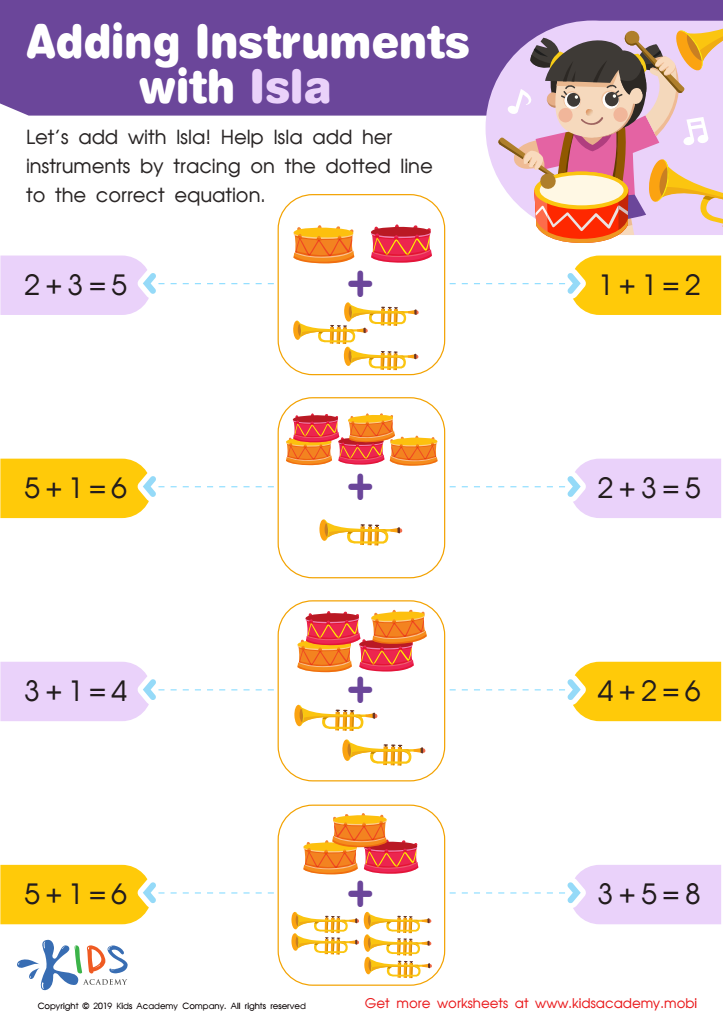
Adding Instruments with Isla Worksheet
 Assign to My Students







Parents and teachers should place significant emphasis on developing problem-solving skills in children aged 3-6 because these skills lay a strong foundation for lifelong learning and personal growth. During these formative years, children's brains are highly receptive, and they begin to understand how to approach challenges, make decisions, and find solutions. Developing problem-solving skills at this age promotes cognitive development, enhances creativity, and fosters critical thinking.
Children who engage in problem-solving activities learn to explore different solutions to a problem, which encourages perseverance and resilience. These skills are vital for academic success, as they improve children's ability to tackle mathematical, scientific, and everyday life challenges. For example, figuring out how to build a block tower that won't fall or deciding how to share toys fairly requires them to think ahead and understand consequences.
Furthermore, effective problem-solving skills contribute to emotional and social development. As children work through problems, they learn patience, empathy, and cooperation, which are essential for forming strong relationships. Encouraging a young child’s ability to solve problems helps them become independent, confident individuals who are better equipped to navigate the complexities of life. Therefore, nurturing problem-solving skills in early childhood benefits both immediate learning experiences and future achievements.








