Science vocabulary expansion Normal Worksheets for Ages 3-6
3 filtered results
-
From - To
Discover our engaging Science Vocabulary Expansion Normal Worksheets tailored for young learners aged 3-6! Designed to spark curiosity and enhance understanding, these worksheets provide a fun and interactive way for children to explore basic scientific concepts and vocabulary. From identifying natural elements to learning about plants and animals, each activity promotes hands-on learning and cognitive development. Perfect for preschool and early grade classrooms, our printable resources make it easy for teachers and parents to support children’s growth in science knowledge and vocabulary skills. Ignite a lifelong love of discovery with our thoughtfully crafted worksheets! Let's explore science together!
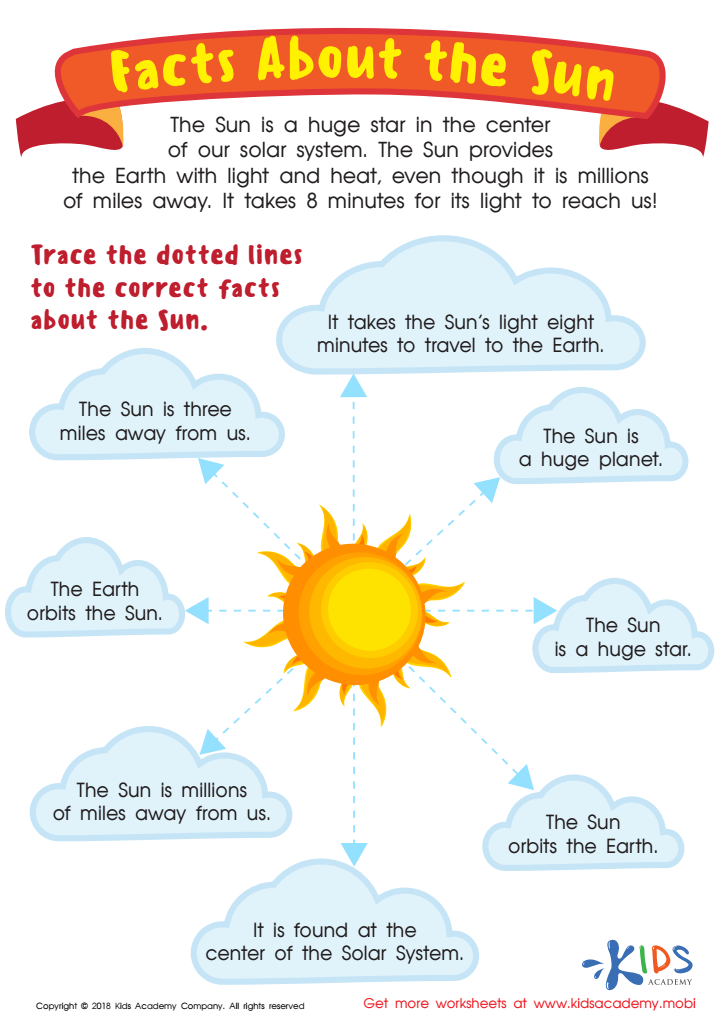
Facts About the Sun Worksheet
 Assign to My Students
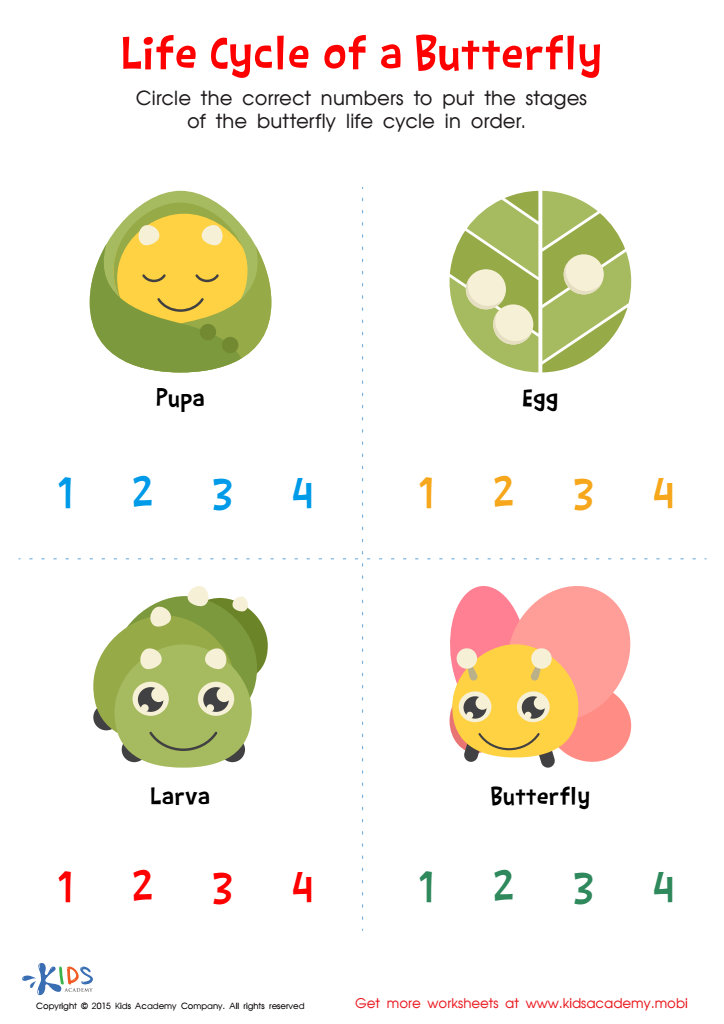
Life Cycle of Butterfly Printable
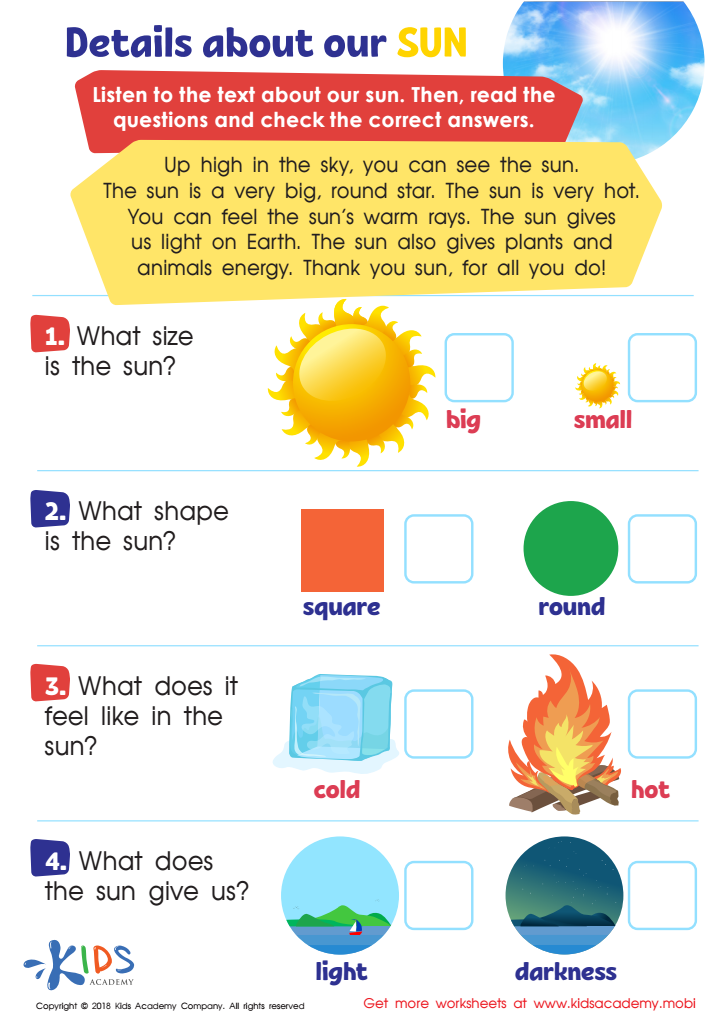
Details About Our Sun Worksheet





Expanding science vocabulary for children aged 3-6 is critical for several reasons. Firstly, a robust vocabulary enhances a child's ability to understand and engage with the world around them. Science vocabulary introduces concepts that help young learners articulate their observations and makes complex ideas more accessible. Words related to nature, movement, patterns, and properties contribute to cognitive development and scientific reasoning skills.
Secondly, early exposure to science vocabulary encourages curiosity and promotes a love for learning. When children are equipped with the language to express their thoughts and findings, they are more likely to ask questions and engage in explorative play, which is essential for scientific inquiry.
Teachers and parents play a vital role in modeling and introducing this vocabulary in everyday contexts. By discussing relatable scientific concepts during activities—like cooking, gardening, or even playtime—adults can nurture a child's fascination with nature and science.
Moreover, expanding science vocabulary supports literacy development. The more words children know, the better they can comprehend texts and express ideas, laying a foundation for future academic success.
In conclusion, caring about science vocabulary expansion is an investment in how children approach learning, fostering inquisitive minds that are prepared to explore and understand the complexities of the world.








