
Sentence formation Normal Worksheets for Ages 3-6
3 filtered results
Difficulty Level
Grade
Age
-
From - To
Subject
Activity
Standards
Introducing our "Sentence Formation Normal Worksheets for Ages 3-6," designed to enhance your child's language skills through engaging activities. These worksheets foster early literacy development by helping young learners construct simple sentences using illustrations and prompts. Each worksheet is carefully crafted to promote vocabulary building and improve grammar awareness in a playful manner. Perfect for both classroom use and home practice, our resources cater to diverse learning styles. Empower your child to express their thoughts clearly and confidently while having fun! Visit our page now to access these valuable tools that will support your child's journey into reading and writing.
Favorites
With answer key
Interactive
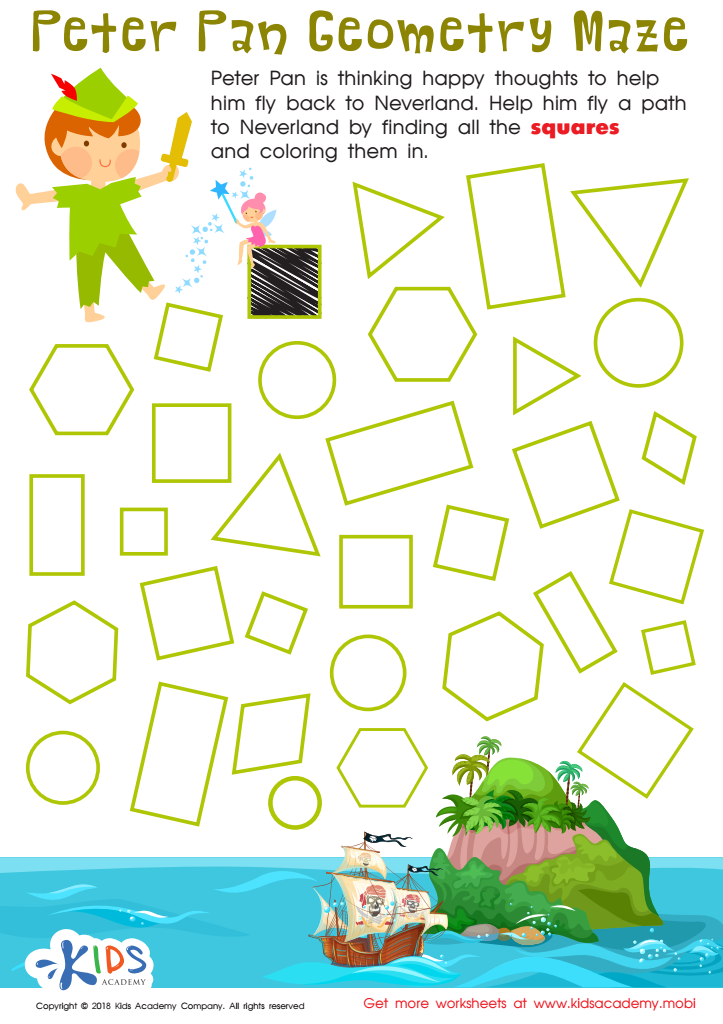
Peter Pan Worksheet
Kindergarteners can join Peter Pan on an adventure to Neverland! They can help him by coloring squares to create a path, strengthening their shape identification skills in a fun maze. Let the journey begin!
 Assign to My Students
Peter Pan Worksheet
Worksheet
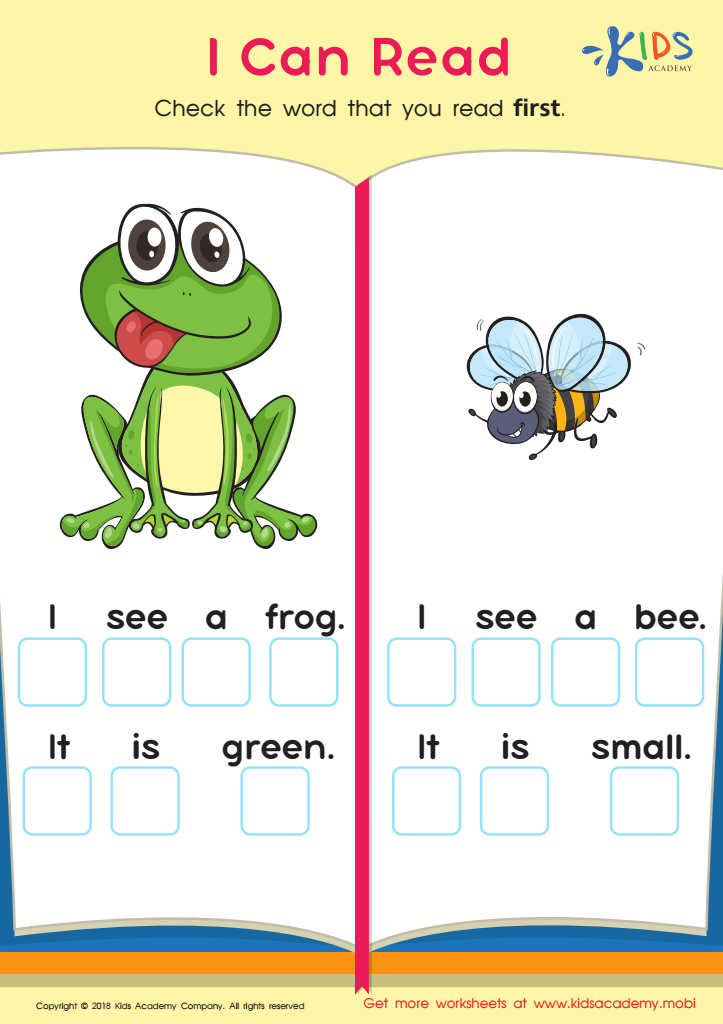
I Can Read Worksheet
Test your child's reading skills with this fun worksheet. See how well they know one-letter, two-letter, and five-letter words. Ask your little one to read the sentences and tick the word they identify first. It's a great way to track their progress and help them become more confident readers.
I Can Read Worksheet
Worksheet
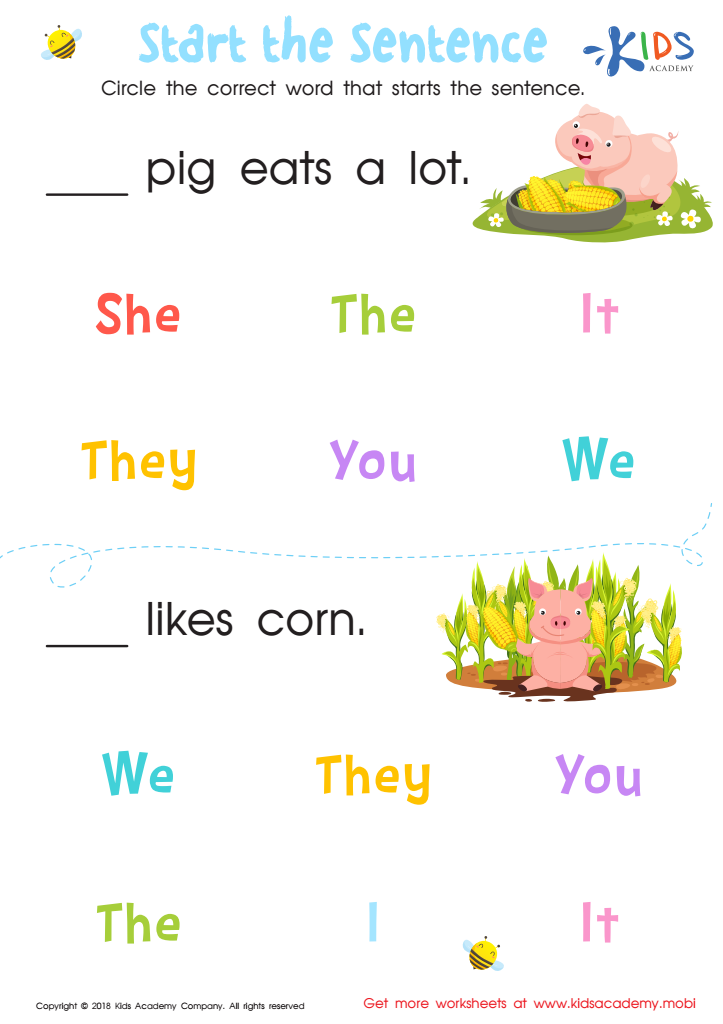
Start the Sentence Worksheet
Test your students' understanding of sentences with this easy worksheet. Ask them to read the sentences and circle the correct word that starts each. This will show how well their lessons have paid off and if they can construct short simple sentences.
Start the Sentence Worksheet
Worksheet
Join Kids Academy for Free
Who is primarily going to use this learning content?







Sentence formation is a fundamental skill for children aged 3-6, as it lays the groundwork for effective communication and literacy development. At this age, children are rapidly expanding their vocabulary and beginning to understand the structure of language. Parents and teachers should prioritize sentence formation because it supports cognitive development and enhances critical thinking skills. As children learn to construct sentences, they also learn to express their thoughts, emotions, and ideas clearly.
Furthermore, early mastery of sentence formation boosts confidence in speaking and writing. Children who are adept at forming sentences are more likely to engage in conversations, share stories, and participate in group activities. These interactions are critical for social development, as they help children learn to collaborate and resolve conflicts.
Moreover, strong foundation in sentence structure can lead to better literacy outcomes in the future. Reading and writing skills grow with practice, and those who understand how to form sentences are often more proficient in decoding text and crafting written material.
Ultimately, encouraging sentence formation in young children fosters a love for language and communication, creating a positive impact on their overall educational journey. It’s an investment in their future success.








