Understanding chess rules Normal Worksheets for Ages 3-6
5 filtered results
-
From - To
Discover the joy of chess with our "Understanding Chess Rules" worksheets, designed specifically for children aged 3 to 6. These engaging resources introduce young learners to the basics of chess in a fun and accessible way, fostering critical thinking and problem-solving skills. With interactive activities, colorful illustrations, and step-by-step guidance, children will learn how each piece moves, the objective of the game, and essential chess etiquette. Perfect for homeschooling or classroom learning, our worksheets encourage a love for strategy, patience, and focus. Start your child's chess journey today and build a foundation for lifelong skills through play!
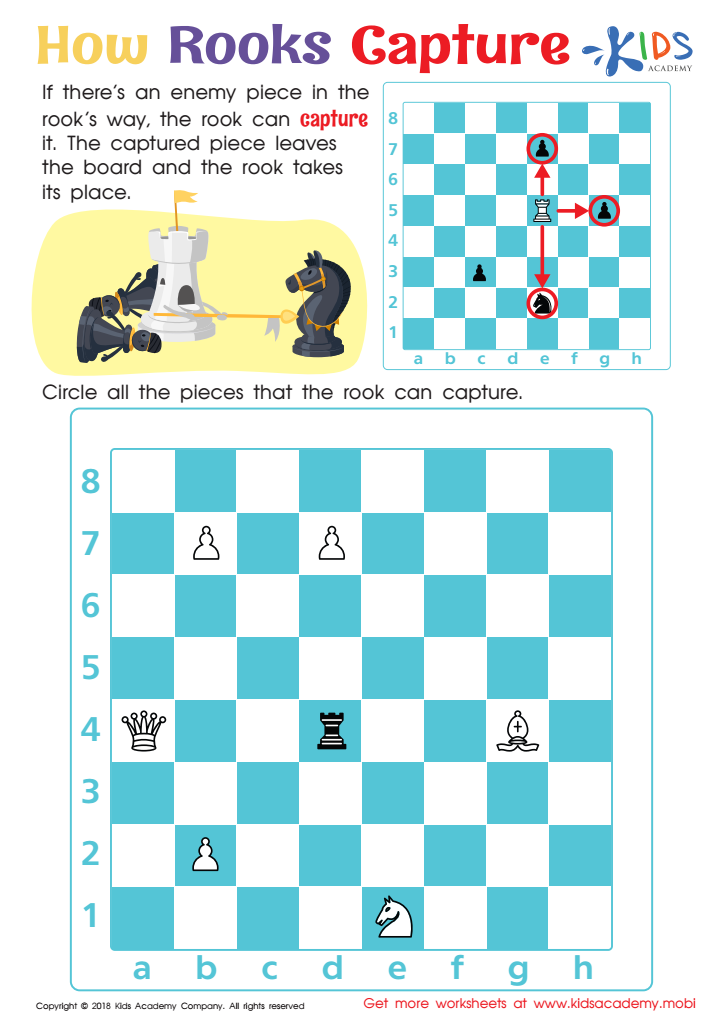
How Rooks Capture Worksheet
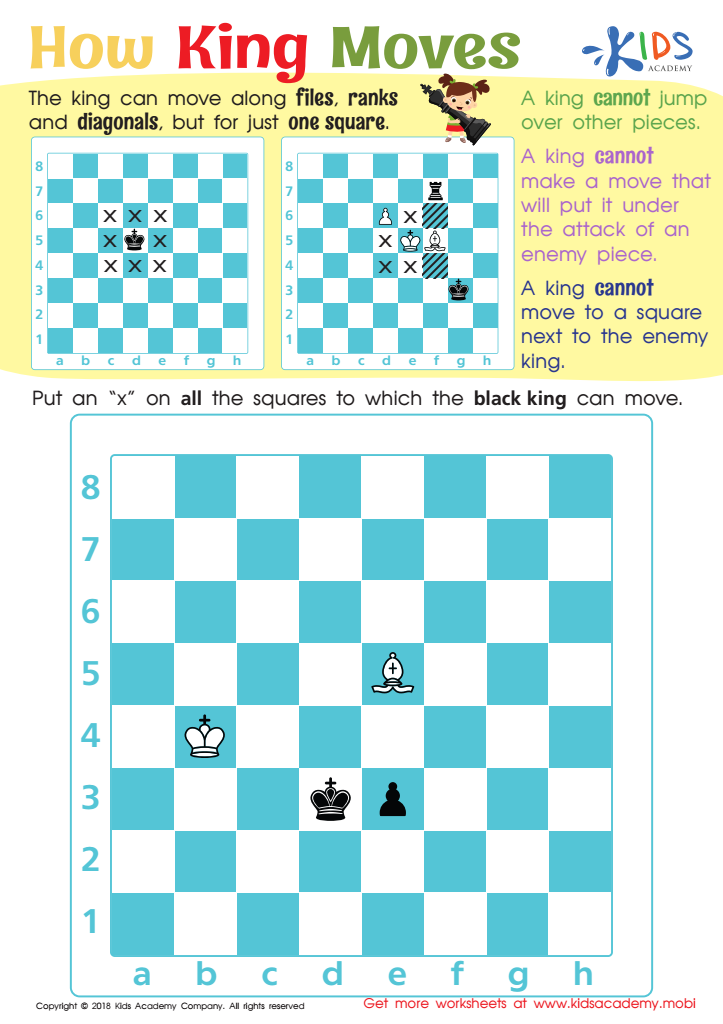
How King Moves Worksheet
 Assign to My Students
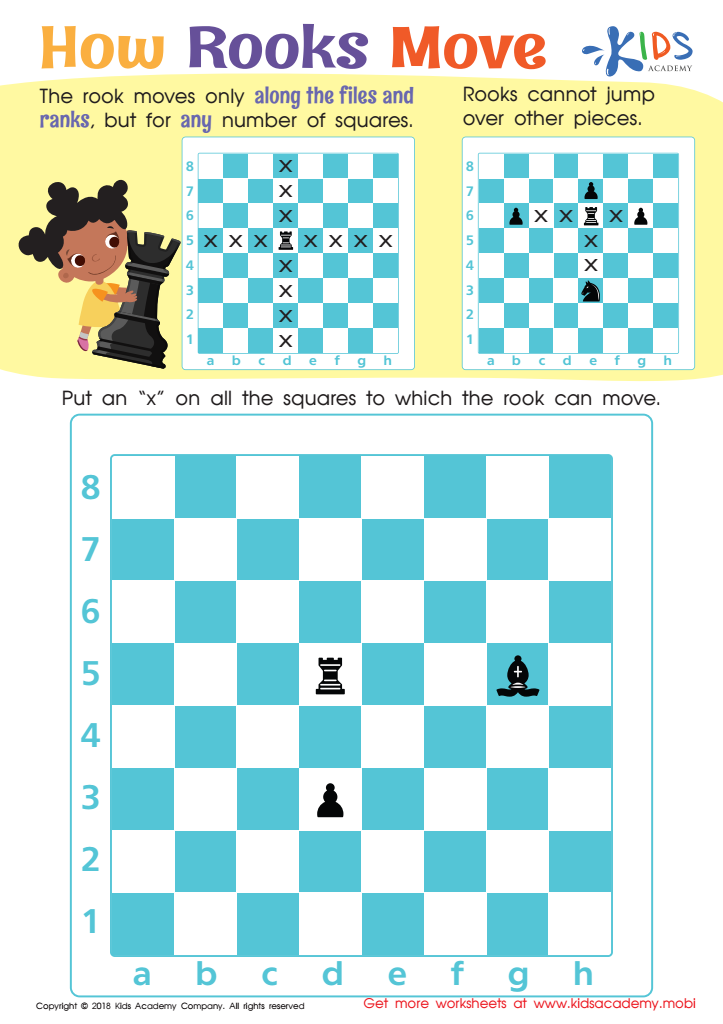
How Rooks Move Worksheet
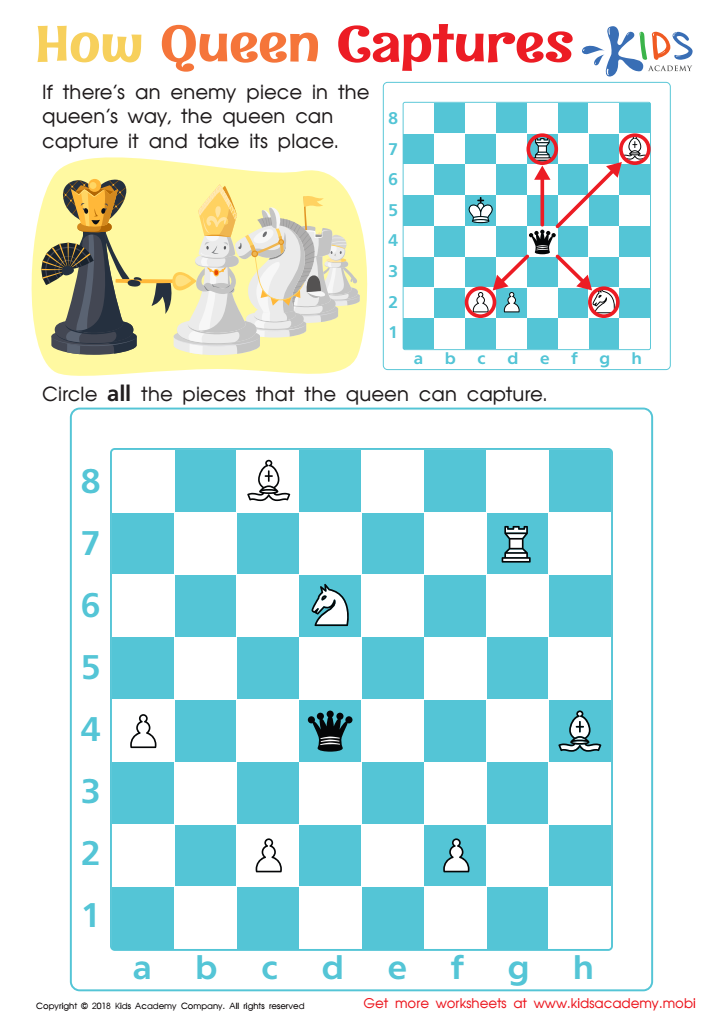
How Queen Captures Worksheet
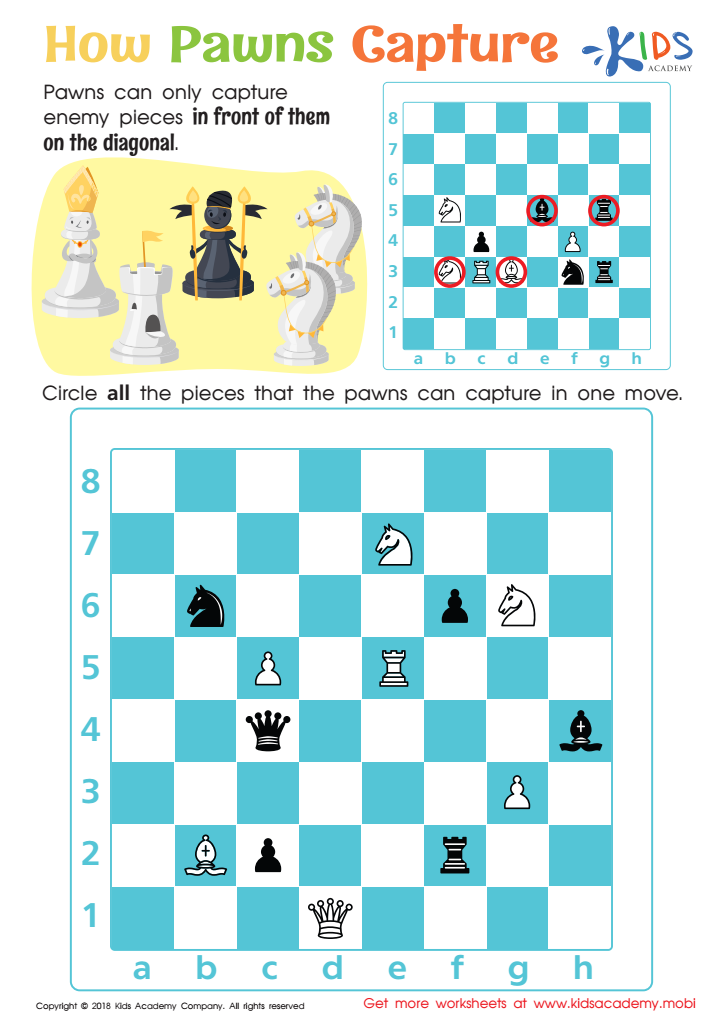
How Pawns Capture Worksheet






Understanding chess rules for children ages 3-6 is vital for several reasons. Firstly, chess promotes critical thinking and problem-solving skills, helping young minds develop the ability to strategize and make quick decisions. Introducing these rules at an early age allows children to engage their cognitive abilities in a fun and challenging way.
Moreover, learning chess fosters social skills. As children play together, they learn about cooperation, taking turns, and respecting opponents, thereby enhancing their interpersonal interactions. Familiarity with the game also provides a foundation for discipline and patience, as chess requires focus and the ability to delay gratification.
In addition, chess can spark interest in mathematics and logical reasoning. Understanding the rules encourages children to identify patterns, an essential skill that can be beneficial in early math education. Parents and teachers who introduce chess can also create an inclusive environment where the joy of learning triumphs.
Ultimately, early exposure to chess helps develop a well-rounded child, honing essential life skills that will serve them in various aspects of their education and beyond. By investing time in understanding chess rules, adults can enrich children’s learning experiences and set the stage for future successes.








