Understanding communities Normal Worksheets for Ages 3-6
4 filtered results
-
From - To
Explore these expertly-designed worksheets to introduce children ages 3-6 to the concept of communities. Through engaging activities and illustrations, kids learn about different roles, places, and relationships that form the fabric of their surroundings. These worksheets help develop social awareness, critical thinking, and communication skills as children identify community helpers and explore their own neighborhood. Ideal for preschool and kindergarten levels, this collection enhances early learning by making the idea of community relatable and fun. Perfect for classroom use or at-home practice, these tools lay a solid foundation for understanding the world around them.
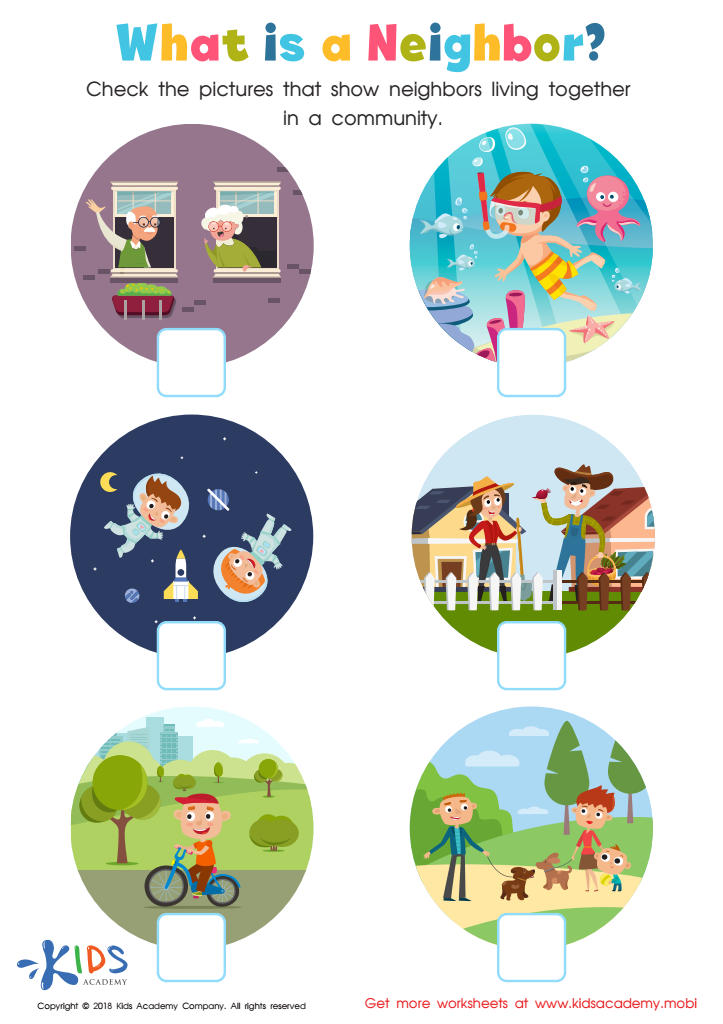
What is a neighbor Worksheet
 Assign to My Students
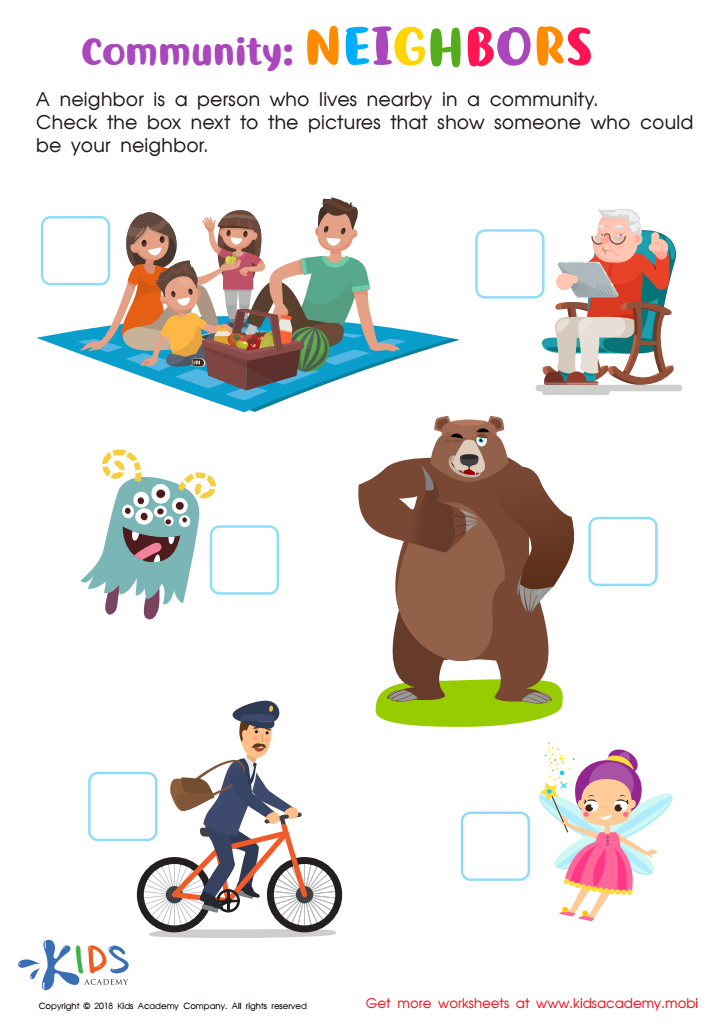
Community: Neighbors Worksheet
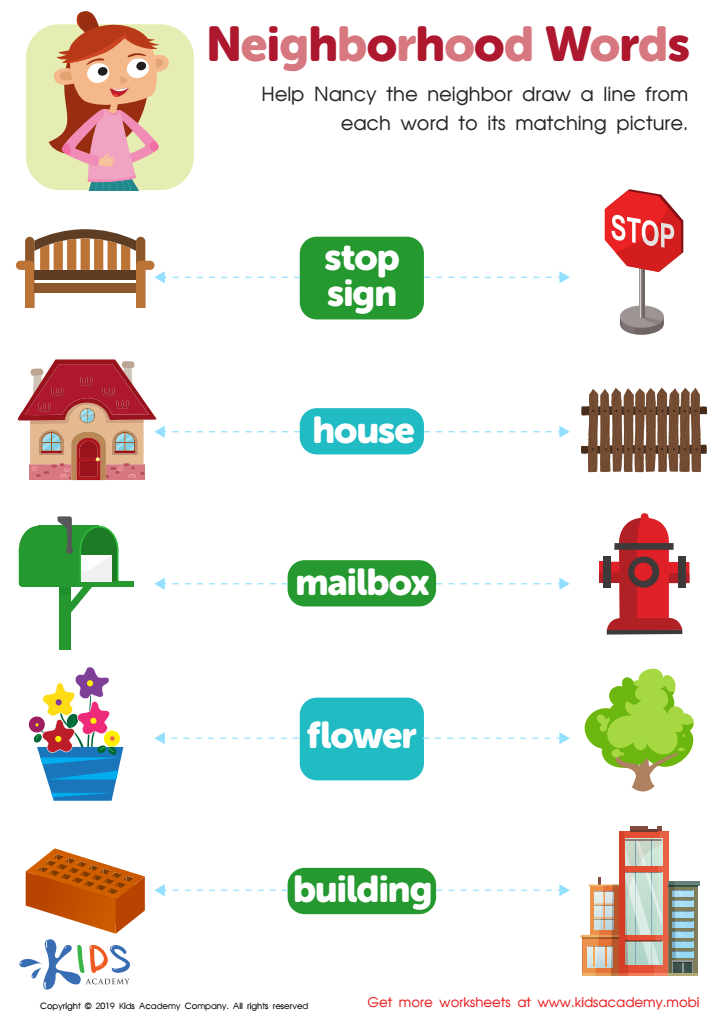
Neighborhood Words Worksheet
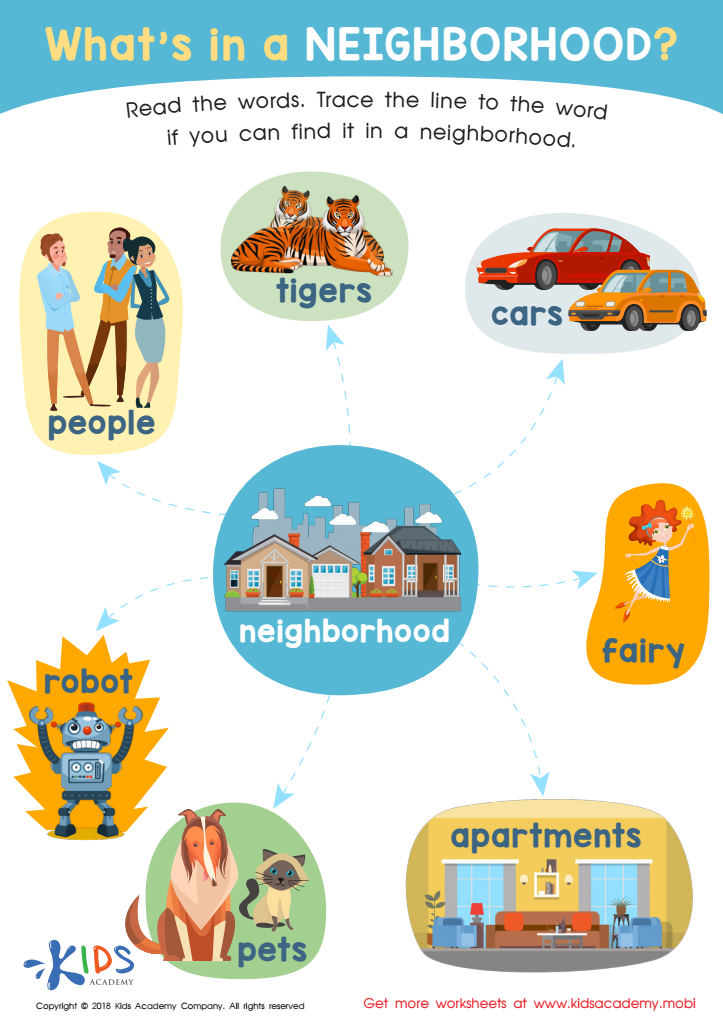
What's in a Neighborhood? Worksheet







Understanding communities is crucial for children ages 3-6 because it lays the foundation for social development and empathy. During these formative years, kids begin to perceive the world outside their immediate family. Understanding their community helps them grasp interconnectedness and the importance of every individual's role, fostering a sense of belonging and security.
For parents and teachers, imparting knowledge about communities helps children develop core social skills. This understanding promotes cooperation, sharing, and empathy as children learn to interact with diverse groups. For example, knowing the roles of a firefighter, teacher, or grocery store worker allows children to respect and value contributions, creating a supportive and inclusive mindset.
Additionally, early community awareness bolsters cognitive and language skills. Discussing community helpers and landmarks enhances vocabulary and communication abilities, while hands-on activities like community walks offer experiential learning that enriches problem-solving skills.
By integrating community learning, parents and teachers help children create a balanced worldview, sparking curiosity about societal functions and responsibilities. This early education establishes a framework for civic responsibility and nurtures thoughtful, engaged citizens who appreciate the dynamics and diversity of their environments. Thus, fostering an understanding of communities in young children is essential for holistic development and long-term social harmony.








