
Understanding Quantities Normal Worksheets for Ages 3-6
3 filtered results
Difficulty Level
Grade
Age
-
From - To
Subject
Activity
Standards
Discover our "Understanding Quantities Normal Worksheets" tailored for children aged 3-6, designed to make learning enjoyable and engaging! These worksheets help young learners grasp basic mathematical concepts by exploring quantities through fun activities. With a variety of exercises that encourage counting, comparing, and identifying amounts, children develop essential early math skills while enjoying captivating visuals and themes. Perfect for homeschooling or classroom use, these worksheets promote hands-on learning and cognitive development. Give your little ones a head start in math with our thoughtfully crafted resources that stir curiosity and build a strong foundation for future learning in a playful manner!
Favorites
With answer key
Interactive
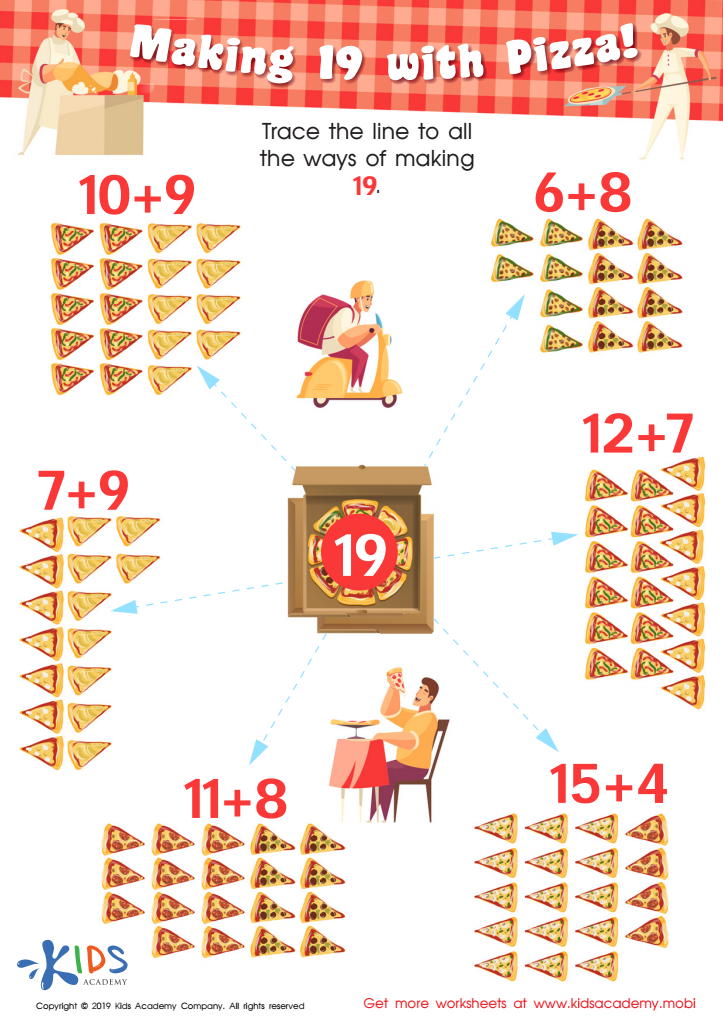
Making 19 with Pizza! Worksheet
Who loves pizza? Your kids do! Next time you need to teach them math, make it fun by combining it with something they enjoy. This worksheet uses a pizza-themed problem to help them practice solving equations. Have them trace the line to figure out how to make 19. It's a great way to make learning math fun!
 Assign to My Students
Making 19 with Pizza! Worksheet
Worksheet
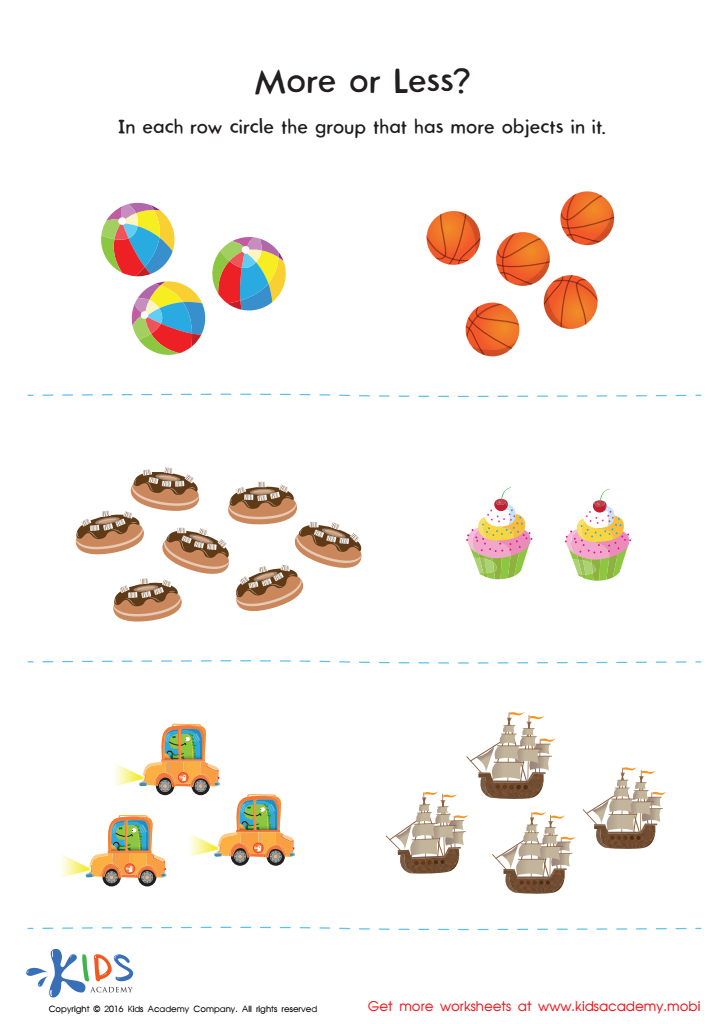
More or Less Size Worksheet
Worksheet
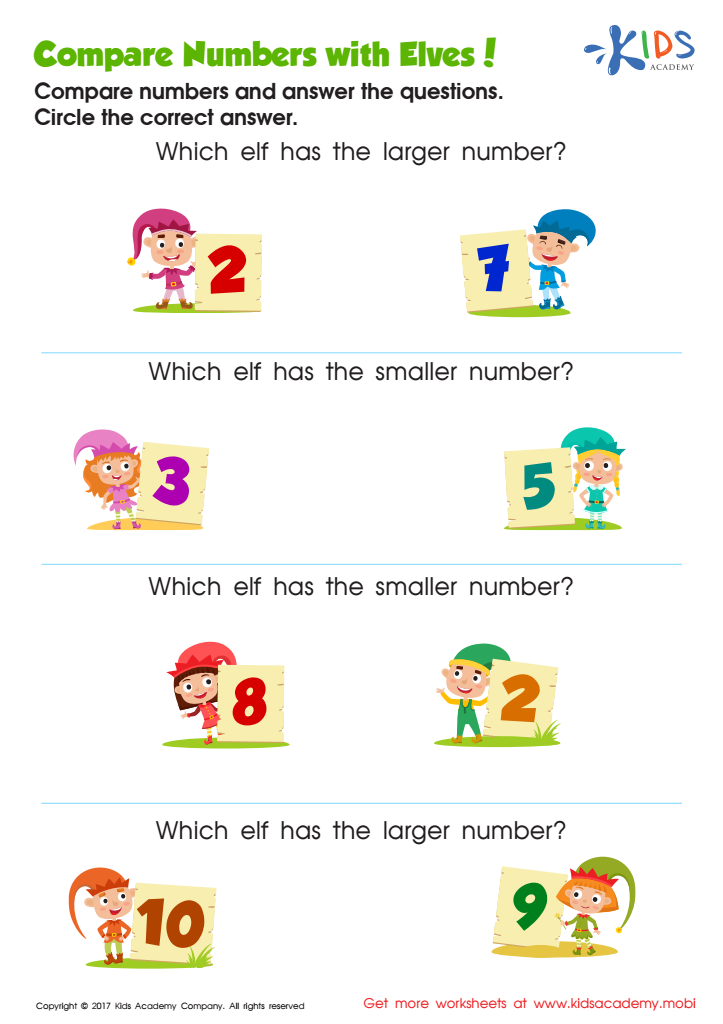
Comparing Numbers Worksheet for Kindergarten
Your child will love helping Santa's elves compare numbers with this fun worksheet for kindergarten! They must determine which number is bigger or smaller then circle the answer. It's a great activity for Christmas or any time!
Comparing Numbers Worksheet for Kindergarten
Worksheet
Join Kids Academy for Free
Who is primarily going to use this learning content?








Understanding quantities is a foundational skill for young children, typically ages 3-6, that plays a critical role in their cognitive development. This stage is crucial as children begin to grasp basic mathematical concepts like counting, comparing, and measuring. Parents and teachers should prioritize understanding quantities because it supports overall academic growth and lays the groundwork for more advanced mathematical concepts later on.
Promoting numerical awareness helps children develop their critical thinking and problem-solving skills. Recognizing quantities enables them to make connections between numbers and their real-world applications, fostering a sense of curiosity and engagement with their environment. This understanding also enhances language development, as discussing numbers and comparisons encourages vocabulary growth.
Moreover, strong number sense at an early age contributes to confidence in math-related tasks, reducing anxiety as children encounter complex mathematical concepts in later grades. Engaging children in playful and interactive activities that involve quantities—like counting objects, comparing sizes, or exploring measurement—makes learning enjoyable and effective. By nurturing early quantity understanding, parents and teachers not only enhance children's mathematical intelligence but also equip them with essential life skills that promote logical reasoning and success in future education.








