Understanding shapes Normal Worksheets for Ages 3-6
5 filtered results
-
From - To
Discover our "Understanding Shapes Normal Worksheets" designed for children ages 3-6! These engaging, printable worksheets introduce young learners to basic shapes, fostering essential skills in shape recognition and spatial awareness. Each worksheet features vibrant illustrations and interactive activities tailored to capture children’s imagination while engaging them in meaningful learning experiences. Parents and teachers will find these resources ideal for reinforcing classroom concepts at home, ensuring that learning remains fun and interactive. Perfect for preschool and kindergarten settings, our worksheets support early childhood development, helping kids build a strong foundation in geometry. Start your child’s journey into the world of shapes today!
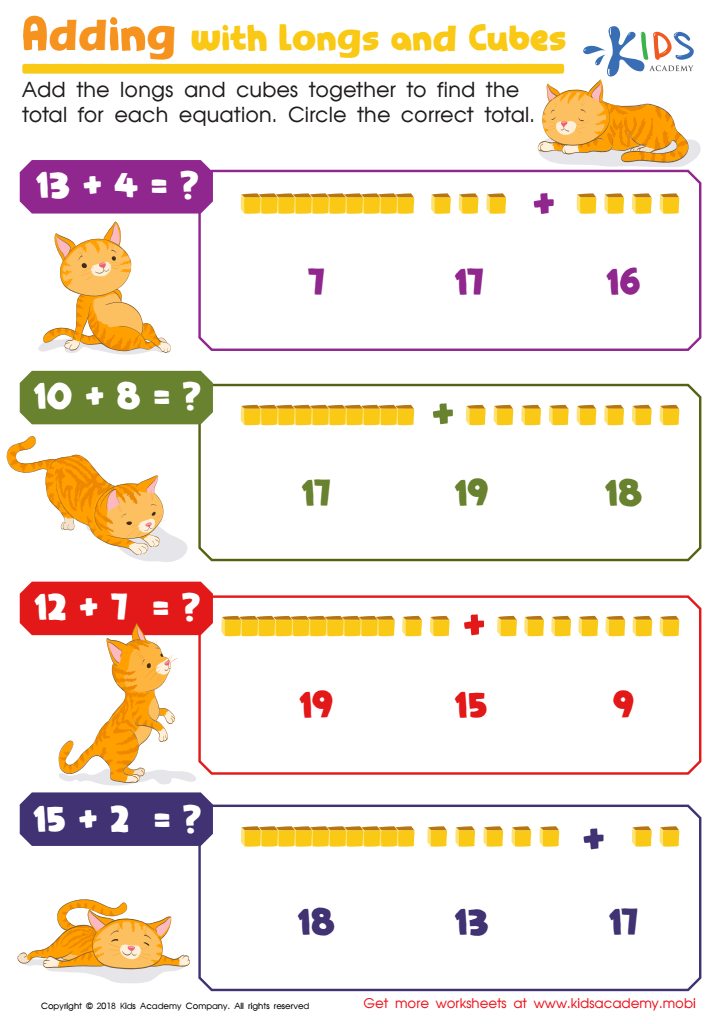
Adding With Longs and Cubes Worksheet
 Assign to My Students

Let's Check! Assessment Worksheet
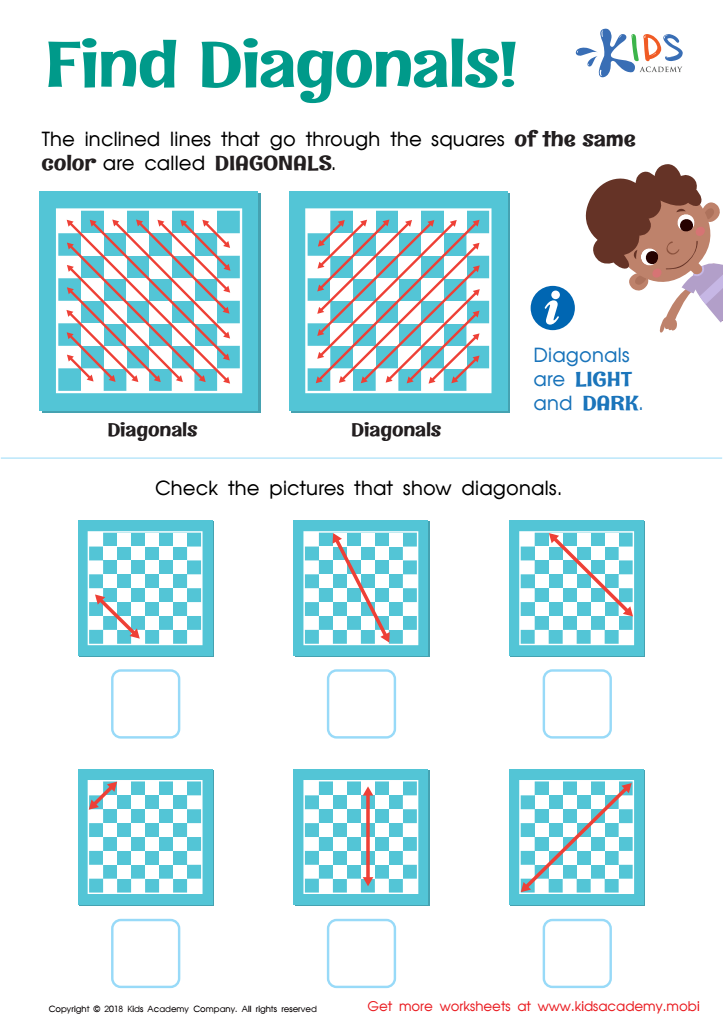
Find Diagonals Worksheet
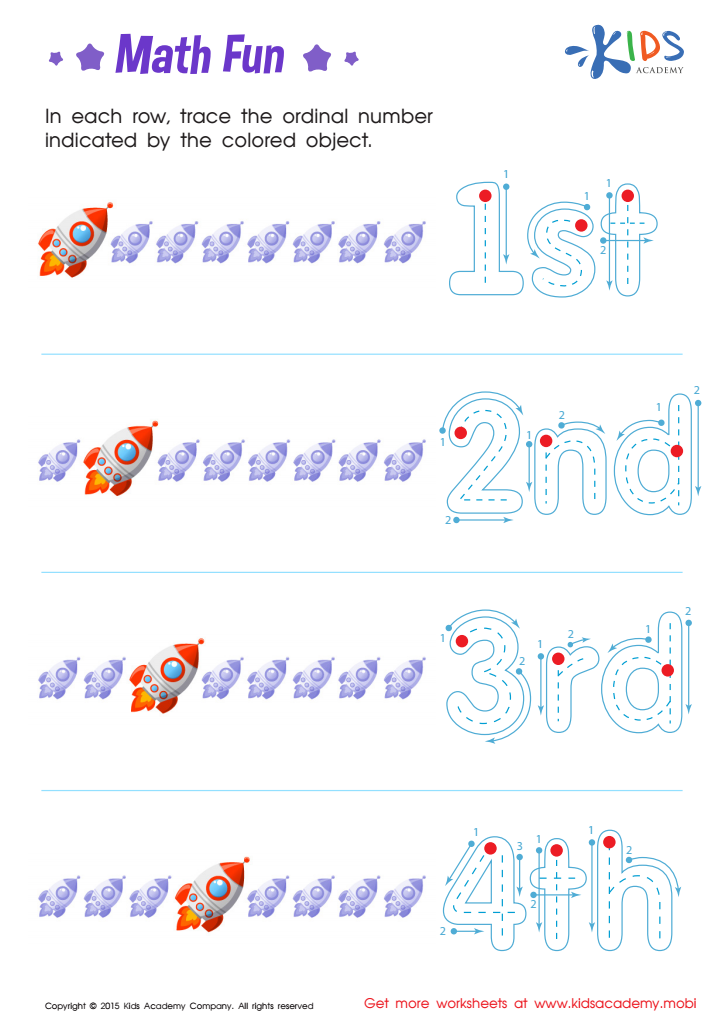
Ordinal Numbers: Math Fun Worksheet
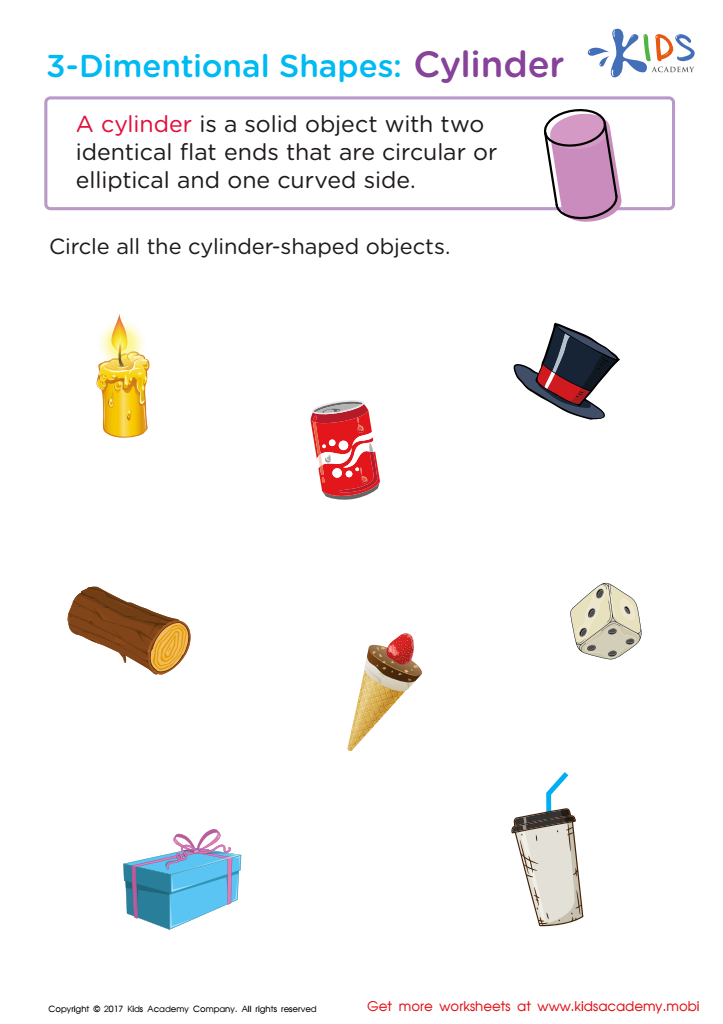
Three–Dimensional Shapes: Cylinder Worksheet








Understanding shapes is a foundational skill in early childhood education that should be prioritized by parents and teachers for children aged 3-6. Engaging with shapes helps kids develop critical cognitive skills, including spatial awareness, problem-solving, and analytical thinking. These skills form the basis for more complex mathematics and are essential for everyday tasks, like organizing objects and navigating spaces.
Additionally, shape recognition serves as a building block for language development. Children learn to identify and describe shapes, which enhances their vocabulary and boosts communication skills. For instance, discussing shapes during activities encourages children to articulate their thoughts and engage in conversations, fostering social interactions.
Moreover, learning about shapes encourages creativity and imagination. Activities such as drawing, building with blocks, or playing with shape-sorting toys prompt children to experiment and express themselves artistically. These experiences also promote fine motor skills as they manipulate various materials.
Overall, investing time in teaching shapes establishes a strong educational foundation, nurturing lifelong learners who are better equipped for future academic challenges. By recognizing the importance of shape understanding, parents and teachers can support holistic development, preparing children for success in both academic and real-life situations.








