
Weather identification Normal Worksheets for Ages 3-6
4 filtered results
Difficulty Level
Grade
Age
-
From - To
Subject
Activity
Standards
Introducing our Weather Identification Normal Worksheets for ages 3-6! These engaging and colorful worksheets are designed to help young learners recognize and understand different weather types. Perfect for preschool and kindergarten classrooms, these activities encourage kids to observe, discuss, and identify various weather conditions, such as sunny, rainy, snowy, and windy days. Each worksheet promotes early cognitive skills, vocabulary development, and critical thinking through fun, interactive exercises suitable for both home and educational settings. Enhance your child's learning experience and instill a love for nature with our thoughtfully crafted weather identification worksheets that make learning a joyful adventure!
Favorites
With answer key
Interactive
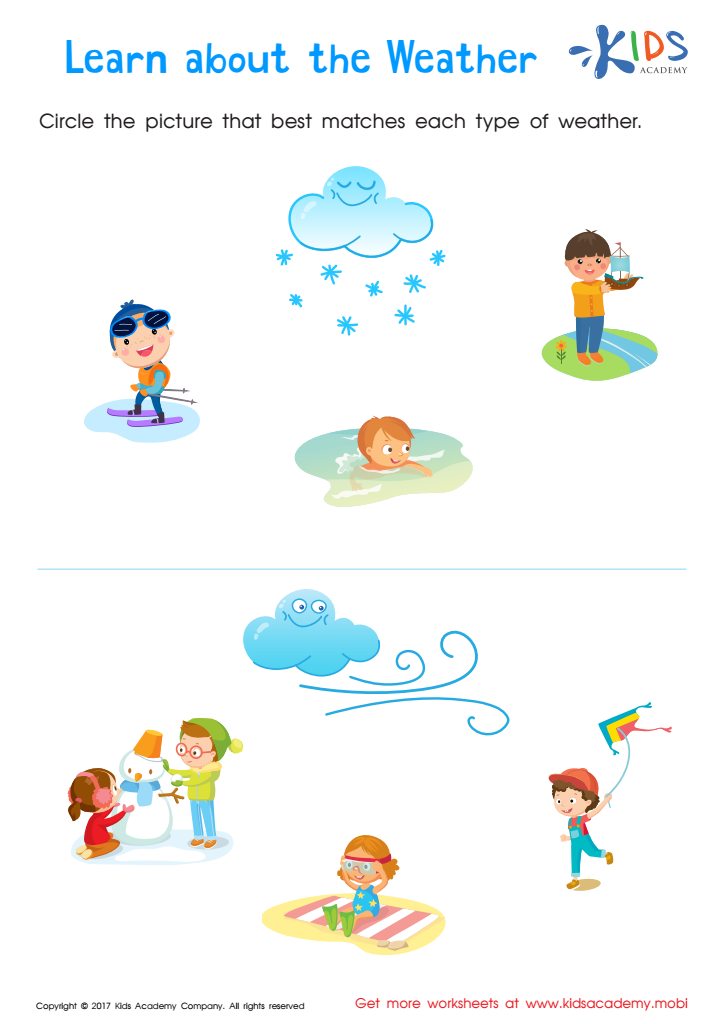
About the Weather Printable
This worksheet is perfect for reinforcing knowledge about changing weather and activities that suit each season. Help your child use their life experiences to observe the weather and complete the worksheet. Fun and colorful, it's a great way to learn about weather and seasons. Let's get started!
 Assign to My Students
About the Weather Printable
Worksheet
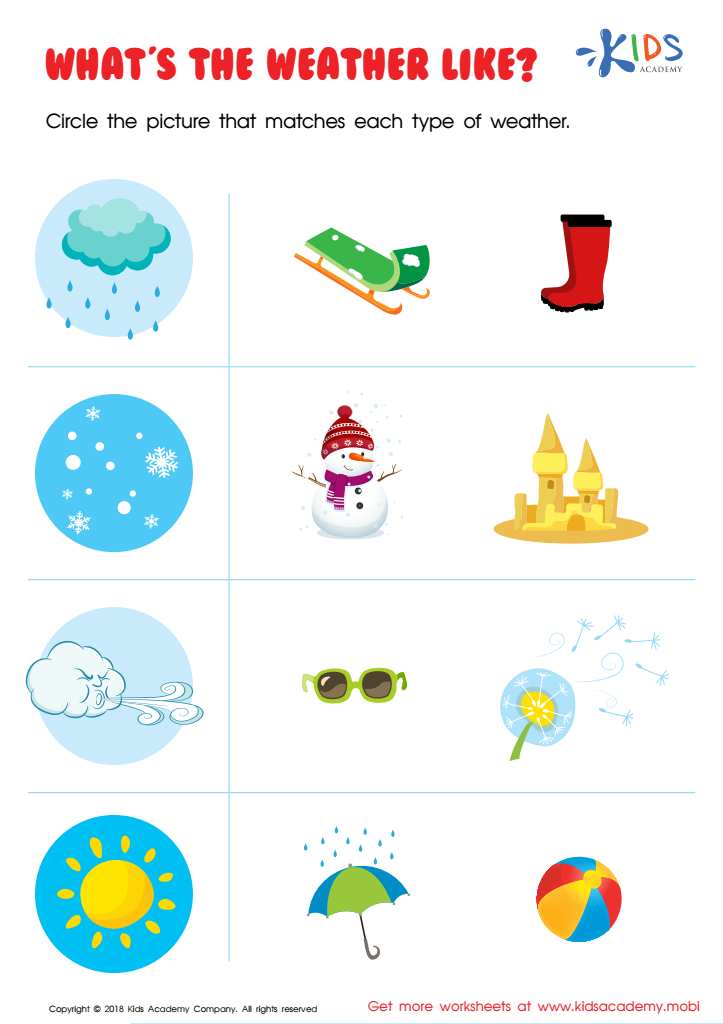
What's the Weather Like? Worksheet
Help budding meteorologists practice matching weather to seasons with this PDF worksheet. Picture clues help identify seasons and fine motor skills are practiced circling the correct weather patterns. Bright and engaging characters make learning fun and reinforce weather knowledge.
What's the Weather Like? Worksheet
Worksheet
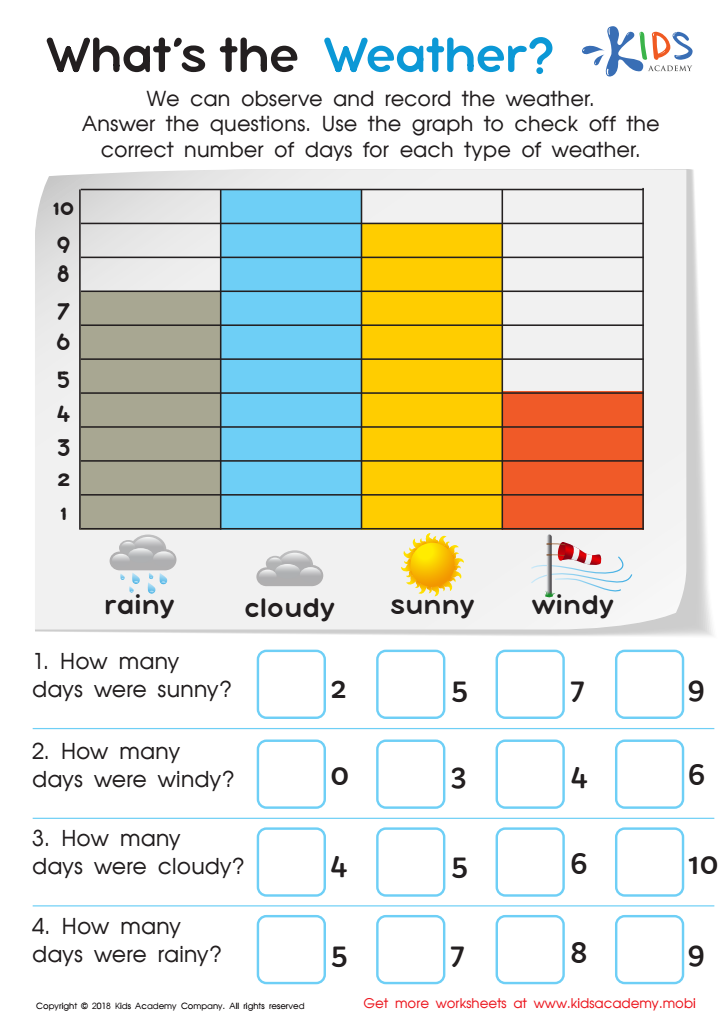
What's the Weather? Worksheet
Check the weather outside. Help kids learn and practice science and math by tracking different types of days using this printable worksheet. Have them count bars next to weather types like cloudy, sunny, windy, and rainy. Answer the questions and take the lesson further by creating a bar graph to show the monthly weather.
What's the Weather? Worksheet
Worksheet
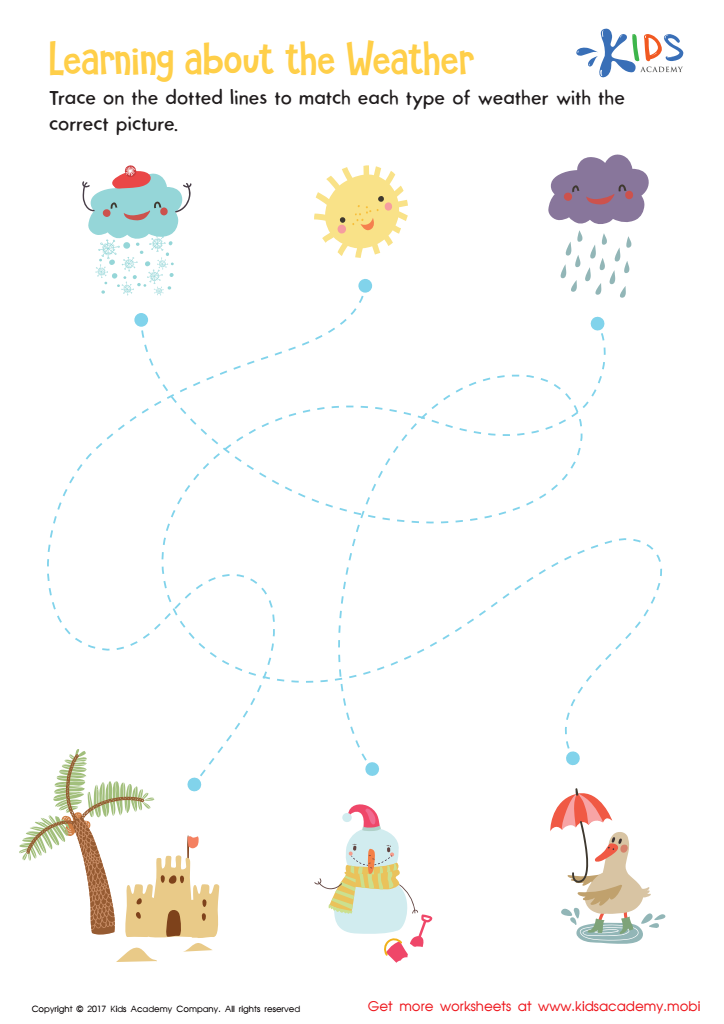
Join Kids Academy for Free
Who is primarily going to use this learning content?







Weather identification is a vital skill for children aged 3-6 that significantly contributes to their overall development and understanding of the world around them. Early childhood is a crucial period for sensory exploration, and recognizing different weather conditions enhances this experience. Teaching children about the weather fosters curiosity and critical thinking, helping them develop observations and make connections between their daily lives and environmental changes.
Moreover, benefits extend beyond simple identification. Understanding weather patterns helps children to predict changes, poses opportunities for engaging discussions, and nurtures imaginative play. For instance, associating rainy days with jumper-splashing fun supports physical activity, while sunny days encourage outdoor exploration.
From a safety perspective, instilling awareness about various weather conditions—such as storms, strong winds, or extreme heat—helps children understand the importance of appropriate clothing and behavior. This knowledge can aid in teaching them about climate appreciation, respect for nature, and respective social responsibilities.
Ultimately, teaching weather identification not only enriches children's vocabulary and cognitive skills, but it also builds a sense of connection to their community and environment, promoting overall well-being and fostering lifelong learning habits. Parents and teachers play a pivotal role in this foundational learning process.








