Handwriting practice Normal Math Worksheets for Ages 3-6
5 filtered results
-
From - To
Discover engaging "Handwriting Practice Normal Math Worksheets for Ages 3-6" designed to make early learning fun and effective. Our worksheets combine foundational math concepts with handwriting practice, promoting fine motor skills and mathematical thinking in young children. Each worksheet provides clear instructions and delightful illustrations, making it easier for kids to learn numbers, shapes, counting, and basic addition while improving their writing skills. Perfect for parents and educators, these printables offer valuable learning experiences, aligning with preschool and kindergarten standards. Encourage a love for numbers and neat handwriting with our expertly crafted worksheets tailored for young learners!
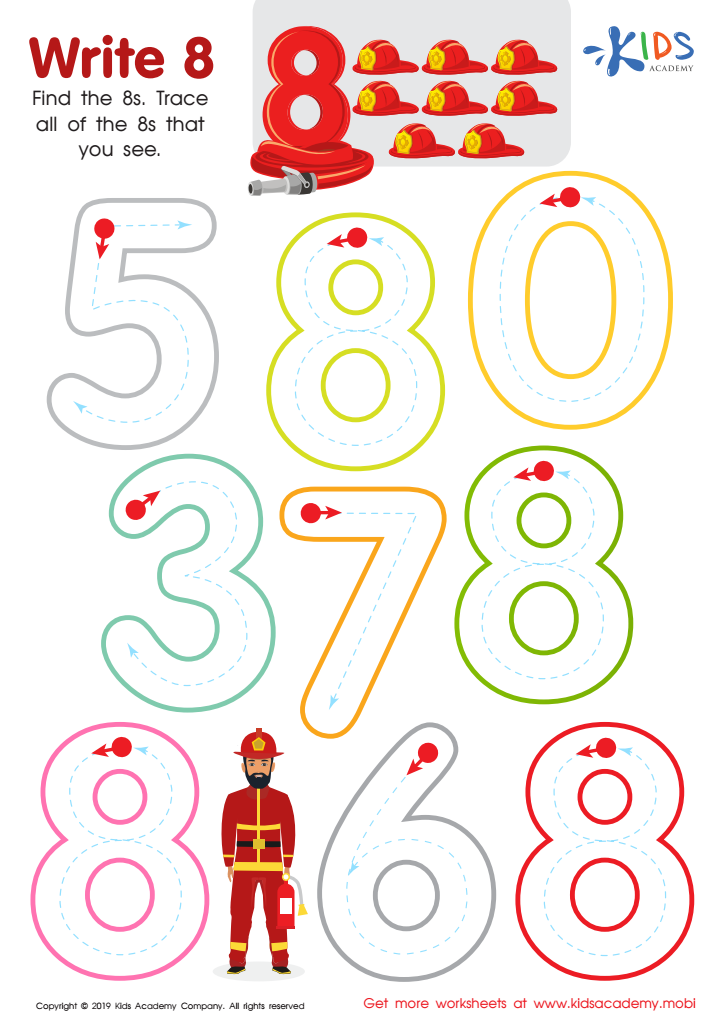
Write 8 Worksheet
 Assign to My Students
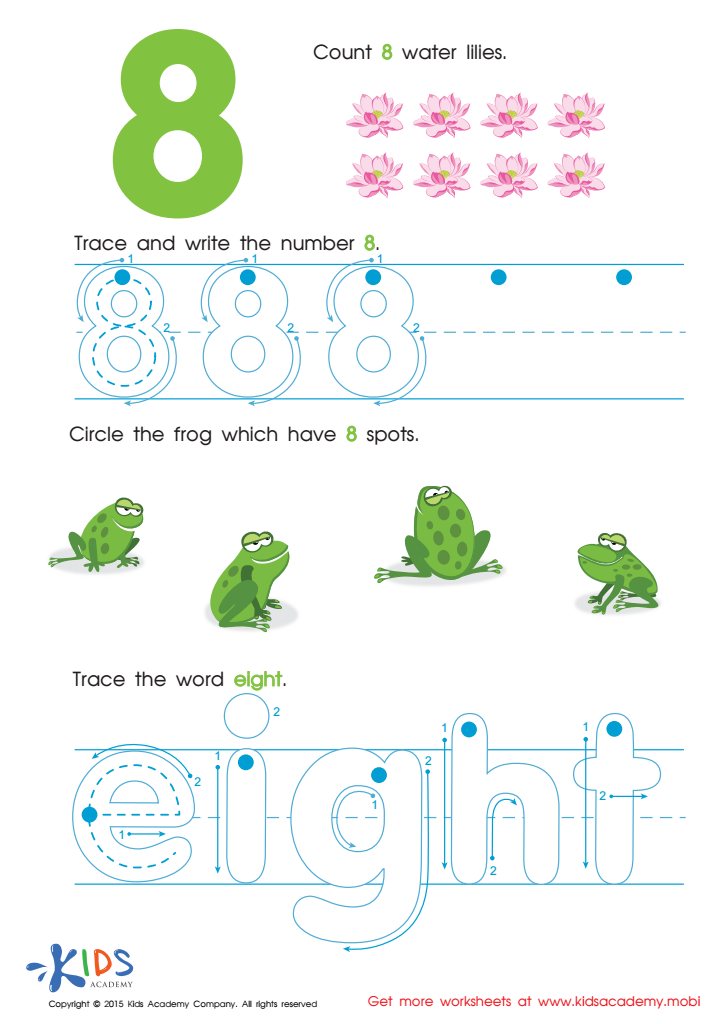
Learn Number 8 Easily Worksheet
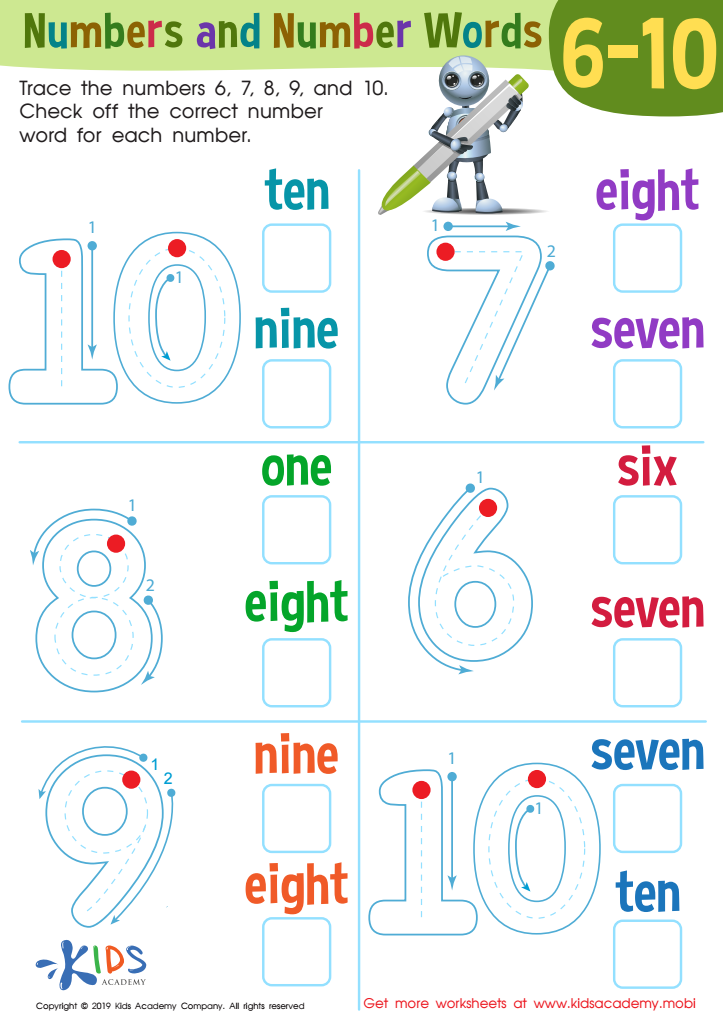
Numbers and Number Words 6–1 Worksheet
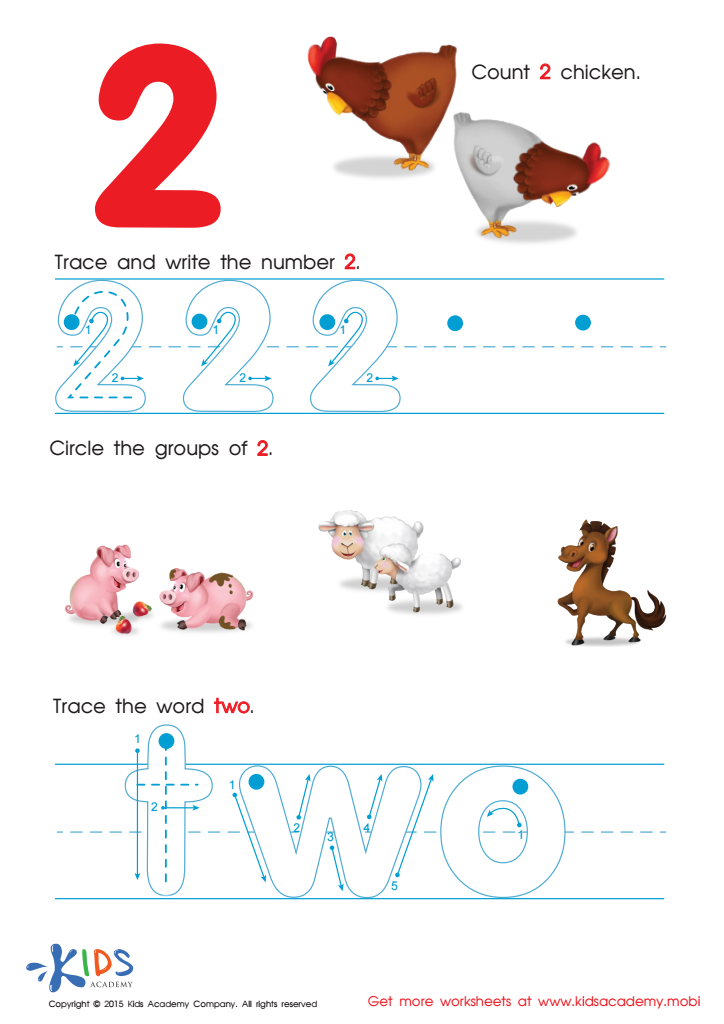
Learn to Write the Number 2 Worksheet
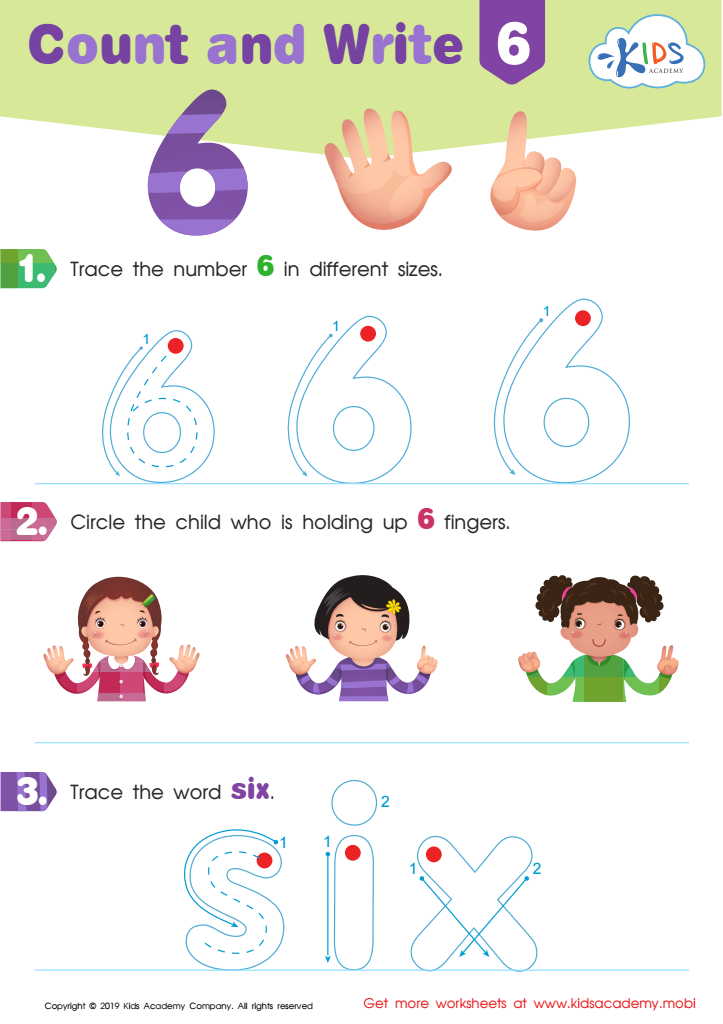
Count and Write 6 Worksheet








Handwriting practice, even at a young age, plays a crucial role in a child's development. For children aged 3-6, engaging in extensive handwriting practice supports significant advancements in both motor skills and cognitive abilities. Handwriting exercises bolster fine motor skills, improving hand-eye coordination and strengthening the fingers, which are essential for numerous daily tasks. These activities lay the groundwork for dexterity, ultimately promoting more fluid and legible handwriting in the future.
From a cognitive perspective, handwriting practice enhances children's understanding of letter formation, leading to better phonemic awareness and alphabet familiarity. This early literacy foundation is linked to improved reading skills as children connect written letters with their corresponding sounds.
Regarding normal math, incorporating handwriting in math exercises fosters numeracy skills through repeated writing of numbers and solving simple equations. Engaging in handwritten math operations helps cement fundamental mathematical concepts, improving memory retention and comprehension.
Moreover, involving young children in handwriting and math tasks nurtures patience and attention to detail. The discipline acquired from routine practice transcends handwriting and math, influencing their overall academic readiness and establishing a lifelong love for learning. Ultimately, prioritizing handwriting practice coupled with normal math exercises for youngsters cultivates a robust foundation for their intellectual and emotional growth, setting the stage for their future educational journey.








