Practicing addition Normal Math Worksheets for Ages 3-6
3 filtered results
-
From - To
Introduce young learners to the world of math with our engaging Practicing Addition Normal Math Worksheets, meticulously designed for ages 3-6. Our worksheets focus on building a strong foundation in addition, helping little ones understand the concept in a fun and interactive way. Each worksheet combines colorful illustrations and simple problems to keep young minds interested and motivated. Our user-friendly resources aim to boost confidence and sharpen basic math skills while offering easy-to-follow instructions for at-home practice. Perfect for parents and teachers alike, these worksheets make learning addition an enjoyable and rewarding experience for early learners.
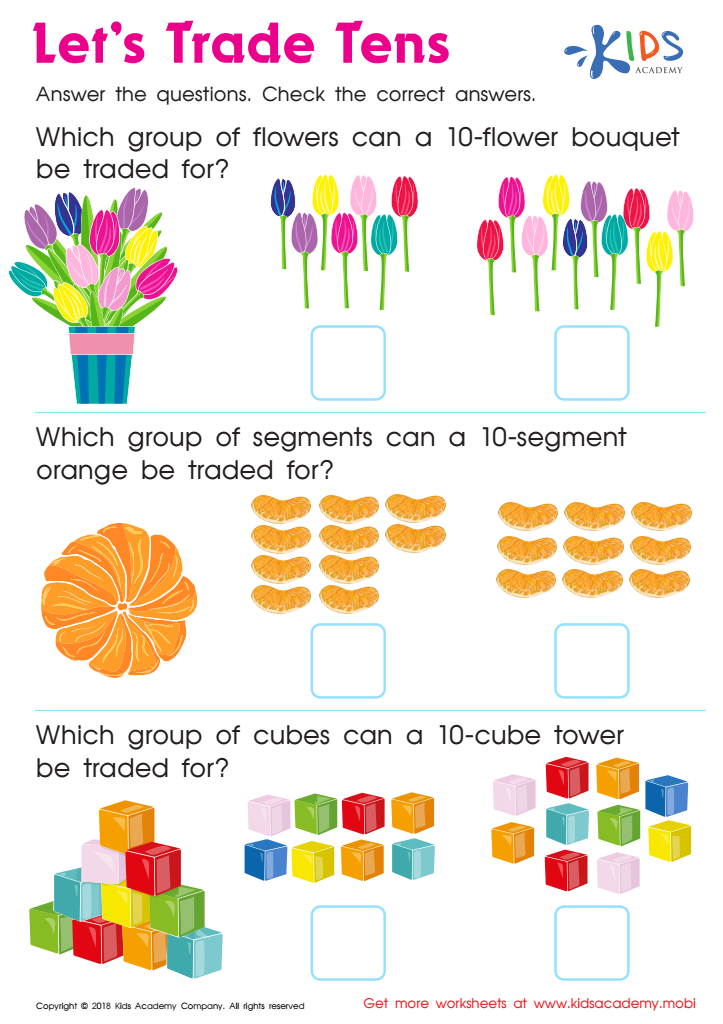
Lets Trade Tens Worksheet
 Assign to My Students
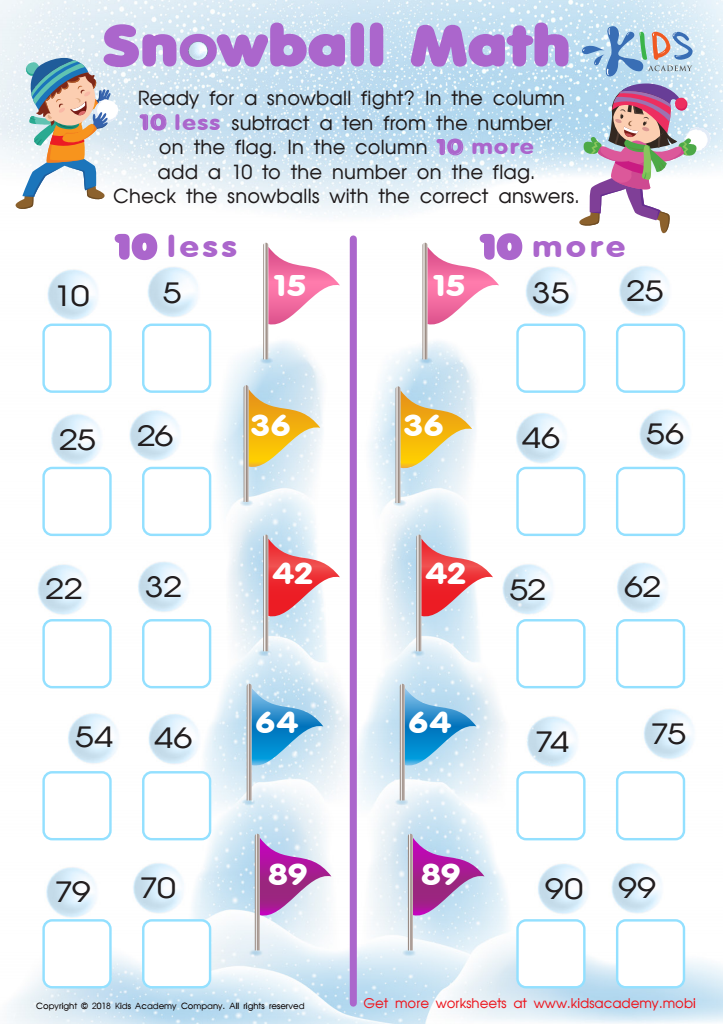
Snowball Math Worksheet
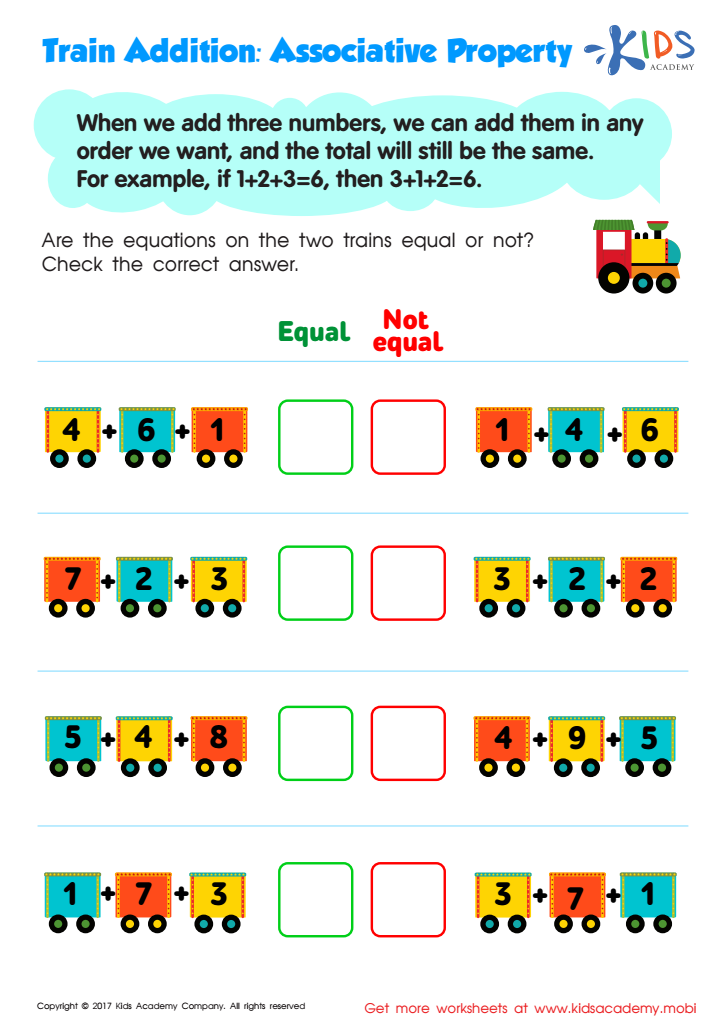
Train Addition: Associative Property Worksheet








Practicing addition with young children is crucial for laying the foundation of their mathematical understanding and cognitive development. For ages 3-6, learning addition helps to build critical early numerical skills that will support their future academic success. At this age, children's brains are highly receptive to new information and experiences, making it an ideal time to introduce them to mathematical concepts in a fun, engaging manner.
Firstly, addition reinforces number sense, helping children to understand quantities and how numbers relate to each other. This sets the groundwork for more advanced math topics such as subtraction, multiplication, and division. By familiarizing children with addition early on, parents and teachers can help them develop confidence and a positive attitude towards math, reducing anxiety related to the subject as they progress in school.
Additionally, early practice in addition supports the development of problem-solving and critical thinking skills. As children learn to add, they begin to recognize patterns, make connections, and apply logical reasoning to arrive at solutions, abilities that are transferable to other areas of learning.
Parents and teachers should integrate addition practice into daily activities through playful methods like counting objects, using toys, or interactive games. This not only makes learning enjoyable but also illustrates the real-world applications of math, fostering a lifelong curiosity and appreciation for the subject.








