Understanding directions Normal Math Worksheets for Ages 3-6
3 filtered results
-
From - To
Introducing "Understanding Directions Normal Math Worksheets for Ages 3-6" – an exceptional resource from Kids Academy designed to help young learners grasp foundational math skills with ease. These printable worksheets are ideal for children aged 3 to 6, focusing on essential learning skills like understanding directions and spatial awareness. Packed with engaging activities, colorful illustrations, and simple instructions, our worksheets make learning fun and effective. Whether used at home or in the classroom, they are perfect for developing your child's confidence and proficiency in math. Unlock your child's potential with our expertly designed "Understanding Directions" math worksheets today!
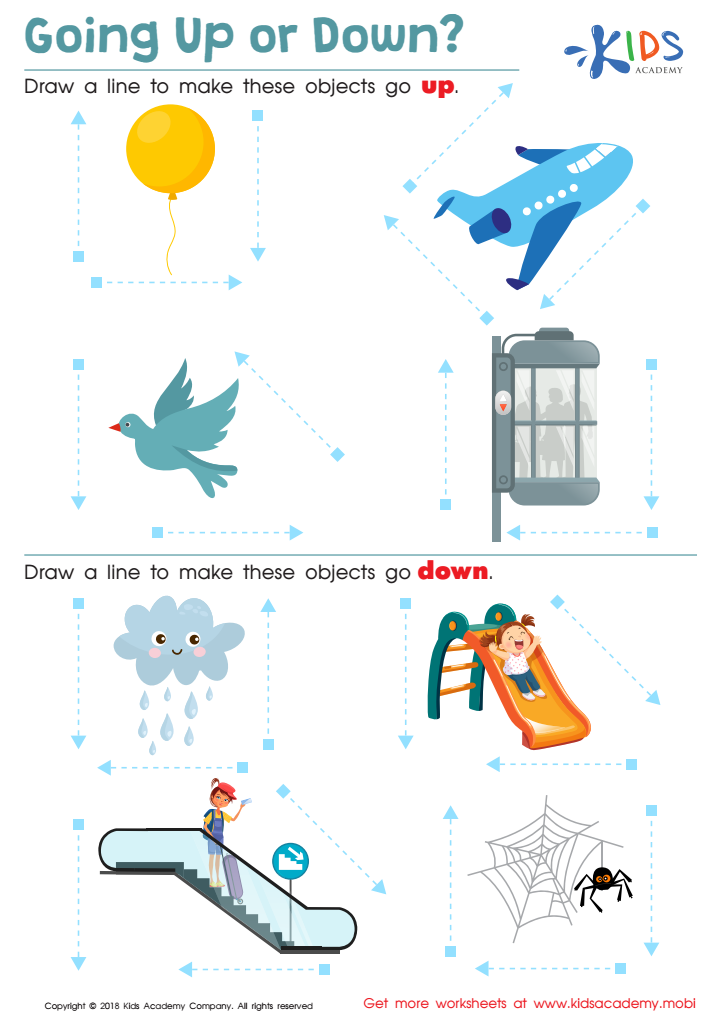
Going up or Down? Worksheet
 Assign to My Students
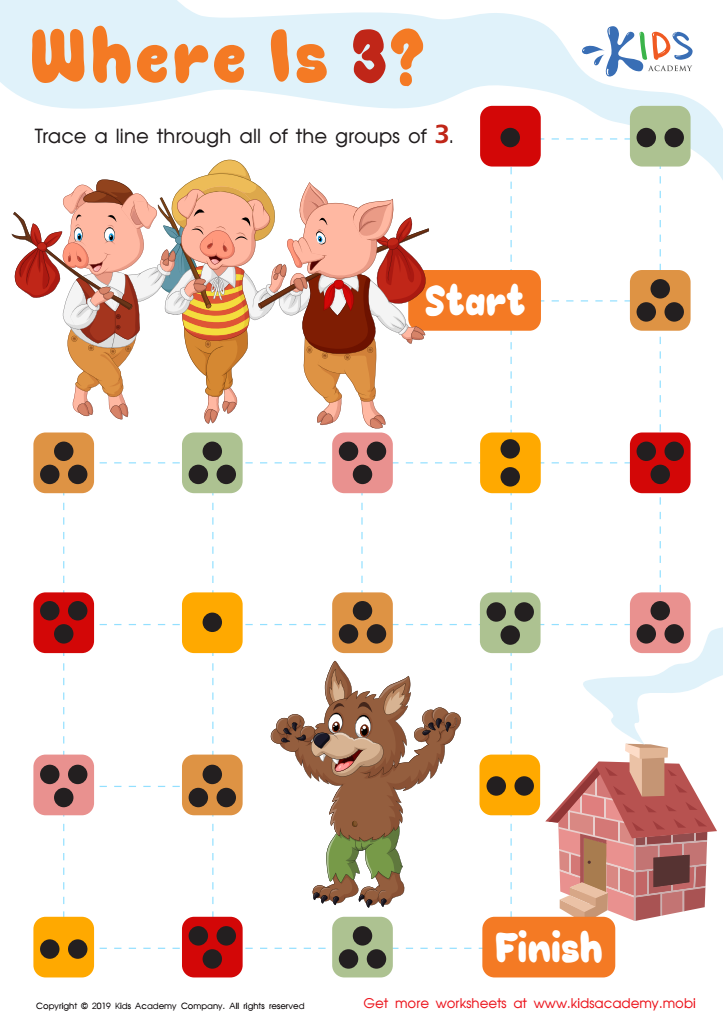
Where Is 3? Worksheet
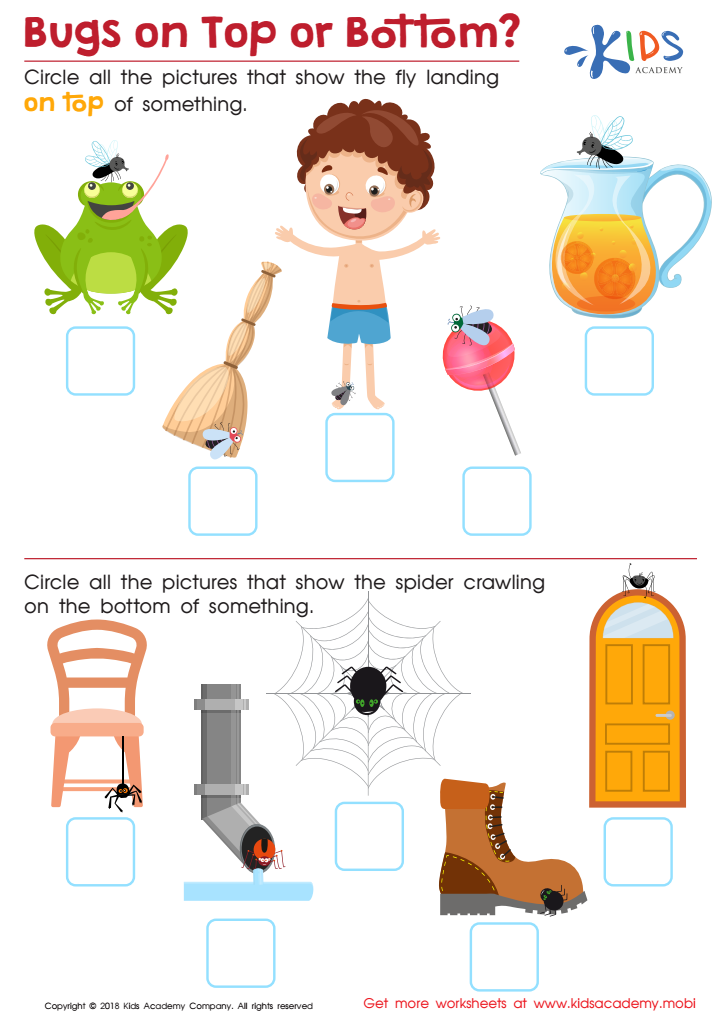
Bugs on Top or Bottom? Worksheet







Understanding directions in math for children aged 3-6 is crucial for establishing a solid foundational skill set that supports future learning. For young learners, math is not just about numbers; it encompasses spatial awareness, pattern recognition, sequencing, and logic. Comprehending directions enhances their ability to follow multi-step instructions, a skill pivotal throughout their academic journey and daily life.
At this formative stage, children are wired to learn through exploration and play. Games and activities involving directions foster confidence and independence as they accomplish tasks by understanding terms like "next to," "under," "above," and "between." This, in turn, bolsters their ability to grasp more complex concepts as they grow.
Moreover, spatial awareness, which is sharpened through understanding directions, is linked to success in various subjects including science and technology. A grasp of these concepts enables children to make sense of the world around them, recognizing how shapes fit into spaces, how puzzles come together, and how to navigate their environment.
In summary, nurturing an understanding of directions in early mathematics lays down the cognitive tools needed for critical thinking and problem-solving skills. Parents and teachers should prioritize these foundational aspects to support the overall cognitive and academic growth of children.








